
Common Plumose Anemone vs Giant Plumose Anemone: Key Differences, Identification, and Comparison Guide
Quick Facts
Common Plumose Anemone Scientific Name: Metridium senile
Giant Plumose Anemone Scientific Name: Metridium farcimen
Largest Species: Giant Plumose Anemone
Most Widespread Species: Common Plumose Anemone
Shared Family: Metridiidae
Main Identification Difference: Size and Tentacle Crown Proportions
Introduction to Common Plumose Anemone vs Giant Plumose Anemone
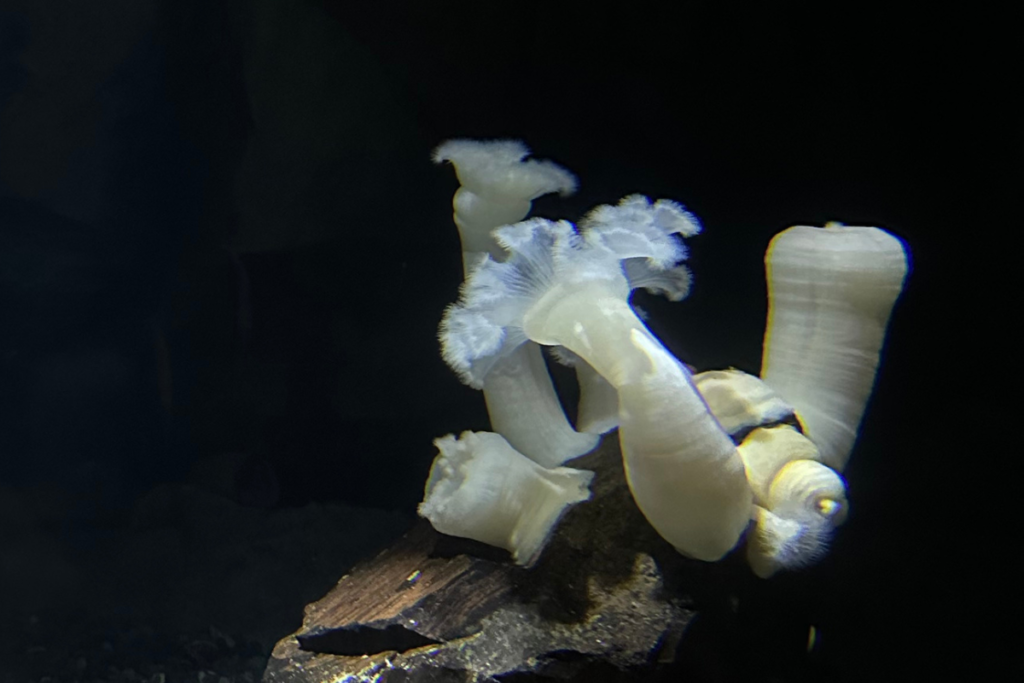
The Common Plumose Anemone (Metridium senile) and Giant Plumose Anemone (Metridium farcimen) are two closely related sea anemones that share a remarkably similar appearance. Both species possess tall columns, dense crowns of feathery tentacles, and a flower-like form that makes them among the most recognizable marine invertebrates in temperate waters. Because of these similarities, they are often confused by divers, photographers, and aquarium visitors.
At first glance, distinguishing the two species can be difficult. Their body structure follows a similar pattern, and both display the soft, plume-like tentacle arrangement that defines the genus Metridium. However, careful observation reveals several important differences that allow accurate identification.
The Common Plumose Anemone is widely distributed across portions of the North Atlantic and North Pacific Oceans. The Giant Plumose Anemone is primarily associated with the Pacific coast of North America, where it often becomes one of the largest sea anemones visible in coastal marine environments.
Although closely related, these species occupy slightly different ecological niches and display distinct physical characteristics. Understanding those differences makes identification considerably easier and helps marine enthusiasts recognize each species in the field.
Common Plumose Anemone vs Giant Plumose Anemone Appearance Differences
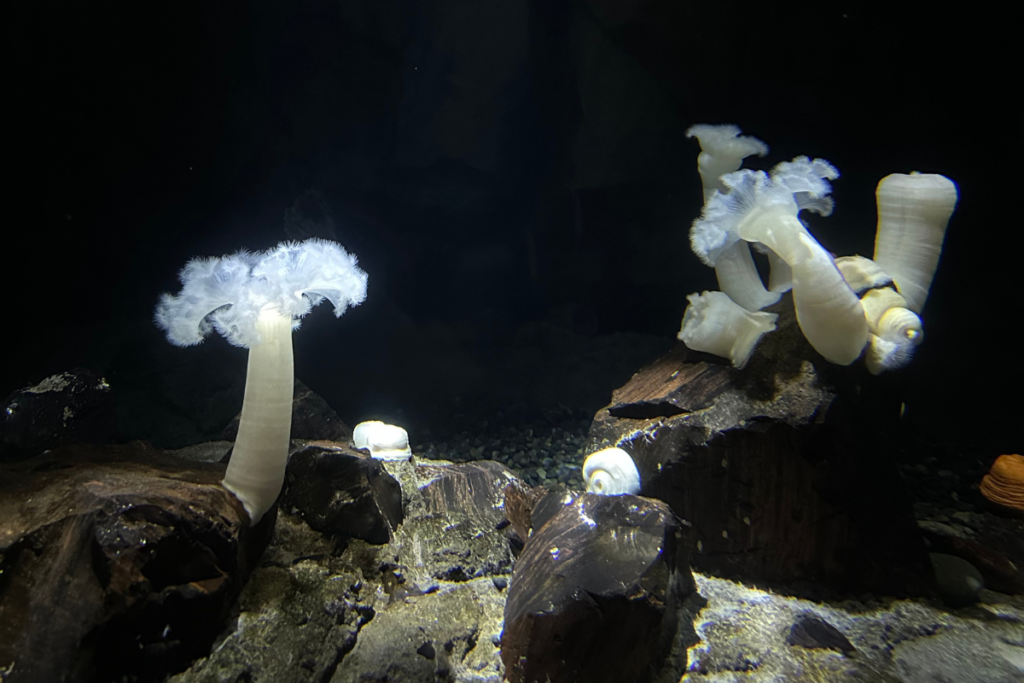
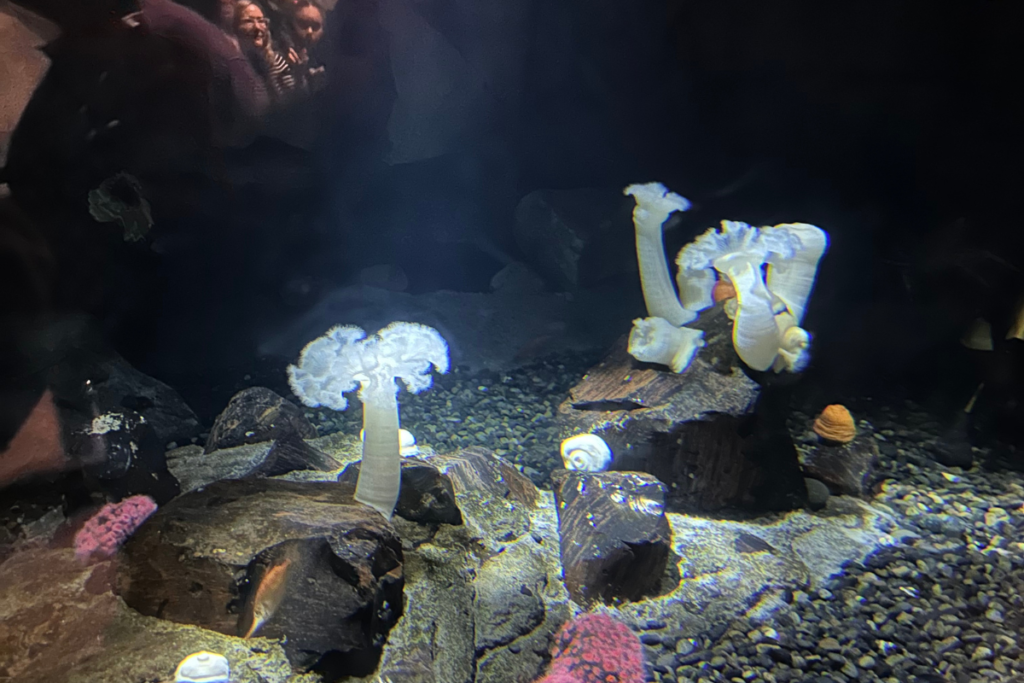
The most obvious distinction between these species is size. Common Plumose Anemones typically reach heights of approximately 4 to 12 inches, although larger individuals occasionally occur. Giant Plumose Anemones can exceed 3 feet in height under favorable conditions, making them dramatically larger than their smaller relative.
When viewed side by side, the difference is immediately noticeable. A mature Common Plumose Anemone may resemble the size of a coffee mug or water bottle, while a Giant Plumose Anemone can approach the height of a small child. This size disparity is often the quickest identification clue available.
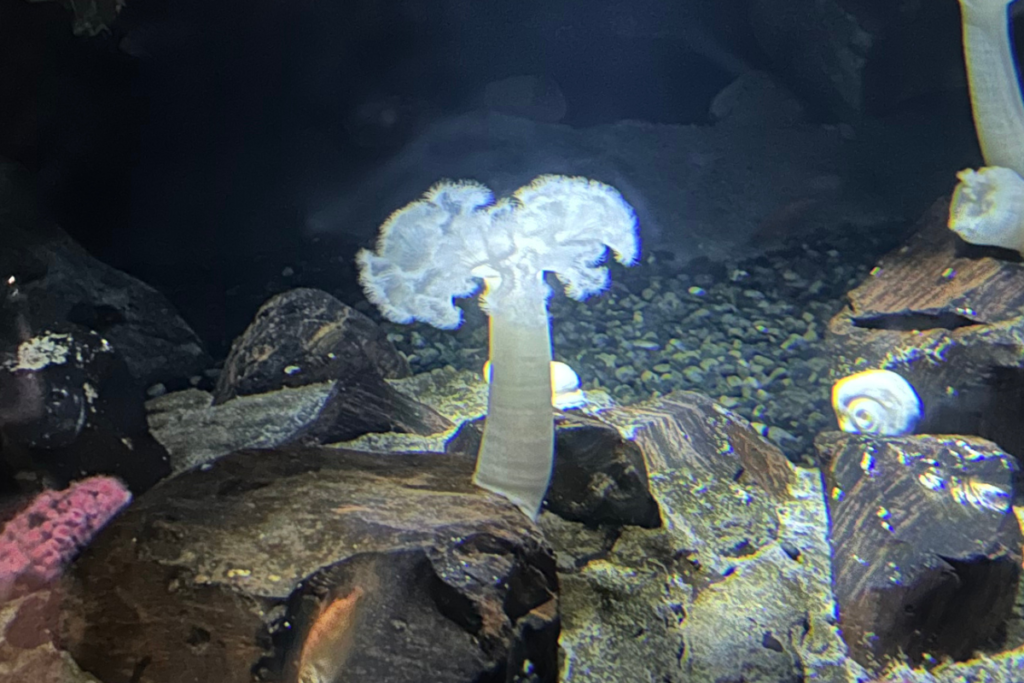
Tentacle crown proportions also differ. The Common Plumose Anemone generally displays a compact, rounded crown relative to its body size. Giant Plumose Anemones often possess broader, more expansive tentacle crowns that create a fuller overall appearance.
Color variation occurs in both species. White individuals are common, but shades of cream, orange, brown, pink, and gray may appear depending on location and environmental conditions. Because both species share similar color ranges, coloration alone is rarely sufficient for identification.
The body column of the Giant Plumose Anemone tends to appear more substantial and robust. In contrast, the Common Plumose Anemone often looks slightly more delicate and compact. These differences become increasingly obvious as individuals approach mature size.
Common Plumose Anemone vs Giant Plumose Anemone Range and Distribution
Distribution provides one of the most reliable methods for distinguishing these species. The Common Plumose Anemone occurs throughout much of the North Atlantic and North Pacific Oceans. Its range extends across Europe, eastern North America, western North America, and numerous northern coastal regions.
The Giant Plumose Anemone has a far more restricted distribution. It is primarily found along the Pacific coast of North America, including coastal waters from Alaska southward to portions of California. This narrower range significantly reduces identification confusion in many regions.
For observers exploring Atlantic coastlines, a large plume-like anemone is almost certainly the Common Plumose Anemone rather than the Giant Plumose Anemone. Geographic location alone can often eliminate one of the possibilities before detailed physical examination even begins.
Pacific coast observers face a greater challenge because both species may occur within overlapping regions. In these situations, body size and overall proportions become especially important identification tools.
A useful comparison is to think of the Common Plumose Anemone as the widespread relative found across multiple ocean regions, while the Giant Plumose Anemone functions as a more specialized Pacific representative. Distribution patterns often provide valuable context for accurate identification.
How to Identify Common Plumose Anemone vs Giant Plumose Anemone
For most observers, successful identification begins with estimating size. If an individual appears exceptionally large, towering above surrounding marine life, the Giant Plumose Anemone becomes the more likely candidate. Moderate-sized specimens are more likely to be Common Plumose Anemones.
Examining the overall proportions can provide additional clues. Giant Plumose Anemones often appear more imposing, with thicker columns and broader tentacle crowns. Common Plumose Anemones typically maintain a more compact and balanced profile.
Location should always be considered alongside physical characteristics. Atlantic populations strongly favor identification as Common Plumose Anemones, while Pacific coast observations require more careful examination. Geographic information frequently simplifies the identification process.
Both species possess the characteristic feathery tentacle crown that distinguishes Metridium anemones from many other sea anemone groups. As a result, the primary challenge is not recognizing the genus but determining which species is being observed.
Ultimately, the best identification approach combines size, body proportions, and geographic location. The Common Plumose Anemone is generally smaller, more widespread, and common throughout both Atlantic and Pacific regions. The Giant Plumose Anemone is significantly larger, more robust, and primarily associated with the Pacific coast of North America. Together, these characteristics provide a reliable framework for distinguishing two of the most impressive sea anemones found in temperate marine ecosystems.
Popular Searches About Plumose Anemones
Explore Plumose Anemone Guide
Explore More Exhibits

Support Encounters World
Help support wildlife photography and get behind the scenes discoveries on Patreon.