
Coras Funnel Weaver Overview: Identification, Appearance, and Ecological Role
Quick Facts
Scientific Name: Coras sp.
Common Name: Coras Funnel Weaver
Location: North America
Average Size: 0.3–0.8 inches (8–20 mm) body length
Lifespan: Approximately 1–2 years
Global Range: Eastern and central North America
Conservation Status: Not Evaluated
Notable Feature: Dense funnel-shaped retreat web and mottled abdomen pattern
Location Observed: Pennsylvania, USA
Field Observation
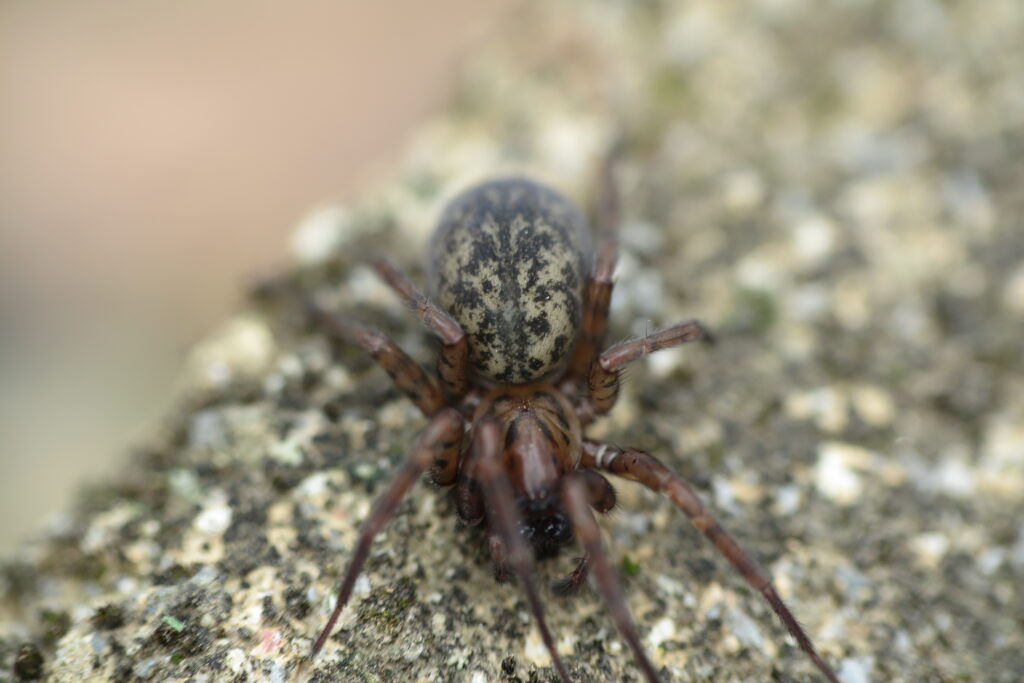
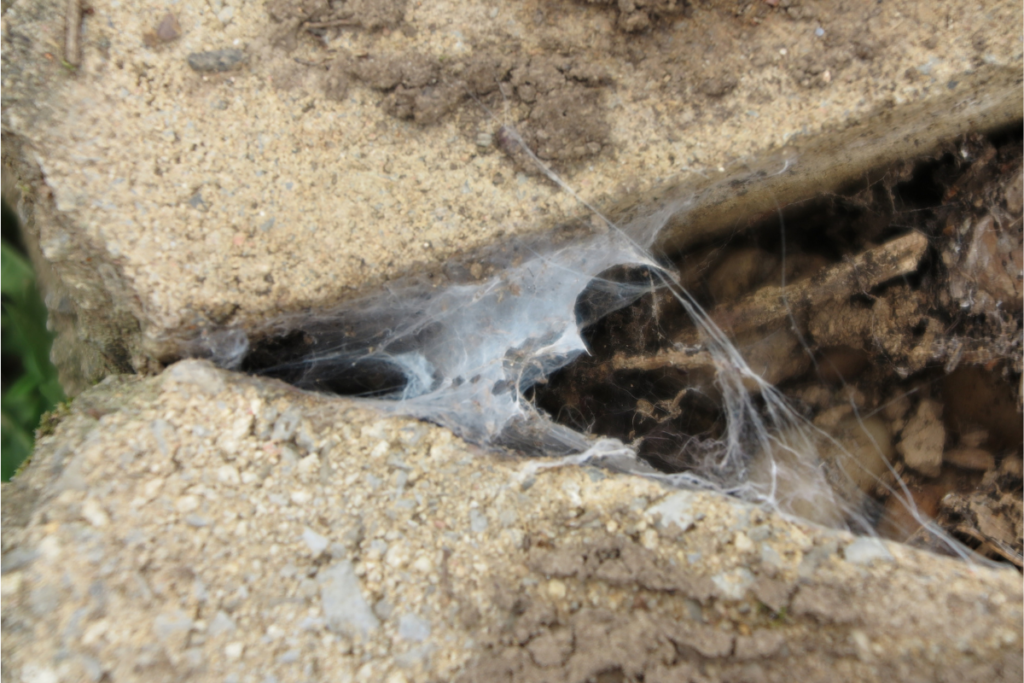
During this observation, the Coras funnel weaver was found beneath a rock, resting within its funnel-shaped web retreat. The spider remained motionless for most of the encounter, blending well with the surrounding surfaces, but appeared alert and aware of nearby movement. Its behavior suggested it was monitoring its surroundings while remaining protected inside its web home.
Coras Funnel Weaver Introduction and Species Overview
The Coras funnel weaver (Coras sp.) is a member of the funnel-weaver family Agelenidae, a group of spiders known for producing sheet-like webs connected to narrow retreat funnels. Several species within the genus occur across eastern portions of North America, where they inhabit a variety of natural and developed landscapes. Although they are frequently overlooked due to their secretive nature, these spiders are widespread and play an important role in local ecosystems.
Many encounters with Coras funnel weavers happen accidentally. A person moving a rock, inspecting a retaining wall, or exploring a wooded area may notice a spider retreating into a hidden crevice. Their ability to blend with surrounding surfaces often allows them to remain unnoticed even when they are only a short distance away.
Members of the genus are commonly found throughout regions of the United States and southern Canada where suitable conditions exist. Their distribution overlaps with many other funnel-weaving spiders, contributing to occasional identification challenges. Despite this similarity, Coras spiders possess distinctive physical traits that help separate them from related species.
At first glance, a Coras funnel weaver may appear unremarkable compared to brightly colored orb-weavers or larger wolf spiders. Closer observation reveals intricate body patterns, subtle coloration, and specialized features that reflect a long evolutionary history. These details make the genus an interesting subject for wildlife observers, macro photographers, and spider enthusiasts alike.
Coras Funnel Weaver Appearance and Identification Features
Coras funnel weavers possess a compact, low-profile body shape typical of many ground-associated spiders. Their appearance is generally dominated by muted earth tones, allowing them to blend naturally with stone surfaces, bark, leaf litter, and other textured backgrounds. This camouflage contributes significantly to their overall visual identity.
The abdomen often displays a mottled pattern consisting of gray, tan, cream, brown, and black markings. These markings may resemble marbling, scattered ink splatters, or irregular brush strokes spread across the surface. Individual patterns vary between species and even among individual spiders, creating a surprising amount of visual diversity.
Adult Coras spiders are relatively small compared to many commonly recognized spiders. Most individuals possess a body length roughly comparable to a sunflower seed or small paperclip segment. While not large enough to attract immediate attention, their intricate markings become striking when viewed through close-up photography.
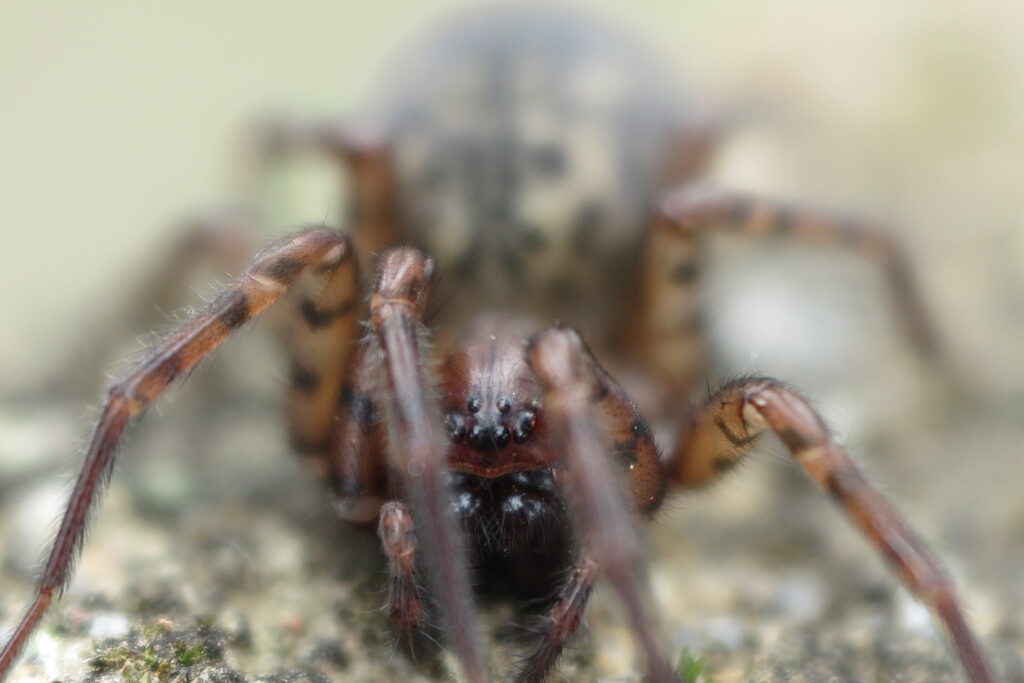
The cephalothorax is typically brown to reddish-brown and often contains darker longitudinal markings. Legs are moderately robust and covered with fine hairs that assist in sensory detection. When viewed from above, the spider presents a balanced and symmetrical appearance that contributes to its distinctive profile.
Coloration may vary slightly depending on age, lighting conditions, and species. Some individuals appear predominantly gray, while others display warmer brown tones. Despite these variations, the overall appearance remains consistent enough that experienced observers can often recognize a Coras funnel weaver from photographs alone.
Distinctive Characteristics of Coras Funnel Weavers
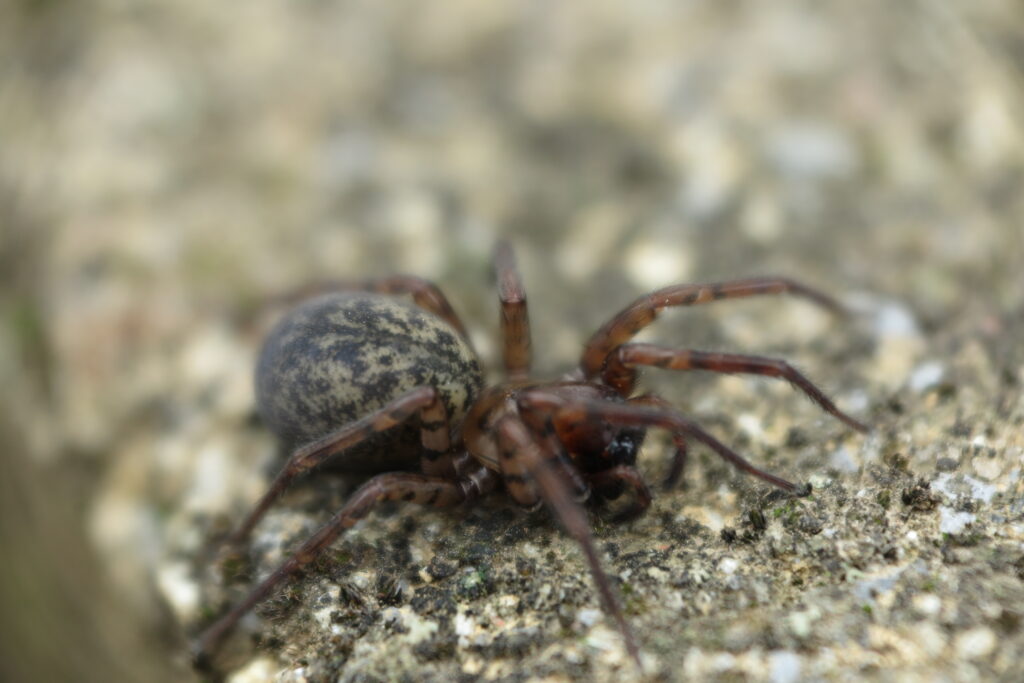
One of the most recognizable traits of the genus is the intricate abdominal patterning. Unlike species with simple stripes or uniform coloration, Coras spiders often display highly irregular markings that resemble natural stone textures. This visual complexity helps break up the spider’s outline against rough surfaces.
Another defining feature is the body’s overall proportions. Coras funnel weavers possess a somewhat elongated abdomen paired with a sturdy cephalothorax, creating a balanced appearance that differs from the rounded shape of many cobweb spiders. Their silhouette appears streamlined rather than bulky.
The spinnerets, located at the rear of the abdomen, are often more noticeable than those of many other spider groups. Although not as prominently extended as in some grass spiders, these structures remain useful identification clues. Careful observation of the rear body region can often help distinguish funnel weavers from unrelated species.
Eye arrangement also contributes to identification, though it is usually visible only under magnification. The eyes are arranged in characteristic patterns shared by members of the funnel-weaver family. Combined with body structure and coloration, these features provide taxonomic clues used by arachnologists.
Many people initially confuse Coras spiders with wolf spiders because both groups commonly occur on the ground and display subdued coloration. However, Coras funnel weavers generally possess a more delicate appearance, a narrower profile, and structural characteristics associated with web-building species. These distinctions become increasingly apparent as observation skills improve.
Coras Funnel Weaver Role in the Ecosystem
Coras funnel weavers occupy an important position within terrestrial ecosystems. As small predatory arthropods, they contribute to the regulation of numerous invertebrate populations. Their presence helps maintain ecological balance by participating in the natural movement of energy through food webs.
These spiders function as both predator and prey. While they consume various small invertebrates, they are also food sources for birds, reptiles, amphibians, larger spiders, and predatory insects. This dual role connects multiple levels of the ecosystem and contributes to biodiversity within the habitats they occupy.
The genus also serves as an indicator of healthy invertebrate communities. Areas supporting stable populations of funnel-weaving spiders often contain diverse insect and arthropod assemblages. Their continued presence reflects the availability of resources necessary for sustaining complex ecological relationships.
Coras funnel weavers indirectly influence nutrient cycling by participating in predator-prey interactions throughout the landscape. Through countless feeding events occurring each year, they contribute to the redistribution of biological energy within local ecosystems. Although individually small, their collective impact can be substantial when viewed across large populations.
An abandoned funnel-weaver retreat may even provide temporary shelter for tiny invertebrates and other organisms. While less dramatic than the environmental modifications created by larger animals, these subtle interactions contribute to habitat complexity. The ecological importance of Coras funnel weavers extends beyond their size, demonstrating how even small spiders can play meaningful roles in maintaining healthy ecosystems.
Observation Location
Observed in York, Pennsylvania, USA
Popular Searches About Funnel Weaver Spiders
Explore Funnel Weaver Spider Guide
Explore More Wildlife

Support Encounters World
Help support wildlife photography and get behind the scenes discoveries on Patreon.