
Groundhog Overview: Identification, Appearance, and Ecological Importance
Quick Facts
Scientific Name: Marmota monax
Common Name: Groundhog, Woodchuck
Location: North America
Average Size: 16–27 inches (40–68 cm) long
Lifespan: 3–6 years in the wild
Global Range: Canada, United States, and parts of Alaska
Conservation Status: Least Concern
Notable Feature: Powerful digging abilities and stout, marmot-like body shape
Location Observed: Pennsylvania, USA
Field Observation
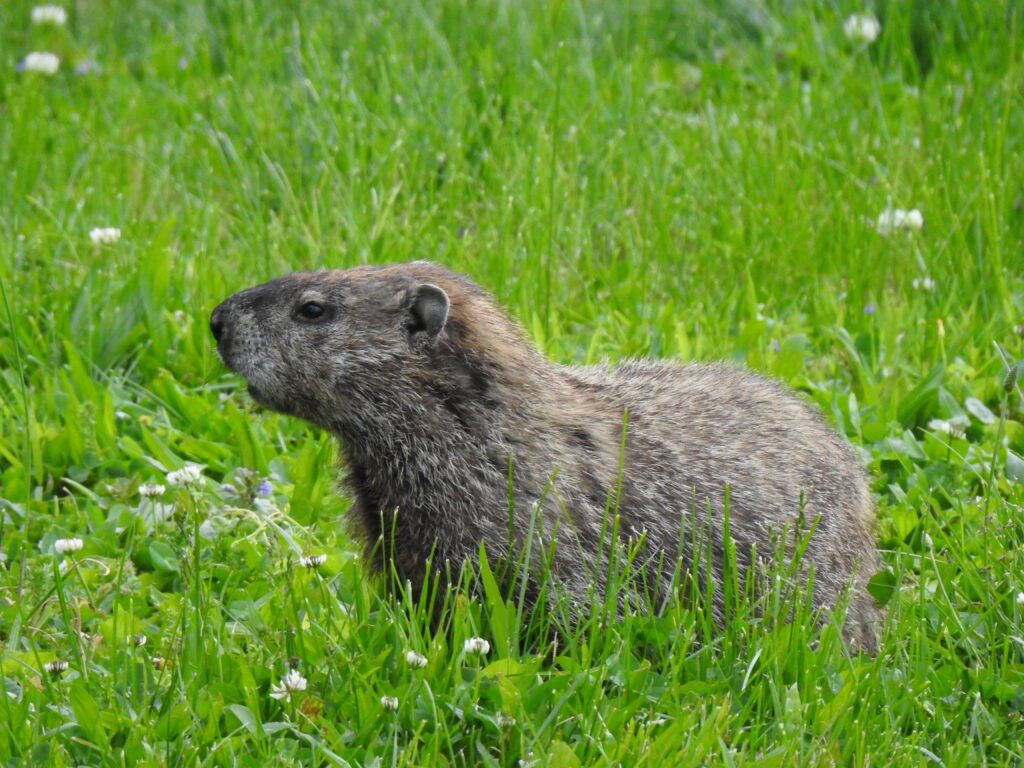
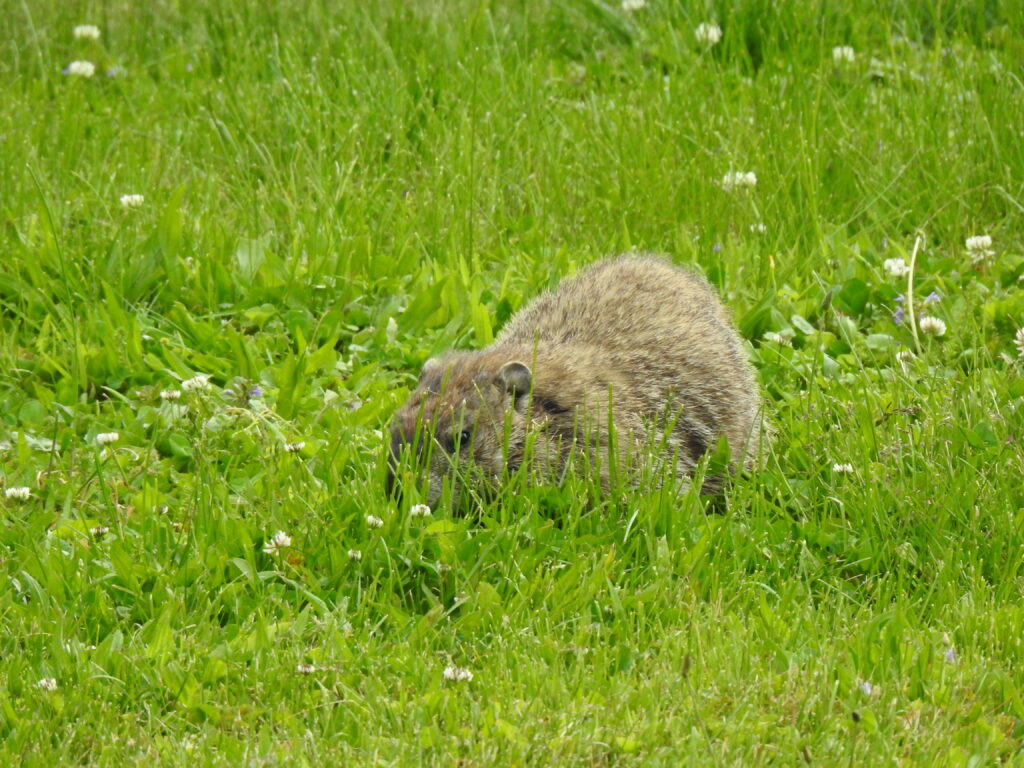
During this observation, the groundhog was seen feeding continuously in an open grassy area. Despite focusing on eating, it remained highly alert, frequently lifting its head and scanning the surrounding environment before returning to feed. This cautious behavior suggested a strong awareness of potential predators or disturbances nearby.
Groundhog Identification and Species Introduction
The groundhog (Marmota monax) is one of North America’s most recognizable mammals. Known by many people as the woodchuck, this large rodent belongs to the squirrel family and is the largest member of the marmot group found across eastern portions of the continent. Its stocky build, short ears, and grizzled coat make it easy to identify when spotted in fields, roadsides, or open landscapes.
Groundhogs are distributed throughout much of the United States and southern Canada, with populations occurring from the Atlantic Coast westward into the central regions of North America. Their broad range has allowed them to become familiar wildlife neighbors in both rural and suburban communities. Many people encounter them near farms, parks, golf courses, and undeveloped lots.
Despite being widely recognized, groundhogs are often confused with other burrowing mammals. Their rounded profile can resemble a small beaver at a distance, while their coarse fur sometimes causes people to mistake them for oversized prairie dogs. Closer inspection reveals a distinctly marmot-like appearance characterized by a thick neck, broad head, and compact body.
The groundhog has also become culturally significant through Groundhog Day traditions, giving it a level of public recognition uncommon among wild rodents. While folklore has made the species famous, its natural history is equally fascinating. Throughout its range, the groundhog serves as one of the most visible representatives of North America’s native marmots.
Groundhog Appearance and Physical Overview
A groundhog possesses a sturdy, barrel-shaped body that immediately distinguishes it from most other rodents. Adults typically measure between 16 and 27 inches in length and often weigh between 5 and 14 pounds, although larger individuals occasionally exceed those averages. When viewed in the field, many people compare their size to a medium house cat or a small dog.
The fur appears coarse and dense, consisting of mixed shades of brown, gray, black, and tan. Individual hairs often contain several color bands, creating the frosted or grizzled appearance commonly seen in photographs. This coloration helps break up the animal’s outline and contributes to its distinctive look.
The head is broad with a blunt muzzle and small rounded ears positioned close to the skull. Dark eyes are set on the sides of the face, while long whiskers extend outward from the snout. Together, these features create the familiar profile that wildlife observers often recognize instantly.
Groundhogs also possess relatively short legs compared to their body size, giving them a low-slung appearance when moving across open ground. Their tail is shorter and less bushy than that of tree squirrels, appearing thick and slightly flattened. Across their extensive geographic range, individuals may vary somewhat in color intensity and overall size, but the general body form remains remarkably consistent.
Distinctive Groundhog Characteristics and Recognition Features
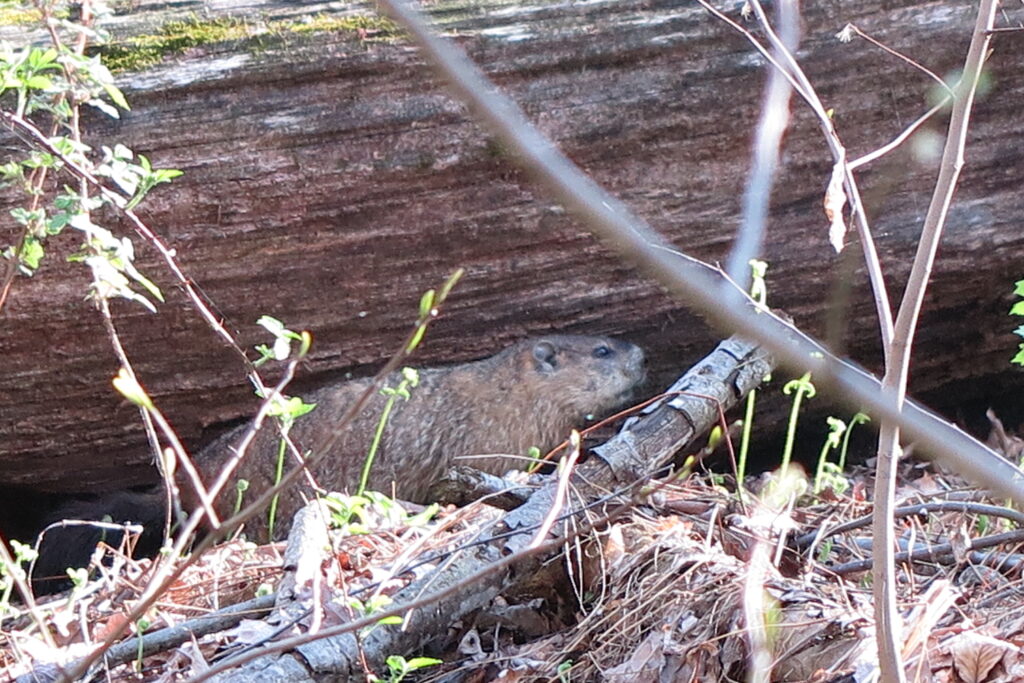
Among North American rodents, the groundhog stands out because of its exceptionally robust body structure. Unlike slender squirrels that spend much of their time climbing, groundhogs appear heavily built, with thick shoulders and a broad chest. Their body proportions create a silhouette that is difficult to confuse once familiar.
One of the most distinctive physical traits is the presence of powerful front limbs equipped with strong claws. Even without observing their activities, these enlarged forefeet are noticeable and help separate groundhogs from many similar-sized mammals. The claws appear longer and heavier than those of most squirrels, reflecting the animal’s specialized body design.
The species also displays a characteristic facial appearance marked by a blunt nose and relatively small ears. Compared to a beaver, the muzzle is shorter and more rounded. Compared to a prairie dog, the body is larger and more compact, with a heavier overall build. These differences are useful when identifying animals from photographs or distant observations.
Another defining feature is the dense outer coat that gives groundhogs a rugged, weather-resistant appearance. The fur often looks rougher than that of rabbits or squirrels and can vary from pale gray-brown to rich chestnut tones. Combined with their stocky frame and broad head, this textured coat creates the unmistakable image associated with the species throughout its range.
Groundhog Ecosystem Role and Environmental Importance
Although often recognized for their appearance, groundhogs contribute significantly to the ecosystems where they occur. Their presence influences soil conditions, creates opportunities for other wildlife, and adds diversity to natural communities. In many landscapes, they function as an important component of ecological processes that extend beyond the species itself.
One of the most notable contributions comes from their ability to alter the physical environment. Areas modified by groundhogs can create patches of disturbed soil that support different plant communities and increase habitat diversity. These changes introduce variation into landscapes that might otherwise remain relatively uniform.
Groundhogs also occupy an important position within North American food webs. As a medium-sized mammal, they help connect lower and higher levels of ecological systems. Their presence contributes to the overall balance of wildlife populations, supporting interactions among numerous species across a variety of habitats.
Abandoned groundhog burrows often become valuable shelters for other animals. Various mammals, reptiles, amphibians, and invertebrates may utilize these underground spaces after the original occupant leaves. In this way, a single groundhog can indirectly provide resources that benefit many other organisms over time.
The ecological value of groundhogs extends beyond any single interaction. By modifying landscapes, contributing to biodiversity, and creating opportunities for other species, they play a broader environmental role than many people realize. Their widespread distribution across North America ensures that these contributions occur in countless ecosystems, making the groundhog an important and often overlooked part of the continent’s wildlife communities.
Observation Location
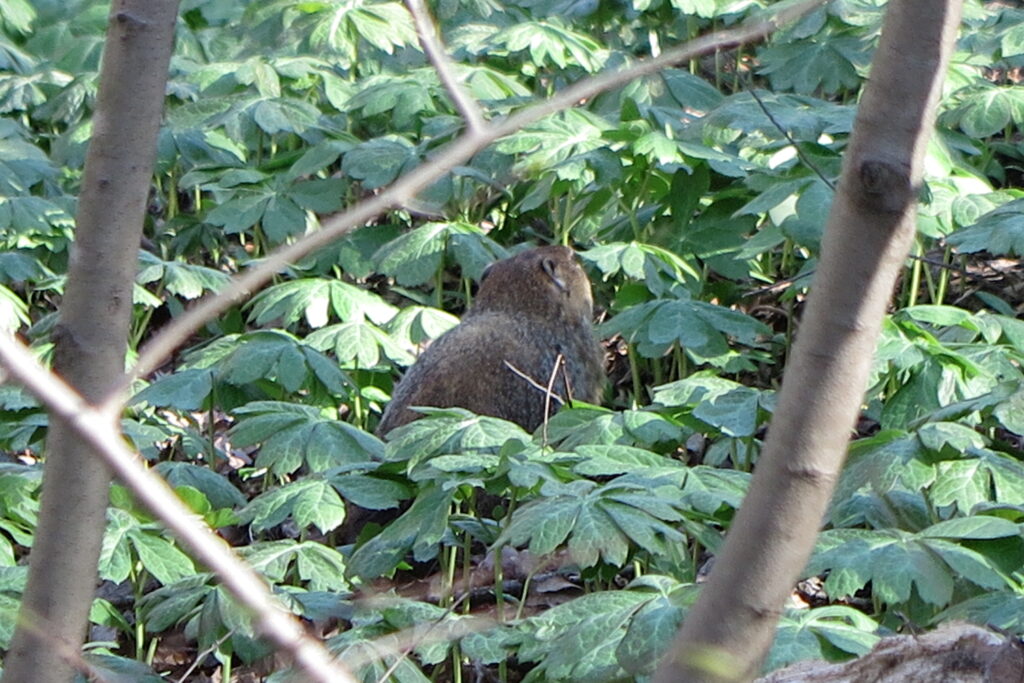
Observed in Turkey Hill Overlook Trail, Lancaster County, Pennsylvania, USA
Popular Searches About Groundhogs
Explore Groundhog Guide
Explore More Wildlife

Support Encounters World
Help support wildlife photography and get behind the scenes discoveries on Patreon.