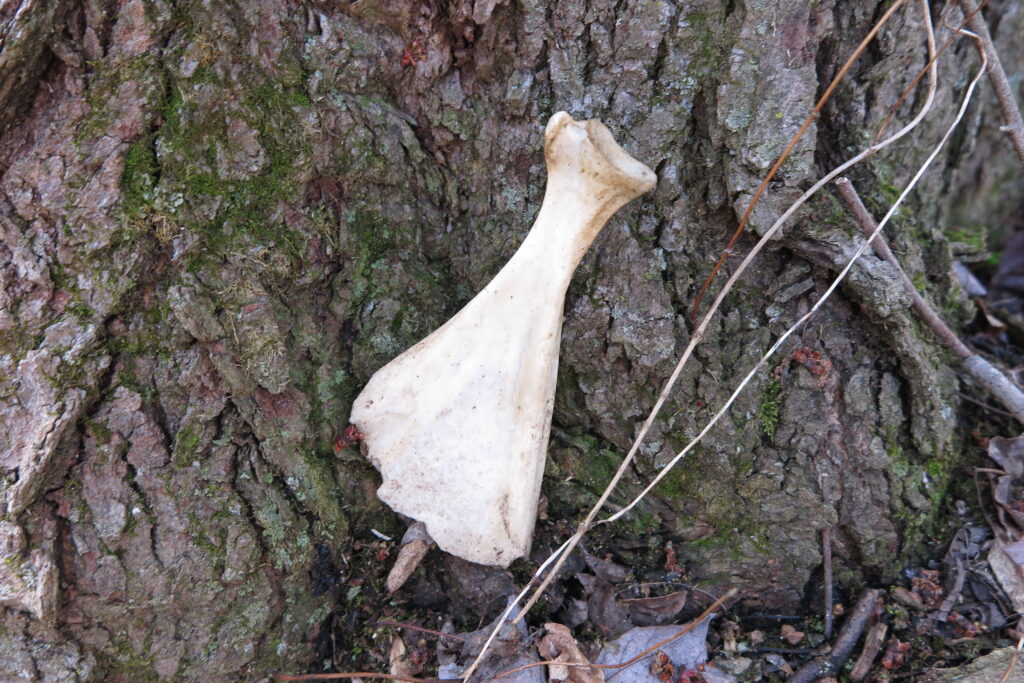
White-Tailed Deer Scapula (Shoulder Blade Fragment): Where Found, Habitat, and Environmental Distribution
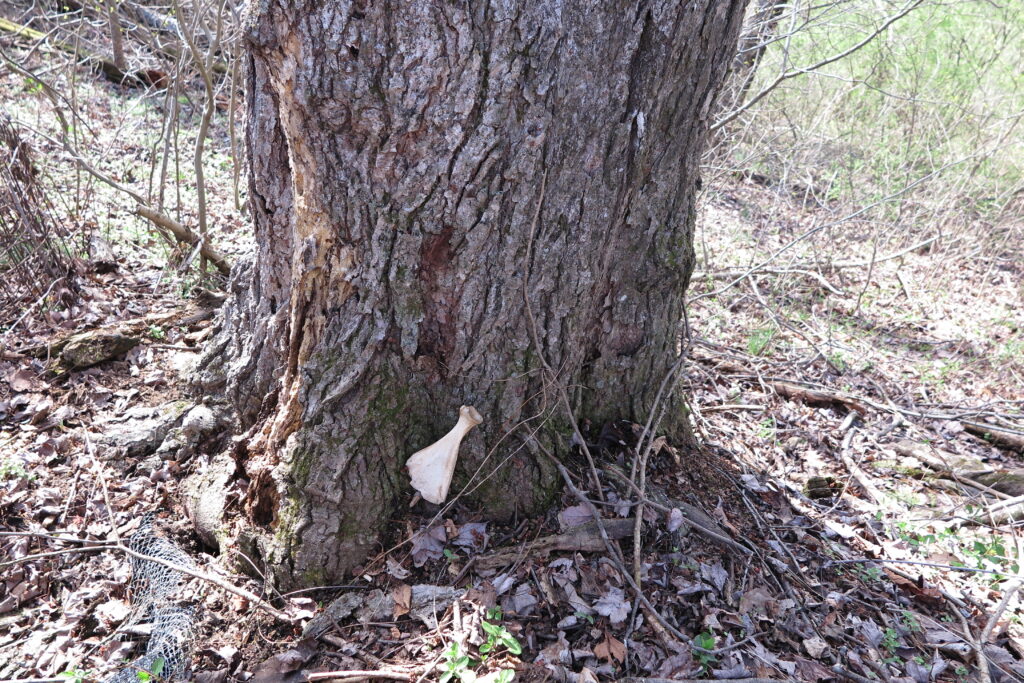
Quick Facts
Primary Environment: Forest
Common Discovery Areas: Forest floors, base of trees, near fallen logs, trail edges
Ground Condition: Leaf litter, loose soil, organic debris
Decomposition Stage: Advanced (skeletal remains only)
Scavenger Activity: Moderate to High
Exposure Level: Partially exposed to surface
Climate Zone: Temperate
Season Found: Year-round (most visible in fall/winter)
Associated Species: Oak trees, moss, insects, small mammals, woodland birds
Location Observed: Pennsylvania
The white-tailed deer scapula, or shoulder blade, is a flat bone that forms part of the upper front limb structure. It rests along the side of the body and connects the front leg to the main skeletal framework, making it one of the more recognizable bones when encountered in the wild.
This bone likely comes from a White-tailed deer, a species found across North America, Central America, and into parts of northern South America. Its widespread presence and adaptability mean that its remains are commonly discovered across a variety of landscapes.
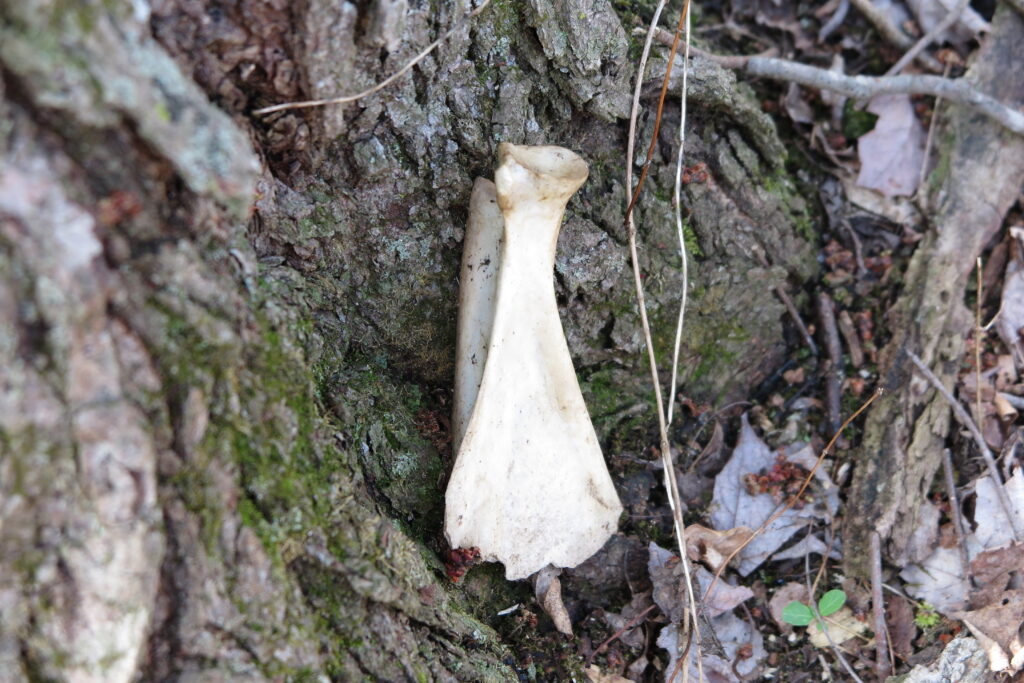
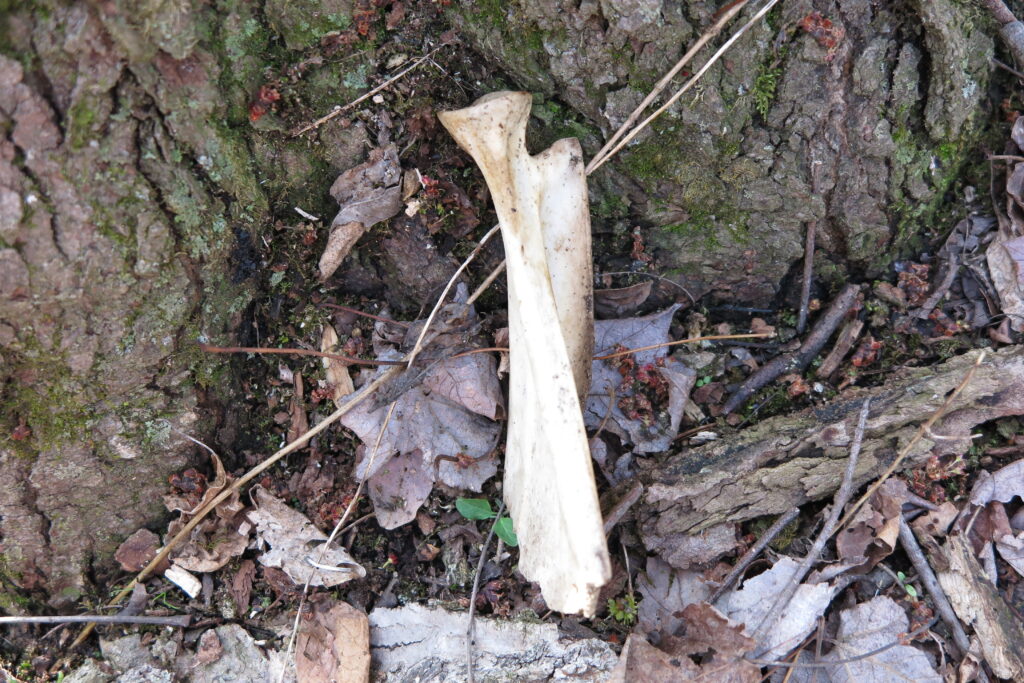
Fragments like this are typically found resting on the ground surface, often partially hidden among leaves, sticks, and natural debris. Whether in deep forest or along open edges, these bones quietly mark areas where wildlife once moved through the landscape.
White-Tailed Deer Scapula Overview (Where Found in Nature)
The scapula of a white-tailed deer is most frequently discovered in natural environments where animals live and travel regularly. These bones often appear in areas that provide cover, such as wooded landscapes, where leaf litter gradually builds up and preserves skeletal remains over time.
Unlike bones found in more exposed or heavily trafficked areas, scapula fragments tend to settle into quieter parts of the environment. Their flat shape allows them to rest against the ground surface, making them less likely to roll or be carried far compared to rounder bones.
In many cases, these bones are not immediately visible. Seasonal changes, such as falling leaves or shifting soil, can either conceal or reveal them. This creates a pattern where bones may appear suddenly in areas that seemed previously undisturbed.
Across different landscapes, the presence of a deer scapula often signals a location where wildlife activity has occurred over time. Whether through natural death, predation, or scavenging, these remains become part of the environment and blend into the surrounding terrain.
White-Tailed Deer Scapula Location & Habitat (Where Found)
Forested areas are the most common places to encounter deer scapula fragments. Dense woods provide both habitat for deer and conditions that allow bones to remain undisturbed. The forest floor, layered with leaves and organic material, acts as a natural resting place for skeletal remains.
Edges between forests and open fields are also frequent discovery zones. These transitional areas are heavily used by deer for movement and feeding, increasing the likelihood of remains being present. Bones found here may be more exposed due to less ground cover.
Water edges, such as creeks or small streams, can also reveal bones like this scapula. These locations attract wildlife, and over time, bones may accumulate nearby. Movement of water can also expose remains that were previously buried or hidden.
In addition, disturbed ground—such as trails, fallen trees, or areas affected by natural events—often reveals bones that would otherwise stay concealed. As soil shifts and vegetation changes, previously hidden remains become visible, making these areas key spots for discovery.
White-Tailed Deer Scapula Environmental Exposure and Distribution
Environmental exposure plays a major role in how and where a scapula is found. Weather conditions such as rain, snow, and temperature changes gradually affect how bones appear. Over time, these elements can clean, lighten, or slightly erode the surface.
Terrain also influences bone distribution. Sloped ground may cause bones to shift downhill, while flat terrain allows them to remain in place for long periods. Natural barriers like roots, rocks, or fallen logs often stop movement, resulting in bones collecting in certain areas.
Scavenger activity contributes significantly to how bones are spread across a landscape. Animals may move or separate skeletal elements, causing fragments like scapula pieces to appear away from the original location. This results in scattered remains rather than a complete skeleton in one place.
Water movement and seasonal changes further impact distribution. Flooding or heavy rain can relocate bones, while drying conditions may expose them. As a result, the same area can reveal new finds over time, even if it has been searched before.