Blue Jay Overview Guide: Identification, Appearance, and Ecological Importance of Cyanocitta cristata
Quick Facts
Scientific Name: Cyanocitta cristata
Common Name: Blue Jay
Location: Forests, woodlands, suburbs, and parks
Average Size: 9–12 inches long
Lifespan: 7–17 years
Global Range: Eastern and central North America
Conservation Status: Least Concern
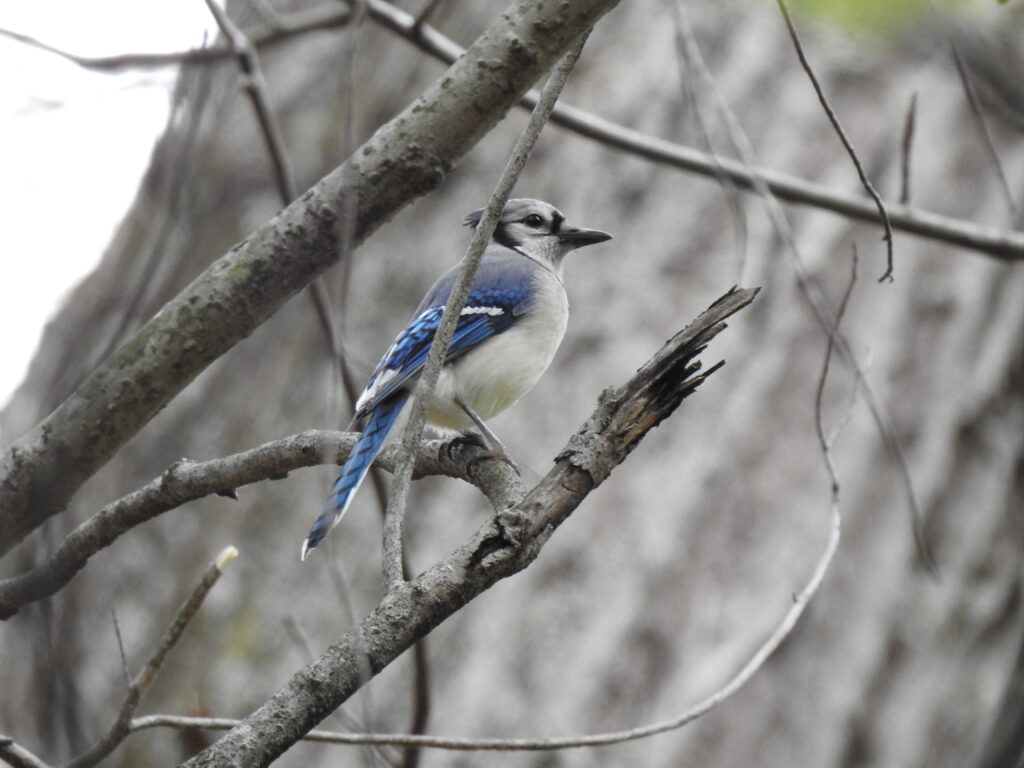
Notable Feature: Bright blue plumage with bold black barring and crest
Location Observed: Pennsylvania, USA
Field Observation
During this observation, the Blue Jay moved carefully between nearby trees while remaining highly alert to its surroundings. It frequently paused high in the canopy to scan the area before flying to another branch. Loud calls echoed through the forest as the bird continued surveying the woodland from above.
Introduction to the Blue Jay’s Striking Presence Across North America
The Blue Jay is one of the most recognizable birds found throughout eastern and central North America. Its vivid blue feathers, upright crest, and loud appearance make it stand out immediately among woodland birds. Even from a distance, the contrasting patterns across its wings and tail often catch attention as sunlight reflects across the feathers. The species belongs to the crow family, giving it a sturdy body shape and intelligent appearance unlike many smaller songbirds.
Blue Jays are widely distributed across a large portion of the continent, ranging from southern Canada through much of the United States. They are commonly seen in suburban neighborhoods, mixed forests, rural farmland edges, and public parks. Their adaptability has allowed them to remain widespread even in areas altered heavily by human development. Because of this flexibility, many people encounter Blue Jays regularly without needing to travel deep into wilderness areas.
The bird’s appearance changes subtly depending on lighting conditions and feather wear throughout the year. In bright sunlight, the blue coloration can appear vibrant and almost electric, while overcast conditions may give the feathers a softer gray-blue tone. Young birds often appear fluffier and less sharply patterned than adults. Seasonal molting can also cause temporary dullness before fresh plumage returns.
Across much of their range, Blue Jays are associated with deciduous forests containing mature trees. Their strong silhouette and loud visual contrast make them easy to notice among green leaves or bare winter branches. Whether perched high in a canopy or moving between lower branches, the species often creates an immediate impression because of its bold coloration and recognizable shape.
Blue Jay Physical Appearance and Distinct Feather Coloration
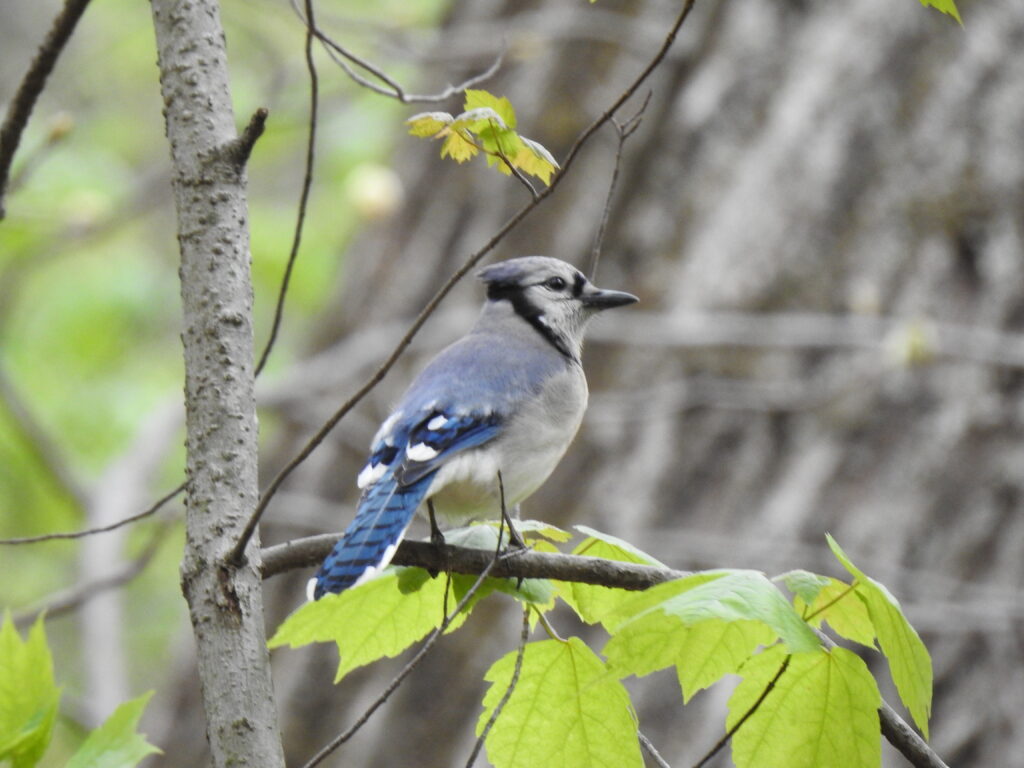
The overall appearance of the Blue Jay combines bright coloration with sharp feather patterning that few North American birds can match. The upper body is covered in blue feathers layered with black barring and white accents, while the chest and underside are pale gray to white. Around the neck sits a black collar-like marking that separates the lighter underparts from the colorful upper body. Together, these markings create a highly contrasted and clean appearance.
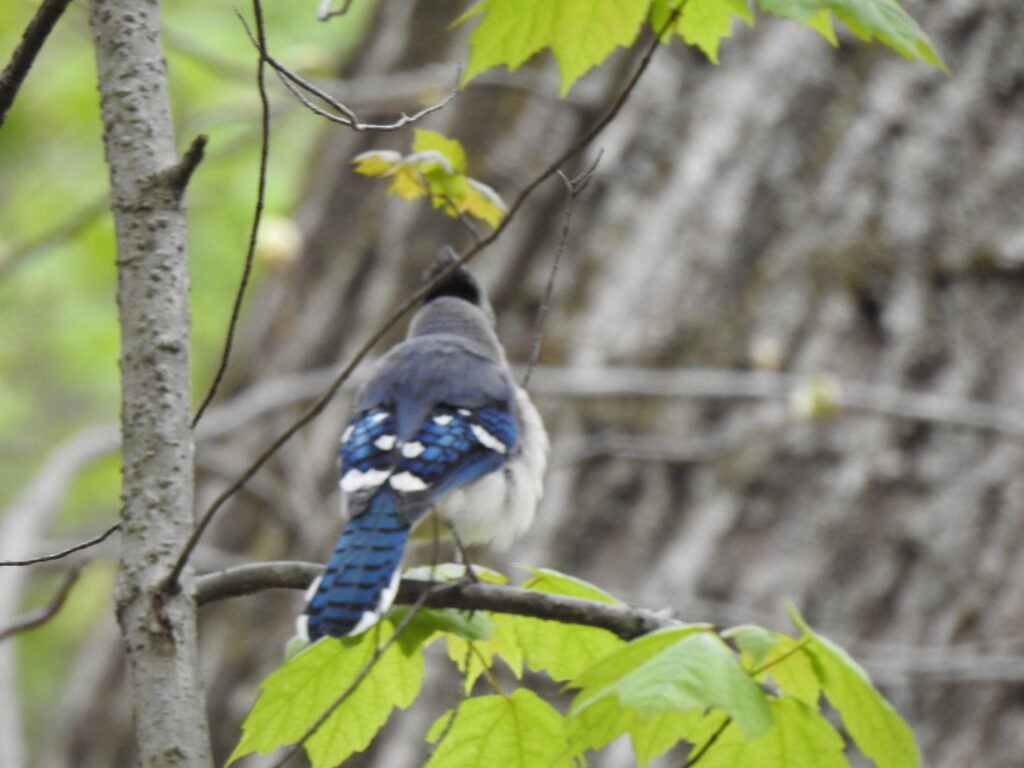
Adult Blue Jays are roughly similar in size to a small crow or a large robin, though their bodies appear slimmer and more streamlined. Their long tails contribute to an elegant profile when perched on branches. The tail feathers feature alternating blue and black bands with white tips, forming a striking pattern visible both in flight and at rest. When viewed from behind, the feather arrangement resembles overlapping scales or layered mosaic tiles.
One of the most noticeable features is the feather crest on top of the head. This crest may stand upright sharply or flatten depending on the bird’s posture and mood. Even without movement, the crest changes the silhouette dramatically and gives the bird a more alert appearance. Combined with dark eyes and a strong black bill, the face often appears intense and expressive.
Blue coloration in Blue Jays is not created by blue pigment itself but by microscopic feather structures that reflect light. Because of this, feathers may shift between bright blue and muted gray depending on viewing angle and lighting conditions. In shaded forests, the bird can blend surprisingly well into the surroundings despite its vivid reputation. During direct sunlight, however, the plumage becomes extremely eye-catching against green foliage or brown tree bark.
Recognizable Blue Jay Features That Distinguish the Species
Several physical characteristics make the Blue Jay instantly recognizable even among other colorful woodland birds. The combination of its crest, barred feathers, and bold black markings creates a visual identity unlike cardinals, chickadees, or woodpeckers. While many songbirds display bright coloration, Blue Jays possess a sharper contrast pattern that appears almost painted across the body. This gives the species a dramatic and highly detailed appearance.
The wings contain rows of blue feathers broken by black bars and white patches. When folded, these markings form layered geometric patterns similar to decorative fabric stitching or ceramic tile designs. In flight, the wings flash alternating blue and white sections that stand out clearly against the sky. The tail mirrors these patterns, creating symmetry across the entire bird.
Compared to similar-sized birds such as the American Crow, Blue Jays appear lighter, more colorful, and far more patterned. Their body structure still hints at their relation to crows through their sturdy bill and upright posture. Unlike softer-looking songbirds, Blue Jays often appear physically robust and sharply defined. This combination of elegance and toughness gives them a unique presence among woodland birds.
Another defining trait is the smooth transition between the pale underside and darker upper body. The chest feathers are usually soft gray or white, creating a strong contrast against the black neck markings. Around the face, the black “bridle” pattern near the eyes helps frame the bird’s features distinctly. These markings remain visible even when the bird is partially obscured by branches, helping observers identify the species quickly.
Ecological Importance of the Blue Jay in Forest Ecosystems
The Blue Jay plays an important role within North American forest ecosystems. As a widespread native bird, it contributes to the movement of plant material and helps support ecological balance across wooded habitats. Its presence is often associated with healthy tree cover and connected woodland systems. Because Blue Jays are highly adaptable, they also help bridge natural and developed environments where forests meet suburban landscapes.
One of the species’ most significant ecological contributions involves forest regeneration. Blue Jays frequently transport seeds and nuts across large areas, unintentionally helping trees spread into new locations. Oak forests especially benefit from this movement, as transported acorns may later develop into young trees. Over long periods, this natural distribution process contributes to forest diversity and renewal.
Blue Jays also occupy an important middle position within the food web. Larger predators such as hawks, owls, and mammals may prey upon them, while the birds themselves influence smaller organisms and plant communities indirectly. Their existence supports energy transfer throughout woodland ecosystems. By occupying this intermediate role, they help maintain ecological connections between multiple species levels.
In many areas, Blue Jays serve as familiar indicators of seasonal environmental change. Their visibility increases during migration periods and shifts in weather patterns, making them noticeable components of regional wildlife activity. Because they thrive in both mature forests and partially urbanized landscapes, they represent one of the more resilient native bird species in eastern North America. Their continued abundance reflects the importance of preserving mixed woodland habitats that support a wide variety of wildlife.
Observation Location
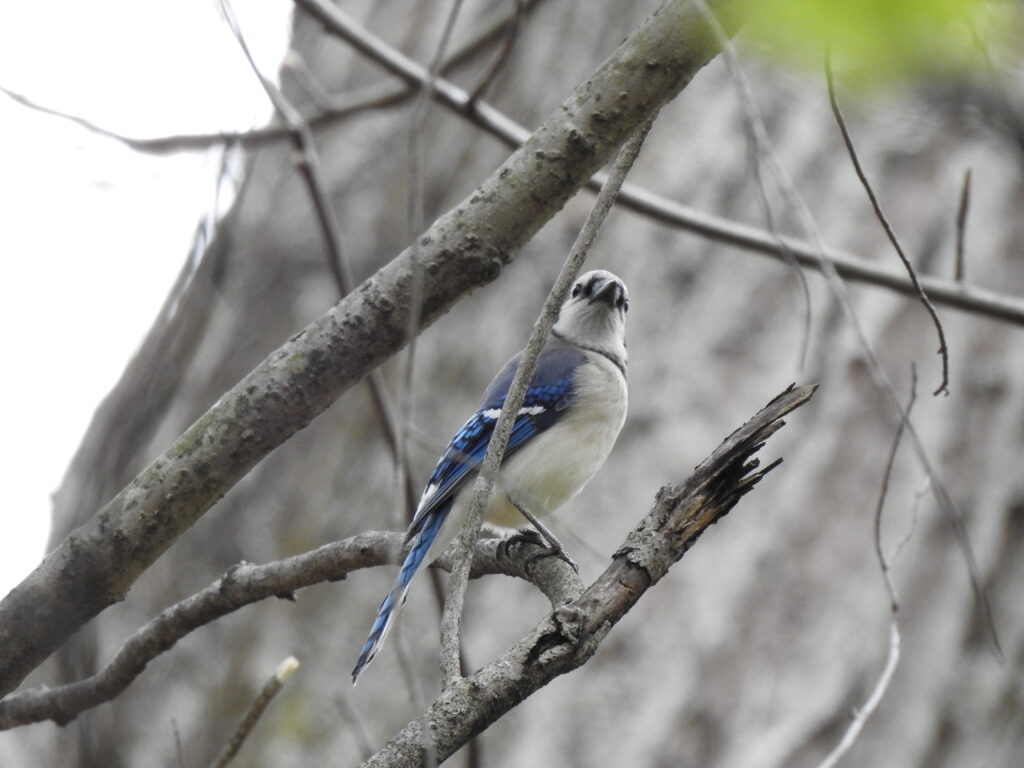
Observed in Nixon Park Nature Center, Pennsylvania, USA
Popular Searches About Blue Jay
Explore Blue Jay Guide
Explore More Wildlife

Support Encounters World
Help support wildlife photography and get behind the scenes discoveries on Patreon.