Northern Cardinal Diet Guide: What Northern Cardinals Eat in the Wild
Quick Facts
Diet Type: Omnivore
Main Food Sources: Seeds, fruits, insects, and berries
Feeding Time: Primarily morning and late afternoon
Foraging Method: Ground foraging, branch picking, and seed cracking
Seasonal Diet Changes: More insects during warmer months, more seeds and berries during winter
Predatory Adaptations: Strong cone-shaped beak for cracking tough food sources
Introduction to the Northern Cardinal’s Feeding Habits
The Northern Cardinal is a highly adaptable North American songbird with feeding habits that allow it to thrive in many different environments. Found throughout much of the eastern and central United States, southern Canada, and parts of Mexico, this species regularly takes advantage of both natural food sources and resources found near human activity. Its flexible diet is one reason it remains common across such a broad geographic range.
Northern Cardinals are frequently observed searching for food along woodland edges, gardens, parks, and dense shrub zones. Their feeding activity often becomes especially noticeable during early morning hours when birds move steadily between low vegetation and open ground. Bright plumage combined with active foraging behavior makes them easy to spot compared to more secretive songbirds.
Throughout the year, cardinals adjust their feeding routines according to seasonal conditions. Warm months bring access to a wider variety of fresh food sources, while colder periods force a stronger reliance on durable plant material and stored natural resources. This seasonal flexibility helps the species remain active year-round instead of migrating long distances.
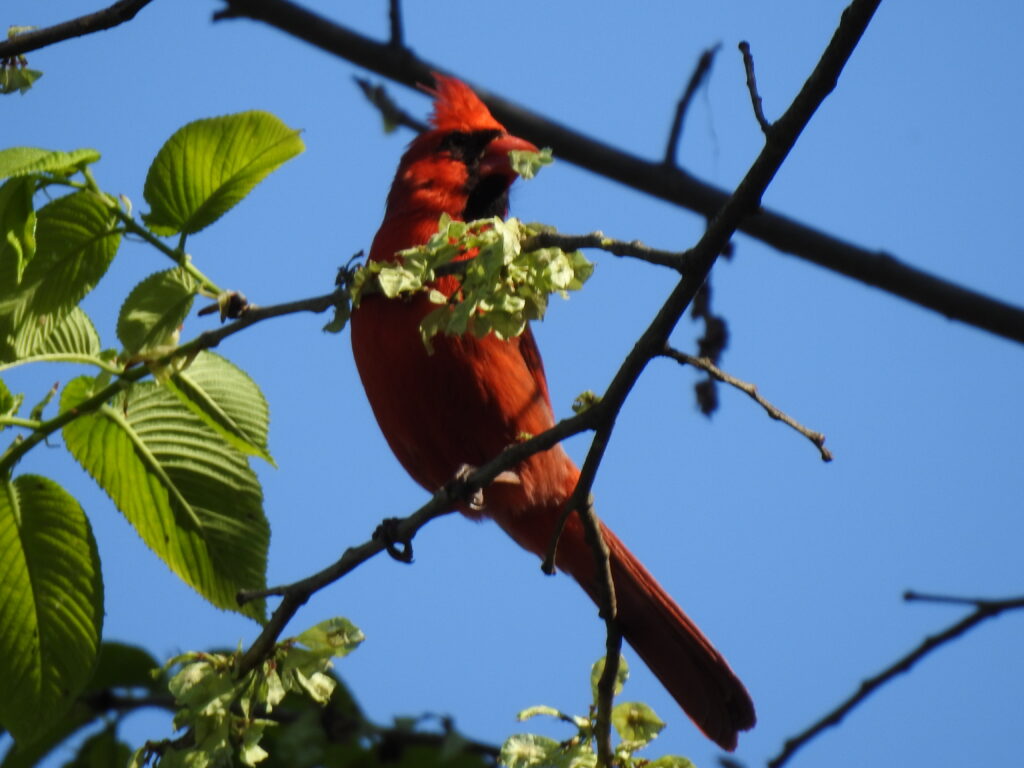
The bird’s thick orange-red beak immediately hints at its feeding capabilities. Unlike delicate insect-catching birds with narrow beaks, Northern Cardinals possess a strong, crushing bill designed for handling a wide variety of foods. This physical adaptation allows them to process tougher materials that many smaller birds cannot easily consume.
Northern Cardinal Diet Overview and Feeding Adaptability
Northern Cardinals are classified as omnivores, meaning they consume both plant and animal material depending on availability and seasonal conditions. Their diet remains highly flexible across different regions, allowing populations to survive in environments ranging from rural forests to suburban neighborhoods. This adaptability is one of the key reasons the species remains widespread throughout North America.
Compared to birds such as the Cedar Waxwing, which depend heavily on fruit during certain periods, Northern Cardinals maintain a more balanced feeding strategy throughout the year. They are capable of shifting between food categories without becoming strongly dependent on a single resource. This flexibility reduces the impact of seasonal shortages.
Cardinals often feed opportunistically, taking advantage of whatever resources are most available within their surroundings. In some regions, natural vegetation may provide most nutritional needs, while in suburban areas, bird feeders can become important supplemental food sources. Their willingness to use both wild and human-provided resources demonstrates remarkable dietary versatility.
Although adaptable, the species still shows strong preference toward foods that can be efficiently handled with its heavy beak. Their feeding structure is especially effective for cracking shells and breaking apart firm plant material. This allows cardinals to exploit food sources that smaller-beaked birds may struggle to access.
Diet composition can also vary depending on life stage and seasonal demands. Young cardinals require higher protein intake during development, while adults may rely more heavily on plant-based foods during colder months. These dietary shifts help support growth, feather maintenance, and long-term survival.
Northern Cardinals generally maintain consistent feeding activity throughout the day, though peak periods often occur during morning and late afternoon hours. Their routines are less frantic than some small songbirds, with individuals often feeding in controlled, deliberate patterns rather than nonstop rapid movement.
Overall, the Northern Cardinal’s feeding strategy resembles a versatile survival system rather than a narrow specialization. Much like a person capable of living on many different types of food rather than a strict diet, cardinals succeed because they can adapt their feeding habits to changing environmental conditions.

Natural Food Sources Northern Cardinals Consume in the Wild
Seeds form one of the most important components of the Northern Cardinal’s natural diet. Their strong beaks are especially effective for cracking open sunflower seeds, grass seeds, and various wild plant seeds found throughout their range. These foods provide dependable energy and remain available during much of the year.
Berries and small fruits are also heavily consumed, particularly during colder seasons when insect availability decreases. Wild grapes, dogwood berries, blackberry clusters, and sumac fruits commonly attract feeding cardinals. Bright berry-producing shrubs often become important winter food sources across snowy northern landscapes.
During spring and summer, insects play a larger role in the species’ diet. Beetles, caterpillars, grasshoppers, ants, and other small invertebrates provide valuable protein, especially for developing young birds. Soft-bodied insects are particularly important during nesting periods because they support rapid growth and feather development.
Northern Cardinals occasionally consume flower buds and tender plant material as well. Fresh vegetation may supplement their diet when other resources fluctuate seasonally. These plant-based additions help diversify nutrient intake across changing environmental conditions.
Juvenile cardinals often receive different foods than adults during early development stages. Protein-rich insects become especially important while young birds grow rapidly and strengthen their muscles and feathers. Adult birds may spend significant time gathering softer prey items specifically for offspring.
Food availability can vary dramatically between seasons and regions. Southern populations may continue accessing insects longer into the year, while northern birds shift more heavily toward seeds and berries during winter. This regional flexibility allows the species to remain successful across diverse climates.
One commonly consumed food source is sunflower seed, which demonstrates the effectiveness of the cardinal’s heavy beak. The bird can grip and crack hard shells with impressive precision, quickly separating edible portions from protective outer layers. This ability gives cardinals access to calorie-rich foods that many smaller birds process less efficiently.
Northern Cardinal Feeding Behavior and Survival Strategies
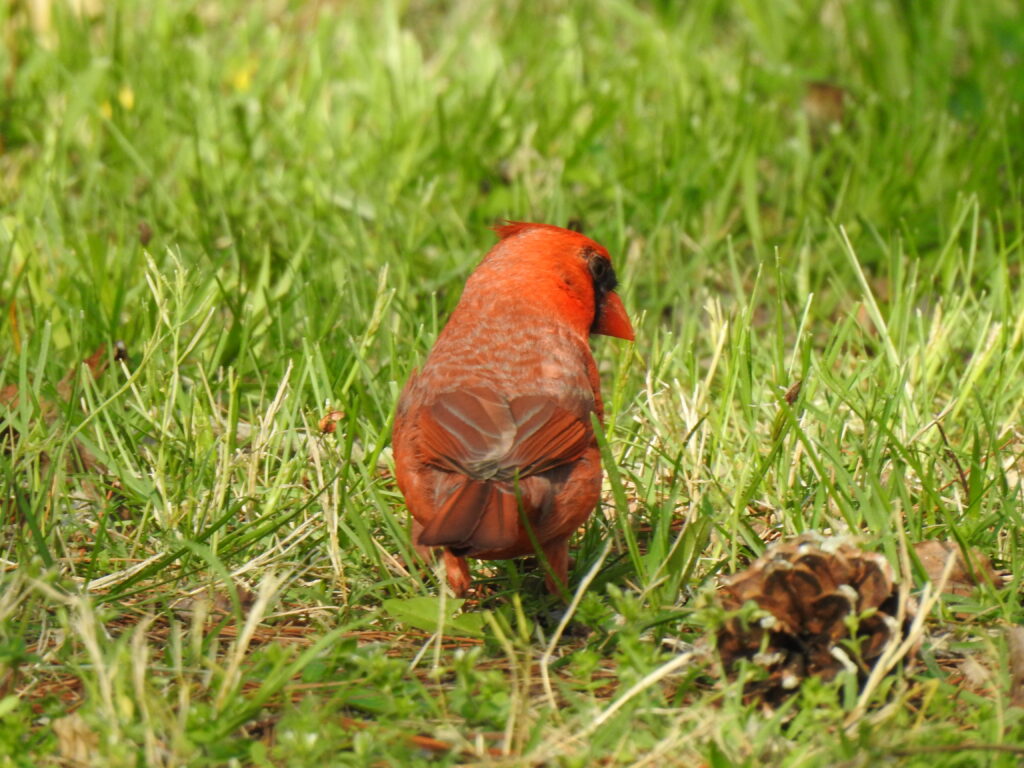
Northern Cardinals forage using a combination of ground feeding, branch picking, and short-distance searching flights. They commonly hop across the ground while scanning for food before quickly retreating into nearby cover if danger appears. This cautious but efficient feeding style helps balance food gathering with predator awareness.
The species relies heavily on visual searching while foraging. Cardinals frequently pause to examine leaves, branches, or open ground before selecting food items. Their feeding behavior often appears methodical rather than frantic, with deliberate movements replacing constant rapid activity.
Their powerful beaks serve as a major survival adaptation during feeding. Hard seeds and thick outer shells that resist smaller birds can often be cracked apart by a cardinal within seconds. The beak functions almost like a compact nutcracker, allowing efficient access to tough food sources.
Northern Cardinals also adjust feeding behavior according to competition levels. Around crowded feeding areas, individuals may become more defensive or selective about feeding positions. Males especially can display territorial behavior when valuable food resources are concentrated in one location.
When resources become limited during winter, cardinals often increase reliance on sheltered feeding areas. Dense shrubs, evergreen cover, and protected ground zones allow safer access to remaining food sources during snow or freezing conditions. These sheltered areas help reduce exposure while conserving energy.
The species frequently uses quick retreat behavior while feeding in open areas. A cardinal may descend to the ground briefly, collect food rapidly, and immediately return to elevated cover. This repeated pattern minimizes vulnerability to predators while maintaining efficient foraging.
Cardinals are also highly capable of remembering reliable feeding locations. Birds returning repeatedly to productive berry shrubs or backyard feeders demonstrate strong environmental familiarity. This consistency reduces wasted energy spent searching for new food sources unnecessarily.
The Northern Cardinal’s feeding strategy ultimately combines caution, adaptability, and physical efficiency. Its ability to locate varied foods, process difficult materials, and react quickly to danger allows the species to remain successful across changing seasons and diverse landscapes throughout North America.

Popular Searches About Northern Cardinals
Explore Northern Cardinal Guide
Explore More Wildlife

Support Encounters World
Help support wildlife photography and get behind the scenes discoveries on Patreon.