
Yellow-Banded Millipede Defense Mechanisms: Protection, Warning Colors, and Survival Strategies
Quick Facts
Primary Defense: Chemical Secretions
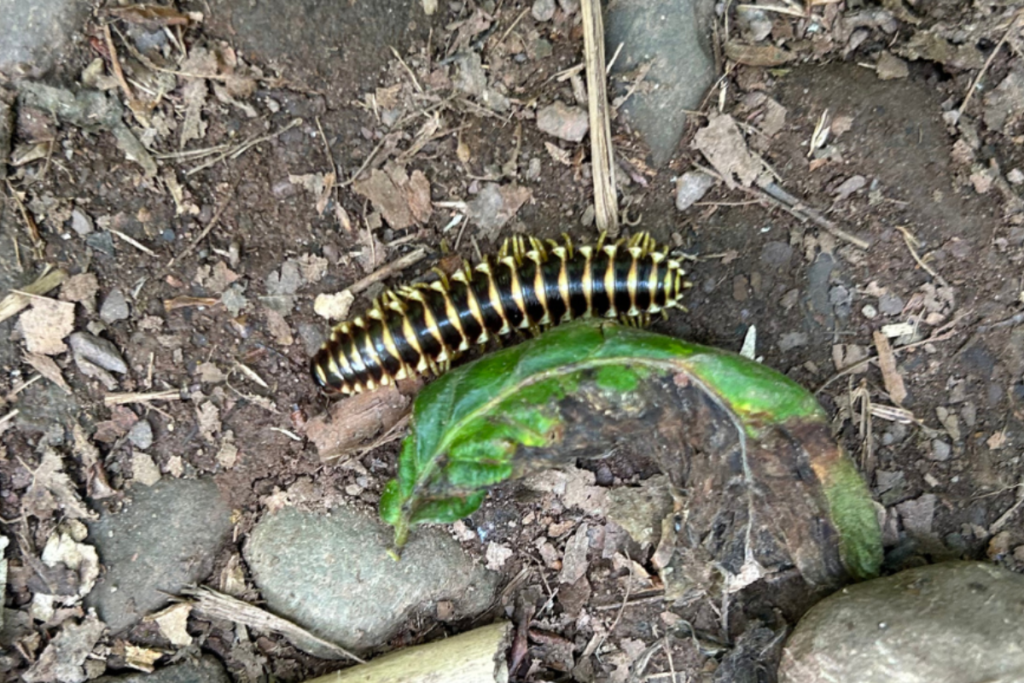
Warning Coloration: Bright Yellow and Black Bands
Can It Bite?: No
Can It Sting?: No
Predator Deterrent: Cyanide-Based Defensive Compounds
Defense Style: Passive Protection and Predator Avoidance
Yellow-Banded Millipede Defense Overview
The Yellow-Banded Millipede (Apheloria sp.) possesses one of the most effective defensive systems found among woodland invertebrates. Rather than relying on speed, strength, or aggressive behavior, this species survives through a combination of warning coloration and chemical protection. These defenses allow it to discourage predators before a physical attack even begins.
Across eastern North America, the Yellow-Banded Millipede encounters a variety of potential threats, including birds, reptiles, amphibians, and small mammals. Despite lacking claws, venom, or powerful jaws, it remains remarkably successful within its environment. Its survival strategy demonstrates that defense does not always require direct confrontation.
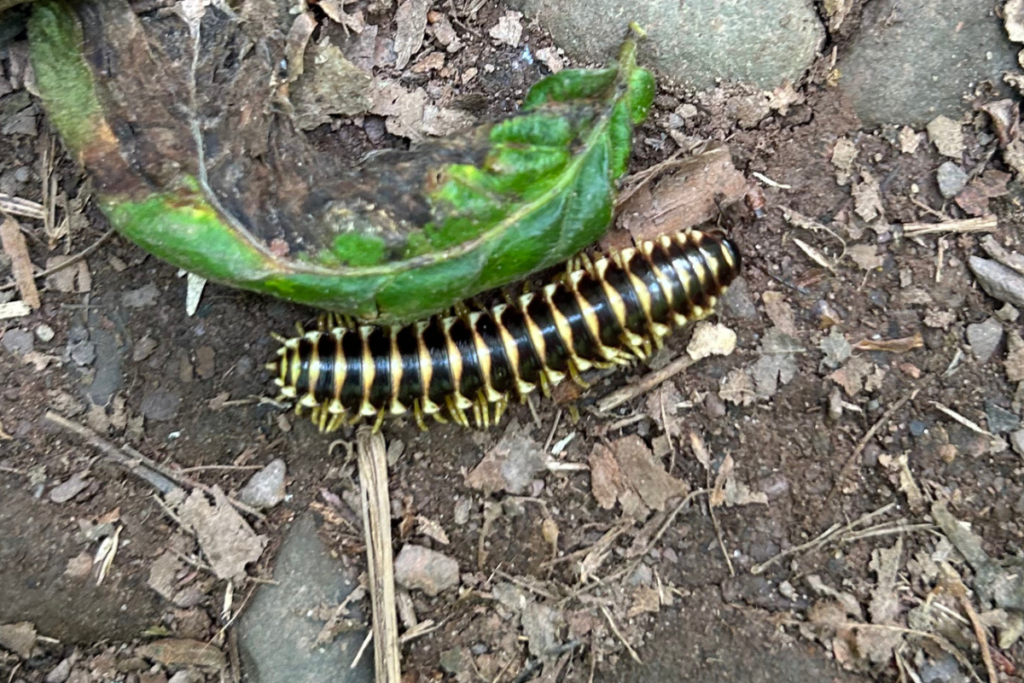
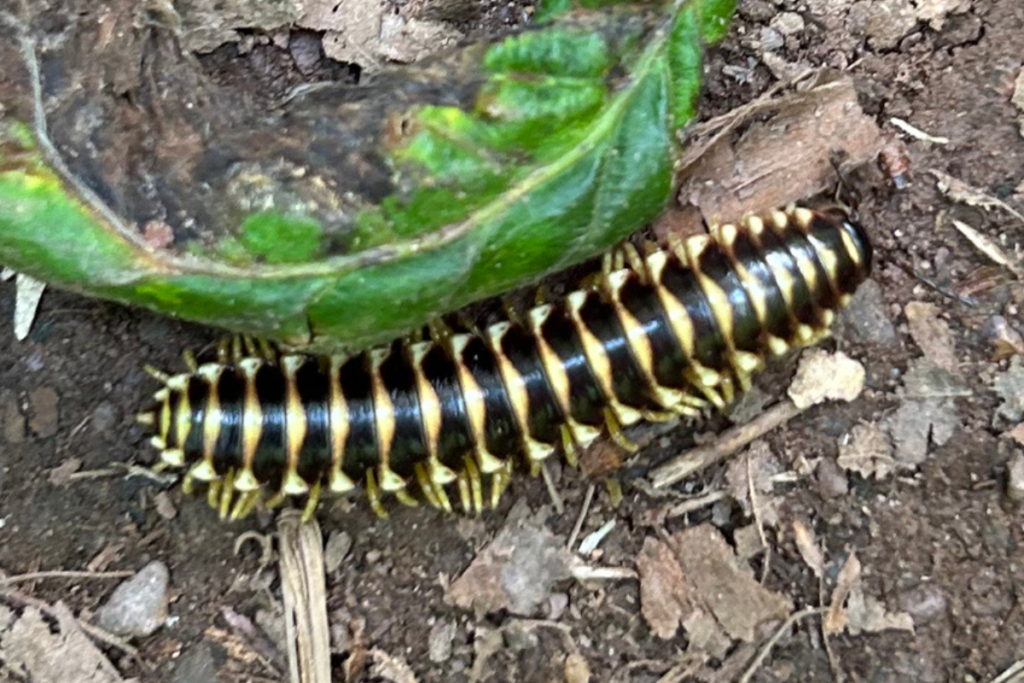
One of the most noticeable features of this species is its bold black-and-yellow coloration. In nature, bright colors often communicate important information, and the Yellow-Banded Millipede is no exception. Its appearance serves as an advertisement that warns predators about the unpleasant experience that may follow an attempted attack.
This defensive approach can be compared to a highly visible caution sign. The sign itself causes no harm, but it communicates enough information to encourage avoidance. Similarly, the millipede’s striking coloration helps many predators recognize that it is not an ideal target, reducing the likelihood of dangerous encounters before they occur.
Yellow-Banded Millipede Warning Coloration and Visual Defenses
The bright yellow bands covering the body of the Yellow-Banded Millipede represent one of its most important protective adaptations. These markings contrast sharply against the dark body, making the animal highly visible even among leaf litter and woodland debris. Instead of attempting to blend into its surroundings, the species benefits from being noticed.
This strategy is known as warning coloration, or aposematism. Numerous animals throughout the world use bright colors to signal that they possess defenses capable of discouraging predators. Poison dart frogs, monarch butterflies, and certain beetles all rely on similar visual warnings to communicate danger or unpleasantness.
For predators, these warning patterns can become valuable learning tools. A bird that attempts to eat a chemically defended millipede may quickly discover that the experience is unpleasant. After such an encounter, the predator is more likely to avoid similarly colored animals in the future, benefiting not only the individual millipede but the species as a whole.
The effectiveness of warning coloration increases over time as predators gain experience. Young predators may initially investigate unfamiliar prey, but repeated negative encounters reinforce avoidance behavior. This creates a protective advantage that extends across generations of millipedes living within the same ecosystem.
Visual defenses require very little energy once they have evolved. Unlike running away or physically fighting, warning coloration works continuously without requiring active effort. The Yellow-Banded Millipede carries this protection wherever it goes, making it one of the most reliable components of its overall defense system.
Yellow-Banded Millipede Chemical Defense System
While warning coloration helps prevent attacks, chemical defenses provide protection when predators ignore those visual signals. Specialized glands located along the body produce defensive compounds that can be released when the millipede feels threatened. These secretions form the species’ primary line of active defense.
Among the chemicals produced are cyanide-related compounds, which are effective at discouraging many predators. The quantities released are generally small, but they create unpleasant tastes, odors, and sensations that make the millipede an undesirable meal. Most predators quickly learn that attacking such prey is not worth the effort.
The release of defensive chemicals is not random. Instead, the millipede activates these defenses when danger becomes significant enough to justify the response. This allows the animal to conserve resources while maintaining protection against genuine threats.
A useful comparison is the defensive spray produced by a skunk. Although the chemicals involved are different, both animals rely on unpleasant secretions rather than physical combat. The objective is not to injure the attacker but to create an experience that encourages immediate retreat and future avoidance.
Chemical defense is particularly valuable because it remains effective against a wide variety of predators. Birds, reptiles, amphibians, and small mammals can all be influenced by unpleasant tastes and odors. This broad effectiveness helps explain why the strategy has remained successful throughout the species’ evolutionary history.
Yellow-Banded Millipede Protective Behaviors and Predator Responses
The Yellow-Banded Millipede supplements its visual and chemical defenses with a variety of protective behaviors. When confronted by danger, it often reduces movement or changes posture rather than attempting a rapid escape. These responses help minimize attention while preparing the animal for further defensive action if needed.
One common reaction involves curling or partially coiling the body. This posture helps protect softer body regions while exposing the harder exterior surface. By reducing vulnerable areas, the millipede improves its chances of surviving an encounter with a predator.
Unlike centipedes, which may rely on speed and venom for protection, Yellow-Banded Millipedes take a far less aggressive approach. They do not chase threats, attack predators, or actively engage in combat. Their survival depends on discouraging attacks rather than winning physical confrontations.
A practical example can be observed when a bird investigates a millipede crossing a forest trail. The bright coloration may cause hesitation before any contact occurs. If the bird proceeds and encounters the defensive chemicals, the unpleasant experience often results in immediate rejection of the millipede and increased caution toward similar prey in the future.
These layered defenses work together to create a highly effective protection system. Warning coloration reduces the number of attacks, chemical secretions discourage predators that ignore the warning, and protective behaviors provide an additional level of security during dangerous situations. The result is a survival strategy that allows the Yellow-Banded Millipede to thrive without relying on speed, strength, or aggression.
Through a combination of visual signals, chemical protection, and instinctive defensive responses, the Yellow-Banded Millipede has developed one of the most successful passive defense systems found among eastern North American arthropods. These adaptations make it a remarkable example of how survival can be achieved through deterrence rather than direct conflict.
Popular Searches About Banded Millipedes
Explore Banded Millipede Guide
Explore More Wildlife

Support Encounters World
Help support wildlife photography and get behind the scenes discoveries on Patreon.