
Yellow-Banded Millipede vs Centipede: Key Differences, Identification, Behavior, and Safety Guide
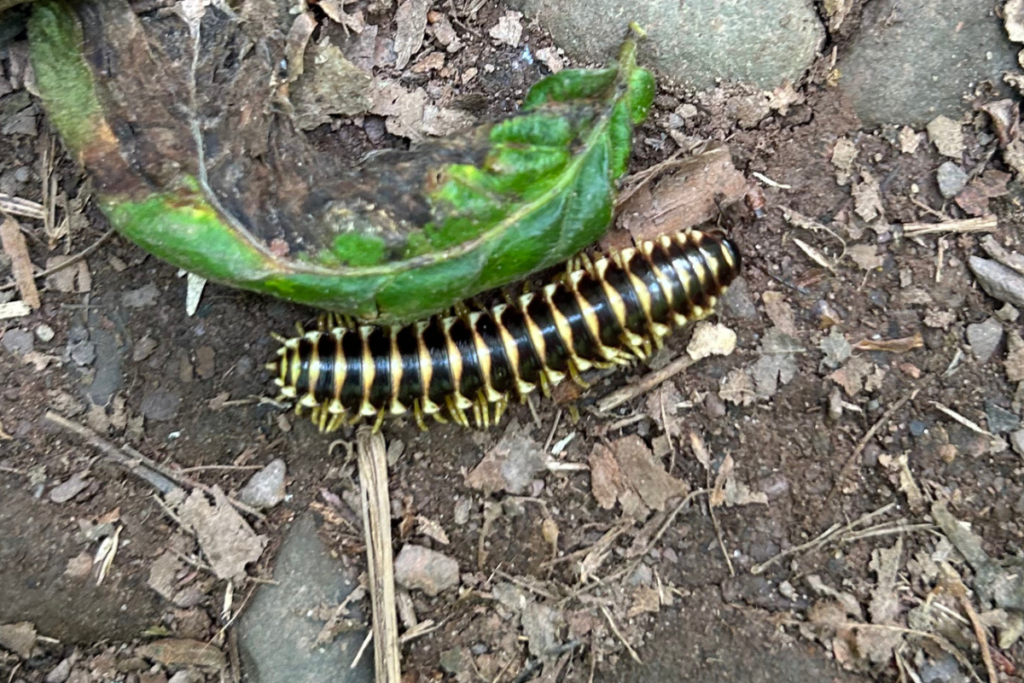
Quick Facts
Yellow-Banded Millipede Classification: Diplopoda
Centipede Classification: Chilopoda
Main Difference: Millipedes are decomposers; centipedes are predators
Leg Arrangement: Millipedes have two pairs of legs per body segment; centipedes have one pair
Movement Style: Millipedes move steadily; centipedes move quickly
Defense Strategy: Millipedes use chemical defenses; centipedes use venom and speed
Yellow-Banded Millipede vs Centipede Identification Overview
Many people encounter a long-bodied arthropod in the woods and immediately wonder whether they have found a millipede or a centipede. At first glance, both animals share an elongated shape, numerous legs, and a preference for ground-level environments. These similarities often lead to confusion, especially among casual observers who only see the animal briefly before it disappears beneath leaves or debris.
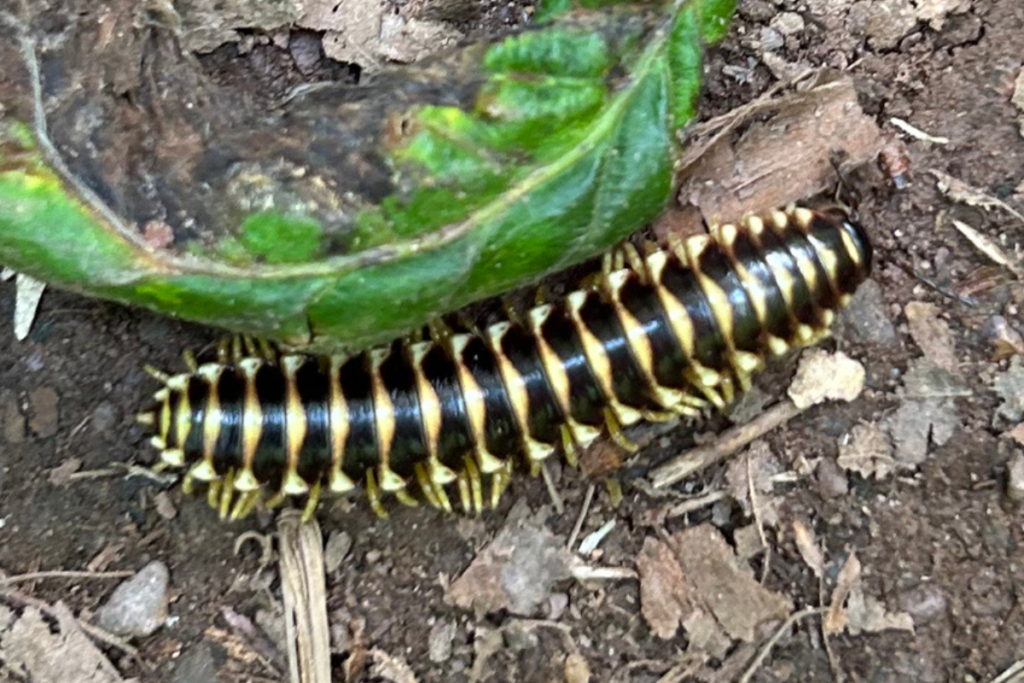
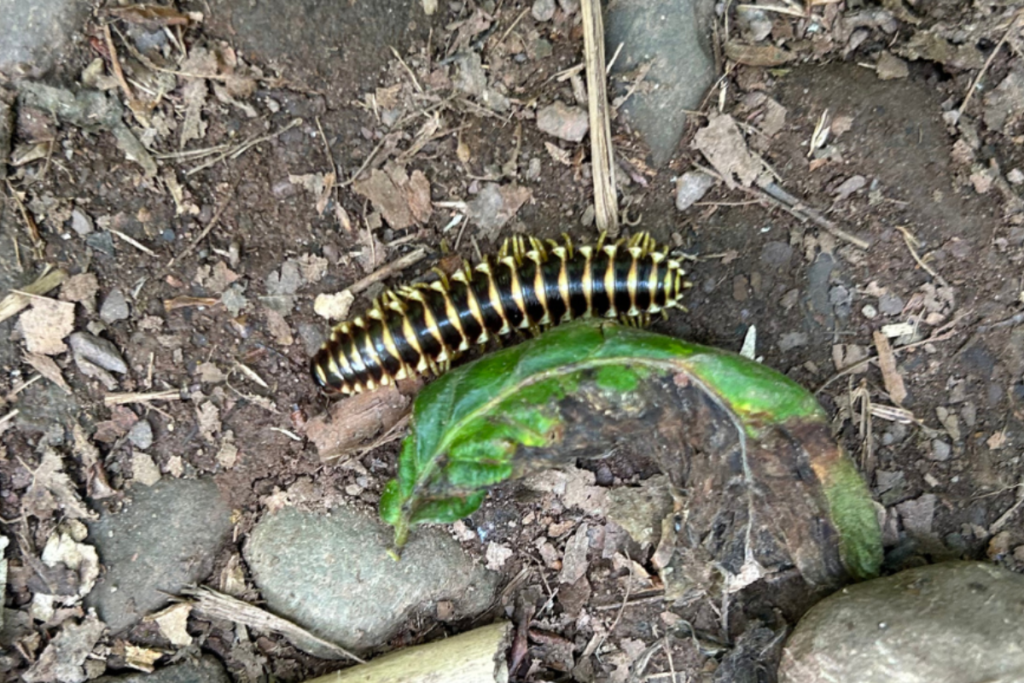
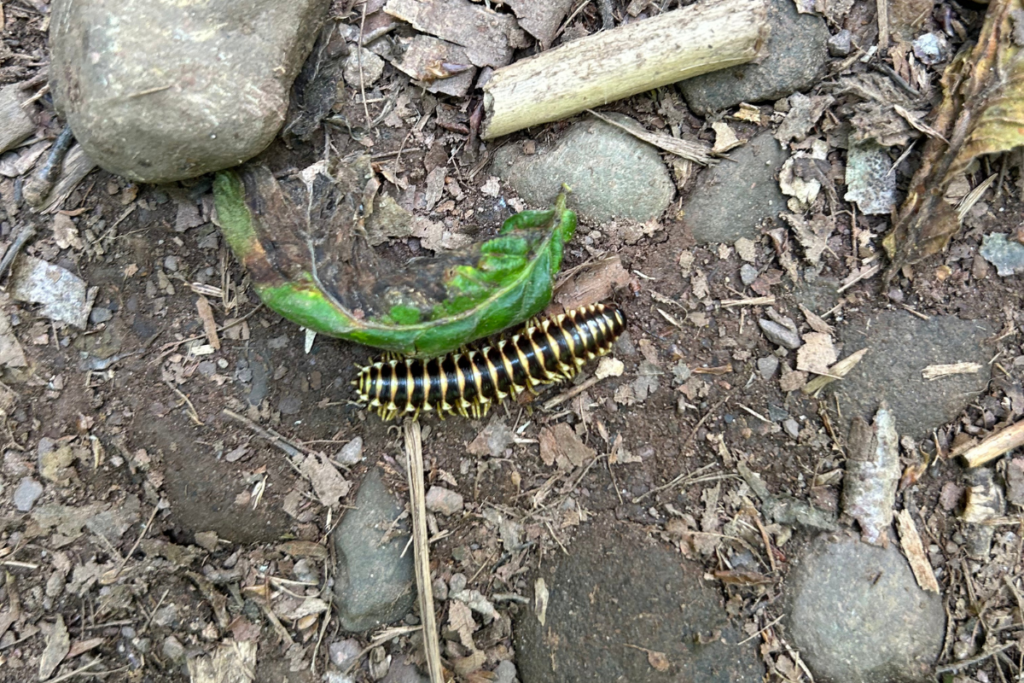
The Yellow-Banded Millipede (Apheloria sp.) is one of the most recognizable millipedes in eastern North America. Its glossy black body is decorated with bright yellow bands that create a striking warning pattern. Centipedes, by comparison, vary widely in appearance, but many species possess flatter bodies, longer legs, and a more streamlined shape designed for rapid movement.
A naturalist walking through a forest after rain may encounter either animal crossing a trail. The first impression is often the number of legs, yet closer observation quickly reveals major differences. Body structure, movement style, coloration, and overall appearance provide reliable clues that make identification much easier.
Understanding these distinctions is important because the two groups occupy very different ecological roles. While millipedes contribute to decomposition and nutrient recycling, centipedes function as active predators within terrestrial ecosystems. Learning to separate them correctly helps observers better understand the wildlife they encounter and reduces unnecessary concern about harmless species.
Yellow-Banded Millipede and Centipede Physical Differences
The easiest way to distinguish a Yellow-Banded Millipede from a centipede is by examining body shape. Yellow-Banded Millipedes possess a broad, segmented body with plate-like extensions along the sides. This gives them a sturdy and somewhat armored appearance when viewed from above.
Centipedes typically have a flatter and narrower profile. Their bodies appear more streamlined, with long legs extending outward from the sides. Many species look almost athletic compared to the heavier build of a millipede, reflecting their role as active hunters rather than decomposers.
Leg arrangement provides another reliable identification feature. Millipedes have two pairs of legs attached to most body segments, creating a dense curtain of legs beneath the body. Centipedes possess only one pair of legs per segment, resulting in a more open and evenly spaced appearance. This difference is often visible even without close examination.
Coloration can also help separate the two groups. Yellow-Banded Millipedes display highly visible black-and-yellow warning markings that remain consistent across much of their range. Centipedes vary considerably in color depending on species, ranging from brown and reddish tones to bright oranges and yellows. Unlike the orderly pattern of the millipede, centipede coloration often appears less uniform and more variable.
Yellow-Banded Millipede vs Centipede Movement and Activity Patterns
Movement is often the quickest way to tell these animals apart in the field. A Yellow-Banded Millipede travels with a smooth, coordinated motion created by the synchronized movement of dozens of legs. Watching one cross the forest floor resembles observing a slow-moving conveyor belt advancing steadily toward a destination.
Centipedes move very differently. Their longer legs allow rapid acceleration, quick turns, and sudden directional changes. Some species can dart beneath cover so quickly that they seem to vanish almost instantly after being spotted.
Daily activity patterns also show important differences. Yellow-Banded Millipedes are frequently associated with damp conditions and are often most visible during nighttime hours or after rainfall. Their activity tends to be deliberate rather than rushed, with movement focused on steady progress instead of speed.
Centipedes often display a much more energetic lifestyle. Their movements can resemble those of a miniature predator patrolling for opportunities, constantly adjusting direction and investigating their surroundings. While both animals may be encountered beneath logs or leaf litter, the pace and style of movement reveal dramatically different lifestyles.
Energy use reflects these contrasting strategies. The millipede conserves energy through consistent and measured movement, while the centipede invests energy into speed, agility, and rapid responses. Observing how an animal moves is often enough to identify it correctly even before body details become visible.
Yellow-Banded Millipede and Centipede Defense and Survival Strategies
The most significant difference between Yellow-Banded Millipedes and centipedes involves how they respond to danger. Yellow-Banded Millipedes rely primarily on defensive strategies designed to discourage predators before an attack occurs. Their bright coloration acts as a warning signal that advertises the presence of chemical defenses.
When threatened, a Yellow-Banded Millipede may curl its body, remain motionless, or release defensive compounds from specialized glands. These chemicals can produce unpleasant tastes or odors that discourage predators from continuing an attack. The strategy focuses on deterrence rather than confrontation.
Centipedes use a much more active approach to survival. Equipped with venomous front appendages called forcipules, they can subdue prey and defend themselves when necessary. Many species also rely on speed as a primary survival tool, escaping danger before direct contact occurs. This combination of mobility and venom makes centipedes far more aggressive in appearance than millipedes.
Human interactions further highlight these differences. Yellow-Banded Millipedes are generally harmless and do not bite. Their defensive chemicals may cause mild irritation if handled, but they pose little risk when left undisturbed. Centipedes, on the other hand, can bite when threatened, and larger species may deliver a painful sting that resembles a bee or wasp sting.
A simple field example illustrates the contrast. If a hiker accidentally disturbs a Yellow-Banded Millipede, the animal is likely to slow down, curl up, or rely on its chemical defenses. A centipede encountering the same situation often reacts by sprinting away or preparing to defend itself if escape is not possible. These opposing responses reflect the fundamental difference between a decomposer built for protection and a predator built for action.
For most observers, the safest approach is simple appreciation from a respectful distance. Once the key differences become familiar, distinguishing a Yellow-Banded Millipede from a centipede becomes straightforward, allowing both animals to be recognized for their unique roles within nature.
Popular Searches About Banded Millipedes
Explore Banded Millipede Guide
Explore More Wildlife

Support Encounters World
Help support wildlife photography and get behind the scenes discoveries on Patreon.