
Common Plumose Anemone Life Cycle Guide: Growth Stages, Development, and Lifespan
Quick Facts
Life Cycle Type: Egg to Larva to Juvenile to Adult
Reproductive Method: Sexual and Asexual Reproduction
Larval Stage: Free-Swimming Planula Larva
Settlement Method: Attachment to Hard Surfaces
Growth Pattern: Gradual Development into Mature Anemone
Average Lifespan: Several Decades
Introduction to the Common Plumose Anemone Life Cycle
The Common Plumose Anemone (Metridium senile) is a marine invertebrate found throughout temperate coastal waters of the North Atlantic and North Pacific Oceans. Although adults appear stationary and plant-like, their life cycle involves several distinct developmental stages that occur over many years. Each stage contributes to the species’ ability to establish populations across a broad geographic range.
From microscopic beginnings to large feathery adults, the transformation of a Common Plumose Anemone is remarkable. The species experiences dramatic physical changes as it progresses through development. These changes allow individuals to transition from drifting marine larvae to long-lived coastal residents.
Like many marine invertebrates, early life occurs within the water column. Young individuals are carried by ocean currents before eventually settling and developing into recognizable anemones. This dispersal stage helps connect populations separated by large distances.
The life cycle is further enhanced by the species’ ability to reproduce through more than one method. Sexual reproduction creates genetic diversity, while asexual reproduction allows local expansion. Together, these processes support one of the most successful sea anemone species found in temperate marine ecosystems.
Common Plumose Anemone Egg and Larval Development
The life cycle begins with fertilized eggs produced through sexual reproduction. Following spawning, fertilization occurs externally within the surrounding water. These microscopic embryos immediately begin a series of developmental changes that prepare them for life in the marine environment.
As embryonic development progresses, the future anemone remains extremely small. Internal structures gradually form while the organism continues growing. Although invisible to casual observers, this stage contains the foundation for every feature the adult will eventually possess.
The embryo eventually develops into a free-swimming larva known as a planula. Unlike adult anemones that remain attached to a surface, planula larvae move through the water column and rely on ocean currents for transportation. This period serves as the species’ primary dispersal stage.
Ocean currents may carry larvae considerable distances before settlement occurs. In some cases, individuals travel far from their place of origin. This movement resembles the way seeds are distributed by wind, allowing the species to colonize suitable environments across large regions.
The larval stage represents one of the most vulnerable periods in the life cycle. Predation, environmental conditions, and competition all influence survival. Despite these challenges, enough larvae successfully complete development to maintain healthy populations throughout the species’ range.
Common Plumose Anemone Juvenile Growth and Settlement
Eventually, the developing larva encounters a suitable surface and settles from the water column. This event marks one of the most significant transitions in the life cycle. The animal shifts from a drifting existence to a permanently attached lifestyle.
After settlement, the young anemone begins transforming into a juvenile. Early tentacles develop around the mouth region, and the body column becomes increasingly defined. Although still tiny, the individual now resembles a miniature version of the adult form.
Growth occurs gradually over time. The body elongates, additional tentacles form, and overall size increases. At this stage, the species begins developing the feathery appearance that eventually becomes its most recognizable characteristic.
Juveniles often differ noticeably from mature adults. Tentacle crowns are less developed, body proportions may be smaller, and overall appearance appears simpler. As development continues, these differences become less pronounced.
The juvenile stage functions as an important bridge between larval and adult life. During this period, individuals establish themselves within marine communities and continue building the structures necessary for long-term survival. Successful growth during this phase determines whether the anemone ultimately reaches maturity.
Common Plumose Anemone Adult Stage and Lifespan
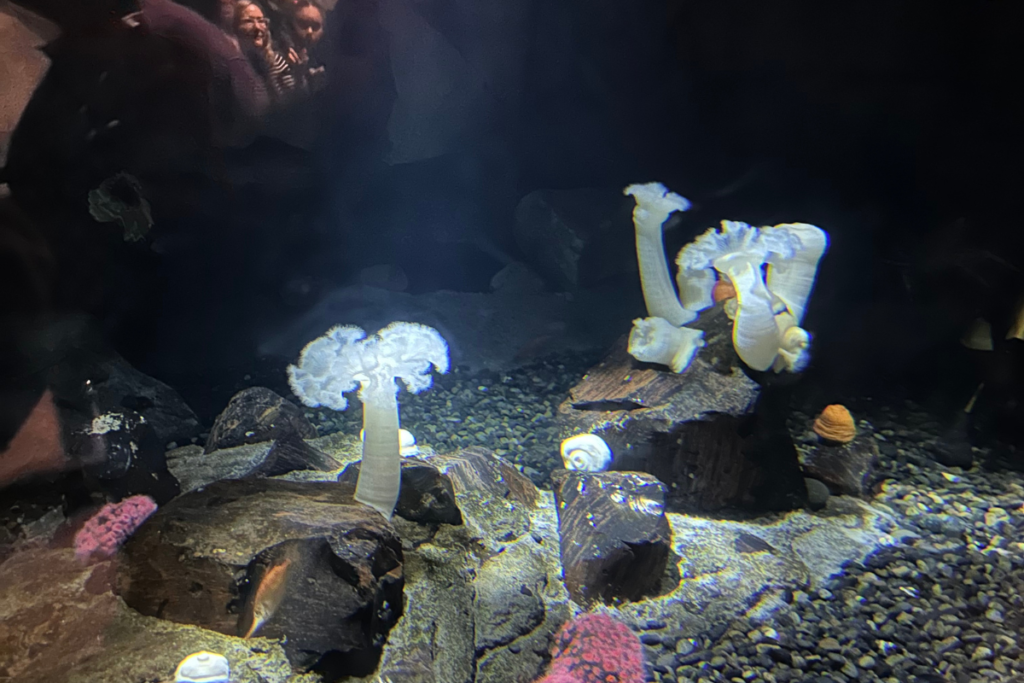
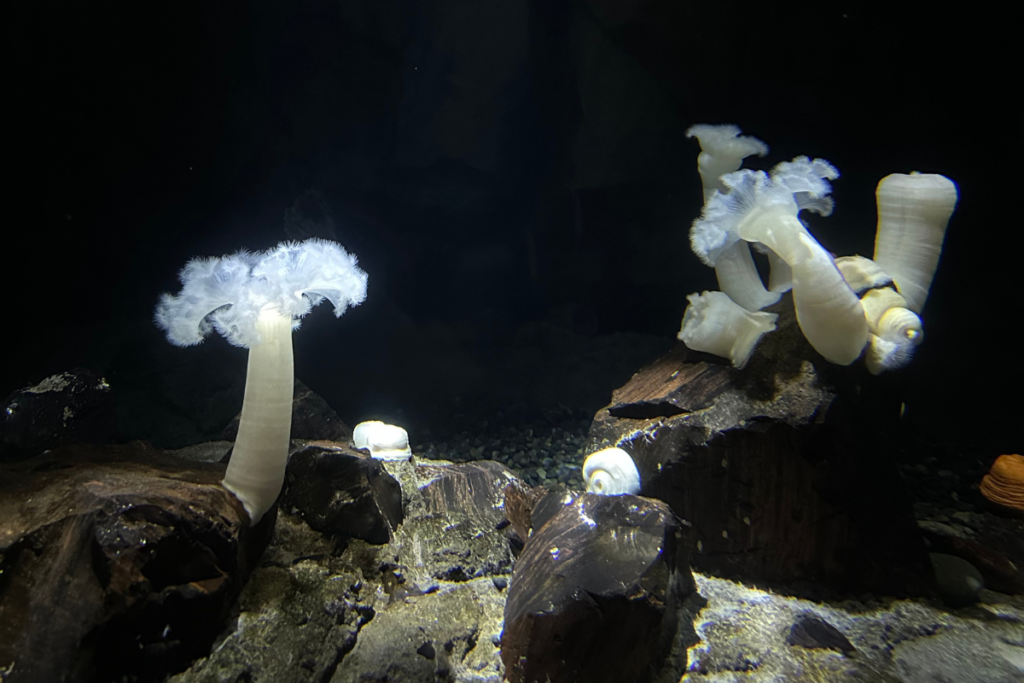
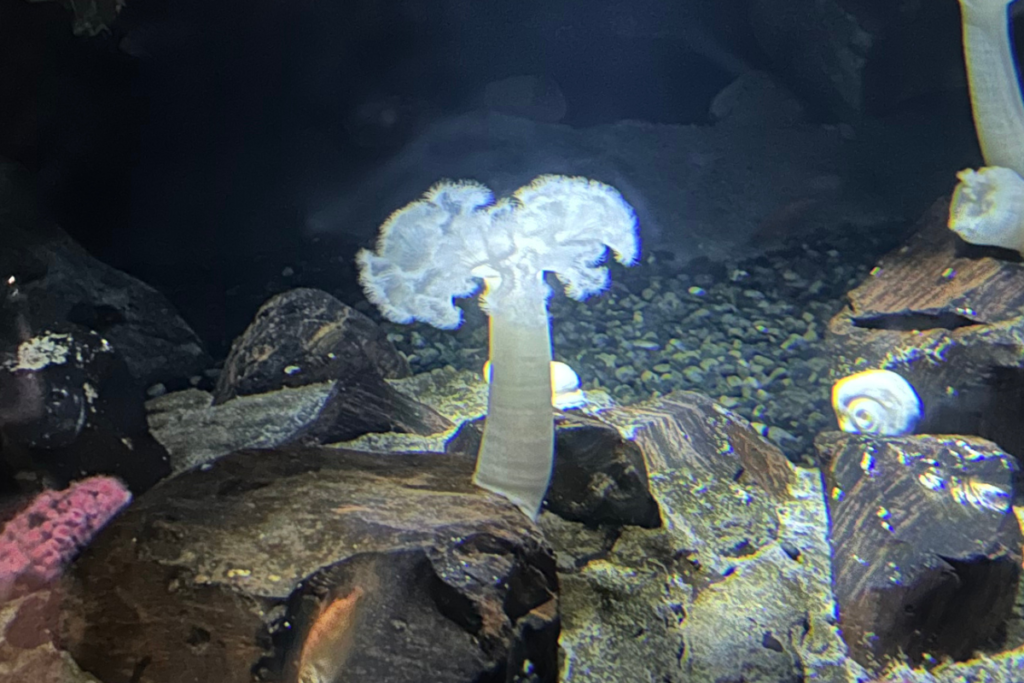
The adult stage represents the longest portion of the Common Plumose Anemone’s life cycle. Fully developed individuals possess the characteristic tall column and dense crown of feathery tentacles that define the species. By this point, growth has produced the recognizable appearance observed by divers and marine enthusiasts.
Mature anemones may remain attached to the same surface for many years. Unlike animals that migrate or relocate regularly, adults typically spend extended periods occupying a single location. This stability allows colonies to become established on rocks, pilings, and other submerged structures.
As adults age, they continue contributing to future generations through reproduction. Both sexual and asexual reproductive methods remain important during this stage. These processes ensure that populations persist and expand throughout suitable coastal environments.
One of the most impressive aspects of the Common Plumose Anemone is its longevity. Individuals may live for decades under favorable conditions, making them among the longer-lived invertebrates inhabiting temperate marine ecosystems. This extended lifespan provides numerous opportunities for growth and reproduction.
The life cycle ultimately comes full circle when mature adults produce the next generation of offspring. Eggs develop into larvae, larvae settle into juveniles, and juveniles mature into reproductive adults. Through this continuous cycle of development, dispersal, growth, and reproduction, the Common Plumose Anemone maintains thriving populations across much of the Northern Hemisphere and remains one of the most recognizable sea anemones in coastal waters.
Popular Searches About Plumose Anemones
Explore Plumose Anemone Guide
Explore More Exhibits

Support Encounters World
Help support wildlife photography and get behind the scenes discoveries on Patreon.