
Yellow-Banded Millipede Identification Guide: How to Identify a Yellow-Banded Millipede
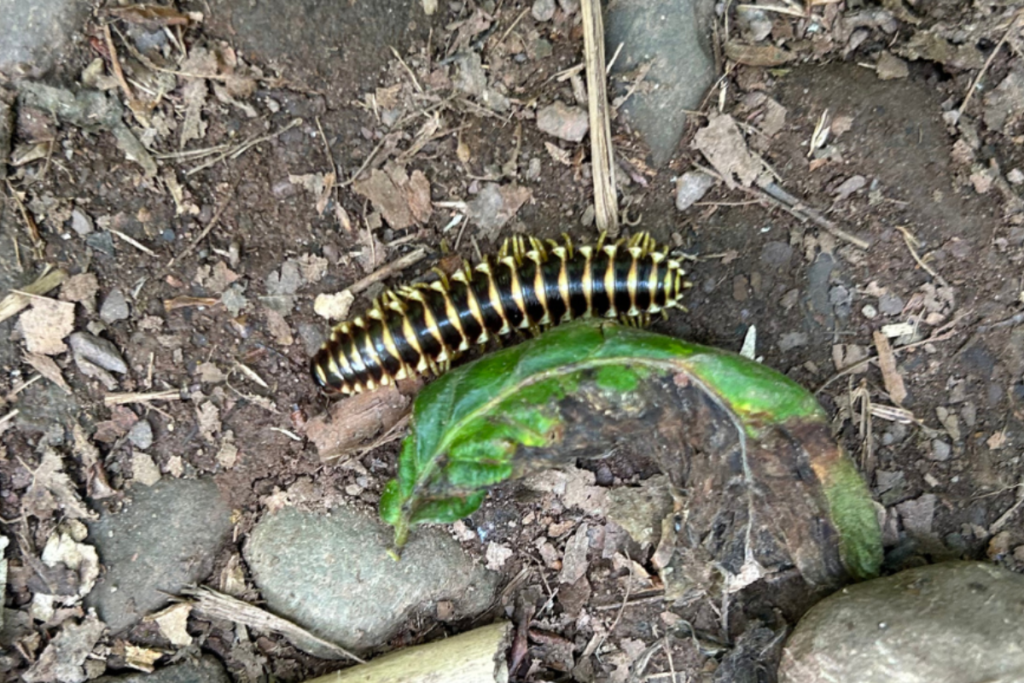
Quick Facts
Scientific Name: Apheloria sp.
Common Name: Yellow-Banded Millipede
Identification Difficulty: Easy to Moderate
Primary Colors: Black and Yellow
Average Length: 2–4 Inches (5–10 cm)
Most Distinctive Feature: Bright yellow bands on a flattened black body
Yellow-Banded Millipede Identification Overview
The Yellow-Banded Millipede (Apheloria sp.) is one of the easiest millipedes in eastern North America to recognize once its key features are understood. Its bold black-and-yellow coloration immediately separates it from many other forest-floor invertebrates. Even individuals with little experience identifying arthropods often notice that this species looks very different from the brown or dark-colored millipedes commonly found in gardens and woodlands.
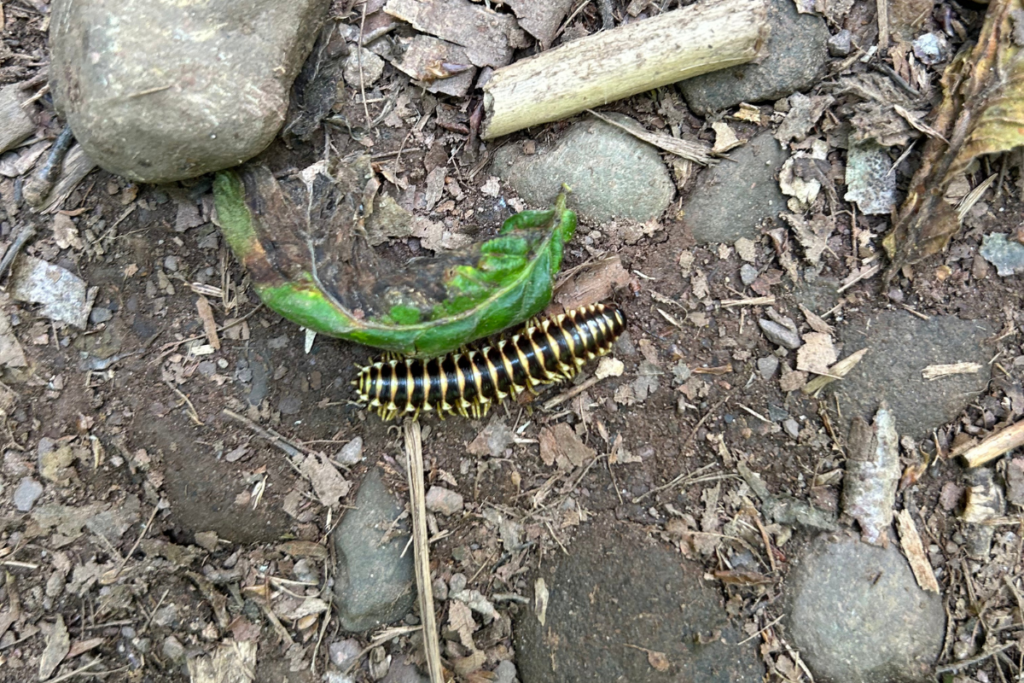
Throughout its range, the Yellow-Banded Millipede is most often encountered moving across leaf litter, fallen logs, or shaded trails. A brief observation is usually enough to recognize its distinctive appearance. The combination of bright markings and a flattened body shape creates a visual profile that stands out against natural surroundings.
Many first-time observers mistake millipedes for centipedes because both groups possess numerous legs and elongated bodies. While this confusion is understandable, several characteristics quickly distinguish the Yellow-Banded Millipede from its lookalikes. Body structure, coloration, and movement all provide useful clues for accurate identification.
Successful identification becomes easier when multiple features are considered together. Rather than relying on color alone, observers should examine body shape, segment structure, leg arrangement, and overall appearance. Looking at the complete animal provides a far more reliable identification than focusing on a single characteristic.
Yellow-Banded Millipede Coloration and Body Structure
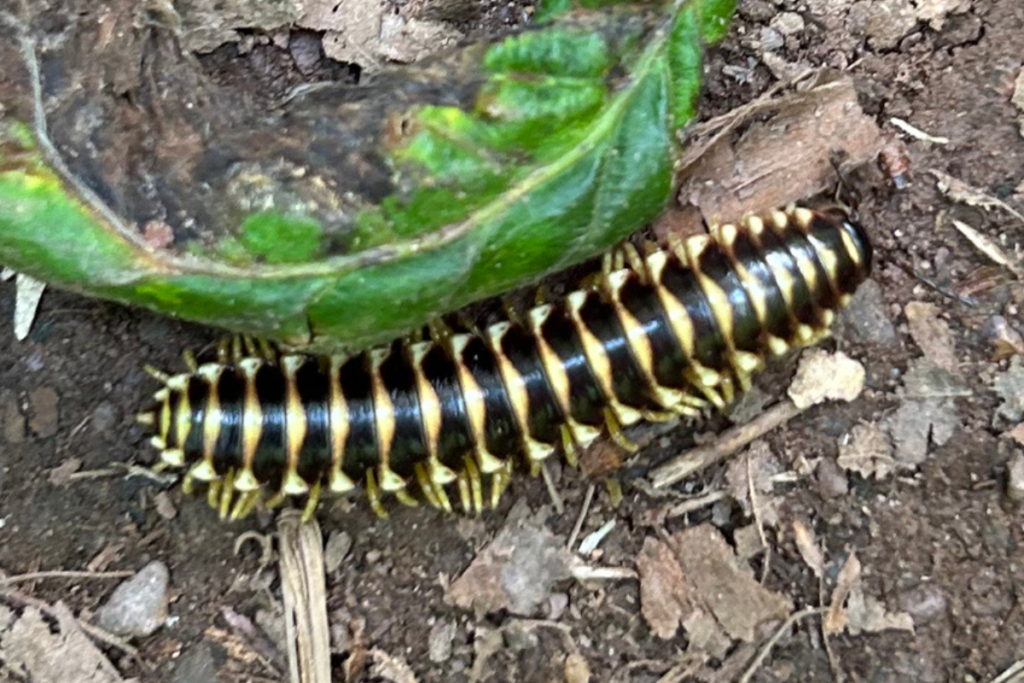
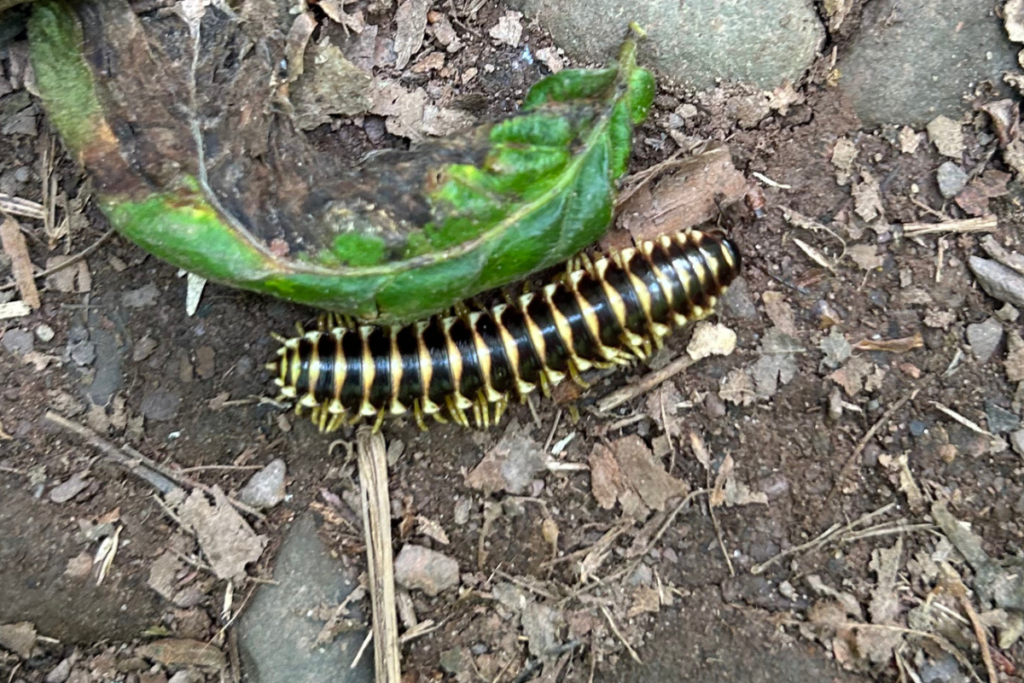
The most recognizable feature of the Yellow-Banded Millipede is its striking color pattern. Most individuals display a glossy black body decorated with bright yellow bands that repeat across each segment. This creates a highly visible contrast that remains noticeable even in low light conditions beneath a forest canopy.
The yellow markings may vary slightly between individuals and populations. Some millipedes display wider yellow bands that dominate the appearance of the body, while others show narrower markings separated by larger black sections. Despite these differences, the alternating pattern remains consistent enough to serve as a dependable identification feature.
Body shape provides another important clue. Unlike many cylindrical millipedes, the Yellow-Banded Millipede possesses a flattened appearance with broad extensions along the sides of each segment. Viewed from above, these extensions create a wider profile that resembles overlapping armor plates.
The surface of the body often appears smooth and glossy. Moist conditions can make the exoskeleton reflect light, giving the millipede a polished appearance. Combined with the bold yellow bands, this glossy finish contributes to the species’ distinctive and memorable look.
Yellow-Banded Millipede Size and Physical Characteristics
Adult Yellow-Banded Millipedes typically reach lengths between two and four inches. This places them among the larger millipedes commonly encountered in eastern forests. A mature individual is often comparable in length to a house key, pocketknife, or standard pen cap.
The body is composed of numerous clearly visible segments arranged in a repeating pattern. Each segment contributes to the animal’s elongated appearance while maintaining a uniform overall structure. This segmented design creates a neat and organized look from head to tail.
Leg arrangement offers one of the most reliable identification features available. Most body segments support two pairs of legs, creating a dense collection of limbs beneath the body. When viewed closely, the large number of legs becomes obvious and helps distinguish the species from centipedes, which possess only one pair per segment.
The head is relatively small compared to the rest of the body and is equipped with a pair of antennae. These antennae constantly investigate the surrounding environment and are often among the first body parts to emerge when the animal moves from beneath cover. Although small, they play an important role in recognizing the species as a millipede rather than another type of arthropod.
Yellow-Banded Millipede Lookalikes and Identification Tips
The animal most frequently confused with a Yellow-Banded Millipede is a centipede. At a glance, both groups appear long and many-legged, but closer examination reveals major differences. Centipedes generally have longer legs, a flatter profile, and move much more rapidly than millipedes.
Other millipede species can also create identification challenges. Many woodland millipedes share a similar body plan but lack the bright yellow banding found in Apheloria. Brown, reddish, or uniformly dark millipedes may occur in the same areas, yet their coloration immediately separates them from the Yellow-Banded Millipede.
Observers should pay particular attention to movement style when uncertain about identification. Yellow-Banded Millipedes move with a smooth and coordinated wave-like motion. The movement resembles a slowly advancing conveyor belt, while centipedes often dart across the ground with quick bursts of speed and sudden directional changes.
A practical field identification method involves checking four characteristics in sequence: color, body shape, leg arrangement, and movement. If the animal displays bright yellow bands, a flattened body, numerous closely packed legs, and steady movement, it is very likely a Yellow-Banded Millipede. Using these combined features allows for confident identification even when viewing the animal for only a short period.
Because of its unique appearance, the Yellow-Banded Millipede is often one of the easiest forest arthropods to recognize once these traits become familiar. Learning these identification features helps naturalists, hikers, and wildlife enthusiasts quickly separate this species from centipedes and other similar-looking invertebrates encountered throughout eastern North America.
Popular Searches About Banded Millipedes
Explore Banded Millipede Guide
Explore More Wildlife

Support Encounters World
Help support wildlife photography and get behind the scenes discoveries on Patreon.