
Yellow-Banded Millipede Predators and Threats: Natural Enemies, Risks, and Survival Challenges
Quick Facts
Primary Predators: Birds, Small Mammals, Amphibians, and Reptiles
Greatest Natural Threat: Predation by Experienced Forest Hunters
Human-Related Threats: Habitat Loss and Environmental Disturbance
Main Survival Defense: Chemical Secretions and Warning Coloration
Predator Avoidance Method: Deterrence Rather Than Escape
Population Trend: Generally Stable in Suitable Habitat
Yellow-Banded Millipede Predators and Threats Overview
The Yellow-Banded Millipede (Apheloria sp.) occupies an important position within eastern North American forest ecosystems. Although it is equipped with effective defensive adaptations, it still faces numerous threats throughout its life. Like most small invertebrates, survival depends on successfully avoiding predators and enduring environmental challenges that occur throughout the year.
Across its range, this millipede encounters a wide variety of animals capable of preying upon arthropods. Forest floors are active environments where countless species search for food among leaves, fallen branches, and decomposing debris. The Yellow-Banded Millipede must navigate this landscape while remaining protected from animals that view it as a potential meal.
Not every predator responds to the millipede’s defenses in the same way. Some animals quickly learn to avoid its warning coloration and chemical secretions, while others may still investigate or attempt an attack. This creates an ongoing balance between defensive adaptations and predator behavior that influences survival rates within natural populations.
Beyond predators, the species also faces environmental pressures that can affect local populations. Changes in habitat quality, prolonged drought, severe weather events, and human-related disturbances may all create challenges. Together, these natural and environmental threats shape the daily survival of the Yellow-Banded Millipede throughout its range.
Animals That Prey on Yellow-Banded Millipedes
Birds represent some of the most common predators encountered by Yellow-Banded Millipedes. Ground-foraging species frequently search through leaf litter for insects and other invertebrates. Although many birds avoid chemically defended prey after negative experiences, inexperienced individuals may still investigate brightly colored millipedes.
Small mammals can also pose a threat. Shrews, mice, and other forest-dwelling mammals often consume a wide range of invertebrates while searching for food. Some mammals quickly reject chemically defended prey, while others may tolerate or work around the millipede’s protective compounds.
Amphibians such as salamanders and frogs occasionally encounter Yellow-Banded Millipedes while hunting along the forest floor. These predators rely heavily on movement and proximity when locating prey. A millipede moving across open ground may attract attention, particularly during damp periods when amphibian activity increases.
Certain reptiles also contribute to predation pressure. Small snakes and lizards frequently consume invertebrates and may attempt to feed on millipedes despite their defenses. In some cases, predators learn through experience that the bright coloration signals an unpleasant meal and begin avoiding similar prey in future encounters.
The relationship between predator and prey is not always straightforward. Some predators avoid Yellow-Banded Millipedes entirely, while others occasionally test their defenses. This variation helps explain why the species benefits from maintaining multiple protective adaptations rather than relying on a single defense mechanism.
Environmental Threats Facing Yellow-Banded Millipedes
Natural predators are only one challenge facing Yellow-Banded Millipedes. Environmental conditions can strongly influence population health and survival. Because the species depends on stable forest ecosystems, significant environmental changes may reduce the quality of suitable living areas.
Extended drought periods can create difficult conditions. Forest-floor environments that normally retain moisture may become increasingly dry, affecting both the millipedes and the ecological processes that support them. Reduced moisture levels can limit suitable activity periods and place additional stress on local populations.
Severe storms and flooding events may also impact populations. While natural disturbances are part of healthy ecosystems, extreme events can temporarily alter habitat structure and environmental stability. Heavy rainfall, erosion, and fallen vegetation may change local conditions in ways that affect survival.
Human activities represent another important threat. Forest clearing, development projects, and habitat fragmentation can reduce the size and connectivity of suitable woodland environments. Large continuous forests often support stronger populations than isolated habitat patches separated by roads, buildings, or agricultural land.
Pollution and environmental contamination may create additional challenges in some areas. Chemicals entering natural ecosystems can influence soil quality and affect the many organisms that contribute to forest health. Because Yellow-Banded Millipedes depend on functioning ecological processes, broader environmental disruptions can indirectly impact their long-term success.
Yellow-Banded Millipede Survival Against Predators and Threats
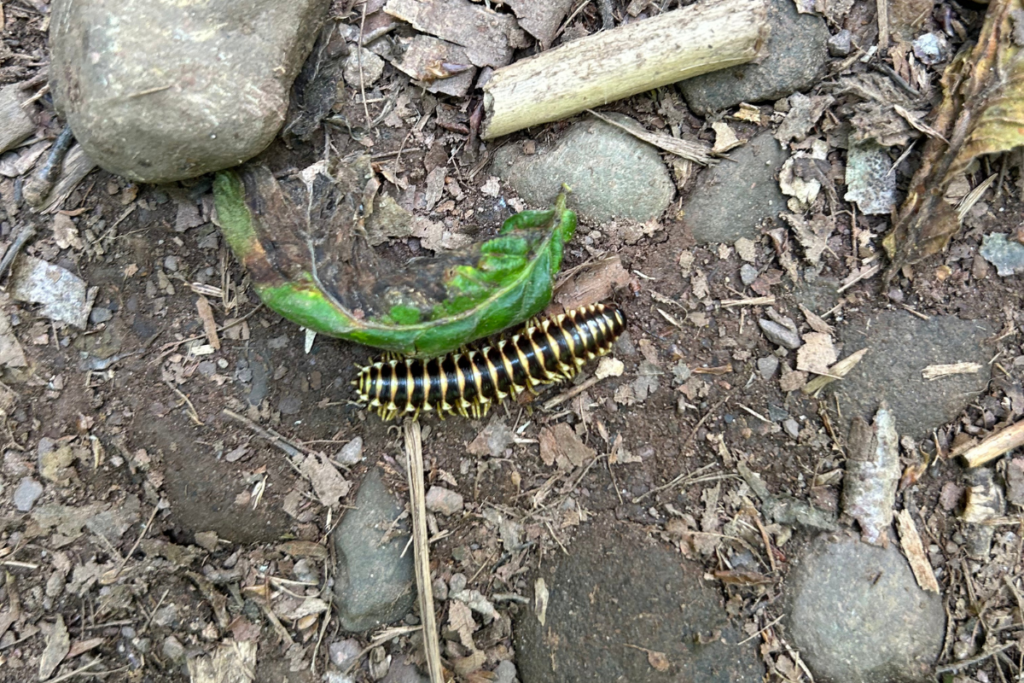
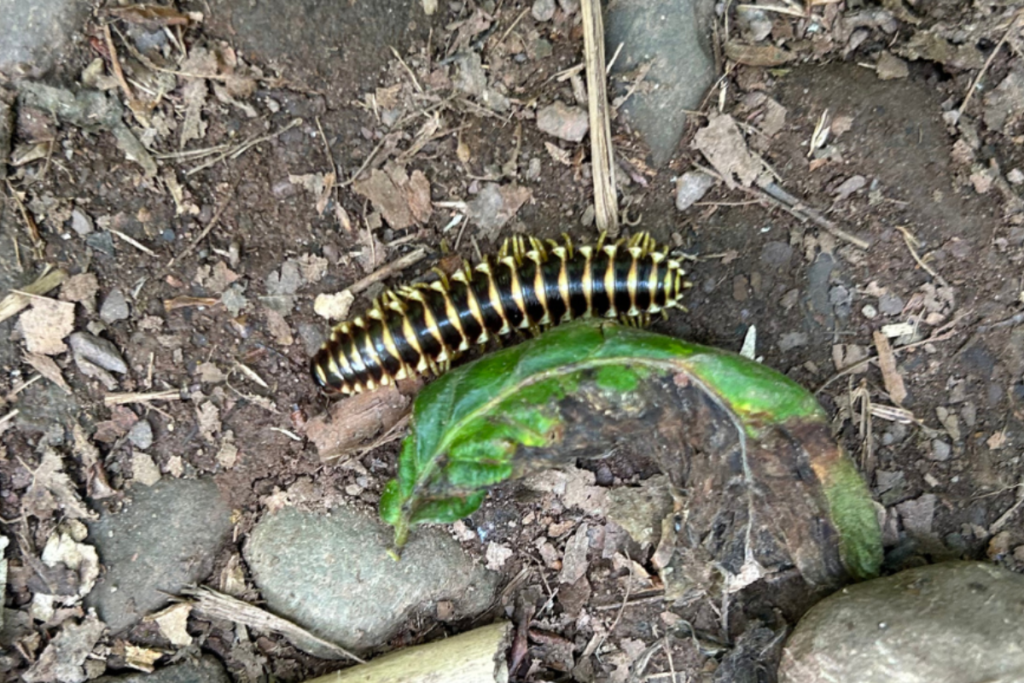
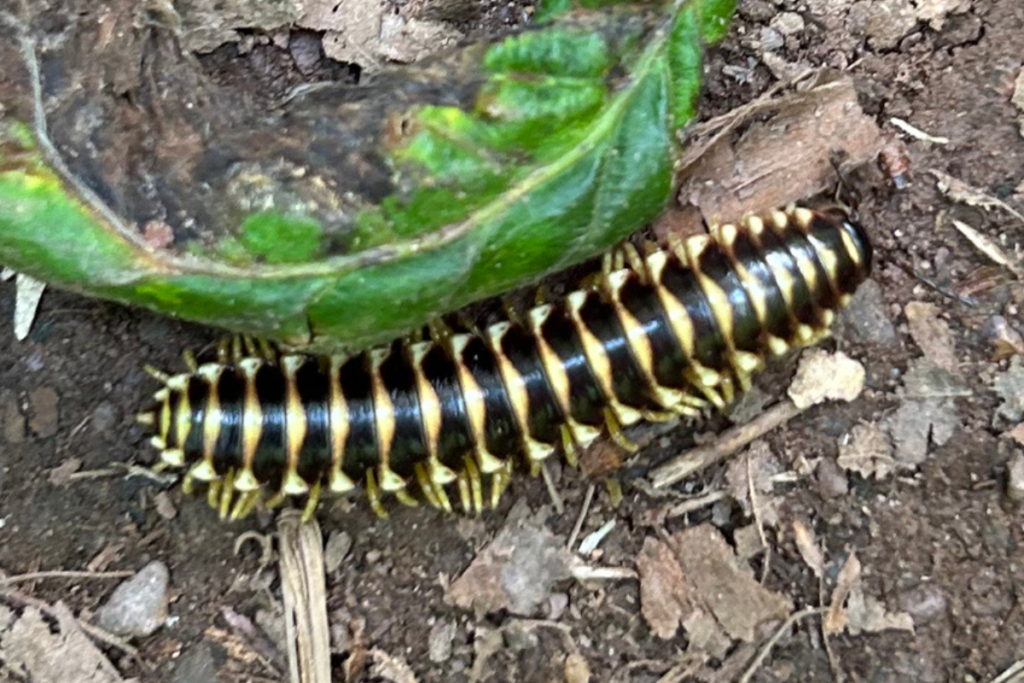
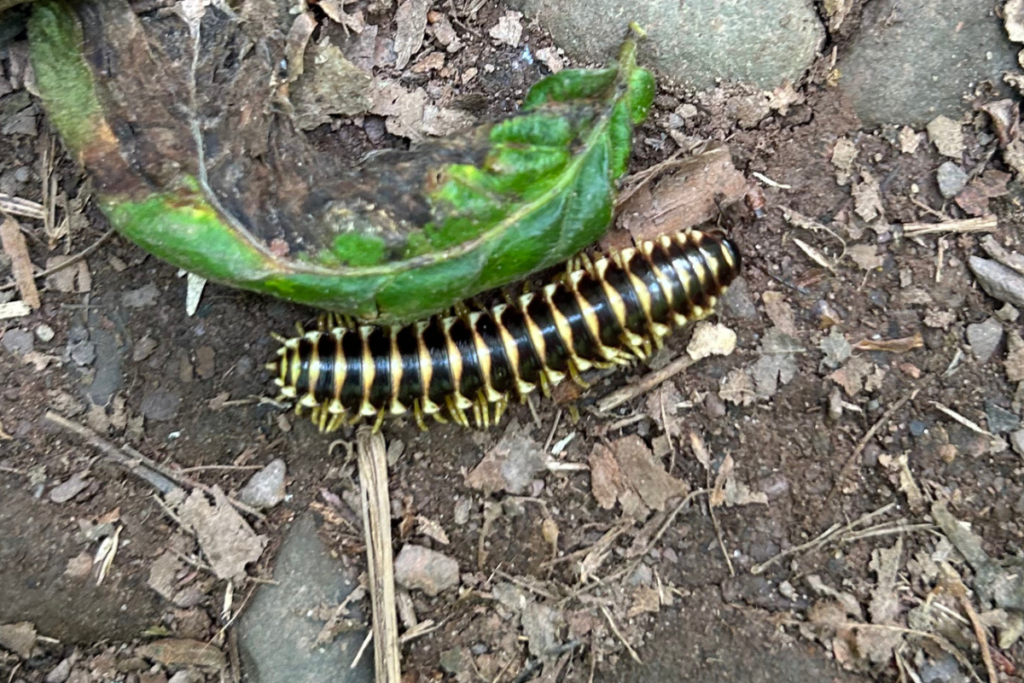
The Yellow-Banded Millipede has evolved several effective strategies that help reduce the risks posed by predators and environmental challenges. Its most obvious adaptation is its striking black-and-yellow coloration, which functions as a warning signal. This visual message helps many predators recognize that attacking the animal may result in an unpleasant experience.
Chemical defenses provide an additional layer of protection. When threatened, the millipede can release compounds that create unpleasant tastes and odors. Predators that attempt to consume the millipede often learn to associate its coloration with these negative experiences, increasing the effectiveness of future warning signals.
Behavior also contributes to survival. Rather than engaging in aggressive confrontations, the Yellow-Banded Millipede often relies on protective postures and reduced movement when danger approaches. This strategy minimizes risk while allowing its warning coloration and chemical defenses to remain the primary deterrents.
A useful example can be seen when a bird encounters a Yellow-Banded Millipede crossing a woodland trail. The bright coloration may trigger caution before any contact occurs. If the bird proceeds and experiences the millipede’s chemical defenses, it is likely to avoid similarly colored individuals in the future, benefiting many other millipedes within the area.
The combination of warning coloration, chemical protection, and instinctive defensive responses has allowed the Yellow-Banded Millipede to persist despite numerous predators and environmental pressures. While threats are a constant part of life in the wild, these adaptations provide an effective survival system that continues to protect the species throughout eastern North American forests.
Popular Searches About Banded Millipedes
Explore Banded Millipede Guide
Explore More Wildlife

Support Encounters World
Help support wildlife photography and get behind the scenes discoveries on Patreon.