
Coras Funnel Weaver Behavior Guide: Activity Patterns, Movement, and Survival Strategies
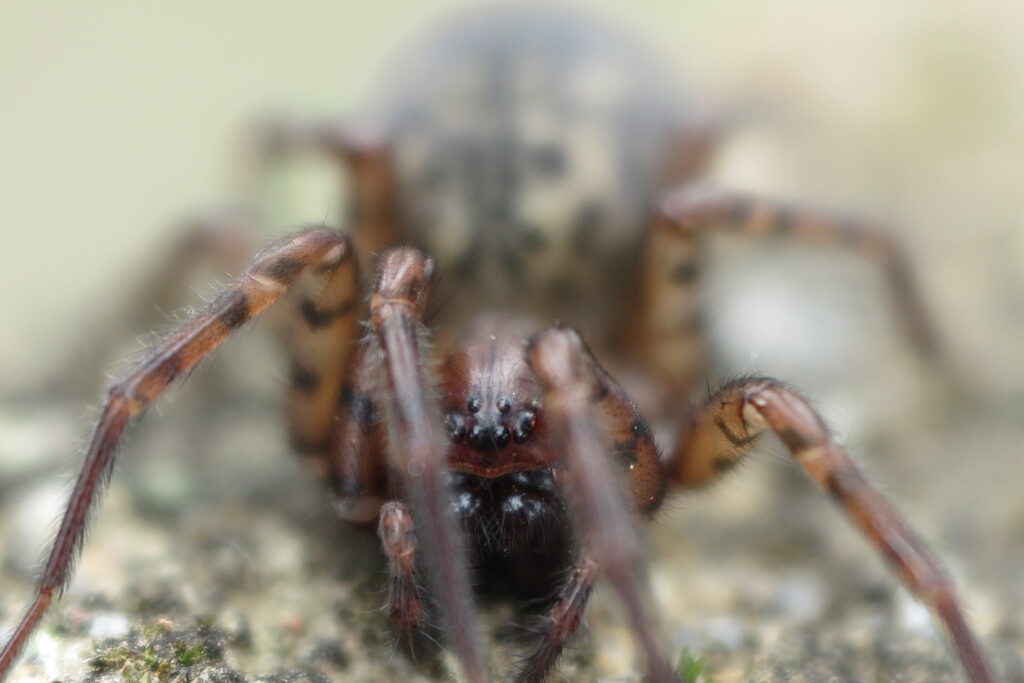
Quick Facts
Activity Type: Primarily nocturnal
Social Structure: Solitary
Territorial Behavior: Maintains an individual web retreat and surrounding hunting area
Movement Style: Rapid bursts of movement with long periods of stillness
Communication Method: Vibrations, touch, and web signals
Defense Strategy: Retreating into funnel shelters and relying on camouflage
Coras Funnel Weaver Behavior Introduction
The Coras funnel weaver (Coras sp.) is a member of the funnel-weaver family Agelenidae, a group of spiders found throughout eastern portions of North America. Although often overlooked due to its secretive lifestyle, this spider spends much of its life hidden within carefully constructed web retreats. Most encounters occur when rocks, logs, boards, or other objects are moved, revealing the spider tucked safely within its shelter.
Across its range, Coras funnel weavers remain largely unseen despite being relatively common. Their muted coloration and preference for concealed locations make them difficult to detect during casual observation. Even when present only a few feet away, they frequently blend into surrounding surfaces so effectively that they escape notice.
Observing a Coras funnel weaver often requires patience. A spider resting inside its funnel retreat may remain motionless for extended periods, creating the impression that little activity is occurring. Closer inspection usually reveals subtle movements and signs of awareness that indicate the animal is continuously monitoring its surroundings.
This combination of caution, responsiveness, and efficiency defines much of the species’ behavior. Rather than constantly moving through the environment, the Coras funnel weaver relies on a strategy centered around observation, rapid reactions, and carefully timed activity. These behavioral traits have helped members of the genus thrive across a wide geographic range.
Coras Funnel Weaver Behavioral Tendencies and Daily Habits
Coras funnel weavers generally exhibit a calm and reserved behavioral style. For much of the day, individuals remain inside or near their funnel retreat, conserving energy while maintaining awareness of nearby activity. This patient approach differs significantly from actively roaming spiders that spend hours searching for opportunities.
When undisturbed, a Coras spider often appears almost statue-like. It may rest at the entrance of its retreat with legs positioned to detect vibrations and movement. To an observer, the spider can resemble a small decorative object resting within the web rather than a living predator waiting for information from its surroundings.
The species demonstrates a high level of environmental responsiveness despite its inactive appearance. Minor disturbances in nearby surfaces, subtle vibrations, or changes in conditions may trigger immediate attention. The spider’s behavior can be compared to a security camera that remains stationary yet continuously monitors everything within its field of view.
Adaptability is another important aspect of Coras funnel weaver behavior. Individuals can adjust their activity patterns according to environmental conditions, disturbance levels, and seasonal changes. This flexibility allows them to remain successful in a variety of situations without relying on constant movement or aggressive actions.
Coras funnel weavers generally avoid unnecessary risks. They rarely engage in confrontational behavior and instead depend on careful decision-making and rapid retreat responses. Their overall behavioral strategy emphasizes efficiency rather than constant activity, making them highly effective despite their relatively small size.
Coras Funnel Weaver Movement and Activity Patterns
Movement in Coras funnel weavers is characterized by long periods of stillness interrupted by sudden bursts of speed. During inactive periods, a spider may remain motionless for minutes or even hours while positioned within its retreat. This energy-efficient approach allows it to conserve resources while maintaining readiness for immediate action.
Most activity occurs during evening, nighttime, and low-light periods. As daylight fades, Coras funnel weavers often become more active around their web structures. The reduced visibility of nighttime conditions provides opportunities for movement while decreasing exposure to many potential threats.
When traveling, these spiders move with remarkable speed relative to their size. A Coras funnel weaver can accelerate rapidly across web surfaces or nearby structures, disappearing into its funnel retreat almost instantly. The motion resembles a dropped bead rolling across a smooth surface—quick, direct, and surprisingly difficult to follow with the eye.
Seasonal changes influence activity levels throughout the year. Warmer months generally support higher levels of movement and web maintenance, while colder conditions often result in reduced activity. Like many small arthropods, Coras spiders adjust energy expenditure according to environmental conditions.
Unlike jumping spiders that frequently stop and change direction, Coras funnel weavers tend to move in purposeful routes. Their movements often follow established paths associated with web structures and retreat locations. This efficiency minimizes unnecessary energy use while maximizing safety.
The spider’s movement strategy can best be described as selective rather than constant. It does not wander extensively without reason. Instead, activity is concentrated around specific tasks, allowing the animal to balance energy conservation with the demands of survival.
Coras Funnel Weaver Interaction and Survival Behavior
Survival behavior in Coras funnel weavers revolves around avoiding danger whenever possible. The spider’s first response to potential threats is usually caution rather than confrontation. This strategy reduces the likelihood of injury and increases long-term survival prospects.
One of the most recognizable defensive responses involves retreating deeper into the funnel structure. If disturbed, the spider often disappears into the narrow tunnel portion of the web within a fraction of a second. This reaction can make the animal seem to vanish instantly from view.
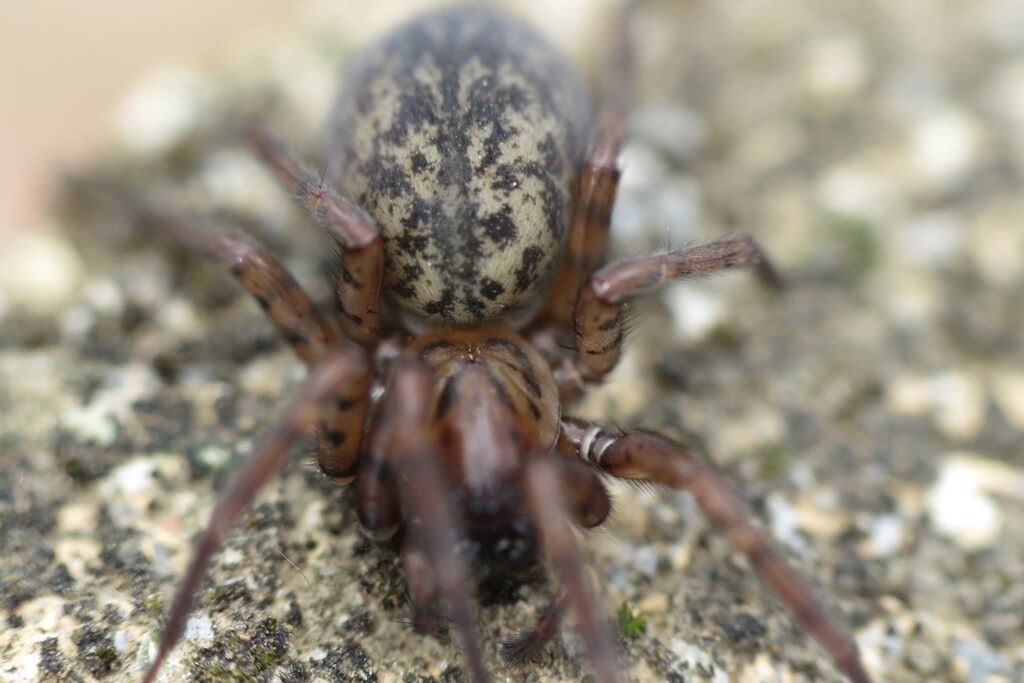
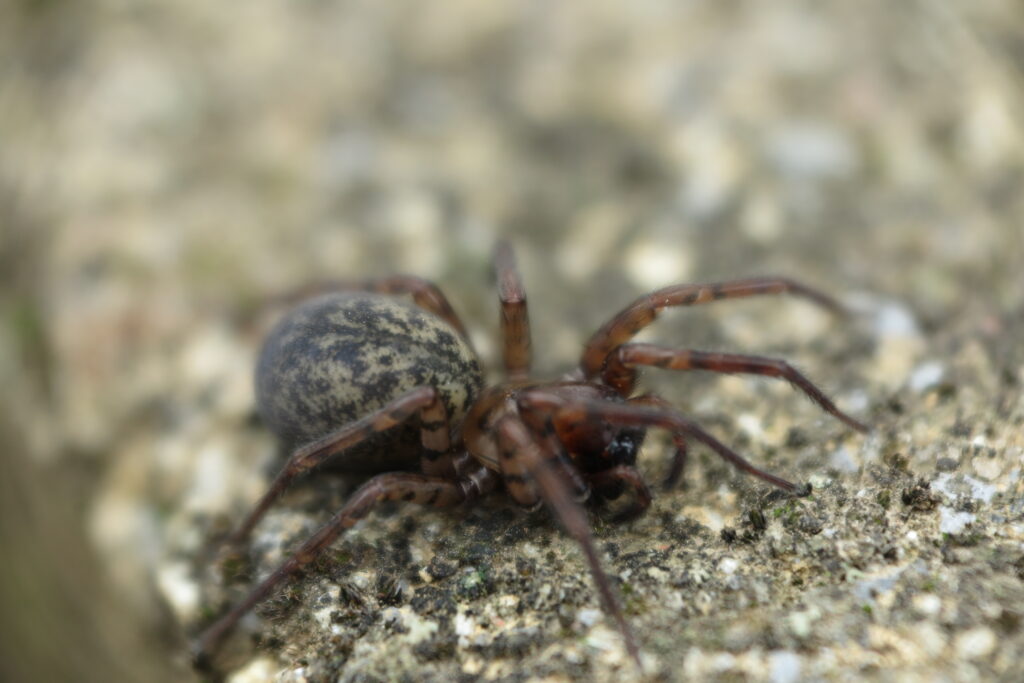
Camouflage provides another important layer of protection. The mottled coloration common among Coras spiders helps them blend into stone, bark, and other textured surfaces. When remaining motionless, they can become surprisingly difficult to distinguish from their surroundings.
Interactions with other Coras funnel weavers are generally limited. The species is primarily solitary, with each spider maintaining its own retreat and surrounding area. Extended social interactions are uncommon outside of reproductive periods, reducing competition and conflict between individuals.
Vibration detection plays a critical role in survival. Web strands act as information networks that transmit signals from the surrounding environment. These signals help the spider distinguish between harmless disturbances and situations that require immediate action.
A good example of the species’ survival instincts can be observed when a rock shelter is lifted unexpectedly. Rather than freezing in place or moving randomly, the spider typically retreats immediately toward the nearest protected section of its funnel. This rapid and predictable response demonstrates how strongly survival behaviors are integrated into the daily life of a Coras funnel weaver.
Through caution, camouflage, rapid retreat, and environmental awareness, Coras funnel weavers successfully navigate a world filled with potential threats. Their behavioral strategy emphasizes efficiency and protection rather than aggression, making them highly specialized survivors within the ecosystems they occupy.
Popular Searches About Funnel Weaver Spiders
Explore Funnel Weaver Spider Guide
Explore More Wildlife

Support Encounters World
Help support wildlife photography and get behind the scenes discoveries on Patreon.