
Banker Horse Diet Guide: What Banker Horses Eat and How They Find Food
Quick Facts
Diet Type: Herbivore
Main Food Sources: Grasses, Sedges, Shrubs, and Coastal Vegetation
Feeding Time: Primarily Daytime
Foraging Method: Grazing and Browsing
Seasonal Diet Changes: Varies with Plant Availability
Predatory Adaptations: Strong Teeth and Efficient Digestive System
Introduction to the Banker Horse Diet
The Banker Horse (Equus ferus caballus) is a feral horse population found along the barrier islands of North Carolina. Unlike domestic horses that often receive supplemental feed, these animals depend entirely on naturally available vegetation. Their ability to obtain sufficient nutrition from a coastal environment has played a major role in their long-term survival.
Food influences nearly every aspect of a horse’s daily life. Large herbivores require substantial quantities of plant material to support their body size, and Banker Horses are no exception. Much of their day is devoted to locating, consuming, and processing vegetation.
For centuries, these horses have survived without direct human management. This independence has resulted in feeding habits shaped by natural conditions rather than agricultural practices. The result is a diet closely tied to the plants available within their environment.
Observing Banker Horses often reveals animals calmly moving while feeding throughout the day. Their grazing behavior may appear simple, but it represents a highly effective strategy developed through generations of adaptation. The ability to utilize available plant resources efficiently remains one of the key factors behind the population’s persistence.
Banker Horse Feeding Strategy and Diet Overview
The Banker Horse is a strict herbivore, meaning its diet consists entirely of plant material. Unlike omnivores that consume both plant and animal matter, these horses rely exclusively on vegetation to meet their nutritional requirements. Their digestive system is specifically adapted to process large amounts of fibrous plant material.
A defining characteristic of the species is dietary flexibility. Rather than depending on a single food source, Banker Horses utilize a broad range of available vegetation. This flexibility helps them cope with changing conditions throughout the year.
Compared to some grazing animals that specialize in only certain plants, Banker Horses display a relatively adaptable feeding strategy. They can take advantage of multiple vegetation types depending on seasonal availability and local conditions. This adaptability has allowed them to persist in environments where food resources fluctuate over time.
Their feeding habits are often described as opportunistic within the limits of a herbivorous diet. When preferred plants are abundant, horses may focus heavily on those resources. During less productive periods, they expand the range of vegetation they consume.
A useful comparison can be made to a person shopping at a local market. When favorite foods are available, they may be selected first, but alternatives are used when options become limited. This flexibility helps Banker Horses maintain consistent nutrition despite seasonal changes in plant growth and availability.
Natural Food Sources of the Banker Horse
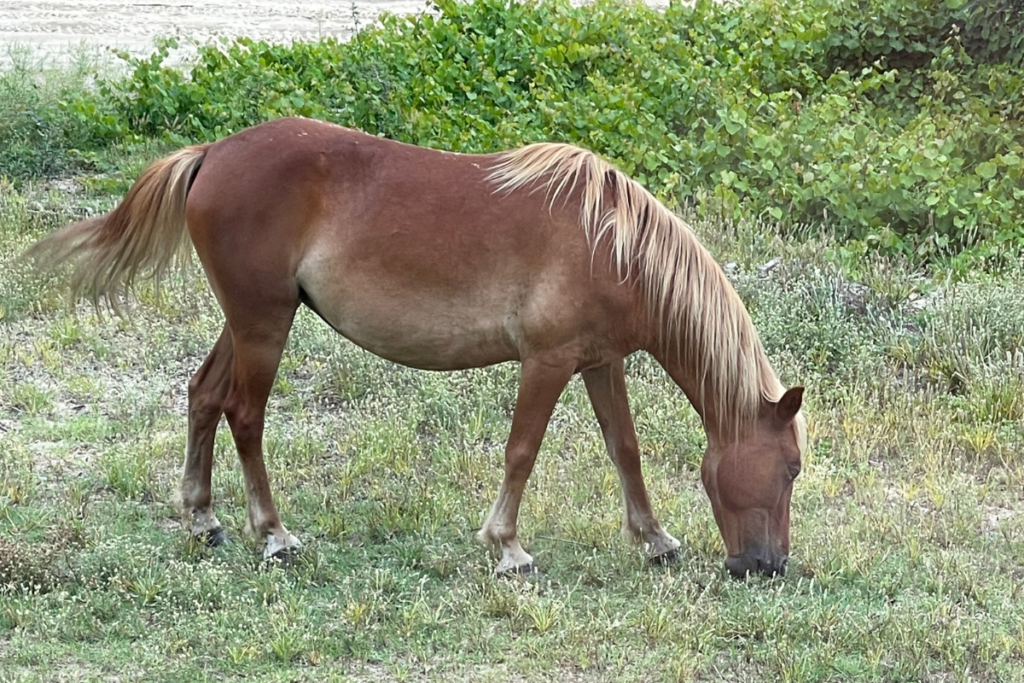
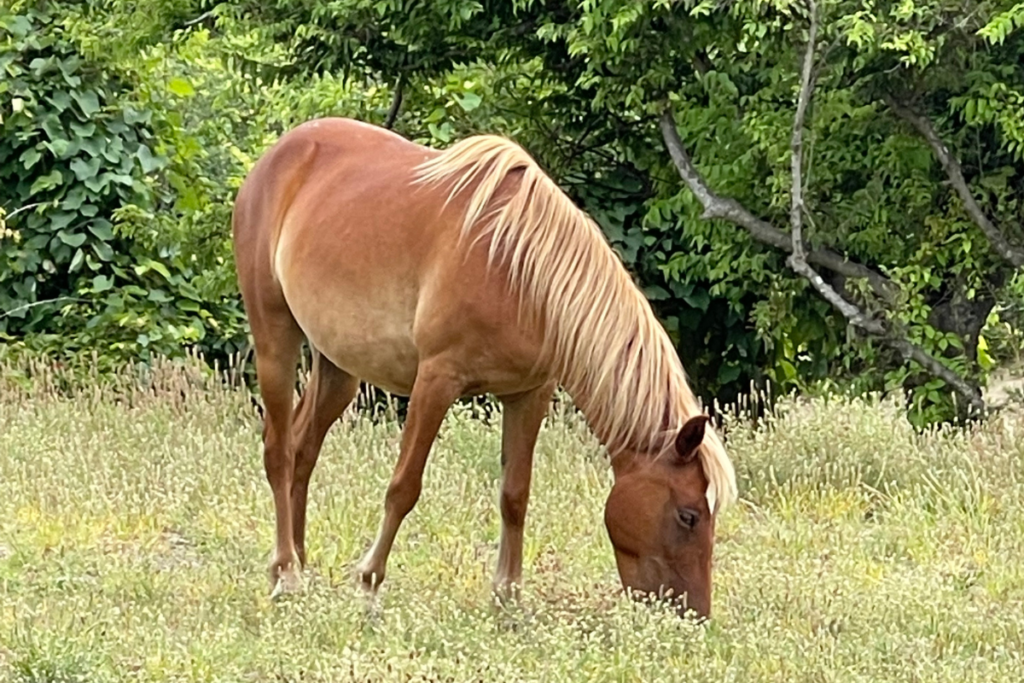
Grasses represent one of the most important components of the Banker Horse diet. Various grass species provide a dependable source of energy and form the foundation of their daily nutritional intake. Large amounts may be consumed throughout the day as horses move through feeding areas.
Sedges also contribute significantly to their food supply. These grass-like plants are common in many coastal environments and provide additional nutritional resources. Their availability helps diversify the diet and reduces dependence on any single plant group.
Shrubs and woody vegetation often serve as secondary food sources. Horses may consume leaves, young stems, and tender plant growth when available. This browsing behavior allows them to utilize resources that many grazing specialists ignore.
Seasonal plant growth can influence food selection. During periods of abundant vegetation, horses may have access to a wider variety of nutritious plants. At other times, they may rely more heavily on hardy species capable of persisting under challenging environmental conditions.
Young foals initially depend on milk from their mothers but gradually begin sampling vegetation as they mature. Over time, they transition toward the same plant-based diet consumed by adult horses. This shift marks an important developmental stage within the life cycle of the species.
Banker Horse Feeding Behavior and Survival Strategies
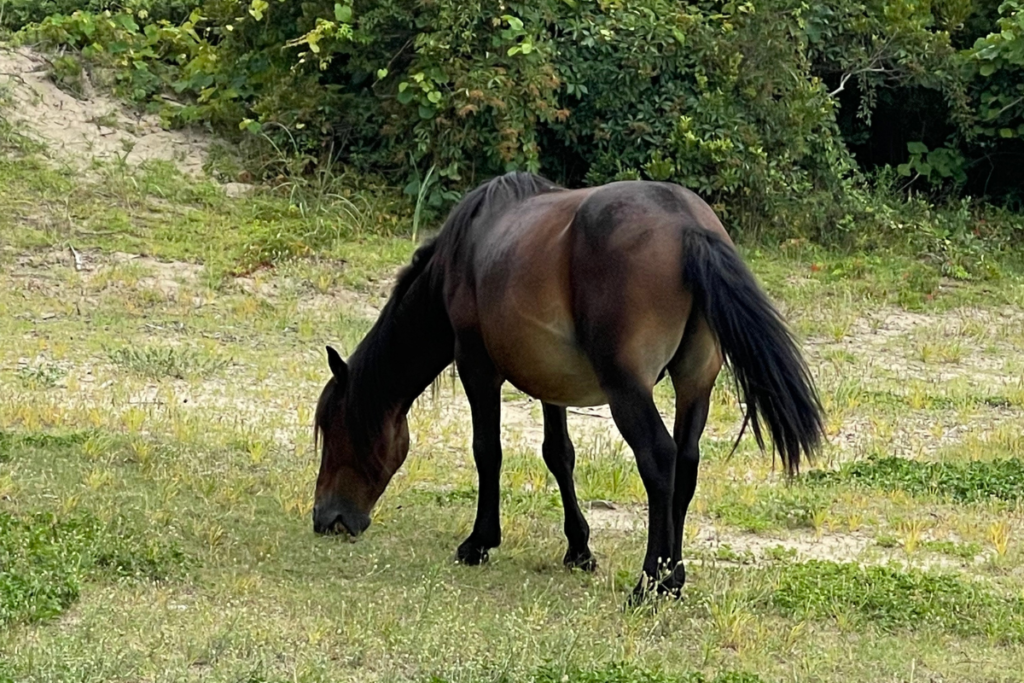
Banker Horses obtain food primarily through grazing. Their heads remain close to the ground as they use specialized lips and teeth to select and remove vegetation. This method allows efficient harvesting of plant material while moving steadily through the landscape.
The species possesses strong incisors that function like natural pruning tools. These teeth clip vegetation close to the ground, while large molars further back in the mouth grind plant material into smaller particles. This combination creates an effective feeding system capable of processing tough vegetation.
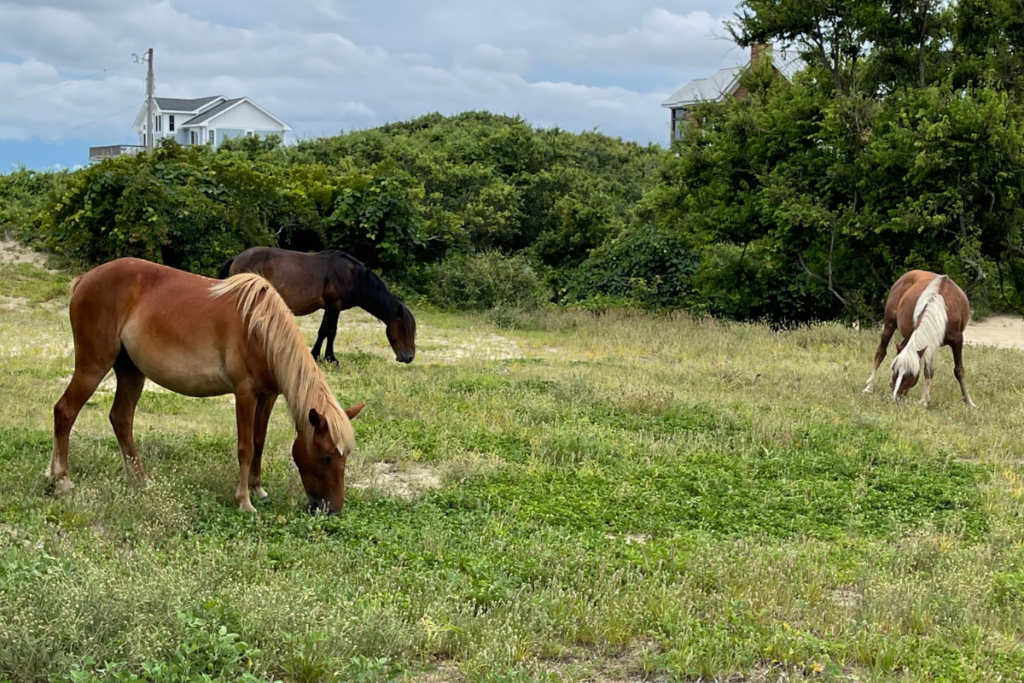
Foraging often involves continuous movement. Rather than remaining in one location for extended periods, horses frequently travel while feeding. This strategy helps prevent overuse of a single area and increases access to a wider range of food resources.
When resources become less abundant, adaptability becomes especially important. Horses may expand their feeding range, utilize additional plant species, or spend more time foraging. These adjustments help maintain nutritional intake during periods when preferred foods are less available.
One notable survival strategy is the ability to process relatively coarse vegetation. Many of the plants consumed would be considered low-quality forage by agricultural standards. However, the Banker Horse’s digestive system allows it to extract useful nutrients from these resources. This efficiency, combined with flexible feeding behavior and constant foraging, has enabled the population to survive for generations while relying entirely on naturally available vegetation.
Popular Searches About Banker Horses
Explore Banker Horse Guide
Explore More Wildlife

Support Encounters World
Help support wildlife photography and get behind the scenes discoveries on Patreon.