
Yellow-Banded Millipede: Identification, Size, Range, and Overview Guide
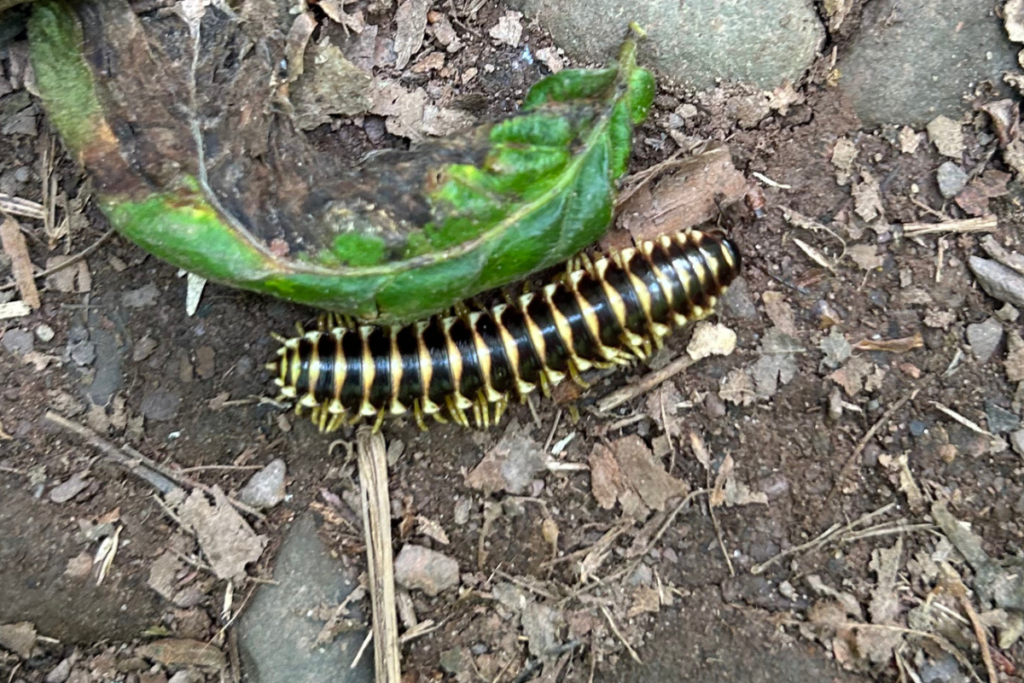
Quick Facts
Scientific Name: Apheloria sp.
Common Name: Yellow-Banded Millipede
Location: Forests, woodlands, and leaf-litter ecosystems
Average Size: 2–4 inches (5–10 cm)
Lifespan: 2–5 years
Global Range: Eastern North America
Conservation Status: Not Evaluated
Notable Feature: Bright yellow bands across a glossy black body
Location Observed: Pennsylvania, USA
Field Observation
I observed this Yellow-Banded Millipede steadily crawling across the forest floor, moving at a moderately fast pace as it traveled over the dirt and leaf litter. Throughout the encounter, it appeared aware of its surroundings, continuously navigating around obstacles while maintaining its direction. Its purposeful movement suggested it was focused on reaching a specific destination rather than remaining in one area.
Introduction to the Yellow-Banded Millipede and Its Geographic Range
The Yellow-Banded Millipede is one of the most visually striking millipedes found in eastern North America. Recognized by its alternating black and yellow body pattern, this invertebrate stands out against the muted colors of the forest floor. Its bold appearance often catches the attention of hikers, naturalists, and photographers who encounter it among fallen leaves and decaying wood.
Members of the genus Apheloria occur across portions of the eastern United States, where they occupy a variety of woodland landscapes. Their range extends through many Appalachian and surrounding regions, making them a familiar sight in forests with abundant moisture and organic material. While different populations may vary slightly in appearance, the yellow-banded pattern remains one of their most recognizable traits.
Observing a Yellow-Banded Millipede can feel like discovering a small piece of living artwork hidden beneath the trees. The contrast between its dark body and bright markings creates a striking visual effect that distinguishes it from many other invertebrates. Even among the tremendous diversity of forest-dwelling arthropods, few species display such an eye-catching combination of colors.
Although millipedes are frequently overlooked compared to birds, mammals, or butterflies, they represent an important and ancient branch of terrestrial life. Fossil evidence suggests that millipede ancestors have existed for hundreds of millions of years. The Yellow-Banded Millipede serves as a modern representative of this remarkably successful group, showcasing both evolutionary persistence and unique visual appeal.
Yellow-Banded Millipede Appearance and Distinctive Features
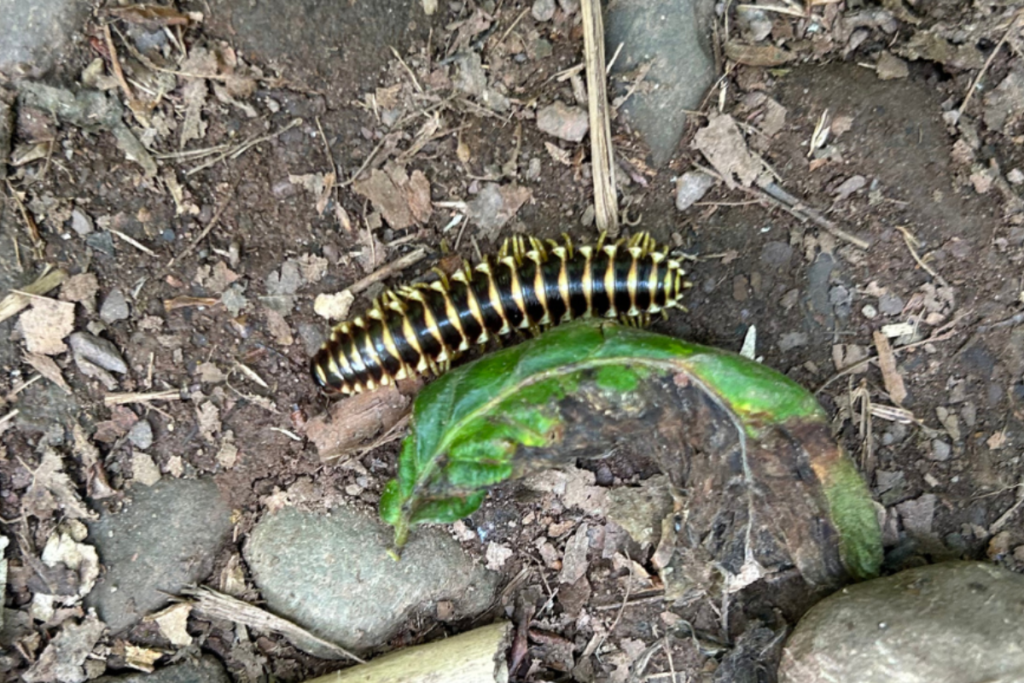
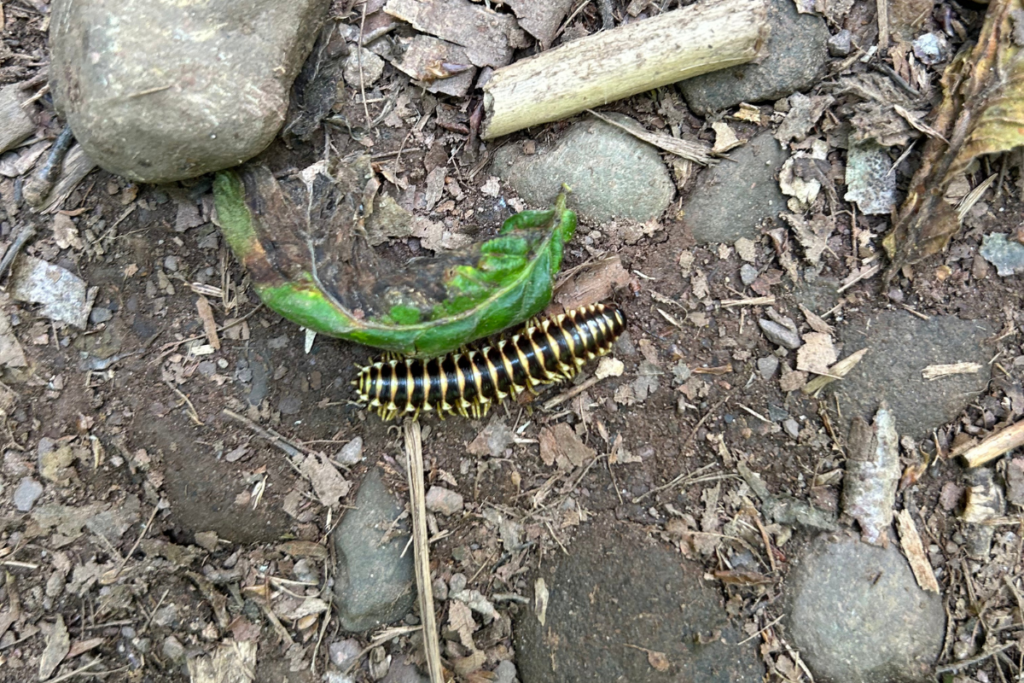
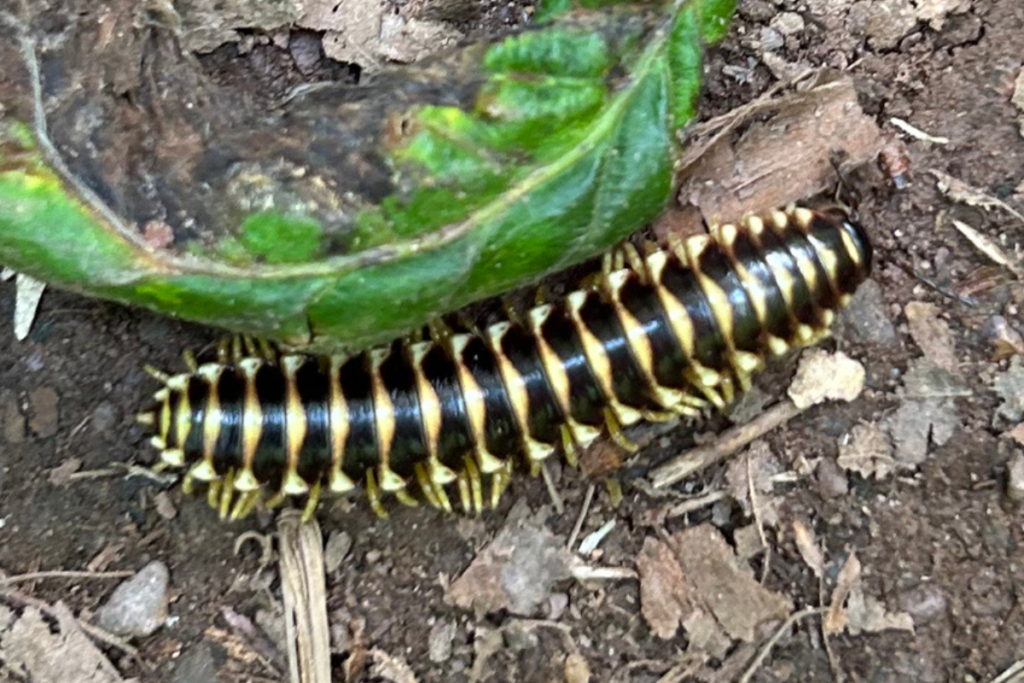
The body of a Yellow-Banded Millipede is elongated, segmented, and noticeably flattened compared to many cylindrical millipede species. Each segment features a broad plate-like extension along the sides, creating a layered appearance when viewed from above. This flattened form gives the animal a wider profile than many people expect from a millipede.
Its coloration is often the first feature people notice. Glossy black segments are separated by bright yellow bands that form a repeating pattern from head to tail. Depending on the individual and lighting conditions, the yellow markings may appear cream-colored, pale gold, or even slightly orange. The contrast between these colors makes the millipede highly visible against dark soil and leaf litter.
Most individuals measure between two and four inches in length, placing them among the larger millipedes encountered in eastern forests. A mature specimen is roughly comparable in length to a standard house key or a small pocketknife. Despite their size, they remain relatively lightweight and move with a smooth, flowing motion created by their numerous legs.
In the wild, Yellow-Banded Millipedes often appear polished, almost as though their bodies have been coated with varnish. Moist conditions can enhance this glossy appearance, causing sunlight or camera flashes to reflect from the surface of the exoskeleton. This combination of shine, color, and segmentation gives the species a distinctive look that remains memorable long after an encounter.
The species also demonstrates a degree of visual adaptability across its range. Some populations display wider yellow bands, while others show narrower markings that emphasize the darker body color. These subtle differences add variety without changing the overall appearance that makes the group so recognizable.
General Characteristics That Define the Yellow-Banded Millipede
One of the defining features of the Yellow-Banded Millipede is its flattened body shape. Unlike the rounded form seen in many common garden millipedes, members of the genus Apheloria possess broad lateral extensions called paranota. These structures create a shelf-like outline along the sides of the body and contribute to the species’ unmistakable profile.
The segmentation of the body is another prominent characteristic. Each section is clearly visible, creating a repeating pattern that resembles linked armor plates. Viewed from above, the arrangement can resemble a miniature train of connected shields moving across the ground. This structured appearance highlights the precision and symmetry commonly found throughout the arthropod world.
Compared to a typical earthworm, the Yellow-Banded Millipede appears far more rigid and sculpted. The body retains a consistent shape rather than flexing dramatically, giving it a deliberate and organized appearance. Even when traveling across uneven surfaces, the segments maintain their distinctive arrangement.
Another notable feature is the remarkable number of legs. Although the exact count varies depending on age and species, the numerous pairs create a wave-like effect during movement. Instead of appearing chaotic, the coordinated motion produces a smooth visual rhythm that seems almost mechanical. Observers often find themselves watching the movement simply because of its unusual precision.
The coloration also serves as a defining characteristic. Many woodland invertebrates rely on camouflage, blending into bark, leaves, or soil. The Yellow-Banded Millipede takes a different visual approach, displaying a bold pattern that immediately separates it from surrounding debris. Combined with its flattened form and glossy surface, the coloration makes identification relatively straightforward for most observers.
Yellow-Banded Millipede Ecological Importance and Environmental Value
The Yellow-Banded Millipede plays a valuable role in maintaining healthy forest ecosystems. Woodland environments generate enormous amounts of fallen leaves, twigs, and other organic material each year. Without organisms that help process this material, forest floors would accumulate thick layers of undecomposed debris that could alter nutrient cycling and soil development.
As part of the broader decomposer community, millipedes contribute to the gradual breakdown of organic matter. Their presence helps transform large pieces of plant material into smaller fragments that can be further processed by fungi, bacteria, and other organisms. This ongoing cycle supports the movement of nutrients through the ecosystem and helps maintain productive soils.
The species also occupies an important position within the forest food web. Numerous animals interact with millipedes either directly or indirectly, linking them to a wide network of ecological relationships. Invertebrates, amphibians, reptiles, birds, and mammals all participate in interconnected systems where decomposers help sustain overall ecosystem function.
Healthy millipede populations can serve as indicators of environmental quality. Forests that support diverse communities of decomposers often contain rich soils, stable moisture levels, and abundant organic material. Observing Yellow-Banded Millipedes within a woodland can therefore suggest that essential ecological processes are operating effectively.
Their contribution extends beyond nutrient cycling alone. By helping break down organic matter, millipedes influence soil structure and create conditions that support plant growth. Trees, wildflowers, mosses, fungi, and countless other organisms ultimately benefit from the recycling activities performed by decomposer species. Though rarely celebrated, these small invertebrates help sustain the foundation upon which entire forest communities depend.
The Yellow-Banded Millipede demonstrates how even relatively small creatures can have significant ecological value. Its striking appearance may draw attention first, but its importance extends far beyond visual appeal. As a participant in nutrient recycling, soil formation, and ecosystem balance, this distinctive millipede represents an essential component of eastern North America’s forest environments.
Observation Location
Observed in Gut Road York Haven, Pennsylvania, USA
Popular Searches About Banded Millipedes
Explore Banded Millipede Guide
Explore More Wildlife

Support Encounters World
Help support wildlife photography and get behind the scenes discoveries on Patreon.