
Buffalo Treehopper Overview: Identification, Range, and Ecological Importance
Quick Facts
Scientific Name: Stictocephala bisonia
Common Name: Buffalo Treehopper
Location: North America
Average Size: 6–10 mm long
Lifespan: Approximately 1 year
Global Range: North America and introduced parts of Europe
Conservation Status: Not Evaluated
Notable Feature: Thorn-shaped body that resembles a plant spine
Location Observed: Pennsylvania, USA
Field Observation
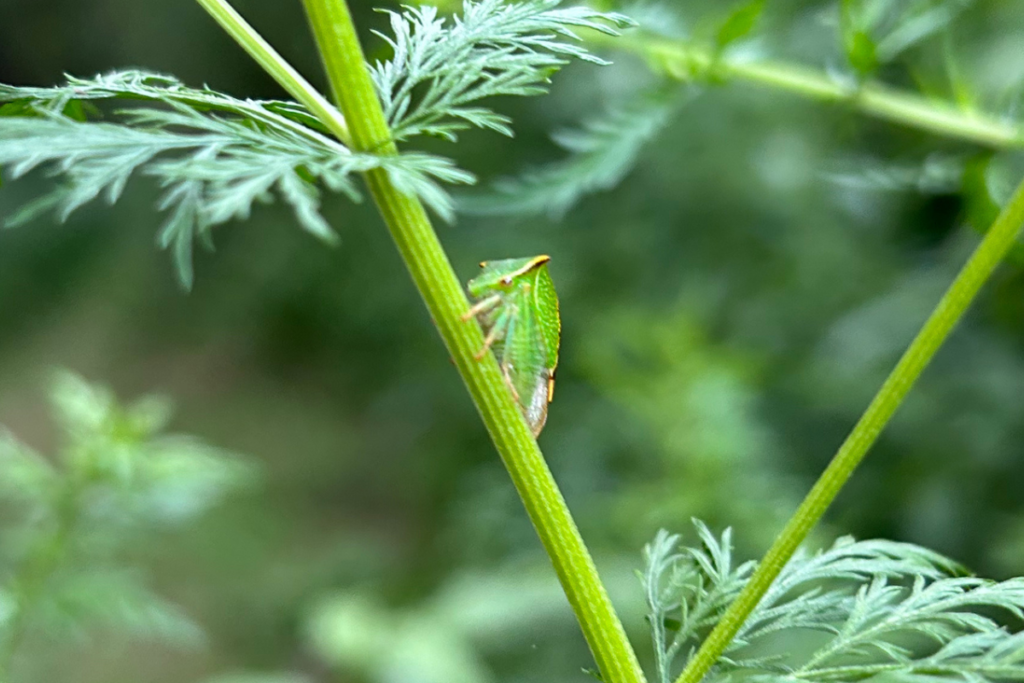
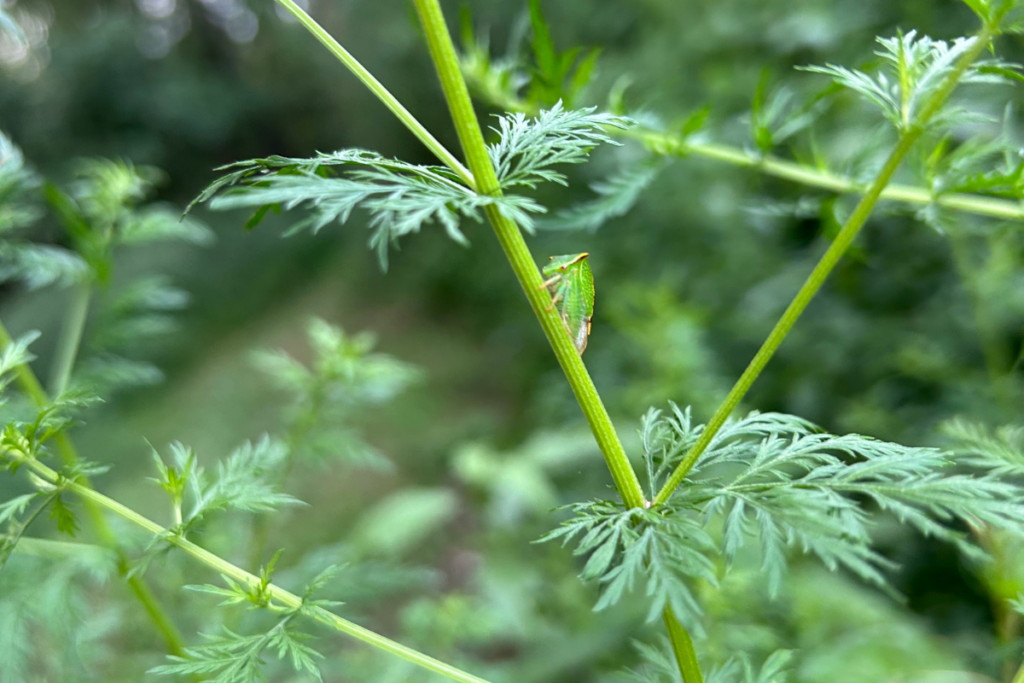
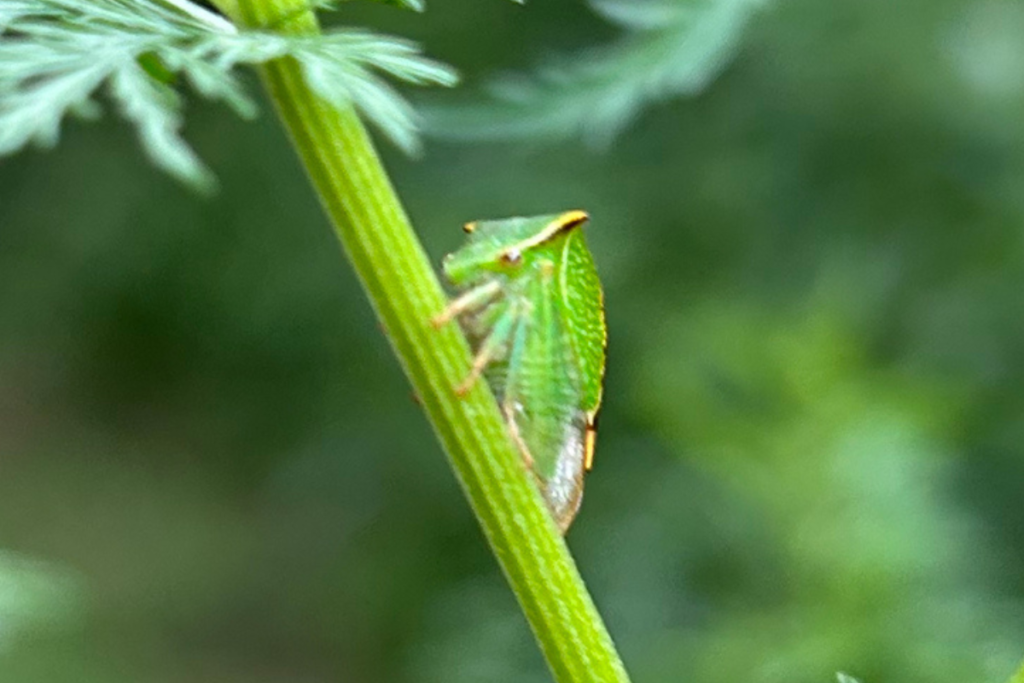
The Buffalo Treehopper was observed resting motionless along a green plant stem, where its body blended almost perfectly with the surrounding vegetation. Its thorn-like shape and matching coloration provided excellent camouflage, making it difficult to notice even at close range. The insect remained still throughout the observation, relying on its natural camouflage to avoid detection from potential predators.
What Is the Buffalo Treehopper?
The Buffalo Treehopper (Stictocephala bisonia) is one of the most unusual insects found throughout North America. Although small in size, its sharply angled body and bright green coloration make it stand out among other plant-feeding insects. The species receives its common name from the pair of horn-like projections on its back, which resemble the shoulders of a buffalo when viewed from the side.
This insect belongs to the treehopper family, a group known for exaggerated body shapes and remarkable camouflage. Unlike many familiar insects that attract attention through bright colors or large wings, the Buffalo Treehopper relies on concealment. Its profile closely resembles a thorn or small plant growth attached to a stem.
The species occurs across much of the United States, southern Canada, and portions of Mexico. It has also been introduced into parts of Europe where populations have become established. Because it feeds on numerous plant species, the insect can survive in many different regions and climates.
People often discover Buffalo Treehoppers accidentally while examining garden plants, shrubs, or wild vegetation. Their small size and excellent camouflage allow them to remain hidden even when sitting in plain view. Once noticed, however, their unusual appearance makes them one of the most memorable insects encountered outdoors.
Buffalo Treehopper Appearance and Physical Features
The Buffalo Treehopper possesses a compact body that measures only a few millimeters long, making it roughly the size of a small pea or pencil eraser. Despite its small dimensions, the insect appears larger because of its expanded pronotum, a shield-like structure that extends over the body and forms its distinctive triangular shape.
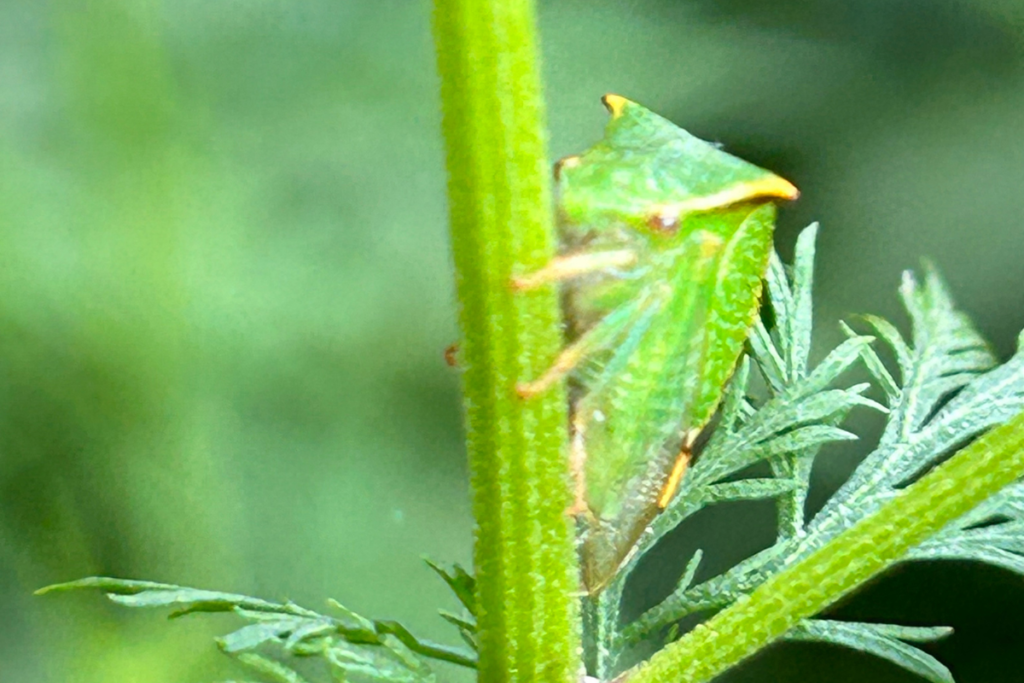
Most individuals display a bright green coloration that closely matches living vegetation. Some specimens may appear yellow-green, pale green, or slightly brown as they age. Thin yellow or orange margins sometimes occur along the upper edges of the pronotum, creating subtle contrast against the body.
The insect’s body resembles a tiny thorn projecting from a stem. Viewed from the side, the elevated dorsal ridge creates an angular silhouette unlike that of most insects. Transparent wings fold neatly beneath the protective shield and are often only partially visible.
In natural settings, Buffalo Treehoppers can easily be mistaken for plant structures rather than animals. Their body shape blends remarkably well with stems, leaf stalks, and branches. Observers frequently overlook them until movement reveals their presence.
The legs are relatively slender and pale in color, allowing them to remain concealed against vegetation. Their large eyes sit near the front of the head but remain difficult to notice because the enlarged pronotum dominates the insect’s appearance.
Distinctive Characteristics of the Buffalo Treehopper
The most recognizable characteristic of the Buffalo Treehopper is its enlarged pronotum. This structure extends upward and outward to form two pointed corners that resemble the shoulders of a buffalo. Few North American insects possess such a dramatic body shape.
The insect’s profile has often been compared to a tiny medieval shield, a thorn, or even a miniature leaf folded against a stem. This unusual appearance immediately separates it from leafhoppers, planthoppers, and many other small green insects that share similar environments.
Unlike shield bugs or stink bugs, which have broad flattened bodies, Buffalo Treehoppers possess a highly compressed shape. Their triangular form creates a narrow profile when viewed from above. This gives them an almost geometric appearance that appears artificial at first glance.
Another defining feature is the smooth integration of the wings beneath the pronotum. Many insects display obvious wing veins or exposed body segments, but Buffalo Treehoppers appear streamlined and compact. The body seems almost entirely enclosed by the extended shield.
The species may sometimes be confused with other treehoppers, particularly thorn bugs and related members of the family. However, Buffalo Treehoppers typically possess a cleaner triangular shape and a more symmetrical outline. Their appearance remains one of the most distinctive among North American insects.
Buffalo Treehopper Importance Within Ecosystems
Although small, Buffalo Treehoppers contribute to the complexity of many terrestrial ecosystems. Their presence adds to the tremendous diversity of insects that occupy vegetation throughout forests, grasslands, gardens, and agricultural landscapes.
The species forms part of a larger network of organisms that supports ecological balance. Small insects such as treehoppers help transfer energy through food webs and provide resources for numerous other organisms. Their populations contribute to maintaining healthy insect communities.
Buffalo Treehoppers also serve as indicators of plant diversity. Areas that support a wide variety of shrubs, wildflowers, and woody vegetation often contain healthy populations of these insects. Their presence can reflect the availability of suitable plant communities.
Many predators depend upon small insects as a reliable food source throughout the growing season. By occupying an intermediate position within ecological systems, Buffalo Treehoppers help connect plant communities with larger animals. Their role may appear minor individually, but collectively these insects contribute significantly to ecosystem function.
The species also adds to the overall biodiversity of North American habitats. Thousands of insect species occupy specialized roles within natural communities, and Buffalo Treehoppers represent one of the more visually distinctive examples. Their unusual appearance demonstrates the remarkable diversity that exists among even the smallest wildlife.
Observing Buffalo Treehoppers can encourage greater appreciation for overlooked insects and the important ecological roles they perform. Their unique form and hidden lifestyle remind observers that even tiny organisms contribute to the complexity and stability of natural environments.
Observation Location
Observed in Gut Road York Haven, Pennsylvania, USA
Popular Searches About Buffalo Treehoppers
Explore Buffalo Treehopper Guide
Explore More Wildlife

Support Encounters World
Help support wildlife photography and get behind the scenes discoveries on Patreon.