
What Do Eastern Tiger Swallowtail Butterflies Eat? (Papilio glaucus Diet Guide)
Quick Facts
Diet Type: Herbivore (nectar feeder as adult, plant-based as larva)
Main Food Sources: Flower nectar (adults), leaves of host trees (caterpillars)
Feeding Time: Daytime (diurnal feeding)
Foraging Method: Visual searching and proboscis feeding
Seasonal Diet Changes: Varies with flowering cycles and plant availability
Predatory Adaptations: None (relies on plant-based feeding and efficiency)
The Eastern Tiger Swallowtail (Papilio glaucus) is a large, visually striking butterfly found across much of eastern North America. Its presence is often associated with flowering landscapes, where it moves steadily between plants during the warmer parts of the day. While its bright coloration draws attention, its feeding habits are just as important to understanding its role in the natural world.
Across its wide geographic range, this butterfly depends on plant-based food sources to sustain itself throughout its life stages. From early development to adulthood, its nutritional needs are tied closely to the availability of vegetation. This connection to plant life influences where it is commonly seen and how frequently it appears in certain areas.
In open environments filled with blooming plants, it can often be observed moving consistently from one food source to another. This creates a noticeable pattern of activity that is both repetitive and efficient. Its feeding process blends seamlessly into its movement, giving the impression that it is constantly searching for the next opportunity.
Rather than feeding in a single location for extended periods, this species tends to move continuously through its environment. This pattern reflects a reliance on multiple sources rather than a single concentrated resource. Its feeding habits are therefore closely linked to the overall availability and distribution of plant life within its range.
Eastern Tiger Swallowtail Diet Overview and Feeding Strategy
The Eastern Tiger Swallowtail follows a herbivorous diet, relying entirely on plant-based sources for nourishment. As an adult butterfly, it primarily feeds on liquid nutrients, while its earlier life stage depends on solid plant material. This dual-stage feeding strategy allows it to utilize different food sources throughout its development.
Its diet is relatively flexible compared to more specialized butterfly species. Rather than depending on a single type of plant, it is capable of using a variety of available resources. This adaptability allows it to maintain a stable presence across a wide geographic range, even in areas where plant communities differ.
Compared to butterflies that rely on very specific plants, the Eastern Tiger Swallowtail behaves more like a generalist feeder. This means it can adjust its feeding patterns based on what is available in its environment. This flexibility increases its chances of survival in changing conditions and contributes to its widespread distribution.
Despite this adaptability, its feeding habits still follow a consistent pattern. It seeks out accessible and energy-rich sources that support sustained activity. This balance between flexibility and consistency allows it to remain both efficient and resilient across different regions.

Natural Food Sources of the Eastern Tiger Swallowtail
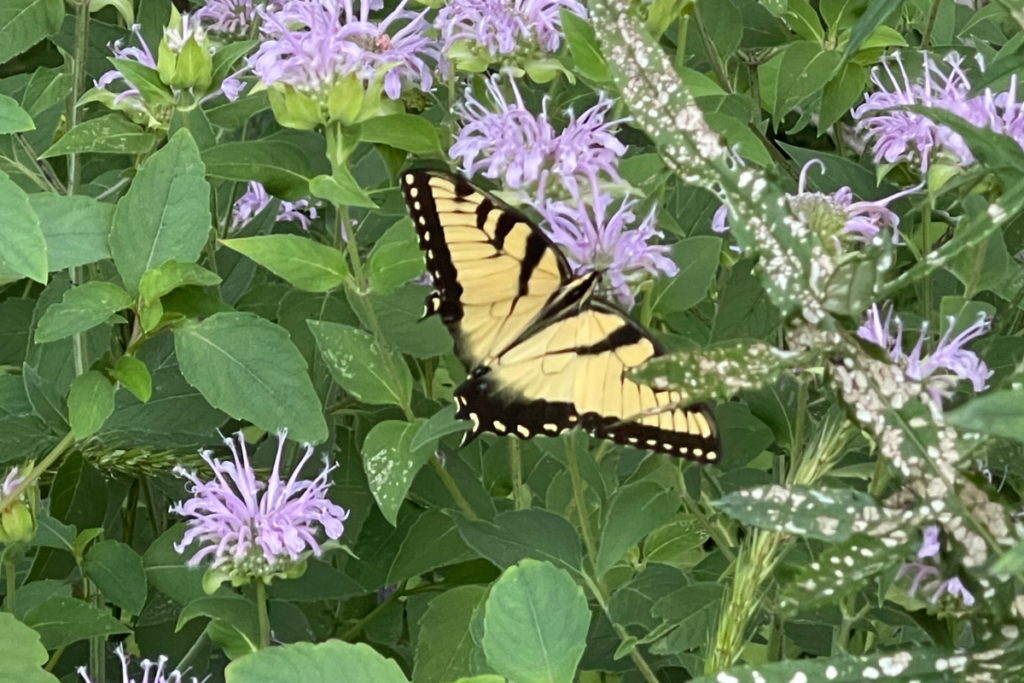
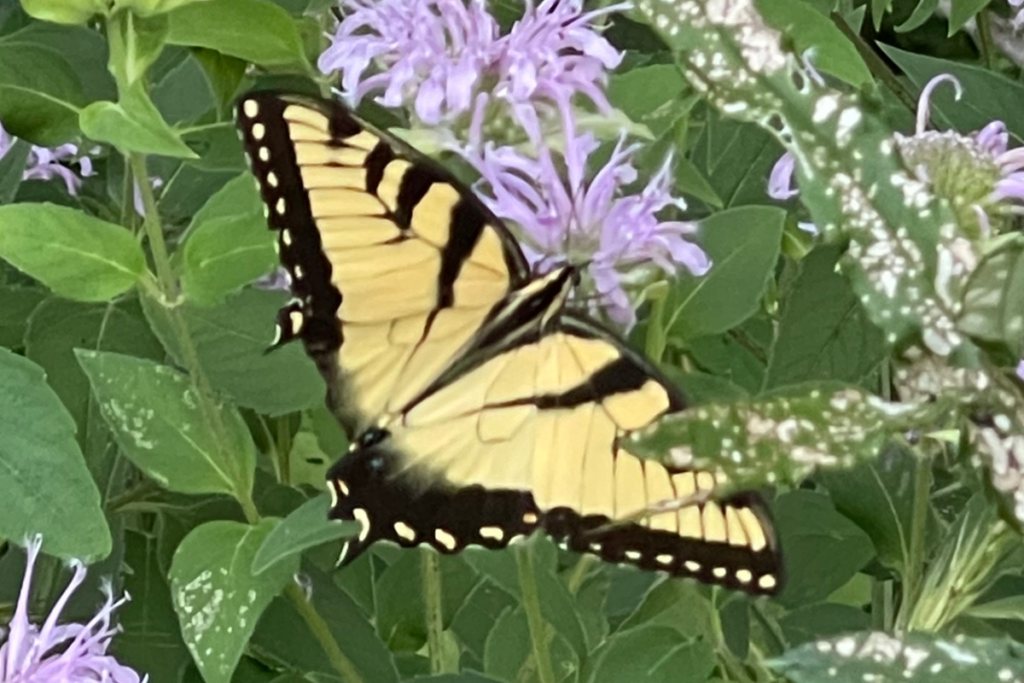
As an adult, the Eastern Tiger Swallowtail primarily feeds on nectar from a wide variety of flowering plants. Common nectar sources include milkweed, thistle, lilac, and wild cherry blossoms. These plants provide the sugary liquid needed to fuel its daily activity and maintain energy for flight.
During its caterpillar stage, its diet shifts entirely to solid plant material. It feeds on the leaves of specific host trees, including tulip trees, black cherry, ash, and willow. These leaves provide the nutrients necessary for growth and development before it transitions into its adult form.
The availability of these food sources can vary depending on the region and season. In areas with abundant flowering plants, adults may have access to a wide range of nectar sources. In more limited environments, they may rely on fewer plant types, but still maintain a consistent feeding pattern.
Each food source plays a specific role in survival. Nectar provides immediate energy for flight and daily activity, while leaves consumed during the larval stage support long-term development. This division between life stages ensures that the species can meet its nutritional needs at different points in its life cycle.
Eastern Tiger Swallowtail Feeding Behavior and Survival Strategies
The Eastern Tiger Swallowtail uses a visual approach to locate food, relying on its ability to detect bright colors and patterns associated with flowering plants. Once a suitable source is found, it extends a long, tube-like structure called a proboscis to access nectar deep within the flower. This allows it to feed efficiently without needing to land for extended periods.
Its feeding behavior is often continuous, moving from one flower to the next with little pause. This creates a steady rhythm of motion, where each feeding opportunity leads directly to another. This pattern can be compared to a person walking through a buffet line, selecting small amounts from multiple sources rather than focusing on a single option.
When resources are limited, the butterfly may expand its search area, covering greater distances to locate suitable food. This ability to adjust its range allows it to continue feeding even when conditions are less favorable. It does not rely on a single location, instead using movement as a strategy to find new resources.
Competition with other nectar-feeding insects can also influence its feeding behavior. In areas with many pollinators, it may move more quickly between flowers to secure access to available nectar. This balance between efficiency and adaptability helps ensure that it can continue to meet its energy needs in a variety of conditions.