
Big-Headed Ground Beetle Burrow Guide: Underground Tunnels, Shelter, and Soil Behavior
Quick Facts
Burrowing Ability: Excellent Digger
Primary Shelter: Underground Burrows
Burrow Depth: Several Inches Below Surface
Burrow Purpose: Protection, Hunting, and Resting
Preferred Soil Type: Loose or Sandy Soils
Most Active Time: Evening and Night
Big-Headed Ground Beetle Burrow Overview
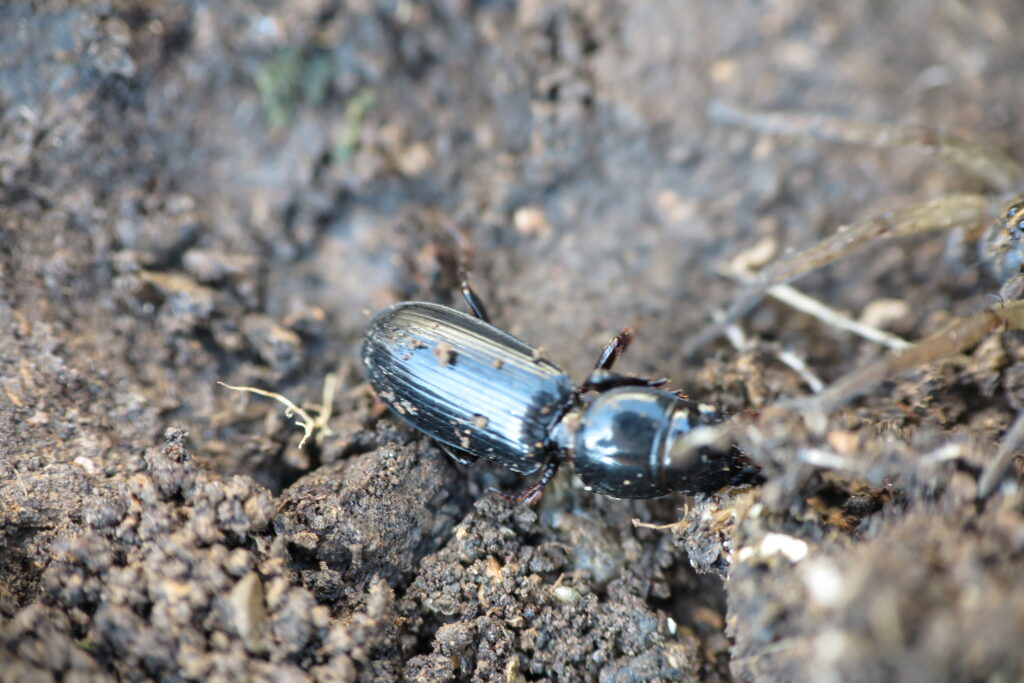
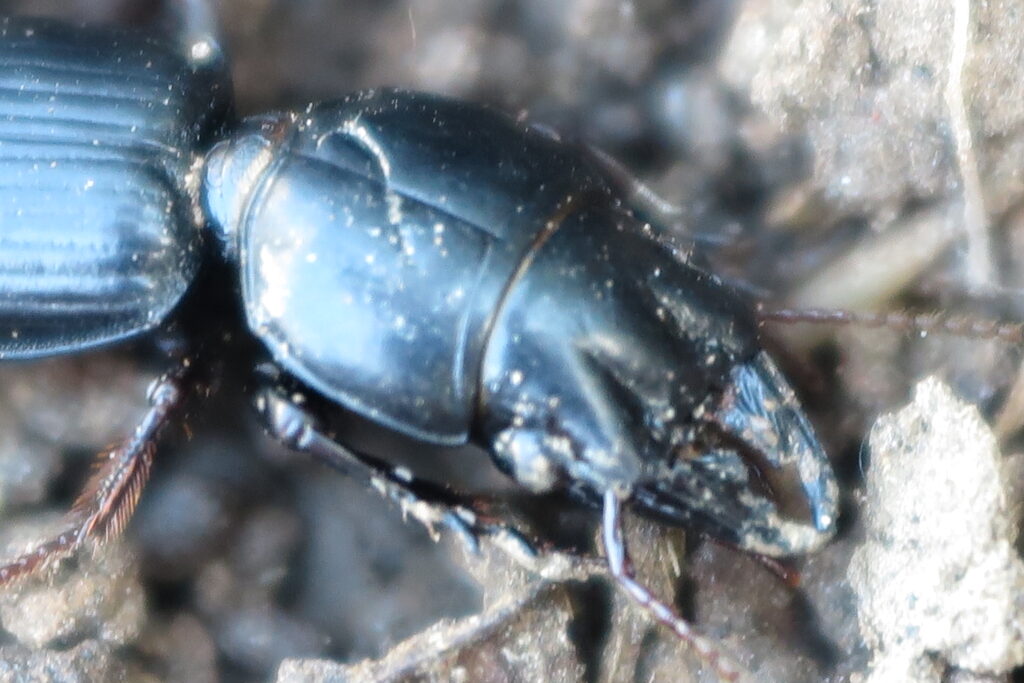
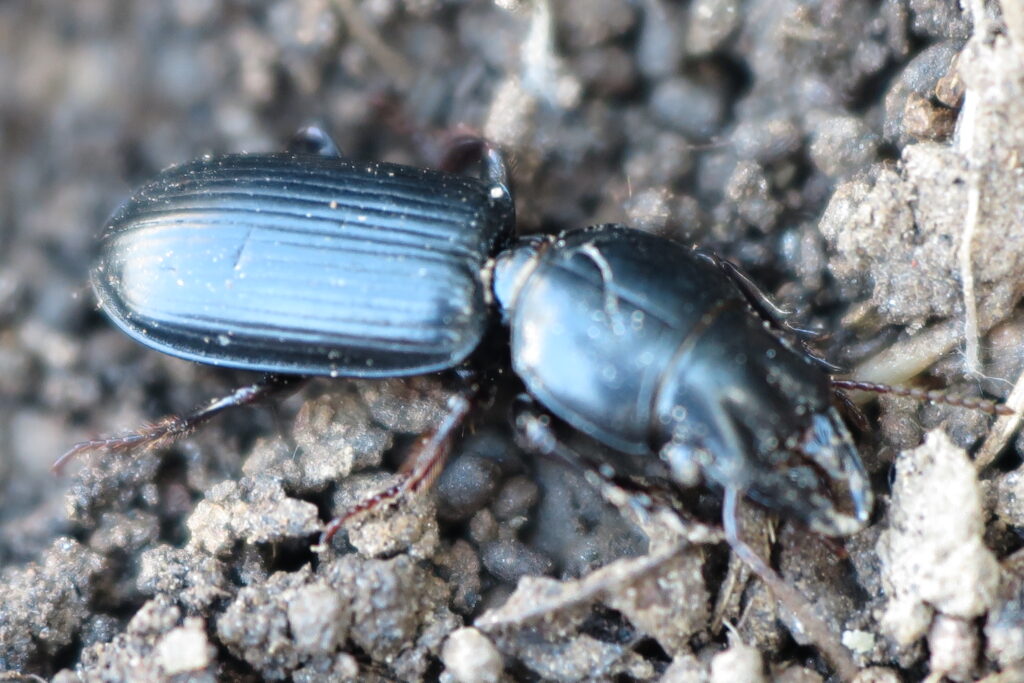
The Big-Headed Ground Beetle (Scarites sp.) is strongly associated with life beneath the soil surface. Unlike many beetles that spend most of their lives on plants or exposed ground, this species frequently occupies underground spaces that provide shelter and protection. Its enlarged head and powerful front body immediately suggest an insect designed for working within loose soil.
Many observations occur only after rocks, logs, boards, or other objects are lifted from the ground. Beneath these coverings, the beetle may be found resting quietly inside shallow chambers or hidden within loose earth. Because much of its activity occurs below the surface, people often encounter the insect unexpectedly.
The underground world occupied by these beetles provides stable temperatures, protection from weather, and reduced exposure to predators. Soil environments can remain cooler during summer and warmer during winter than exposed ground. This natural insulation helps create favorable conditions throughout much of the year.
A Big-Headed Ground Beetle can be compared to a fox using a den or a rabbit occupying a burrow. Although the animal occasionally emerges, much of its daily existence occurs within protected underground spaces. These burrows serve as both shelter and a secure location for many important activities.
Big-Headed Ground Beetle Burrow Structure and Design
The burrows created by Big-Headed Ground Beetles are generally simple compared to the extensive tunnel systems of mammals. Most consist of short underground passages or chambers that allow the beetle to remain concealed beneath the surface. These spaces provide enough room for movement while maintaining protection.
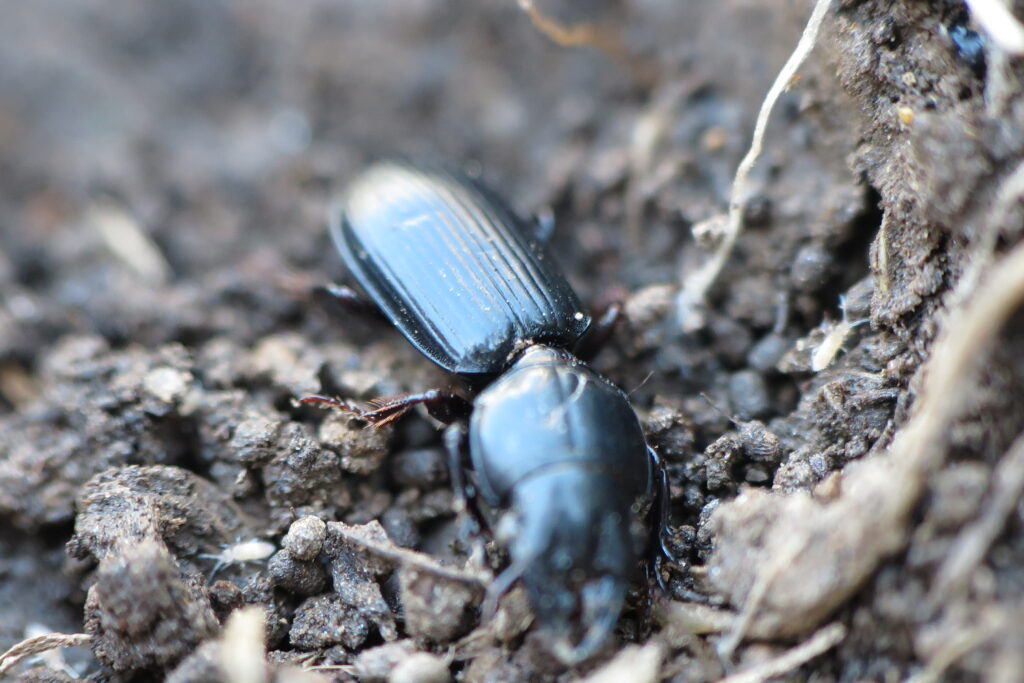
The enlarged head plays an important role in excavation. Acting almost like a shovel, the broad head helps push soil aside while the front legs move loose material. This combination of body structures allows the beetle to work efficiently beneath the ground.
Many burrows are positioned beneath rocks, logs, bark, or other surface objects. These natural covers provide additional protection and help stabilize underground conditions. The entrance to a burrow may be difficult to detect because disturbed soil is often minimal.
Some tunnels extend only a few inches below the surface, while others may penetrate deeper depending on soil conditions. Loose soils allow easier excavation than compacted ground. Sandy or well-drained soils often support more extensive underground spaces.
The overall design resembles a small protective chamber rather than a large tunnel network. Unlike ant colonies or rodent burrows, the beetle’s underground spaces remain relatively simple. Their purpose is efficiency and protection rather than long-term architectural complexity.
Big-Headed Ground Beetle Burrow Locations and Habitat Use
Forested environments provide many opportunities for burrow construction. Leaf litter, loose soil, and fallen logs create suitable conditions for underground activity. These areas often contain numerous protected locations where beetles can establish shelter.
Grasslands and open fields also support burrowing behavior. Areas with moderately loose soil allow the beetles to dig effectively while remaining concealed beneath the surface. Open landscapes often contain suitable conditions where underground activity can occur.
Agricultural fields, gardens, and disturbed soils may also contain burrows. Tilled soil and loose ground provide conditions favorable for excavation. This explains why people occasionally encounter these beetles while gardening or moving soil.
Variation occurs even within a single location. Some individuals occupy shallow burrows near surface cover, while others may use deeper chambers within exposed soil. Local conditions often influence where and how burrows are constructed.
The distribution of burrows can resemble scattered underground shelters across a landscape. Rather than forming colonies, individual beetles establish their own protected spaces. These separate shelters reduce competition while allowing each beetle to maintain a secure location.
Big-Headed Ground Beetle Burrow Functions and Survival Benefits
Burrows serve several important purposes throughout the beetle’s life. Protection from predators remains one of the most significant benefits. Underground chambers reduce exposure to birds, mammals, reptiles, and other animals that hunt at the surface.
Temperature regulation provides another advantage. Soil temperatures change more slowly than surface temperatures, creating stable conditions during both hot and cold periods. The burrow functions much like a basement that remains cooler during summer and warmer during winter.
The underground environment also protects the beetle from severe weather. Heavy rain, strong winds, and direct sunlight become less threatening when the insect remains beneath the surface. This shelter increases survival during unfavorable environmental conditions.
Burrows may also serve as resting sites between periods of activity. During daylight hours, many individuals remain hidden underground before becoming active later. These protected chambers allow the beetle to conserve energy while avoiding unnecessary exposure.
A useful example occurs when a rock covering a beetle is lifted. The insect may be found sitting quietly within a small depression or chamber beneath the object. This simple shelter provides concealment, stable conditions, and immediate access to surrounding soil.
The burrowing abilities of the Big-Headed Ground Beetle contribute greatly to its success across many environments. By creating and using underground shelters, the beetle gains protection from predators, environmental extremes, and changing conditions. These hidden spaces remain one of the most important aspects of its lifestyle and help explain why the species often goes unnoticed despite its wide distribution.
Popular Searches About Ground Beetles
Explore Ground Beetle Guide
Explore More Wildlife

Support Encounters World
Help support wildlife photography and get behind the scenes discoveries on Patreon.