
Big-Headed Ground Beetle Life Cycle: Growth Stages, Development, and Lifespan Guide
Quick Facts
Life Cycle Type: Complete Metamorphosis
Reproduction Method: Sexual Reproduction
Egg Stage: Eggs Deposited in Soil Chambers
Larval Stage: Predatory Soil-Dwelling Larvae
Time to Maturity: Approximately 1–2 Years
Average Lifespan: 1–3 Years
Big-Headed Ground Beetle Life Cycle Overview
The Big-Headed Ground Beetle (Scarites sp.) experiences a complete life cycle that differs greatly from the gradual growth seen in millipedes and some other arthropods. Throughout North America, these beetles develop through four distinct stages: egg, larva, pupa, and adult. Each stage possesses unique characteristics that allow the insect to survive and eventually reach maturity.
Most people only encounter the adult beetle because it is the largest and most visible stage of development. Hidden beneath soil and debris, however, earlier life stages remain active for long periods before becoming adults. This concealed development makes the life cycle far less visible than that of butterflies or other familiar insects.
The species relies heavily on underground environments during much of its development. Eggs, larvae, and pupae often remain protected beneath the surface where environmental conditions are more stable. These sheltered locations help reduce exposure to predators and weather extremes.
The life cycle can be compared to the construction of a machine in several separate stages. Each phase serves a different purpose, gradually building the structures necessary for adulthood. By progressing through complete metamorphosis, the Big-Headed Ground Beetle develops specialized life stages that contribute to its long-term survival.
Big-Headed Ground Beetle Reproduction and Egg Stage
The life cycle begins when mature adults reproduce during favorable seasons. Mating generally occurs when temperatures become suitable and environmental conditions support successful development. Adult beetles locate one another near the ground surface or beneath debris where reproduction takes place.
After mating, females deposit eggs within protected soil chambers or underground spaces. These locations provide stable conditions that help prevent the eggs from drying out or becoming exposed to predators. The surrounding soil acts as a natural barrier against environmental changes.
The eggs themselves are relatively small and remain hidden from view. Inside each egg, the developing embryo gradually forms the structures needed for the larval stage. This developmental period allows the future beetle to prepare for life beneath the soil.
Environmental conditions strongly influence egg survival. Moisture levels, temperature, and soil quality all affect successful development. Favorable conditions increase the likelihood that the eggs will hatch and produce healthy larvae.
Unlike insects that place eggs on leaves or exposed surfaces, Big-Headed Ground Beetles rely on concealed locations. This protective strategy increases survival during the earliest and most vulnerable stage of life. Hidden beneath the soil, the eggs remain protected until the next stage begins.
Big-Headed Ground Beetle Larval Development
After hatching, the beetle enters the larval stage. The larvae differ considerably from adults and possess elongated bodies adapted for life underground. Although they do not resemble the mature beetles in appearance, they already function as active predators.
Larvae spend much of their time beneath the soil where they search for prey and continue growing. Their bodies gradually increase in size as they consume food and accumulate energy for later development. Several molts occur during this stage, allowing the larva to expand as its exoskeleton is replaced.
The larval stage often lasts longer than many people realize. Depending on environmental conditions and food availability, development may continue for many months. This extended period allows the insect to build the resources necessary for metamorphosis.
Compared to caterpillars that feed openly on vegetation, beetle larvae remain largely hidden beneath the ground. Their secretive existence protects them from many predators while allowing steady growth. Most people never encounter these immature stages because they remain concealed within the soil.
A useful comparison can be made to the foundation of a building. Although hidden from view, the foundation supports everything that follows. Similarly, the larval stage provides the growth and energy required for the adult beetle to eventually emerge.
Big-Headed Ground Beetle Pupal Stage and Adult Life
When larval development is complete, the insect enters the pupal stage. During this period, the larva transforms into an adult beetle through complete metamorphosis. Major internal and external changes occur as the body reorganizes itself into its final form.
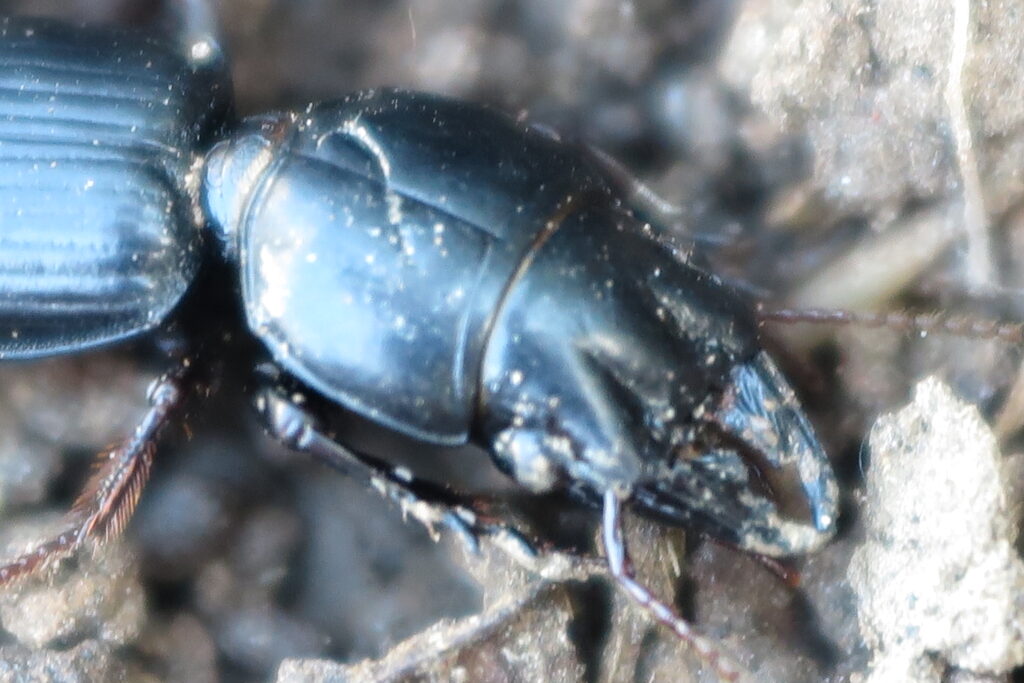
The pupa remains inactive and protected within the soil. Although little movement occurs, extensive development takes place inside the pupal case. Structures such as the wings, enlarged head, mandibles, and adult legs gradually form during this stage.
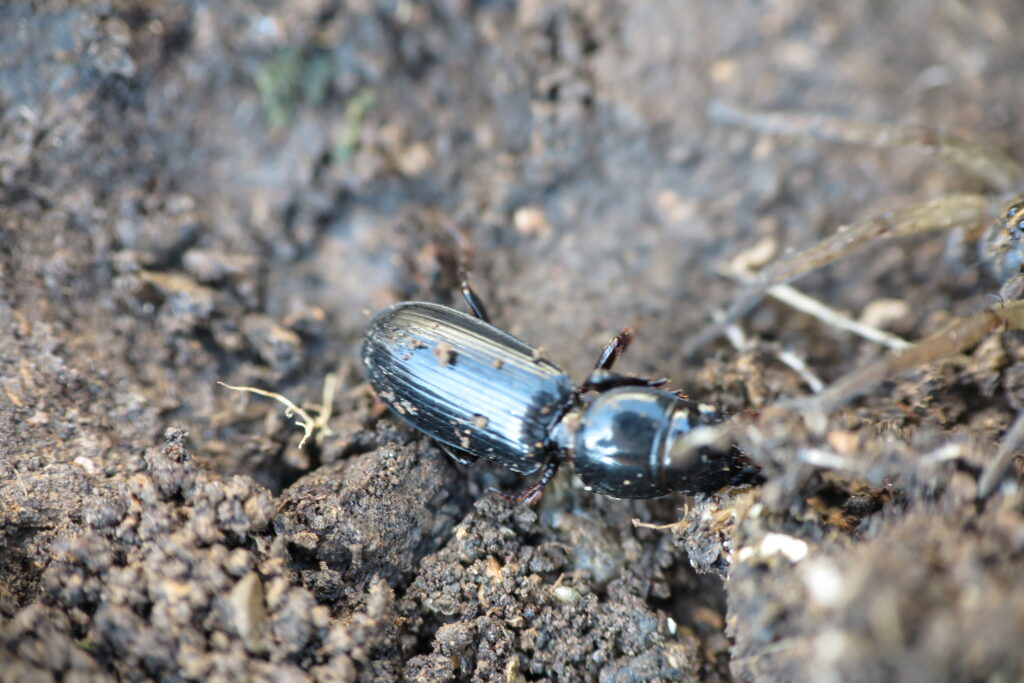
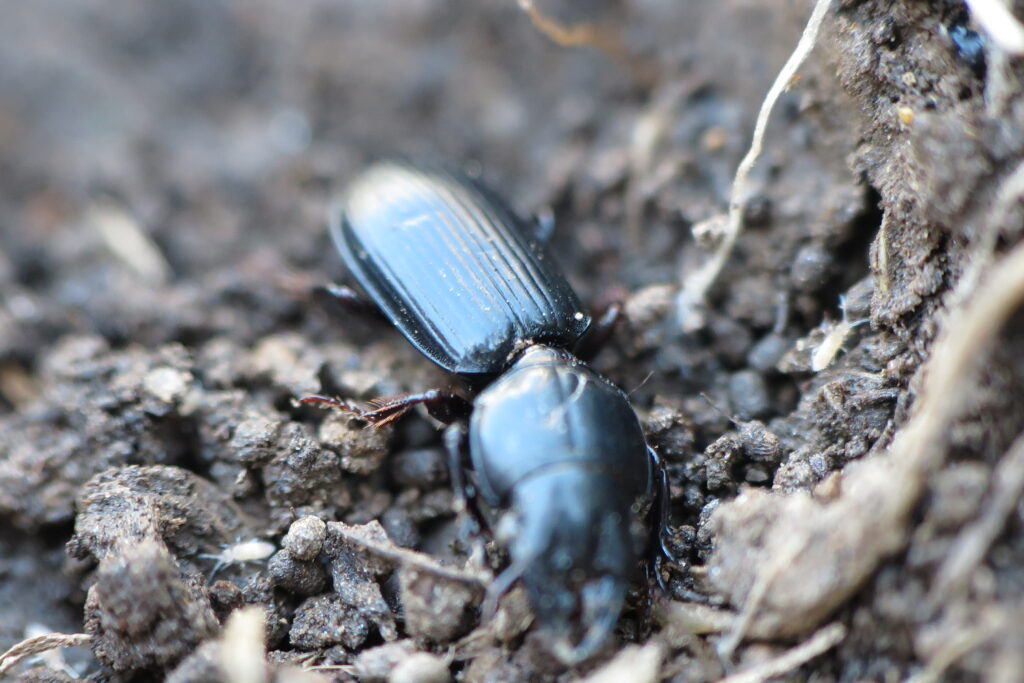
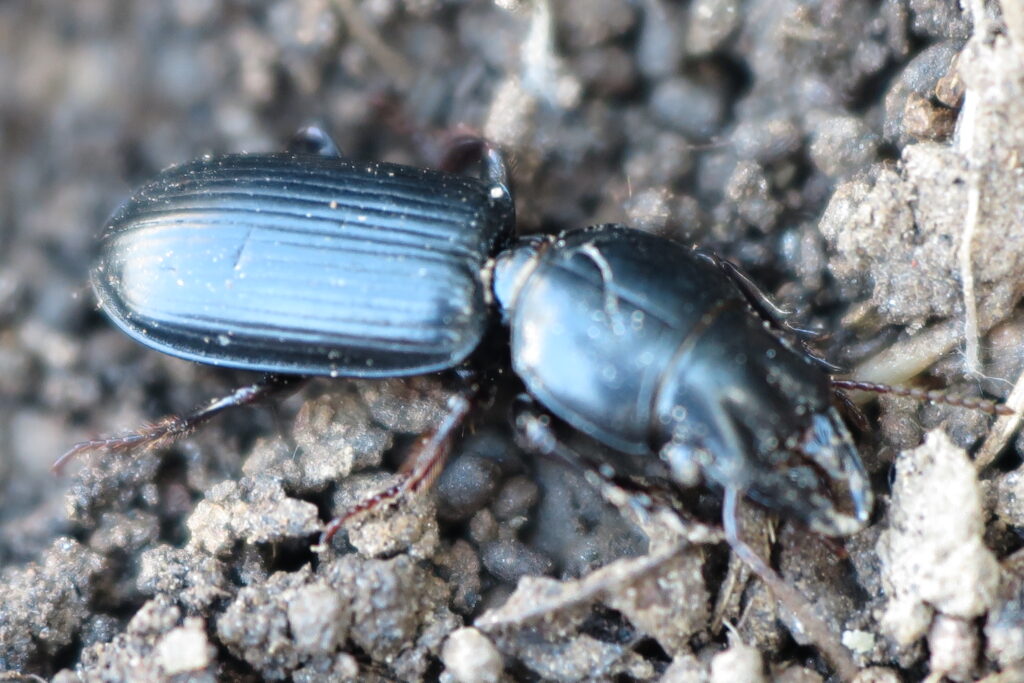
Once development is complete, the adult beetle emerges from the pupal chamber. Initially, the exoskeleton may appear lighter in color and softer than that of mature individuals. Over time, the body hardens and develops the glossy black appearance characteristic of adult Big-Headed Ground Beetles.
Adult beetles may survive for one to three years depending on environmental conditions and survival challenges. During this period, they reproduce, feed, and continue the cycle for future generations. Their larger size and developed physical features make them the stage most frequently encountered by people.
The life cycle eventually returns to the beginning as adults reproduce and deposit eggs within the soil. Each stage serves a distinct purpose, from the protected egg to the predatory larva, transforming pupa, and mature adult. Through complete metamorphosis, the Big-Headed Ground Beetle successfully develops into one of North America’s most recognizable ground beetles.
Popular Searches About Ground Beetles
Explore Ground Beetle Guide
Explore More Wildlife

Support Encounters World
Help support wildlife photography and get behind the scenes discoveries on Patreon.