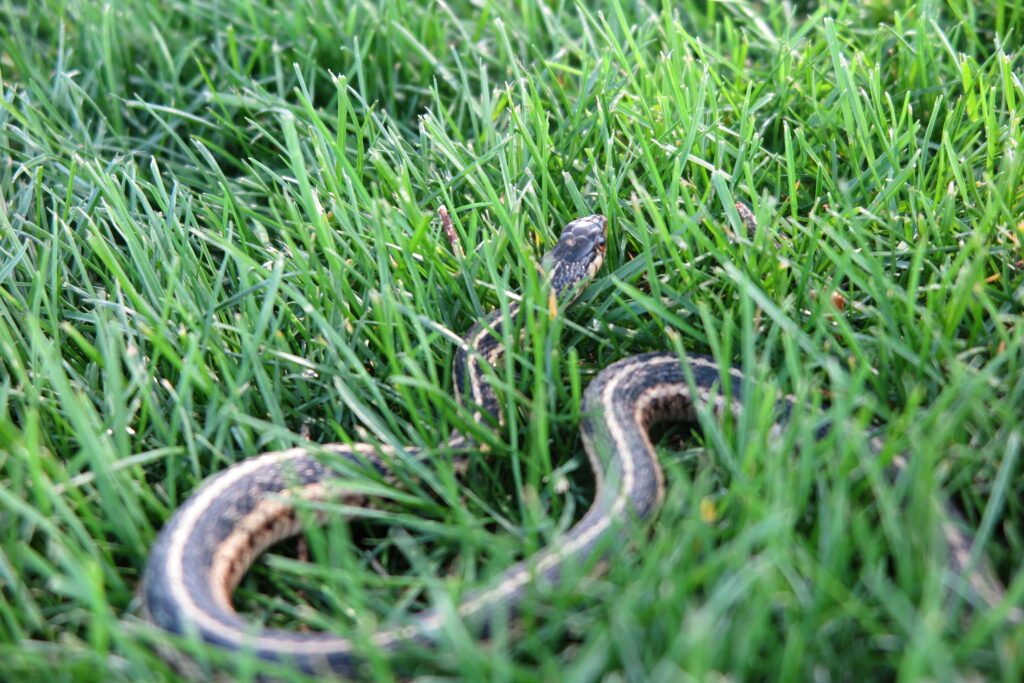
Common Garter Snake (Thamnophis sirtalis) Overview – Identification, Appearance, and Key Traits
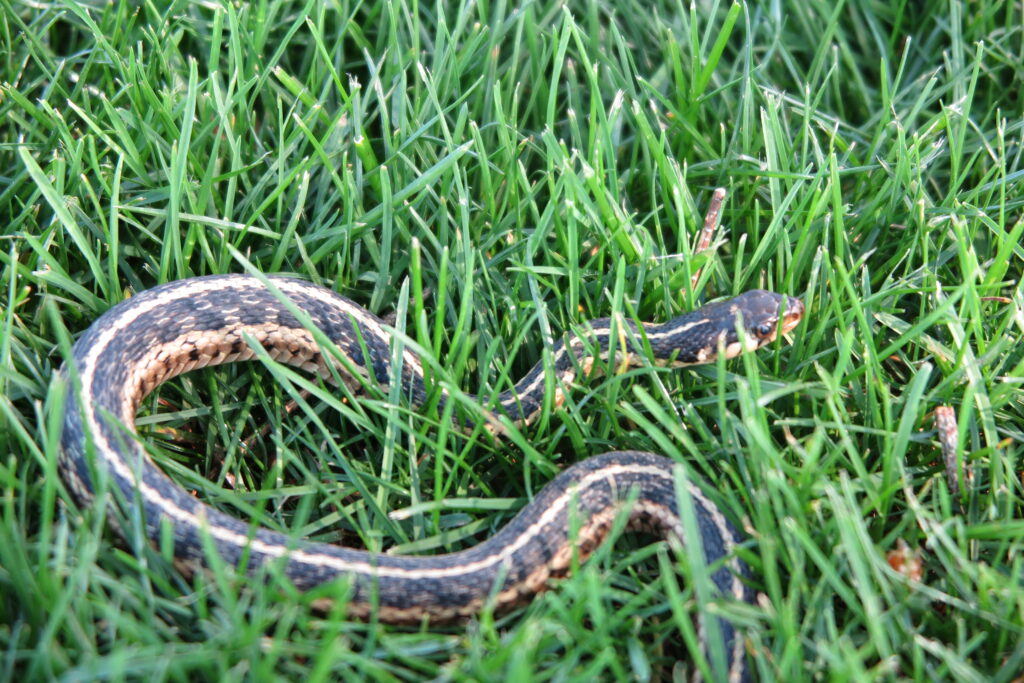
Quick Facts
Scientific Name: Thamnophis sirtalis
Common Name: Common Garter Snake
Location: North America
Average Size: 18–26 inches (45–66 cm)
Lifespan: 2–6 years in the wild
Global Range: Canada, United States, northern Mexico
Conservation Status: Least Concern
Notable Feature: Distinct longitudinal stripes running the length of the body
Location Observed: Pennsylvania, USA
Field Observation
I watched the snake work its way through the grass, its body gliding smoothly as it navigated around obstacles. It stayed alert to everything nearby but remained focused on reaching where it was headed.
Introduction – Understanding the Common Garter Snake Across North America
The common garter snake (Thamnophis sirtalis) is one of the most widely recognized reptiles across North America, often encountered in everyday settings where people least expect it. Its presence stretches across a vast geographic range, from southern Canada through most of the United States and into parts of northern Mexico. Because of this widespread distribution, it has become one of the most familiar snake species to both casual observers and wildlife enthusiasts alike.
This species is frequently seen in suburban yards, grassy fields, forest edges, and even near water sources, making it one of the few snakes that regularly overlaps with human activity. Its adaptability allows it to persist in areas where many other reptiles cannot, contributing to its reputation as a “backyard snake.” For many people, a first wildlife encounter involving a snake is often with this species.
Despite its familiarity, the common garter snake is far from visually uniform. Individuals can vary noticeably in coloration and pattern depending on their region, giving each encounter a slightly different appearance. This variation adds to the intrigue of spotting one, as no two individuals appear exactly alike in the wild.
At a glance, the common garter snake presents a slender, streamlined form that blends naturally into its surroundings. Its subtle movement through grass or along the ground often goes unnoticed until a quick flicker of motion reveals its presence. This combination of familiarity and natural camouflage makes it both easy to find and surprisingly easy to overlook.
Overview – Common Garter Snake Appearance, Size, and Visual Traits
The common garter snake is a relatively small, slender reptile characterized by a long, flexible body that allows it to move efficiently through dense vegetation. Most individuals fall within a moderate size range, typically measuring between the length of a standard ruler and a bit longer. This manageable size contributes to its non-intimidating presence compared to larger snake species.
Its most recognizable feature is the set of longitudinal stripes that run along the length of its body. These stripes are usually lighter in color—often yellow, cream, or greenish—contrasting against a darker base of black, brown, or olive. The pattern creates a clean, linear appearance that helps distinguish it quickly from other snakes in the same regions.
Color variation plays a significant role in how this species appears in the wild. Some individuals display bold, high-contrast striping, while others may appear more muted with softer, blended tones. In certain regions, the stripes may even appear faint or broken, giving the snake a more subtle, less defined look when viewed from a distance.
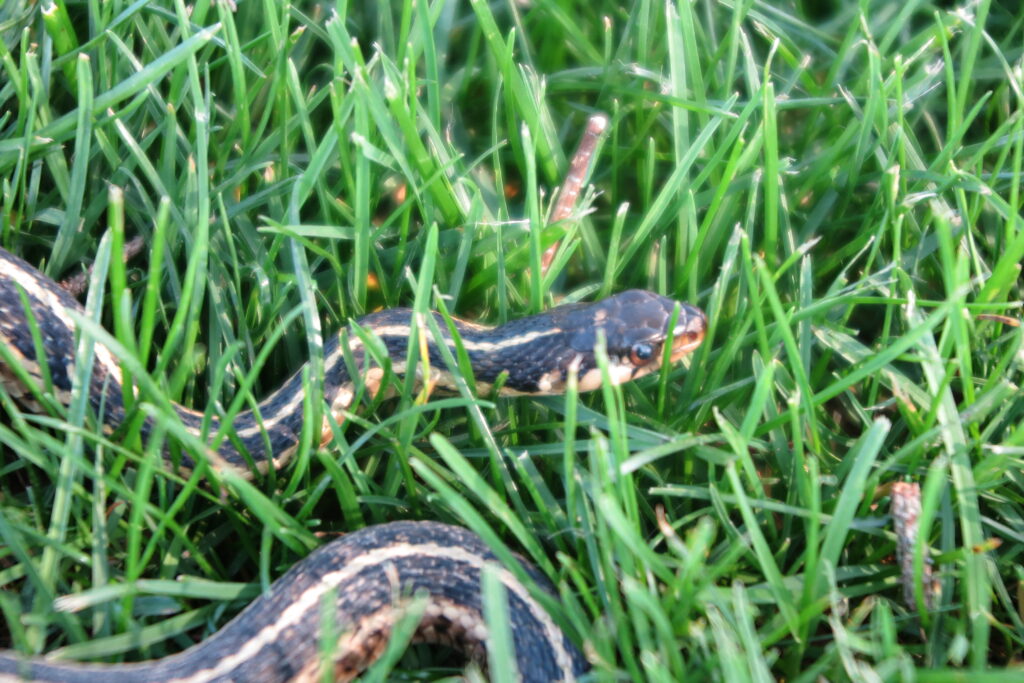
When observed in natural settings, the common garter snake often appears partially concealed, with sections of its body weaving between grass blades or resting along the ground. This partial visibility, combined with its coloration, can make it resemble a shadow or thin vine rather than a reptile. Its overall appearance is understated but highly effective for blending into a wide range of environments.
General Characteristics – Key Features That Define the Common Garter Snake
One of the defining characteristics of the common garter snake is its slim, elongated body structure, which gives it a ribbon-like appearance when in motion. Unlike heavier-bodied snakes, it maintains a lightweight, flexible build that allows it to navigate tight spaces with ease. This streamlined form is a major factor in its ability to remain inconspicuous in natural settings.
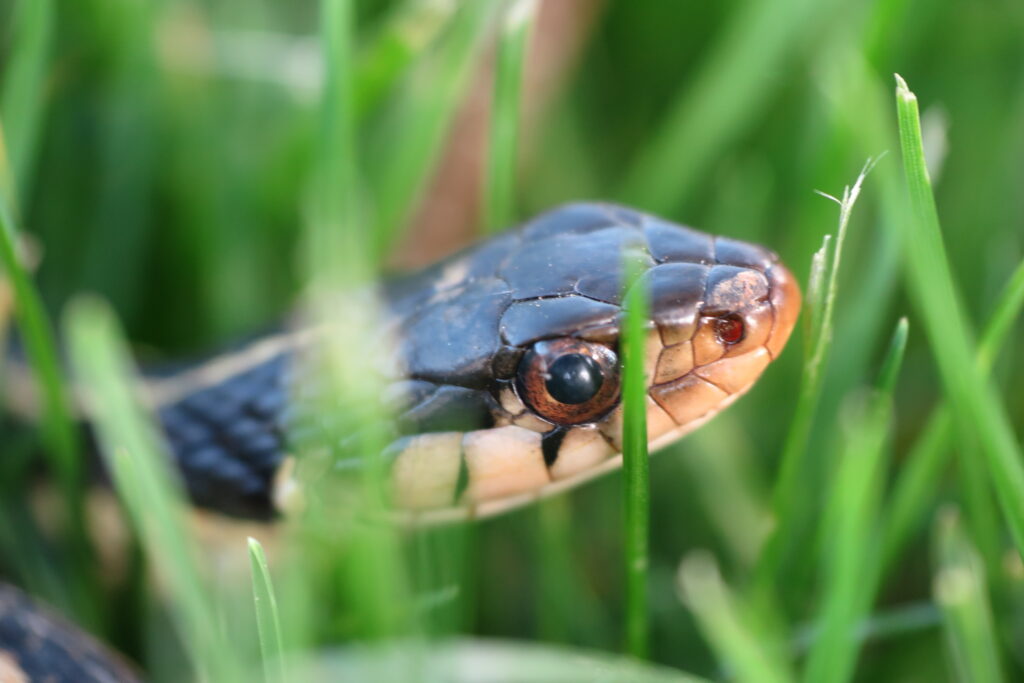
The head of the common garter snake is relatively narrow and only slightly wider than the neck, creating a smooth, continuous profile rather than a sharply defined shape. Its eyes are typically round and alert, often appearing proportionally large compared to the head. In some individuals, subtle markings near the face add contrast and help define the head from the rest of the body.
Its scales are small and keeled, meaning they have a slight ridge running down the center. This texture gives the snake a faintly rough or matte appearance rather than a glossy shine. When light hits the body at certain angles, these scales can create a subtle pattern of highlights that emphasize the snake’s form without making it overly reflective.
Compared to other striped snakes, such as ribbon snakes, the common garter snake tends to appear slightly thicker and less sharply patterned. Ribbon snakes often have cleaner, more defined striping and a more delicate build, while garter snakes show greater variation and a more grounded appearance. This distinction becomes clearer when both species are observed side by side, highlighting the garter snake’s broader and more variable look.
Role in Ecosystem – The Importance of the Common Garter Snake in Nature
The common garter snake plays a meaningful role in maintaining ecological balance across the regions it inhabits. As a mid-level species within the food web, it serves as both a consumer and a source of energy for other wildlife. This dual role helps connect different layers of the ecosystem in a way that supports overall stability.
In many environments, the presence of garter snakes contributes to the natural regulation of smaller animal populations. By occupying this position, they help prevent certain species from becoming overly abundant, which could otherwise disrupt plant life or other animal communities. Their influence is subtle but consistent across a wide range of habitats.
At the same time, the common garter snake is an important food source for larger predators, including birds of prey, mammals, and other reptiles. This makes it a key link in transferring energy upward through the food chain. Without species like this, many predators would face reduced food availability, potentially impacting their populations as well.
Beyond direct interactions, the common garter snake also contributes to biodiversity by occupying a wide variety of ecological niches. Its ability to thrive in both natural and human-altered environments allows it to persist where other species may decline. This resilience supports ecosystem continuity, especially in areas undergoing environmental change or fragmentation.