How Big Do Garter Snakes Get? Size, Length, and Growth of the Common Garter Snake Explained
Quick Facts
Location: North America
Average Size: 18–26 inches (45–66 cm)
Lifespan: 2–6 years in the wild
Global Range: Canada, United States, northern Mexico
Conservation Status: Least Concern
Notable Feature: Slender body with noticeable length variation across regions
Introduction – Understanding the Size of the Common Garter Snake Across Its Range
The Common Garter Snake is one of the most widely distributed snakes in North America, and its size can vary noticeably depending on where it is found. Stretching across southern Canada, the United States, and into parts of northern Mexico, this species occupies a wide range of climates and landscapes. Because of this, individuals may differ in length and overall appearance from one region to another.
For many observers, the first question after spotting one is often related to its size. Whether encountered in a backyard, along a trail, or near vegetation, the snake’s length is usually the most immediate and noticeable trait. Its slender build can sometimes make it appear longer than it actually is, especially when partially hidden in grass.
Across its range, the common garter snake maintains a moderate size compared to many other snake species. It is not among the smallest snakes, but it is far from the large-bodied species that tend to draw more attention. This middle-ground size contributes to its frequent encounters with people without creating a strong sense of intimidation.
Understanding how big this snake gets involves more than just a single number. Factors such as age, location, and natural variation all play a role in determining its final size. Looking at these elements together provides a clearer picture of what to expect when encountering one in the wild.
Overview – Common Garter Snake Size, Appearance, and Length Variation
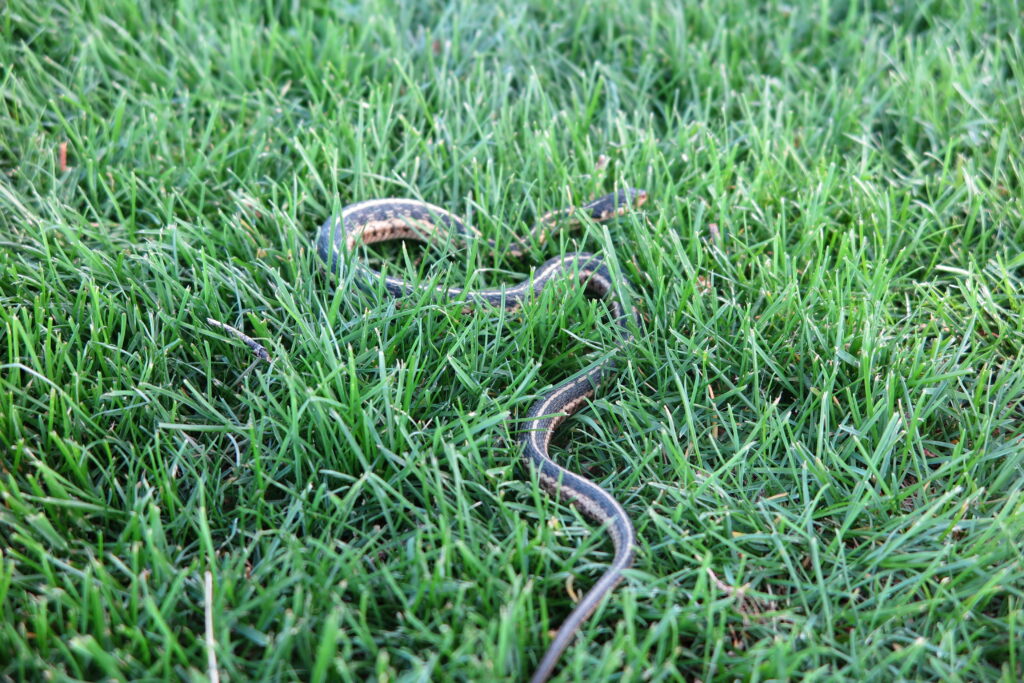
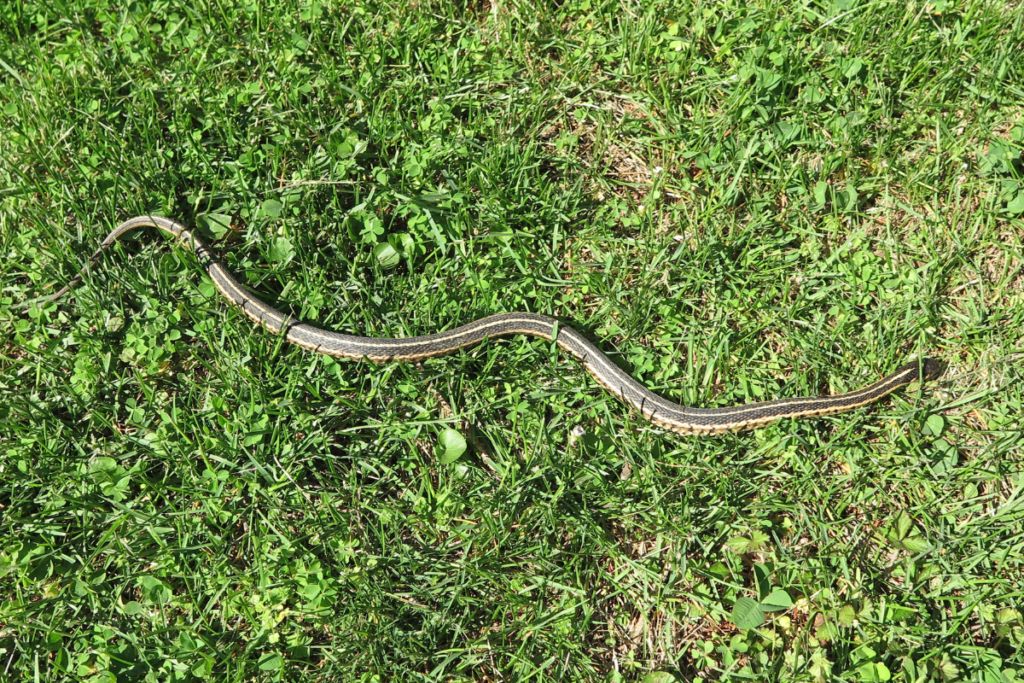
The common garter snake is generally considered a medium-sized snake, with most individuals measuring between 18 and 26 inches in length. This places it roughly in the range of a standard school ruler to the length of a typical laptop. While this size may not seem large, its thin body can make it appear longer when stretched out across the ground.
Its overall form is long and slender, with a body that tapers gradually from head to tail. This streamlined shape allows the snake to extend across surfaces in a way that emphasizes length rather than bulk. Compared to thicker-bodied snakes, it gives the impression of being longer and more flexible than its actual measurements suggest.
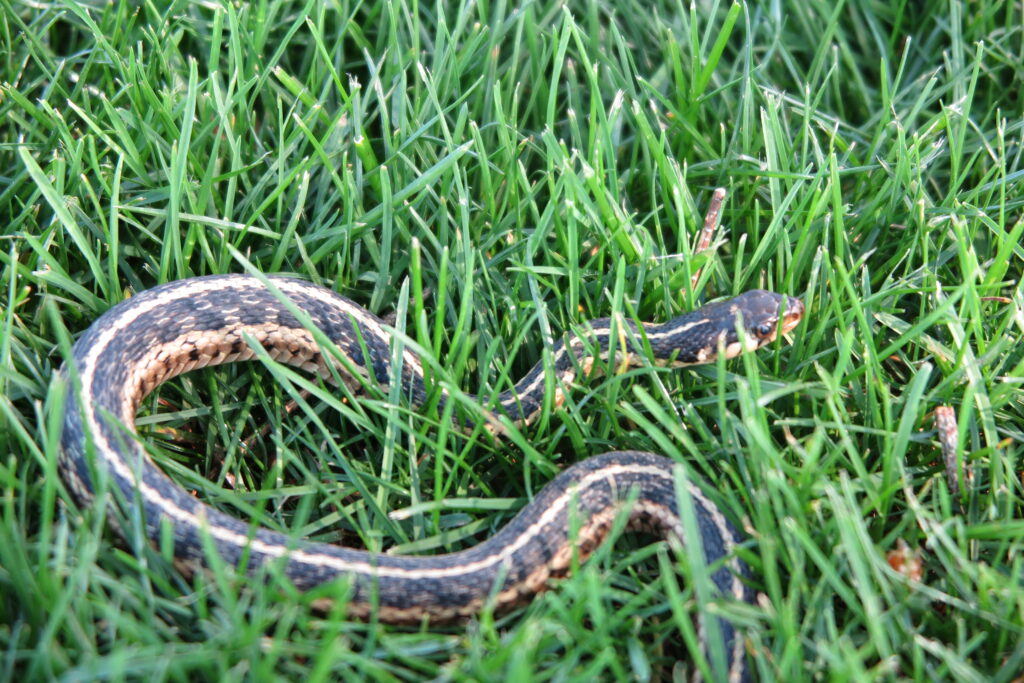
Color variation can also influence how large the snake appears. Individuals with bold, high-contrast stripes tend to have their length visually emphasized, as the lines draw the eye from head to tail. In contrast, snakes with more muted or blended patterns may appear shorter or less defined at a glance.
Across its range, size differences can occur based on environmental conditions. Some populations may produce slightly larger individuals, while others remain on the smaller end of the spectrum. This variation highlights the adaptability of the species, allowing it to maintain its presence in a wide range of locations without a fixed size limit.
General Characteristics – Physical Traits That Influence the Size of the Common Garter Snake
The body structure of the common garter snake plays a major role in how its size is perceived. Its narrow frame and elongated proportions create a stretched appearance, similar to a flexible cord or thin rope laid across the ground. This makes even shorter individuals appear longer than expected at first glance.
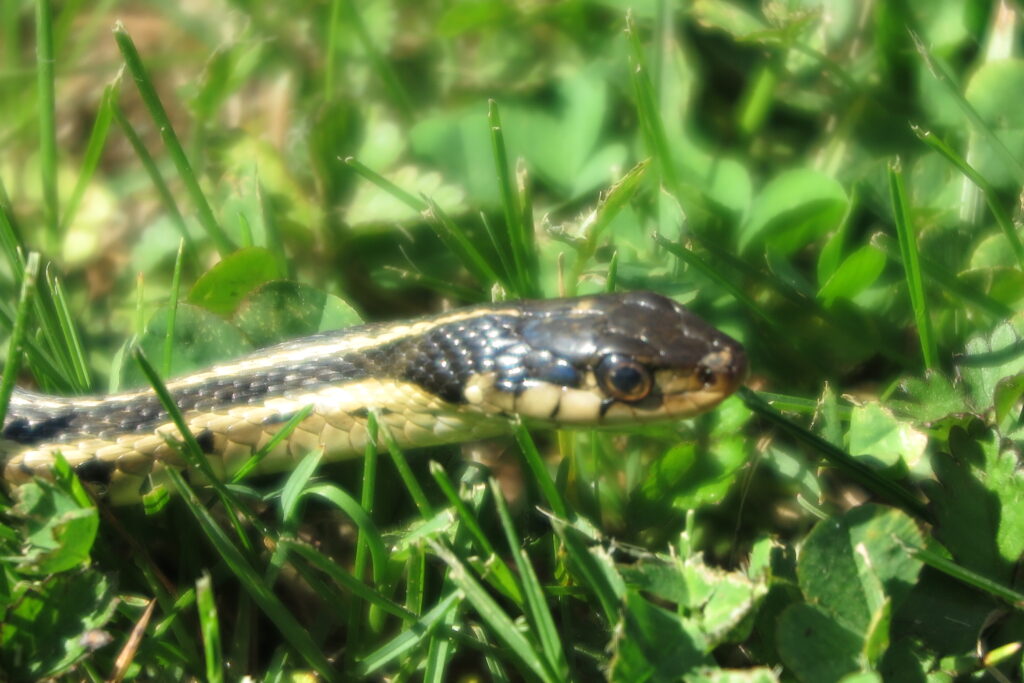
The head of the snake is relatively small and blends smoothly into the rest of the body, without a dramatic increase in width. This lack of contrast between head and body contributes to the illusion of continuous length. In species with larger or more defined heads, the body may appear shorter by comparison.
Another defining feature is the presence of longitudinal stripes, which run the full length of the body. These stripes act as visual guides, drawing attention along the snake’s entire form and reinforcing its elongated shape. This effect is similar to how vertical lines on clothing can make a person appear taller.
Compared to similar species like ribbon snakes, the common garter snake often appears slightly thicker and more variable in pattern. Ribbon snakes are typically slimmer and more uniform, while garter snakes show a broader range of body proportions. This distinction helps explain why size perception can differ even between closely related species.
Role in Ecosystem – How the Common Garter Snake’s Size Fits Into Its Environment
The moderate size of the common garter snake allows it to occupy a balanced position within the ecosystem. It is large enough to interact with a variety of smaller animals, yet small enough to remain vulnerable to larger predators. This middle-ground size helps connect different levels of the food web.
Because it is not overly large, the snake can move through environments without significantly altering them. Its presence is subtle, allowing it to exist alongside other species without causing disruption. This low-impact presence contributes to maintaining natural balance in the areas it inhabits.
At the same time, its size makes it an accessible prey item for a range of predators, including birds and mammals. This ensures that energy continues to move through the ecosystem, supporting species at higher levels. Without animals of this size, certain ecological connections would be less stable.
The adaptability of its size across different regions also plays a role in its ecological success. By maintaining a body size that fits a wide range of conditions, the common garter snake is able to persist in environments where more specialized species might struggle. This flexibility reinforces its importance as a consistent and reliable part of many ecosystems.