
Blacklet Fly Predators Guide: What Eats Blacklet Flies in the Wild?
Quick Facts
Predator Type: Prey Species
Main Predators: Birds, Spiders, Predatory Insects, Amphibians, and Reptiles
Most Vulnerable Stage: Larval and Adult Stages
Primary Defense: Rapid Flight and Avoidance
Food Web Role: Secondary Consumer and Prey Organism
Survival Strategy: Camouflage, Awareness, and Quick Escape
Understanding Blacklet Fly Predators and Survival Challenges
Blacklet flies belong to the family Heleomyzidae, a diverse group of true flies found across much of the world. Although small and often overlooked, they play an important role within food webs. Their widespread distribution places them in environments shared with numerous animals that view small insects as a valuable food source.
Like many insects, blacklet flies occupy a position near the middle of ecological food chains. They interact with a variety of organisms while simultaneously serving as prey for larger species. This role helps transfer energy from smaller biological systems to higher levels of the food web.
Predation is a constant challenge throughout the blacklet fly’s life. From the moment an individual develops through adulthood, numerous predators are capable of capturing and consuming it. Survival depends largely on avoiding detection and escaping danger before an attack occurs.
Despite these risks, blacklet flies remain successful across multiple continents. Their continued presence demonstrates that effective survival strategies can compensate for their small size and limited physical defenses. Understanding their predators provides valuable insight into how ecosystems remain balanced.
Birds and Other Vertebrates That Eat Blacklet Flies
Birds are among the most significant predators of blacklet flies. Many insect-eating species regularly consume small flies as part of their daily diet. Flycatchers, warblers, wrens, swallows, and other insectivorous birds often capture flying insects whenever opportunities arise.
Aerial hunting birds are especially effective predators. Species such as swallows and martins can catch insects while flying, allowing them to intercept blacklet flies in midair. Their speed and agility make escape difficult once a target has been detected.
Small songbirds also prey upon blacklet flies while searching vegetation. A bird moving through shrubs or wildflowers may consume numerous insects in a short period of time. Although a single blacklet fly represents a small meal, many together provide valuable nutrition.
Amphibians contribute to predation as well. Frogs, toads, and salamanders frequently consume small insects encountered within their environment. A blacklet fly that lands within striking distance may quickly become prey.
Reptiles occasionally capture blacklet flies when opportunities arise. Small lizards, particularly insect-eating species, feed on a variety of flying and crawling insects. Their quick reflexes allow them to take advantage of unsuspecting prey.
Even certain mammals consume blacklet flies indirectly or opportunistically. Bats, for example, capture numerous small flying insects during nighttime feeding flights. While blacklet flies are not their only target, they may form part of the available prey community.
Compared with larger insects such as grasshoppers or beetles, blacklet flies provide smaller meals. However, their abundance makes them valuable food sources when consumed in large numbers. Many predators rely on quantity rather than individual prey size.
The relationship between blacklet flies and vertebrate predators demonstrates how even tiny insects support larger wildlife populations. Without insects serving as prey, many birds, reptiles, amphibians, and mammals would struggle to meet their nutritional needs.

Invertebrate Predators of Blacklet Flies
Spiders rank among the most important invertebrate predators of blacklet flies. Web-building species capture flies that accidentally collide with silk strands, while hunting spiders actively pursue prey without relying on webs. Both strategies can be highly effective against small flying insects.
Orb-weaver spiders are particularly successful predators. Their large webs function like aerial traps positioned directly within insect travel routes. A blacklet fly that strikes the web may become entangled before it has a chance to escape.
Wolf spiders and jumping spiders use a different approach. Rather than waiting for prey to arrive, they actively search for insects and launch rapid attacks when opportunities appear. Their excellent vision and speed make them formidable hunters.
Predatory insects also contribute significantly to blacklet fly mortality. Robber flies, assassin bugs, mantises, and certain beetles regularly consume smaller insects. These hunters often specialize in locating and capturing prey with remarkable efficiency.
Dragonflies represent another important threat. Their aerial hunting abilities allow them to capture flying insects with extraordinary precision. A blacklet fly sharing the same airspace as a hunting dragonfly faces substantial risk.
Some predatory wasps target small insects as well. While many people associate wasps with nectar feeding or nest defense, numerous species actively hunt other arthropods. Blacklet flies occasionally become part of this predatory relationship.
Even larger fly species may prey upon smaller flies. Certain predatory flies capture insects during flight, demonstrating that not all flies occupy the same ecological role. Within insect communities, predators and prey often exist side by side.
The diversity of invertebrate predators highlights the numerous challenges blacklet flies face. Survival requires constant awareness because danger may come from webs, ambush predators, aerial hunters, or actively searching insects.
Blacklet Fly Defense Strategies Against Predators
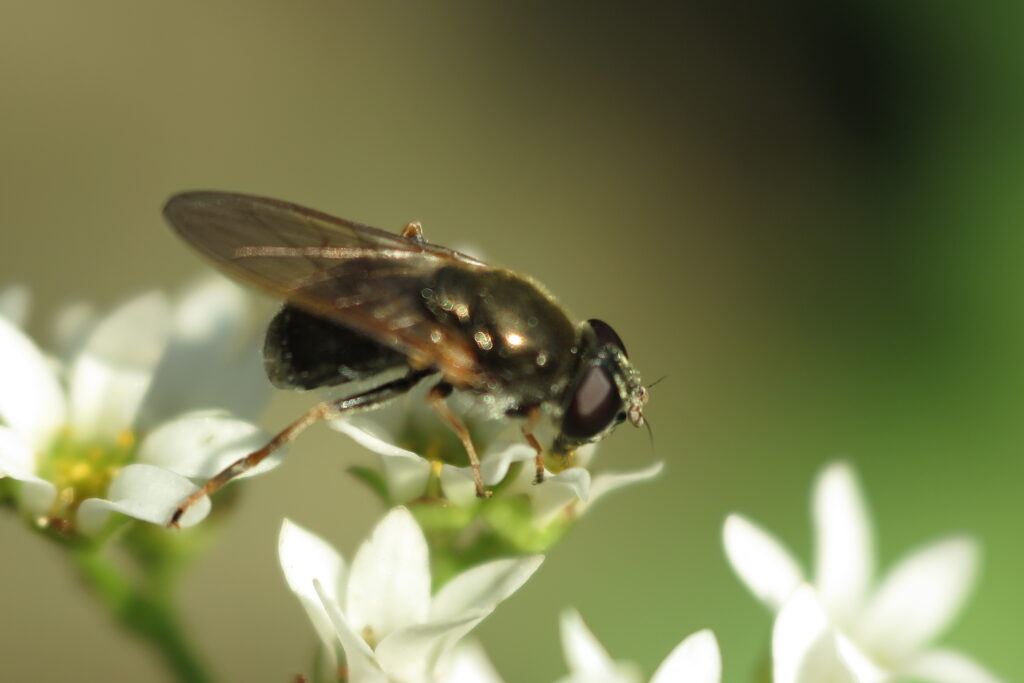
Unlike bees, wasps, or certain beetles, blacklet flies lack powerful physical defenses. They possess no stinger, venom delivery system, or heavily armored body. Instead, their survival depends on avoidance, awareness, and rapid escape.
Flight serves as their most important defense mechanism. When a potential threat approaches, a blacklet fly can launch into the air within moments. This rapid response often allows it to avoid predators before an attack is completed.
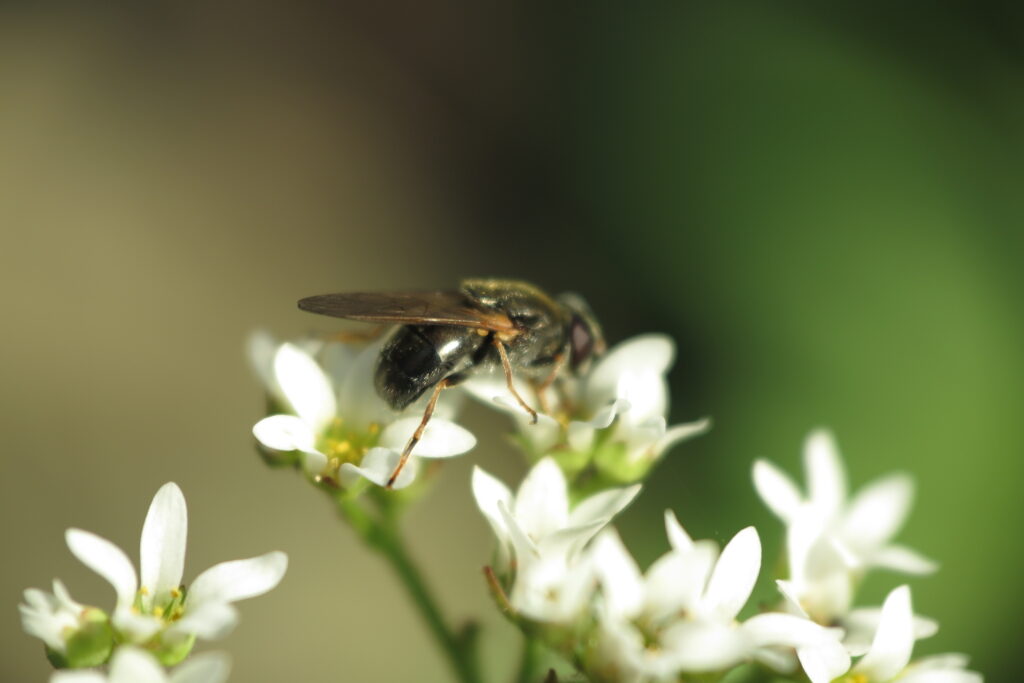
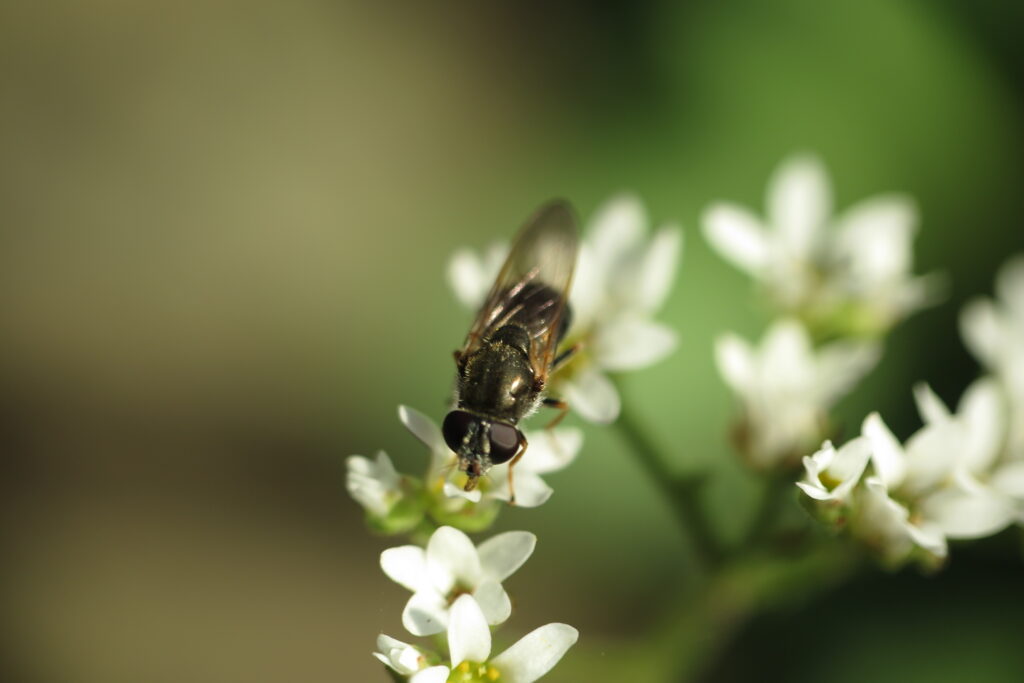
Large compound eyes provide another advantage. These eyes offer extensive visual coverage, helping the insect detect movement from multiple directions. Early detection increases the likelihood of escaping before a predator closes the distance.
Dark coloration contributes to camouflage. Against vegetation, bark, soil, or shaded surfaces, blacklet flies can become surprisingly difficult to notice. Remaining unnoticed often prevents predator encounters altogether.
Their small size also serves as a form of protection. Tiny insects are naturally harder to detect than larger animals. A blacklet fly resting motionless among vegetation may escape attention entirely.
A practical example can be observed when a bird approaches a flowering patch occupied by flies. Many blacklet flies take flight almost instantly, leaving the area before direct contact occurs. This instinctive reaction increases survival odds.
Another defense involves unpredictability. Quick changes in direction during flight make it more difficult for predators to track movement accurately. Similar to a zigzagging athlete avoiding a defender, sudden maneuvers can create valuable escape opportunities.
Although blacklet flies face numerous predators throughout their lives, their combination of awareness, camouflage, speed, and agility allows many individuals to survive long enough to reproduce. These defensive traits help maintain populations across the family’s vast global distribution while supporting the ecological balance of the ecosystems they inhabit.
Popular Searches About Blacklet Flies
Explore Blacklet Fly Guide
Explore More Wildlife

Support Encounters World
Help support wildlife photography and get behind the scenes discoveries on Patreon.