
Blacklet Fly Size Guide: How Big Are Blacklet Flies and What Affects Their Size?

Quick Facts
Average Adult Length: 4–12 mm (0.15–0.47 in)
Largest Known Species: Up to 15 mm (0.59 in) in some regions
Size Category: Small Fly
Wingspan: Approximately 6–18 mm (0.24–0.71 in)
Growth Type: Complete Metamorphosis
Notable Size Feature: Small body size combined with relatively large compound eyes
Understanding Blacklet Fly Size and Physical Scale
Blacklet flies belong to the family Heleomyzidae, a diverse group of true flies distributed across much of the world. Although they occupy a wide range of environments, one characteristic shared by most species is their relatively small size. Their modest dimensions often cause them to go unnoticed among larger insects.
Most blacklet flies measure between 4 and 12 millimeters in body length. This places them among the smaller fly families commonly encountered by naturalists and wildlife observers. While size varies between species, individuals generally remain compact throughout their lives.
To visualize their scale, imagine a grain of rice, a sunflower seed, or the width of a standard pencil eraser. Many blacklet flies fall within this general size range. Even when resting in plain sight, they can be surprisingly difficult to notice because of their small stature.
Despite their limited size, blacklet flies possess all the major anatomical features associated with larger flies. Wings, compound eyes, antennae, legs, and body segments are fully developed and functional. Their miniature proportions simply compress these structures into a remarkably compact package.
Observers often underestimate their size when viewing photographs. Close-up images can make a blacklet fly appear much larger than it actually is. In reality, many individuals could comfortably rest on a fingernail with room to spare.
The family’s small dimensions contribute to its ability to occupy a variety of ecological niches. Tiny insects can utilize spaces and resources unavailable to larger animals. This flexibility has helped blacklet flies establish populations across diverse regions.
Size also influences how these flies are perceived by humans. Large insects tend to attract attention immediately, while blacklet flies often blend into the background. Their subtle presence explains why many people overlook them entirely.
Although physically small, blacklet flies remain important components of insect communities worldwide. Their size may be modest, but their ecological significance extends far beyond their dimensions.
Blacklet Fly Size Range and Growth Differences
Not all blacklet flies are exactly the same size. The family contains numerous species, and body length can vary significantly between them. Some remain near the lower end of the size spectrum, while others approach the upper limits commonly associated with Heleomyzidae.
Smaller species may measure only 4 to 6 millimeters in length. These insects can appear no larger than a sesame seed when viewed in the field. Their tiny size makes careful observation necessary for accurate identification.
Medium-sized species typically fall within the 7 to 10 millimeter range. This represents the most common size category encountered by observers. At this scale, body features become easier to see without magnification, particularly when the insect rests on vegetation.
Larger members of the family may exceed 12 millimeters and occasionally approach 15 millimeters. Although still considered small compared with many insects, these individuals appear noticeably larger than their smaller relatives. Their increased size often makes identification somewhat easier.
Growth differences begin during the larval stage. Environmental conditions, resource availability, and species-specific genetics all influence final adult size. Two closely related blacklet flies may reach different sizes despite sharing similar characteristics.
Regional variation can also occur. Populations living in different climates sometimes exhibit slight size differences due to environmental pressures. Such variation is common throughout the insect world and is not unique to Heleomyzidae.
Males and females may differ slightly in body proportions as well. In some species, females appear somewhat larger because of reproductive requirements. However, these differences are generally subtle and difficult to detect without direct comparison.
The result is a family that exhibits moderate size variation while remaining consistently small overall. Whether tiny or relatively large for a blacklet fly, all members retain the compact appearance characteristic of the group.
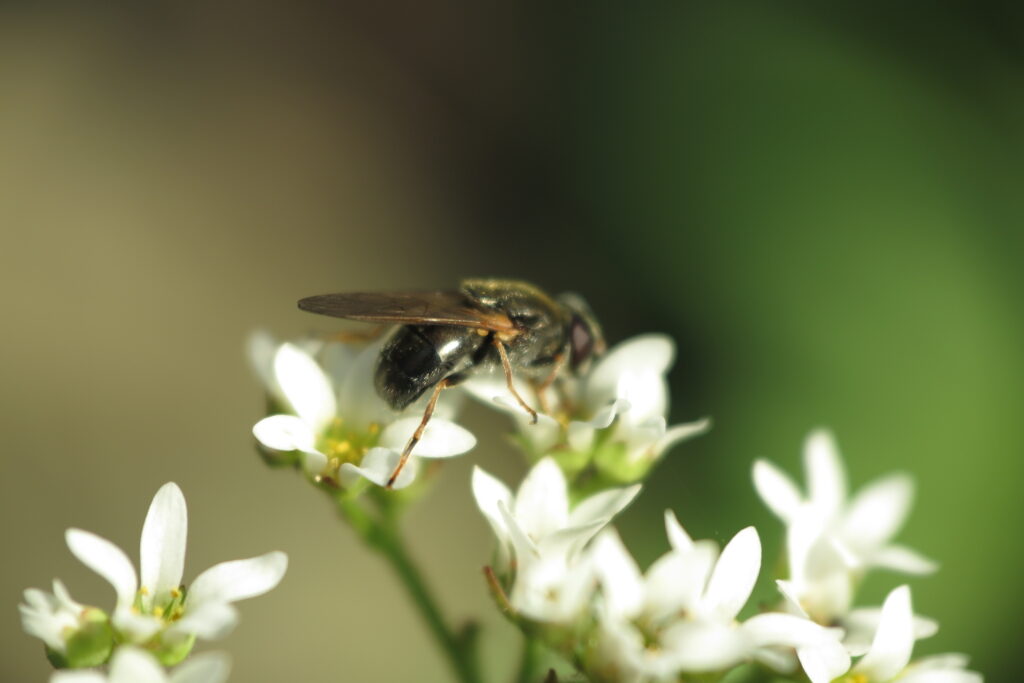
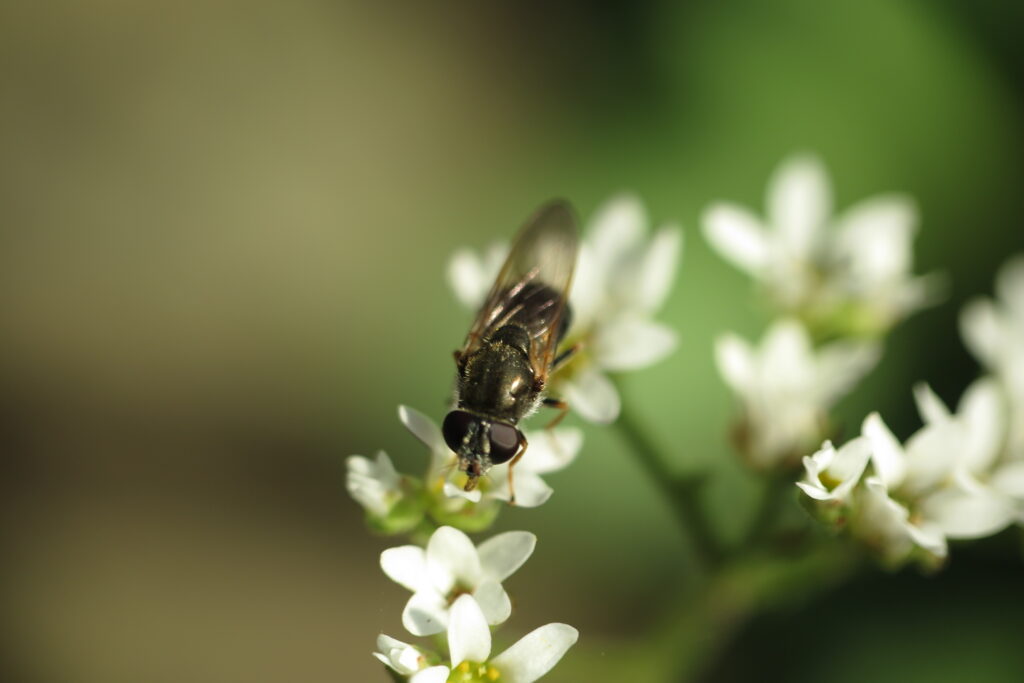
Key Body Measurements Used in Blacklet Fly Identification
Body length is the most frequently referenced measurement when discussing blacklet fly size. Scientists typically measure from the front of the head to the tip of the abdomen, excluding the antennae. This standardized approach allows accurate comparison between individuals and species.
Wingspan provides another useful measurement. Although not discussed as often as body length, wingspan helps illustrate the insect’s overall proportions. Most blacklet flies possess wings spanning roughly 6 to 18 millimeters depending on species and body size.
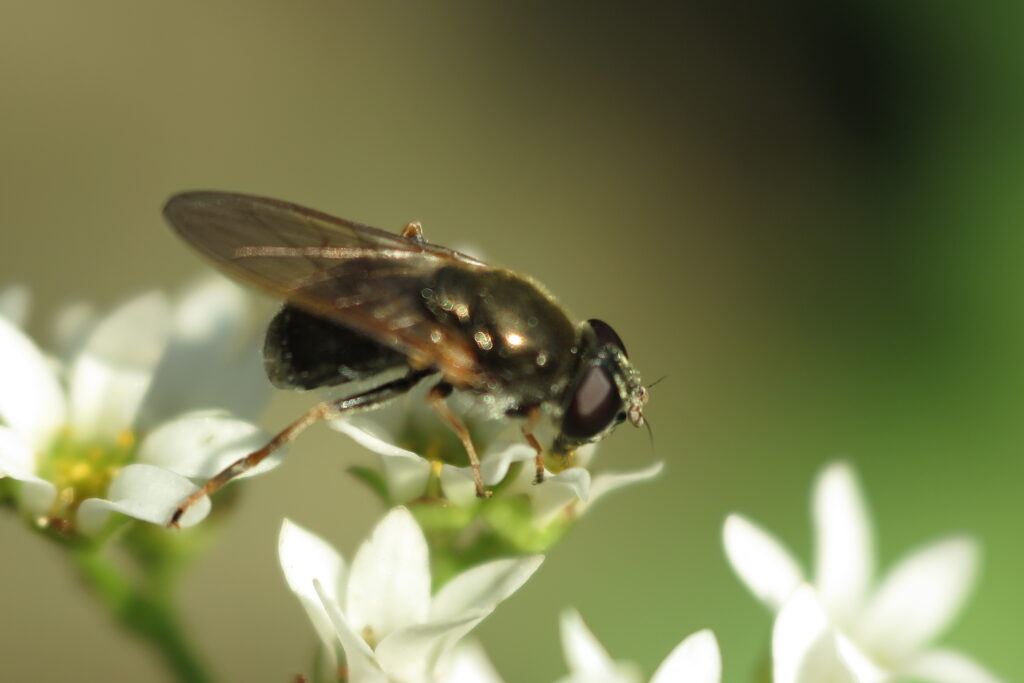
The head occupies a surprisingly large portion of the body relative to overall dimensions. Large compound eyes dominate much of the facial area and create a distinctive appearance. This proportion often makes the insect seem larger than it actually is when viewed closely.
Body width is generally narrow compared with overall length. Most blacklet flies maintain a streamlined profile that contributes to their sleek appearance. This slender shape separates them from certain broader-bodied fly species.
Comparisons with common objects can make measurements easier to understand. A 5-millimeter blacklet fly is similar in length to a grain of uncooked rice, while a 12-millimeter individual approaches the width of a standard paperclip. These familiar references help place their size into perspective.
Macro photography often exaggerates apparent scale. A highly magnified image may make a blacklet fly appear as large as a dragonfly or butterfly. Understanding actual measurements prevents misinterpretation of photographic size.
Wing-to-body proportion is another notable characteristic. Despite their small size, blacklet flies possess wings that appear relatively large compared with overall body length. This creates a balanced silhouette when viewed from above.
Together, these measurements provide a complete picture of blacklet fly size. Rather than focusing on a single dimension, considering body length, wingspan, width, and proportions offers a more accurate understanding of the insect’s physical scale.
Why Blacklet Fly Size Matters in Nature
Size influences nearly every aspect of a blacklet fly’s life. From development and survival to reproduction and ecological interactions, body dimensions affect how these insects function within their environments. Even slight differences in size can influence opportunities and challenges.
Small body size allows blacklet flies to access spaces unavailable to larger insects. Tiny gaps among vegetation, organic material, and natural surfaces become usable environments. This expands the range of locations where individuals can live and develop.
Their compact size also reduces overall resource requirements. Compared with larger insects, blacklet flies need fewer resources to maintain daily activities. This efficiency can be advantageous in environments where conditions fluctuate throughout the year.
Predator interactions are influenced by size as well. Smaller insects are more difficult to detect visually, particularly when resting against dark vegetation or shaded surfaces. Remaining inconspicuous can provide an important survival advantage.
A useful comparison can be made to compact cars navigating crowded city streets. Just as smaller vehicles can maneuver through tighter spaces than large trucks, blacklet flies benefit from their miniature dimensions. Their size provides flexibility that larger insects may not possess.
Developmental timing can also be linked to body size. Smaller insects often complete growth more quickly than larger species. This relationship helps explain why many fly species can produce multiple generations under favorable conditions.
Identification efforts frequently rely on size information. Knowing whether an observed insect falls within the expected size range helps eliminate other possibilities. Size alone rarely confirms identification, but it serves as an important supporting clue.
Ultimately, blacklet fly size represents far more than a simple measurement. It influences ecology, survival, development, and recognition. Understanding these dimensions provides valuable insight into how such a small insect successfully occupies ecosystems across much of the world.
Popular Searches About Blacklet Flies
Explore Blacklet Fly Guide
Explore More Wildlife

Support Encounters World
Help support wildlife photography and get behind the scenes discoveries on Patreon.