
Buffalo Treehopper Behavior: Activity Patterns, Movement, and Survival Strategies
Quick Facts
Activity Type: Primarily diurnal
Social Structure: Solitary to loosely grouped
Territorial Behavior: Non-territorial
Movement Style: Slow walking with rapid jumps and short flights
Communication Method: Vibrational signals through plants
Defense Strategy: Camouflage, immobility, and sudden escape movements
Buffalo Treehopper Behavior Introduction
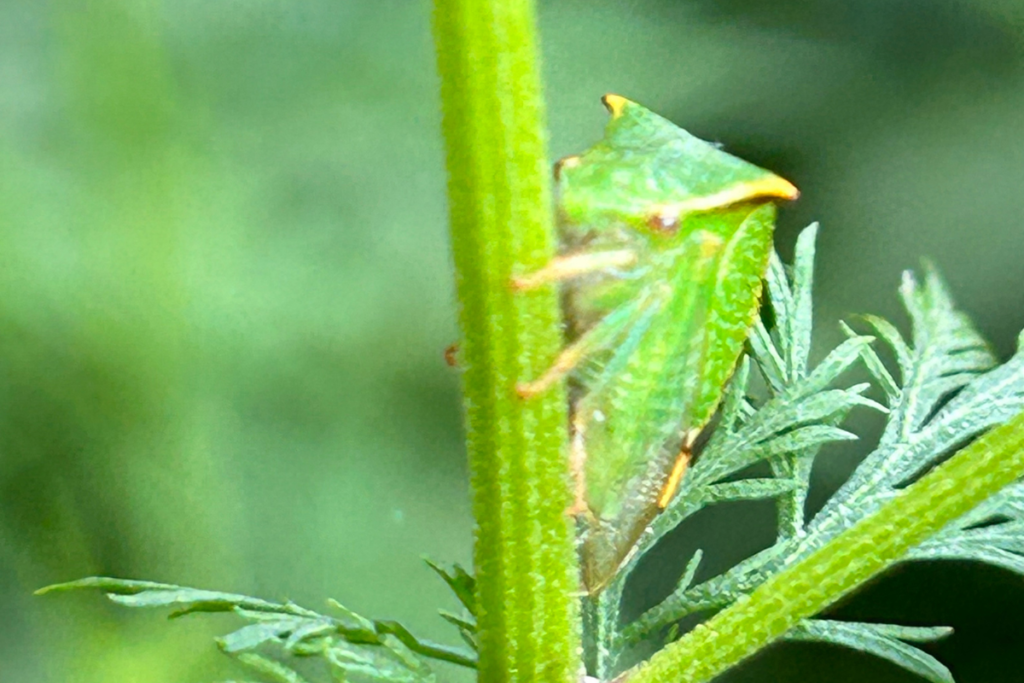
The Buffalo Treehopper (Stictocephala bisonia) spends much of its life quietly attached to stems and branches where its unusual shape allows it to disappear into surrounding vegetation. Across North America and introduced portions of Europe, these insects often remain unnoticed despite living in areas frequently visited by people. Their small size and thorn-like appearance create the impression that they are simply part of the plant itself.
Observers who encounter a Buffalo Treehopper often notice its stillness before any movement occurs. The insect may remain motionless for several minutes, even when approached closely. This calm and patient behavior makes it very different from many other insects that immediately flee from disturbance.
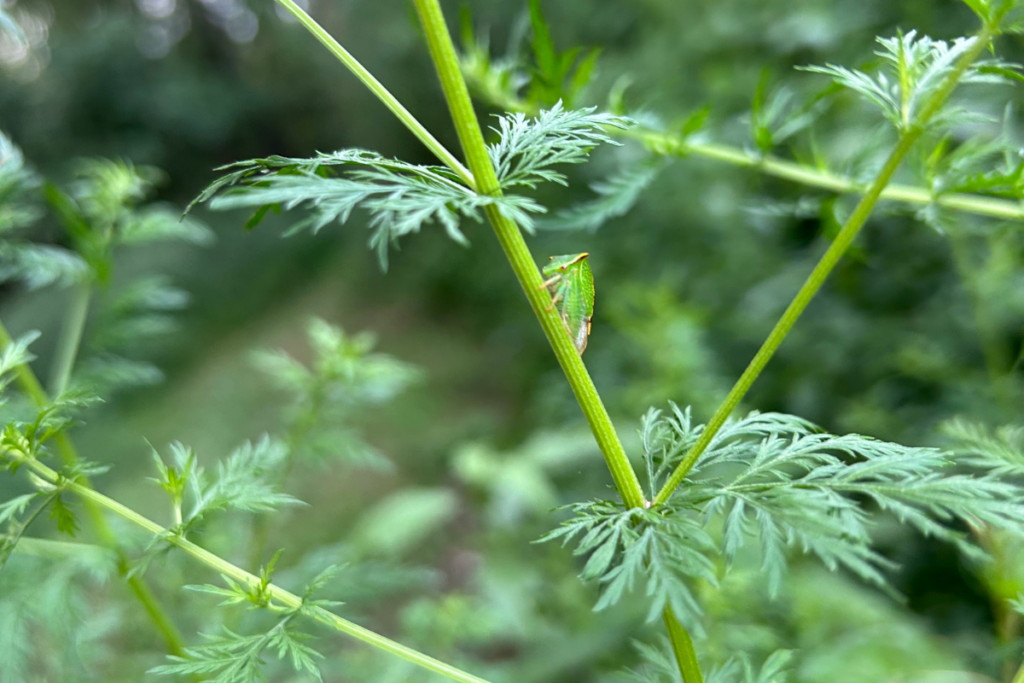
Throughout meadows, gardens, orchards, and woodland edges, Buffalo Treehoppers occupy a quiet role among stems and branches. Their daily lives unfold slowly, with long periods of inactivity interrupted by brief moments of movement. A person walking through vegetation may pass several individuals without ever realizing they are present.
Watching a Buffalo Treehopper can feel similar to observing a tiny statue attached to a plant. Its body rarely shifts position, and even slight movements occur carefully. This restrained lifestyle forms the foundation of the species’ behavioral patterns and allows it to remain hidden within the landscape.
Buffalo Treehopper General Behavior Patterns
Buffalo Treehoppers generally display calm and deliberate behavior. Rather than constantly moving from place to place, they often spend extended periods resting in a single location. Their activities appear measured and economical, conserving energy whenever possible.
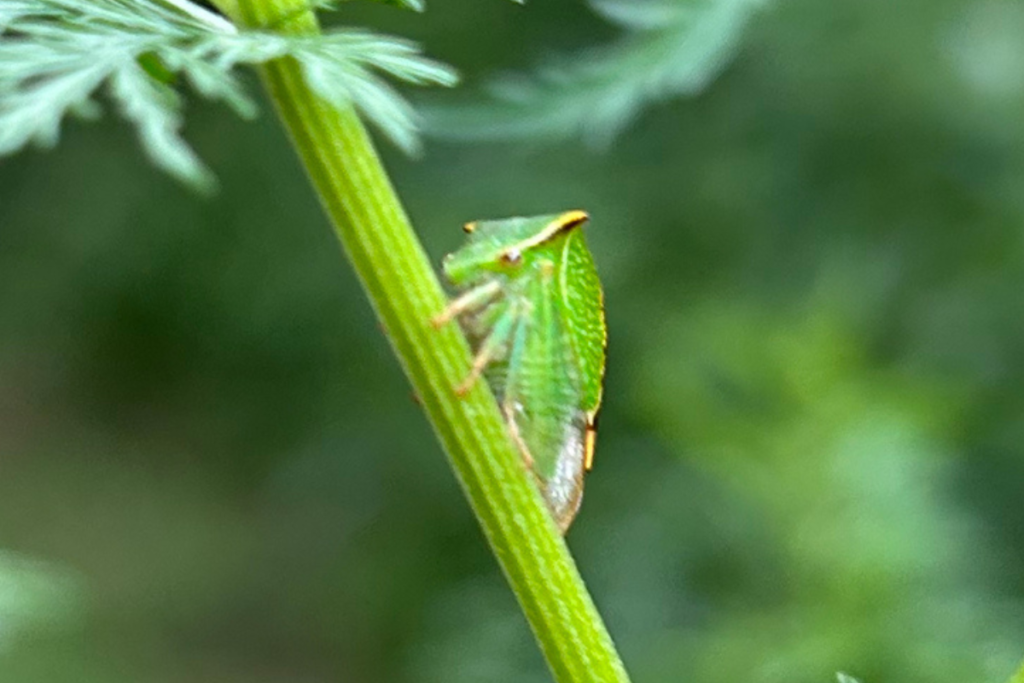
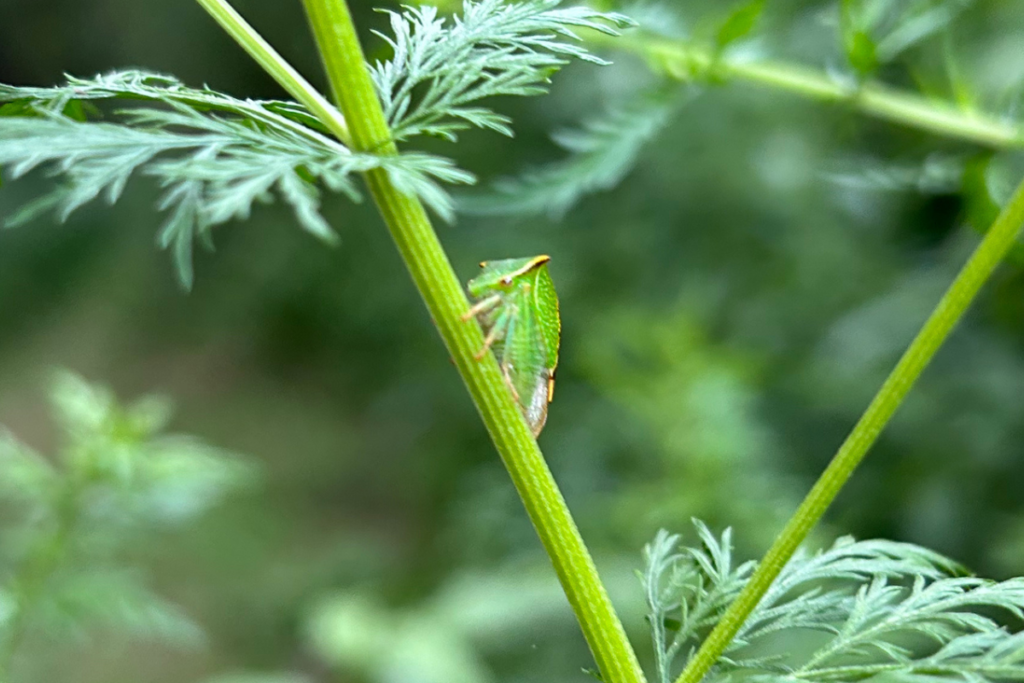
When undisturbed, individuals may remain completely still for long stretches of time. They frequently align themselves along stems or leaf stalks where their bodies blend naturally with surrounding vegetation. This passive behavior reduces attention from predators and contributes to their remarkable concealment.
The species demonstrates a strong sensitivity to changes in its surroundings. Vibrations, shadows, or nearby movement can trigger a response even before direct contact occurs. Their awareness resembles that of a deer standing quietly in a field, remaining calm while constantly monitoring potential disturbances.
Buffalo Treehoppers are neither highly aggressive nor strongly territorial. Multiple individuals may occupy the same plant without obvious conflict. Although they often appear solitary, small groups can sometimes occur when suitable vegetation is abundant.
Their behavior can seem almost mechanical compared to more active insects such as grasshoppers or flies. Instead of constant exploration, Buffalo Treehoppers emphasize patience and caution. This strategy allows them to survive while expending very little energy.
Environmental conditions may influence overall activity levels. Warm temperatures often increase movement, while cooler periods encourage longer resting intervals. Even during active periods, however, the insect usually maintains a reserved and unobtrusive lifestyle.
Buffalo Treehopper Movement and Daily Activity
Buffalo Treehoppers are primarily active during daylight hours. Most movement occurs when temperatures rise and vegetation receives direct sunlight. During cooler mornings or cloudy weather, individuals often remain motionless.
Their walking movements are slow and deliberate. The insect carefully places each leg while traveling along stems, almost as if testing each surface before proceeding. This controlled movement prevents unnecessary vibrations that might reveal its location.
When threatened, Buffalo Treehoppers can suddenly switch from slow walking to rapid escape behavior. Powerful hind legs allow them to jump considerable distances relative to their body size. The motion resembles a tiny spring releasing tension, launching the insect away in a fraction of a second.
Short flights may accompany these jumps. The transparent wings unfold quickly and allow the insect to travel to nearby vegetation. These flights are typically brief and direct rather than prolonged or wandering.
Seasonal activity changes throughout the year. Adult populations are most noticeable during warmer months when vegetation is abundant. Activity gradually decreases as temperatures decline, and different life stages become dominant during various seasons.
Energy conservation appears to play an important role in movement patterns. Instead of continuously searching or exploring, Buffalo Treehoppers often remain stationary until movement becomes necessary. This behavior resembles a person sitting quietly in shade during a hot afternoon rather than constantly walking in the sun.
The insect’s movement style combines patience with sudden speed. Long periods of stillness may end with an immediate jump or short flight when danger approaches. This contrast between inactivity and rapid escape defines much of the species’ daily activity.
Buffalo Treehopper Survival and Interaction Behavior
Buffalo Treehoppers rely heavily on defensive behavior to survive. Their first response to danger is usually to remain perfectly still. By avoiding movement, they increase the effectiveness of their camouflage and reduce the chance of being detected.
If a predator approaches, the insect may slowly reposition itself to the opposite side of a stem. This simple behavior places the plant between the treehopper and the threat. Such movements are subtle and often difficult to observe.
Sudden escape responses occur when concealment fails. An approaching hand, nearby vibration, or direct contact may trigger an immediate jump or flight. The insect often disappears into surrounding vegetation within seconds.
Communication among individuals occurs through vibrations transmitted through plant tissues. These signals allow treehoppers to exchange information without producing obvious sounds. Vibrational communication remains hidden from many predators and functions effectively within dense vegetation.
Social interactions are generally limited but not entirely absent. Multiple Buffalo Treehoppers may occupy the same plant without displaying aggressive behavior. Their relationships appear based more on tolerance than competition.
Young stages and adults both depend upon instinctive survival behaviors. Remaining motionless, selecting protective positions, and responding rapidly to danger all contribute to survival. These responses occur automatically and require little active decision-making.
The Buffalo Treehopper’s survival strategy depends less on strength and more on invisibility. Instead of fighting threats, it attempts to avoid detection altogether. This combination of camouflage, patience, and rapid escape has allowed the species to thrive across a wide geographic range.
Popular Searches About Buffalo Treehoppers
Explore Buffalo Treehopper Guide
Explore More Wildlife

Support Encounters World
Help support wildlife photography and get behind the scenes discoveries on Patreon.