
Buffalo Treehopper Host Plants Guide: Plants That Buffalo Treehoppers Use and Prefer
Quick Facts
Primary Host Plants: Alfalfa, clover, and herbaceous plants
Secondary Host Plants: Apple, maple, oak, and fruit trees
Preferred Plant Type: Soft-stemmed vegetation and young woody growth
Egg-Laying Plants: Small branches and tender stems
Most Active Season: Spring through early fall
Plant Association: Broad host range species
Buffalo Treehopper Host Plants and Plant Relationships
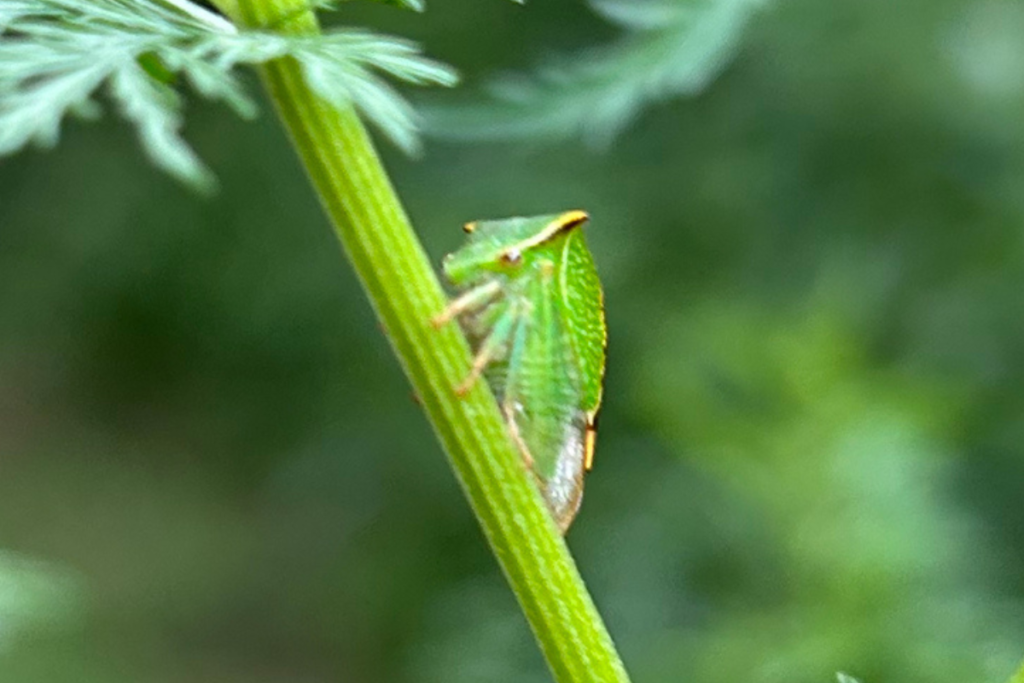
The Buffalo Treehopper (Stictocephala bisonia) depends heavily on a wide variety of plants throughout its life cycle. Unlike insects that specialize on a single species, Buffalo Treehoppers utilize numerous herbaceous plants, shrubs, and trees across their geographic range. This flexibility has allowed the species to become widespread throughout North America and introduced portions of Europe.
Many people discover Buffalo Treehoppers resting quietly on stems without realizing that the plant itself plays a central role in the insect’s survival. The relationship between the insect and its host plants extends far beyond simple shelter. Plants provide food, protection, breeding sites, and seasonal resources.
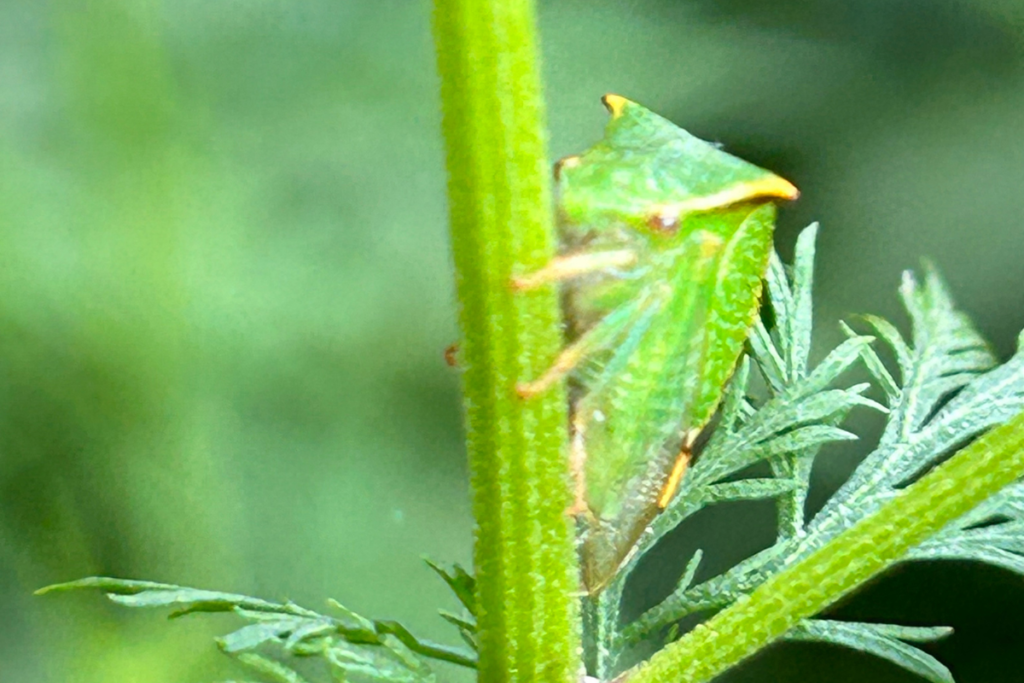
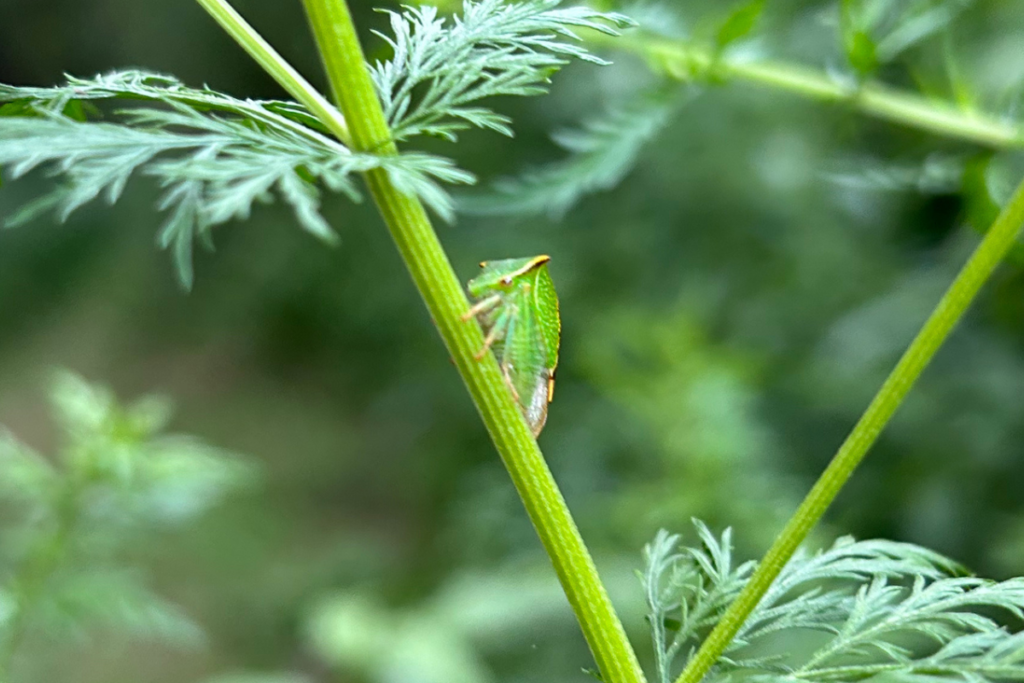
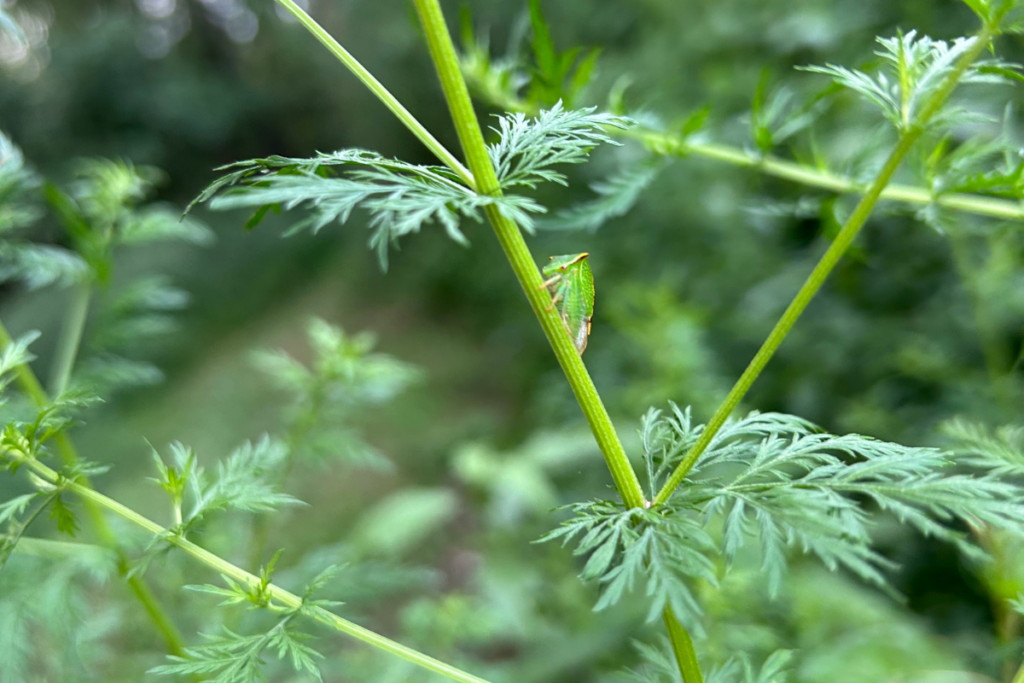
Throughout fields, gardens, orchards, and woodland edges, Buffalo Treehoppers often remain attached to vegetation for long periods. Their body shape and coloration closely match many of the plants they use. The insect’s entire appearance seems designed to blend into the stems and branches where it lives.
The diversity of plants used by Buffalo Treehoppers separates them from more specialized insects. While some species depend upon only one or two plant types, Buffalo Treehoppers can utilize many different kinds of vegetation. This adaptability contributes greatly to their success.
Buffalo Treehopper Preferred Herbaceous Host Plants
Herbaceous plants represent some of the most important host plants used by Buffalo Treehoppers. Alfalfa is one of the best-known hosts and has been associated with the species throughout much of its range. Large alfalfa fields often support substantial populations.
Clover also serves as an important plant for both immature and adult treehoppers. The dense stems and abundant growth provide ideal feeding locations. Clover fields frequently contain multiple individuals during the growing season.
Goldenrod, asters, and numerous native wildflowers are commonly used as well. These plants provide soft stems and abundant growth during summer months. Their structure allows Buffalo Treehoppers to blend into the vegetation while remaining difficult to detect.
Various weeds and roadside plants support local populations. Plantain, ragweed, and other common herbaceous species can provide suitable conditions. Even unmanaged fields often contain enough vegetation to sustain Buffalo Treehoppers.
The insect often selects plants with upright stems and branching growth. Such vegetation creates numerous resting positions and feeding sites. The triangular body shape of the insect aligns particularly well with vertical stems.
Herbaceous host plants frequently dominate the spring and summer portions of the life cycle. Young vegetation provides tender growth that is easily utilized. As these plants mature, Buffalo Treehoppers may expand onto additional plant species.
Trees and Woody Plants Used by Buffalo Treehoppers
Several species of trees and shrubs also serve as important host plants. Apple trees are among the most frequently reported woody hosts. Young branches provide both feeding opportunities and locations for egg deposition.
Maple trees may support Buffalo Treehopper populations in both natural and developed landscapes. The small branches and fresh growth offer suitable conditions during portions of the year. Young saplings often experience greater use than mature trees.
Oak, elm, and various fruit trees can also be utilized. Orchard environments sometimes support noticeable populations because multiple suitable host species grow close together. The availability of young shoots and developing branches increases their usefulness.
Shrubs represent another important category of woody hosts. Dense branching and smaller stems create favorable conditions for feeding and reproduction. Many ornamental shrubs planted in gardens and landscapes may occasionally host Buffalo Treehoppers.
The transition from herbaceous plants to woody vegetation often occurs later in the growing season. Females frequently select young branches for egg-laying because the stems provide protection for developing eggs. These woody tissues help the next generation survive winter.
Compared to herbaceous plants, trees and shrubs provide longer-lasting plant structures. Their branches remain available after annual vegetation dies back. This makes woody plants especially important during certain stages of the life cycle.
Seasonal Changes in Buffalo Treehopper Host Plants
Buffalo Treehopper host plant use often changes throughout the year. Newly emerged nymphs commonly appear on soft, actively growing vegetation during spring. Fresh stems provide ideal conditions for development.
Summer brings the greatest variety of available host plants. Herbaceous vegetation reaches its peak growth, and numerous plant species become suitable. Adults may move among different plants depending on local conditions.
As autumn approaches, woody plants often become increasingly important. Females preparing to lay eggs frequently select small branches and young stems. These locations provide safe sites for overwintering eggs.
The changing use of host plants resembles how migratory birds utilize different habitats throughout the year. Buffalo Treehoppers do not depend on a single plant during every stage of life. Instead, they benefit from seasonal changes in vegetation.
Plant quality also influences host selection. Actively growing stems often contain greater amounts of plant fluids and softer tissues. Older, hardened vegetation may become less suitable as the season progresses.
Weather conditions can affect host availability as well. Drought, heavy rainfall, or seasonal changes in plant growth may alter which species are used. The ability to utilize numerous plants provides flexibility during changing conditions.
This broad host range remains one of the Buffalo Treehopper’s greatest advantages. By feeding and reproducing on many different plants, the species avoids dependence on a single resource. Its relationship with both herbaceous and woody vegetation allows it to occupy a wide variety of landscapes across its range.
Popular Searches About Buffalo Treehoppers
Explore Buffalo Treehopper Guide
Explore More Wildlife

Support Encounters World
Help support wildlife photography and get behind the scenes discoveries on Patreon.