
Buffalo Treehopper Predators and Threats: What Eats Buffalo Treehoppers?
Quick Facts
Primary Predators: Birds, spiders, and predatory insects
Major Threat: Predation
Defensive Adaptation: Camouflage and immobility
Most Vulnerable Stage: Nymphs and eggs
Escape Method: Jumping and short flights
Population Threat Level: Generally stable
Natural Threats Facing Buffalo Treehoppers
The Buffalo Treehopper (Stictocephala bisonia) survives in environments filled with predators and environmental dangers. Despite its unusual appearance and effective camouflage, numerous animals hunt these small insects throughout their lives. From the egg stage to adulthood, Buffalo Treehoppers face constant threats.
Across North America and introduced portions of Europe, these insects occupy vegetation where many predators search for food. Their small size places them within the diets of numerous birds, insects, and spiders. Survival depends largely on remaining unnoticed.
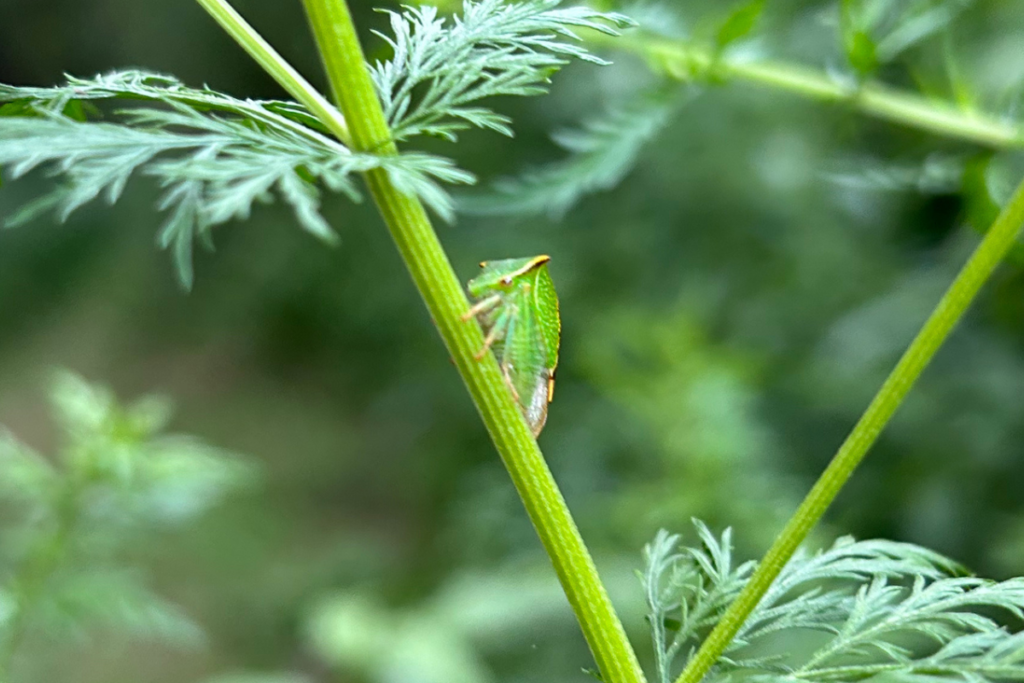
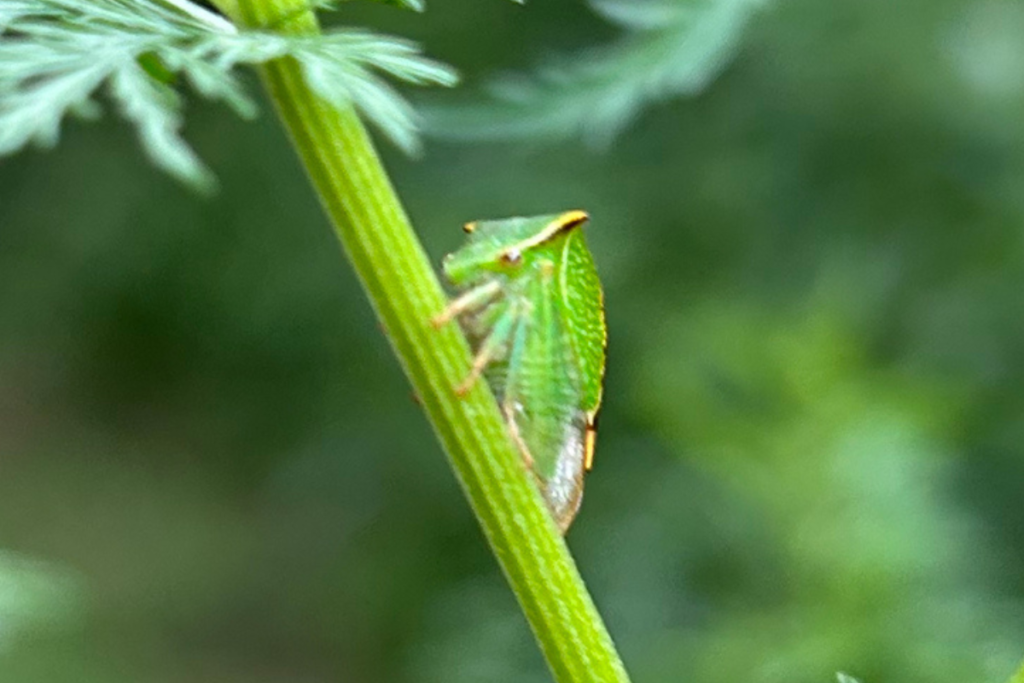
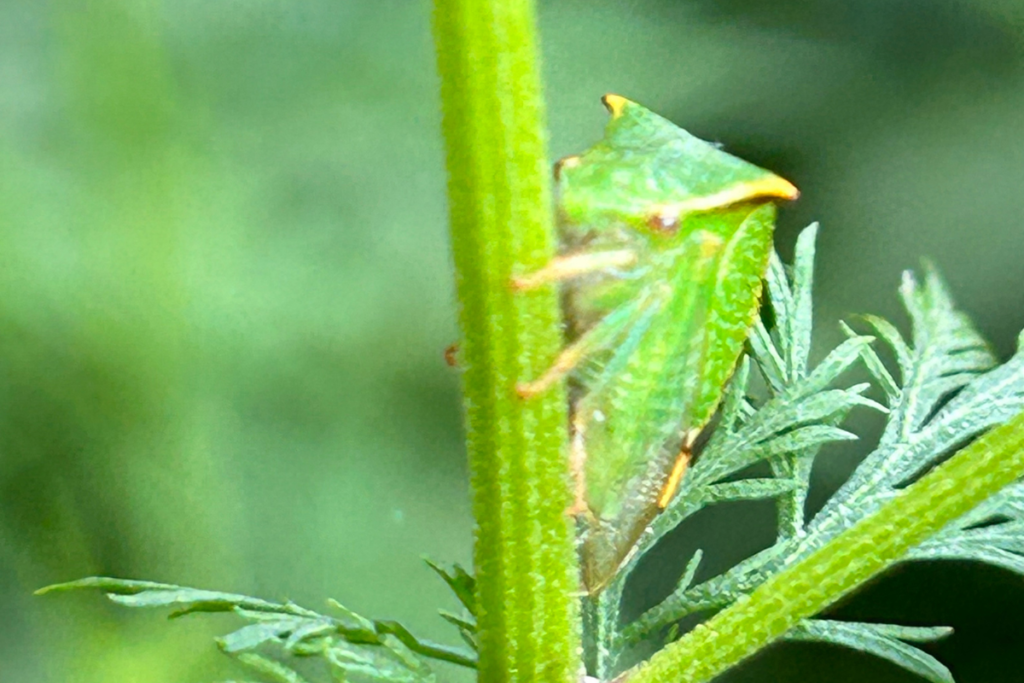
The thorn-like appearance that makes Buffalo Treehoppers famous also serves as one of their greatest defenses. Predators often overlook them entirely, mistaking them for plant structures rather than living insects. Their survival depends more upon avoiding detection than resisting attacks.
Although many individuals survive to adulthood, numerous eggs, nymphs, and adults are lost each year. Like many small insects, Buffalo Treehoppers produce offspring in large numbers because relatively few individuals survive every stage of life. Predation remains one of the strongest forces shaping their populations.
Birds and Vertebrate Predators of Buffalo Treehoppers
Small insect-eating birds are among the most important predators of Buffalo Treehoppers. Warblers, sparrows, chickadees, wrens, and other species frequently search stems and leaves for hidden insects. Their sharp eyesight allows them to locate prey that many predators overlook.
Birds often inspect vegetation carefully while moving through shrubs and small trees. A Buffalo Treehopper that moves suddenly may attract immediate attention. Even excellent camouflage can fail if the insect changes position at the wrong moment.
Small mammals occasionally consume Buffalo Treehoppers while feeding among vegetation. Mice and other opportunistic insect-eaters may encounter them on low plants or fallen stems. However, mammals generally play a smaller role than birds.
Reptiles such as small lizards may prey upon Buffalo Treehoppers in warmer regions. These visual predators often hunt slowly among vegetation, searching for movement. The insect’s camouflage remains particularly important against these hunters.
Frogs and toads sometimes consume treehoppers when insects occur near low vegetation. Although Buffalo Treehoppers do not spend time on the ground, individuals may occasionally become vulnerable during movement between plants.
Compared to larger insects such as grasshoppers or caterpillars, Buffalo Treehoppers offer relatively small meals. Nevertheless, they contribute to the diets of many vertebrate predators and form part of the larger food web.
Insect Predators and Parasitic Threats
Spiders represent one of the greatest threats to Buffalo Treehoppers. Crab spiders, jumping spiders, and orb-weavers commonly hunt among the same vegetation occupied by treehoppers. These predators often capture individuals that venture too close.
Assassin bugs and predatory stink bugs also feed on Buffalo Treehoppers. These insects use piercing mouthparts to subdue prey and extract fluids. Because they hunt directly on vegetation, encounters can occur frequently.
Praying mantises occasionally capture adult treehoppers when they rest on stems or branches. Mantises rely on ambush hunting, remaining motionless until prey comes within reach. Their camouflage often matches that of their prey.
Parasitic wasps may attack Buffalo Treehopper eggs or immature stages. These tiny wasps lay their own eggs inside or near developing treehoppers. The developing wasp larvae eventually kill the host.
Ants sometimes prey on young nymphs, particularly shortly after hatching. Newly emerged individuals possess fewer defenses and may be easier to capture. Nymphs generally experience higher mortality than adults.
Predatory insects create constant pressure throughout the Buffalo Treehopper’s life. Because many predators occupy the same vegetation, the insect must rely heavily on concealment and rapid escape to survive.
Buffalo Treehopper Defense Strategies and Survival Threats
Camouflage serves as the Buffalo Treehopper’s primary defense against predators. The enlarged pronotum resembles a thorn or plant growth, allowing the insect to blend into stems and branches. This disguise prevents many predators from recognizing it as prey.
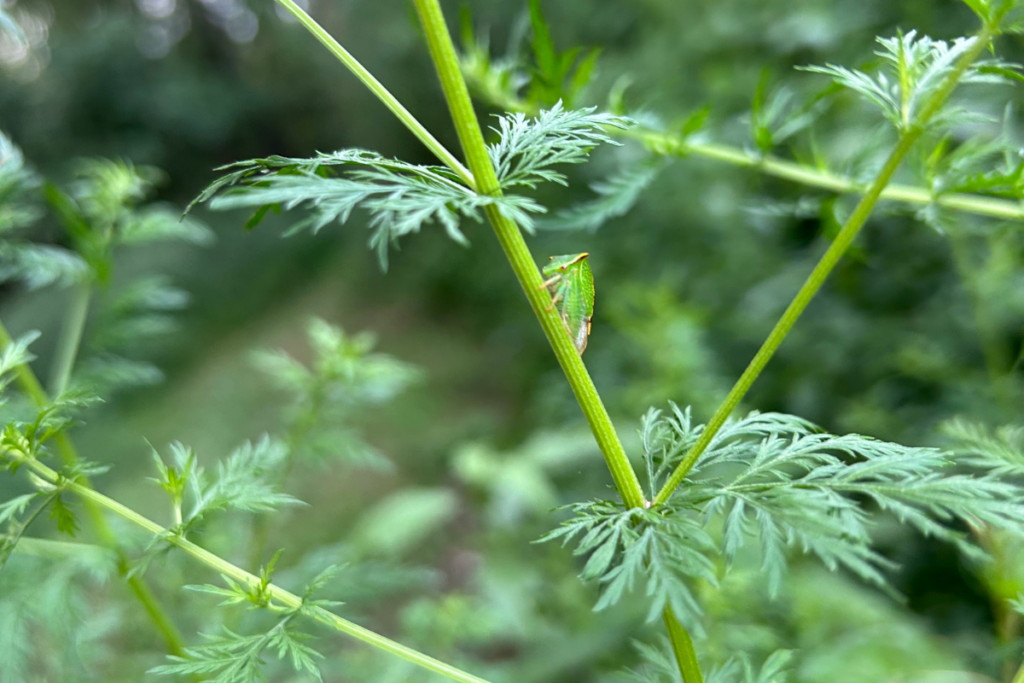
Remaining motionless provides an additional survival advantage. A stationary Buffalo Treehopper can become nearly invisible against surrounding vegetation. Birds and insects that search for movement may pass by without noticing it.
Rapid jumping behavior acts as a secondary defense. Powerful hind legs allow the insect to escape suddenly when danger approaches. The movement resembles a spring releasing tension and can carry the treehopper safely to nearby vegetation.
Short flights also help individuals avoid predators. Although Buffalo Treehoppers are not strong fliers, brief flights allow them to relocate quickly. These movements often occur only when camouflage fails.
Weather can present environmental threats as well. Heavy rain, strong winds, and sudden temperature changes may affect exposed individuals. Young nymphs often face the greatest risks during severe weather events.
Habitat loss and vegetation removal may reduce suitable populations in some areas. The removal of shrubs, field edges, and native vegetation can eliminate important resources. However, the species remains widespread because of its ability to use many different plants.
Despite facing numerous predators and environmental threats, Buffalo Treehoppers remain successful throughout much of their range. Their combination of camouflage, patience, and rapid escape has allowed them to survive against a wide variety of natural enemies. The species demonstrates how specialized defenses can provide effective protection even for a small and vulnerable insect.
Popular Searches About Buffalo Treehoppers
Explore Buffalo Treehopper Guide
Explore More Wildlife

Support Encounters World
Help support wildlife photography and get behind the scenes discoveries on Patreon.