
Groundhog Diet: What Groundhogs Eat and How They Find Food
Quick Facts
Diet Type: Herbivore
Main Food Sources: Grasses, wild plants, leaves, flowers, agricultural crops, and fruits
Feeding Time: Primarily daytime, especially morning and late afternoon
Foraging Method: Ground-based browsing and grazing
Seasonal Diet Changes: Yes, food selection varies throughout the year
Predatory Adaptations: Strong incisors for clipping vegetation and efficient digestion of plant material
Groundhog Feeding Habits and Dietary Introduction
The groundhog (Marmota monax), often called the woodchuck, is one of North America’s most familiar herbivorous mammals. Found across much of the United States, southern Canada, and parts of Alaska, this large member of the squirrel family spends a significant portion of its active season gathering and consuming plant material. Food availability plays a major role in shaping its daily routine and annual cycle.
Across its broad geographic range, groundhogs inhabit regions that support abundant vegetation during the warmer months. Whether observed along agricultural landscapes, grassy clearings, roadside vegetation, or suburban green spaces, feeding opportunities are never far away. Their success as a species is closely tied to their ability to take advantage of a wide variety of naturally occurring plant resources.
Unlike predators that depend on pursuing prey, groundhogs rely on a feeding strategy centered around browsing and grazing. Much of their day involves locating nutritious vegetation and consuming enough energy-rich food to support growth, maintenance, and seasonal preparation. This food-focused lifestyle is especially important in regions where winter eventually limits food availability.
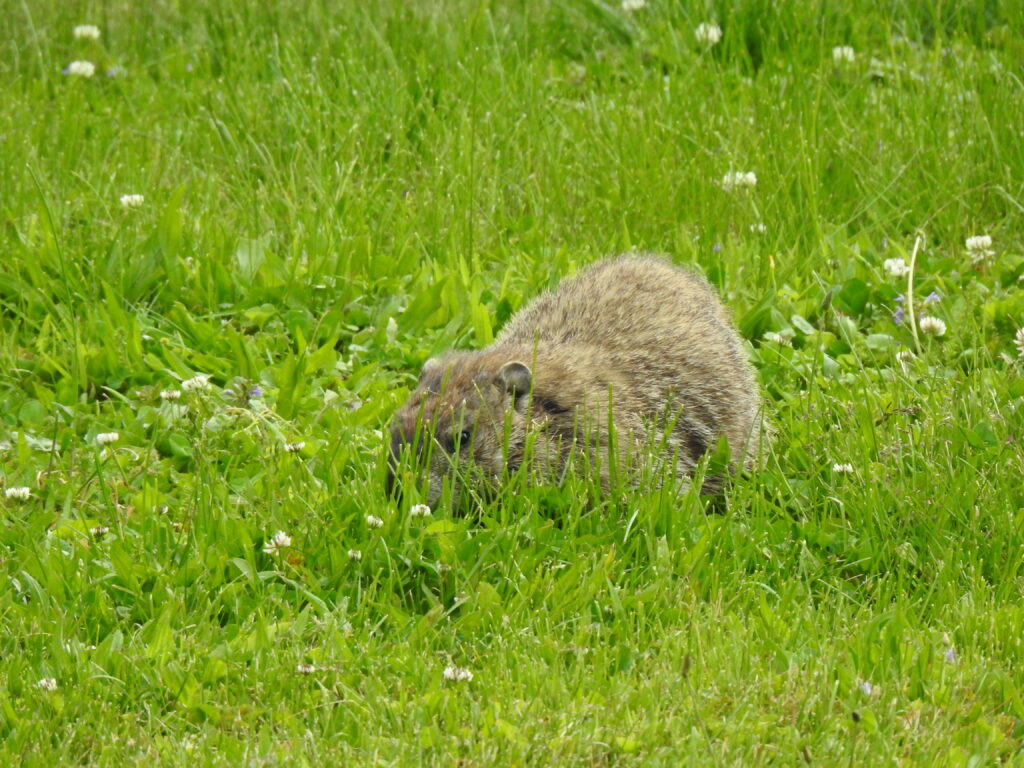
A casual observer watching a groundhog often notices the animal lowering its head into vegetation and feeding steadily for extended periods. Although the behavior appears simple, the species has developed efficient feeding habits that allow it to make use of diverse plant communities throughout its range. These feeding patterns contribute significantly to the groundhog’s survival and ecological success.
Groundhog Diet Overview and Plant-Based Feeding Strategy
Groundhogs are classified as herbivores, meaning their diet consists primarily of plant material rather than animal prey. Unlike omnivorous mammals that regularly switch between plant and animal foods, groundhogs remain strongly focused on vegetation throughout their lives. This specialization influences everything from their feeding habits to their physical adaptations.
The species exhibits a relatively flexible herbivorous diet compared to some plant-eating mammals. While certain herbivores depend heavily on a narrow range of food sources, groundhogs can utilize many different types of vegetation depending on local availability. This flexibility allows populations to thrive across a broad geographic area.
Diet composition often varies from region to region. A groundhog living near farmland may encounter different food resources than one occupying a meadow near a forest edge. Despite these differences, the overall feeding strategy remains consistent, with vegetation forming the overwhelming majority of consumed material.
Compared to rabbits, which often focus heavily on low-growing vegetation, groundhogs frequently take advantage of a wider range of plant structures. Their size allows them to access taller vegetation and consume larger quantities during a feeding session. This capability provides additional dietary opportunities throughout the growing season.
Seasonal changes can also influence feeding patterns. As different plants emerge, flower, mature, and decline throughout the year, groundhogs adjust their food choices accordingly. Rather than relying on a single food source, they take advantage of changing vegetation conditions across the seasons.
Natural Food Sources Consumed by Groundhogs
Wild vegetation forms the foundation of the groundhog’s diet. Grasses are among the most commonly consumed foods and often make up a significant portion of daily feeding. These abundant plants provide a reliable source of nutrition throughout much of the active season.
Various broadleaf plants are also important dietary components. Groundhogs frequently consume clover, alfalfa, dandelions, plantain, chickweed, and numerous other herbaceous species. These plants often provide nutrients that complement those obtained from grasses, creating a diverse and balanced diet.
Flowers and tender plant shoots are commonly selected when available. Young vegetation typically contains higher moisture levels and can be easier to digest than older, tougher plant growth. During spring and early summer, these fresh plant parts often become particularly valuable food resources.
Agricultural crops can serve as secondary food sources in areas where farming occurs. Groundhogs may consume beans, peas, corn, lettuce, soybeans, and other cultivated plants when accessible. This tendency sometimes brings them into conflict with gardeners and farmers, especially during peak growing periods.
Fruit consumption occurs opportunistically throughout the year. Apples, berries, and fallen fruits may be eaten when available, providing additional energy and moisture. Although fruits are not usually the primary component of the diet, they represent a useful supplemental food source.
Food preferences may also vary slightly depending on age, season, and local vegetation communities. Younger individuals often consume many of the same plant species as adults but may focus on particularly tender growth. Regardless of these minor differences, vegetation remains the dominant source of nutrition throughout the species’ life cycle.
Groundhog Feeding Behavior and Food Survival Strategies
Groundhogs obtain food through a feeding method best described as browsing and grazing. Rather than actively hunting or pursuing prey, they move through vegetation while selecting suitable plants. This strategy allows them to gather large amounts of food efficiently without expending excessive energy.
Most feeding occurs during daylight hours, particularly during the morning and late afternoon. During these periods, temperatures are often more moderate than midday conditions, making extended feeding sessions easier. Groundhogs may spend considerable time steadily consuming vegetation while remaining aware of their surroundings.
Their strong, continuously growing incisors play an important role in food acquisition. These teeth function much like natural pruning shears, allowing the animal to clip stems, leaves, and shoots with remarkable efficiency. Once vegetation is cut, it is processed by specialized digestive systems adapted for handling plant material.
Food gathering becomes especially important as seasonal conditions begin to change. During late summer and early autumn, groundhogs often increase feeding intensity as they accumulate body reserves. These energy stores become critical during periods when food is unavailable and above-ground feeding ceases.
When resources become limited, groundhogs demonstrate flexibility in food selection. Rather than relying exclusively on one preferred plant species, they can shift toward other available vegetation. This ability helps reduce dependence on any single food source and improves survival during changing environmental conditions.
A good example of this adaptability can be seen in agricultural landscapes. If one crop becomes unavailable following harvest, nearby wild plants may immediately become more important food resources. By adjusting feeding choices according to local conditions, groundhogs maximize their ability to obtain nutrition throughout the active season.
Although feeding may appear straightforward, it represents a carefully balanced survival strategy. Efficient food selection, strong feeding adaptations, and the ability to respond to seasonal changes all contribute to the species’ long-term success. These traits have helped establish the groundhog as one of North America’s most widespread and recognizable herbivorous mammals.
Popular Searches About Groundhogs
Explore Groundhog Guide
Explore More Wildlife

Support Encounters World
Help support wildlife photography and get behind the scenes discoveries on Patreon.