
Groundhog Predators Guide: What Eats Groundhogs in the Wild?
Quick Facts
Primary Predator Type: Mammalian and avian predators
Most Vulnerable Life Stage: Juveniles and young groundhogs
Main Mammal Predators: Coyotes, foxes, bobcats, and domestic dogs
Main Bird Predators: Eagles, hawks, and large owls
Primary Defense: Burrow retreat and vigilance
Predator Avoidance Strategy: Early detection and rapid escape
Groundhog Predators Introduction and Survival Challenges
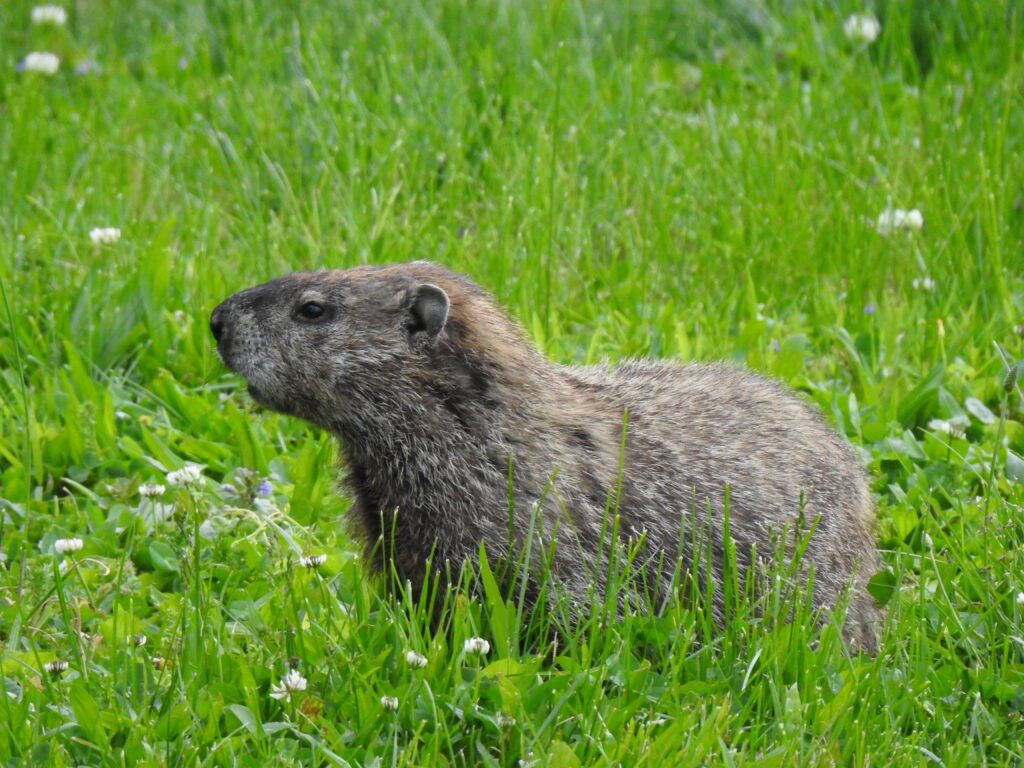
The groundhog (Marmota monax), also known as the woodchuck, is a widespread mammal found throughout much of the United States, southern Canada, and parts of Alaska. Although it is often viewed as a common and successful species, groundhogs face numerous threats from predators throughout their lives. These predator-prey relationships play an important role in shaping natural ecosystems.
Across North America, groundhogs occupy landscapes shared with a wide variety of carnivores and birds of prey. From rural farmland and forest edges to open meadows and grasslands, predators constantly search for opportunities to capture vulnerable animals. Groundhogs must remain alert whenever they are above ground.
The risk of predation changes throughout a groundhog’s life. Young individuals are particularly vulnerable because of their smaller size and limited experience. Adults possess greater awareness and physical defenses, but they are still targeted by larger predators capable of overpowering them.
Predators help regulate wildlife populations and contribute to ecological balance. The relationship between groundhogs and their predators has developed over thousands of years, creating an ongoing cycle of survival, adaptation, and natural selection across the species’ range.
Common Groundhog Predators Across North America
Coyotes are among the most important predators of groundhogs throughout much of their distribution. These adaptable carnivores occur in many of the same environments as groundhogs and are capable of hunting both juvenile and adult individuals. Their intelligence, speed, and persistence make them highly effective predators.
Foxes also prey upon groundhogs, particularly younger animals. Red foxes often patrol fields, brushy edges, and open habitats where groundhogs are commonly found. While adult groundhogs can be formidable opponents, young individuals are more vulnerable to fox attacks.
Bobcats represent another significant mammalian predator. These stealthy hunters rely on camouflage and ambush tactics rather than long pursuits. A bobcat concealed near a burrow entrance or feeding area may surprise an unsuspecting groundhog before it has an opportunity to escape.
Domestic dogs occasionally prey upon groundhogs as well. In suburban and rural areas, free-ranging dogs sometimes encounter groundhogs near yards, fields, or wooded edges. These encounters can result in injury or death, particularly if the groundhog is unable to reach shelter quickly.
Other predators may occasionally include black bears, wolves, mountain lions, and fishers in regions where their ranges overlap with groundhog populations. While these predators do not depend heavily on groundhogs as a primary food source, opportunistic encounters can still occur. Together, these various mammalian predators create constant survival challenges for groundhogs living across North America.
Birds of Prey That Hunt Groundhogs
Large raptors are among the most impressive predators capable of targeting groundhogs. Eagles, hawks, and owls possess exceptional vision that allows them to detect movement from considerable distances. Groundhogs feeding in open areas are particularly vulnerable to aerial observation.
The bald eagle is capable of capturing young groundhogs and occasionally larger individuals when opportunities arise. With powerful talons and strong flight capabilities, these birds can exploit vulnerable animals occupying exposed locations. Juveniles are especially susceptible due to their smaller size.
Red-tailed hawks are frequently associated with habitats occupied by groundhogs. Perched high above fields or soaring overhead, these raptors scan the landscape for potential prey. Their keen eyesight enables them to detect subtle movements that many other predators might miss.
Great horned owls present a different type of threat. Unlike hawks and eagles that primarily hunt during daylight hours, these large owls are most active at night. Young groundhogs venturing outside shelter during low-light conditions may become targets for these silent aerial hunters.
Birds of prey are often most successful when targeting juveniles rather than large adults. A fully grown groundhog can be a challenging animal to subdue due to its size and strength. Nevertheless, aerial predators remain important components of the ecological forces influencing groundhog populations throughout their range.
Groundhog Defense Strategies Against Predators
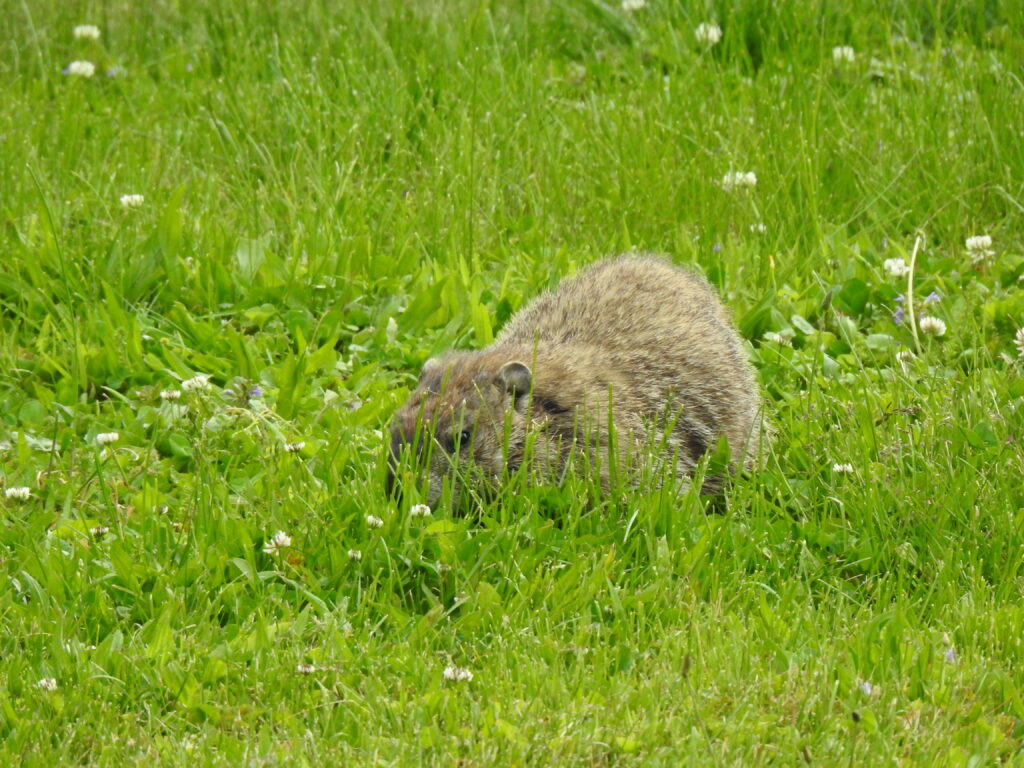
Groundhogs rely heavily on vigilance as their first line of defense. Individuals frequently pause while feeding or traveling to scan their surroundings for signs of danger. This constant awareness allows them to detect threats before predators move within striking distance.
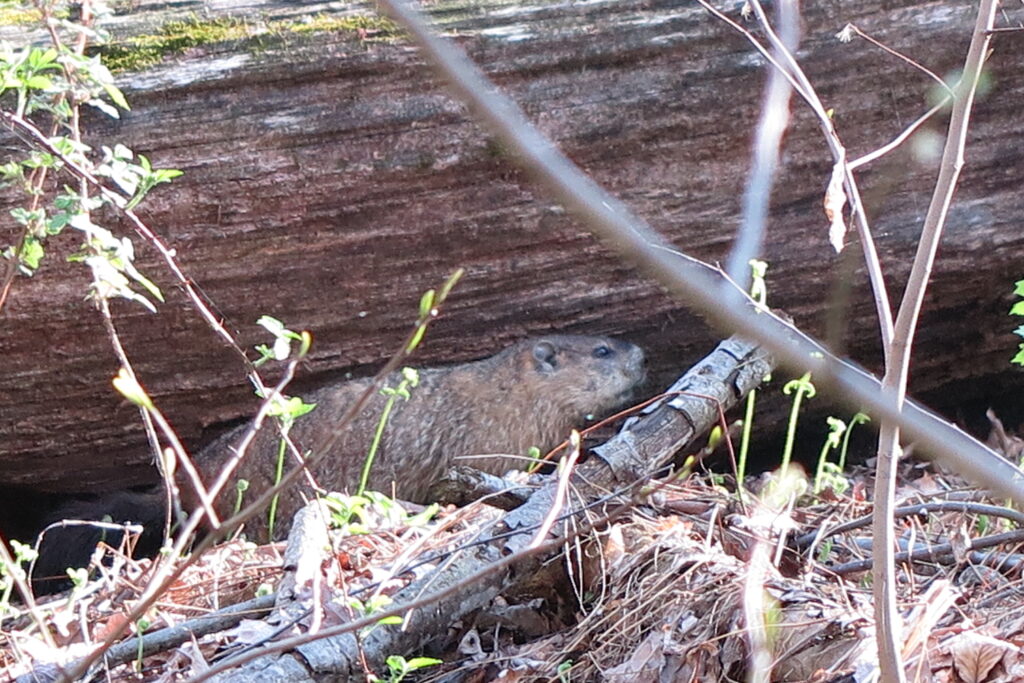
The burrow serves as the groundhog’s most important survival tool. When danger is detected, a nearby tunnel entrance provides immediate protection from many predators. A groundhog can retreat underground within seconds, transforming an exposed animal into one protected by a complex tunnel system.
Speed also plays a role in predator avoidance. Although groundhogs appear heavy and slow while feeding, they are capable of surprising bursts of acceleration when necessary. Their rapid sprint toward safety often determines whether an encounter ends successfully or becomes dangerous.
Physical defenses become important when escape is not possible. Groundhogs possess strong incisors and powerful claws capable of inflicting injury on attackers. While they generally prefer retreat over confrontation, they can defend themselves aggressively when cornered.
Young groundhogs often rely on instinctive survival behaviors from an early age. Staying close to shelter, reacting quickly to movement, and remaining cautious of unfamiliar situations all increase survival chances. These natural responses help reduce predation risk during the most vulnerable stage of life.
The combination of vigilance, burrow use, speed, and physical defenses has helped groundhogs persist despite facing numerous predators across North America. Although many animals hunt them, these survival adaptations allow groundhogs to maintain healthy populations throughout much of their extensive geographic range.
Popular Searches About Groundhogs
Explore Groundhog Guide
Explore More Wildlife

Support Encounters World
Help support wildlife photography and get behind the scenes discoveries on Patreon.