
Are Big-Headed Ground Beetles Dangerous? Bite Risk, Safety, and Human Interaction Guide
Quick Facts
Danger Level: Low
Can They Bite?: Yes, if handled
Venomous: No
Poisonous: No
Risk to Humans: Minimal
Primary Defense: Mandibles, fleeing, and concealment
Big-Headed Ground Beetle Safety Overview
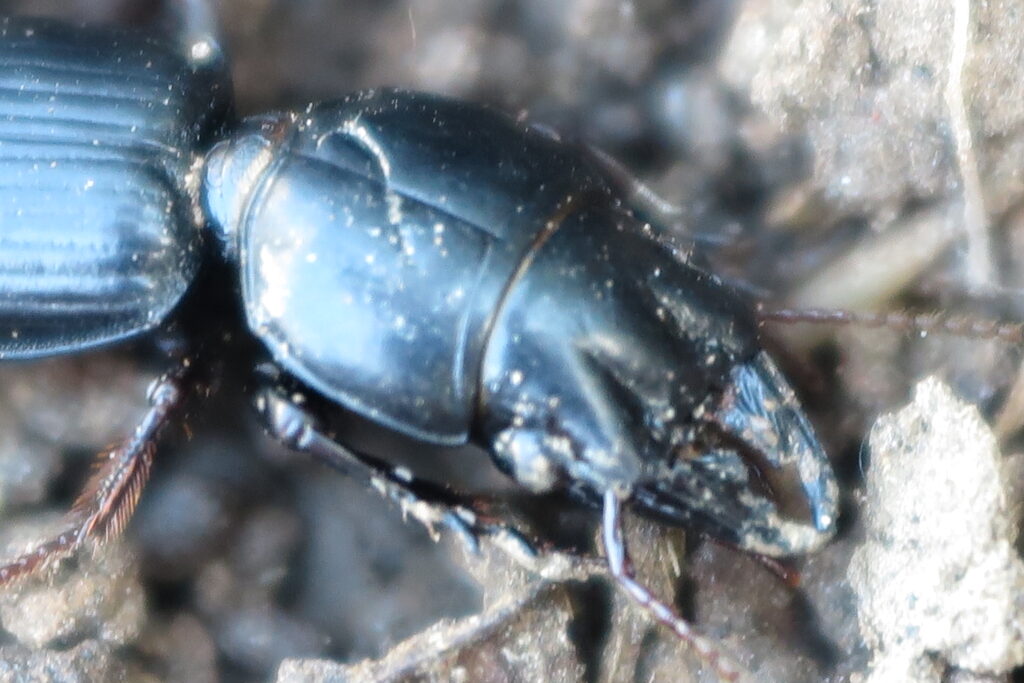
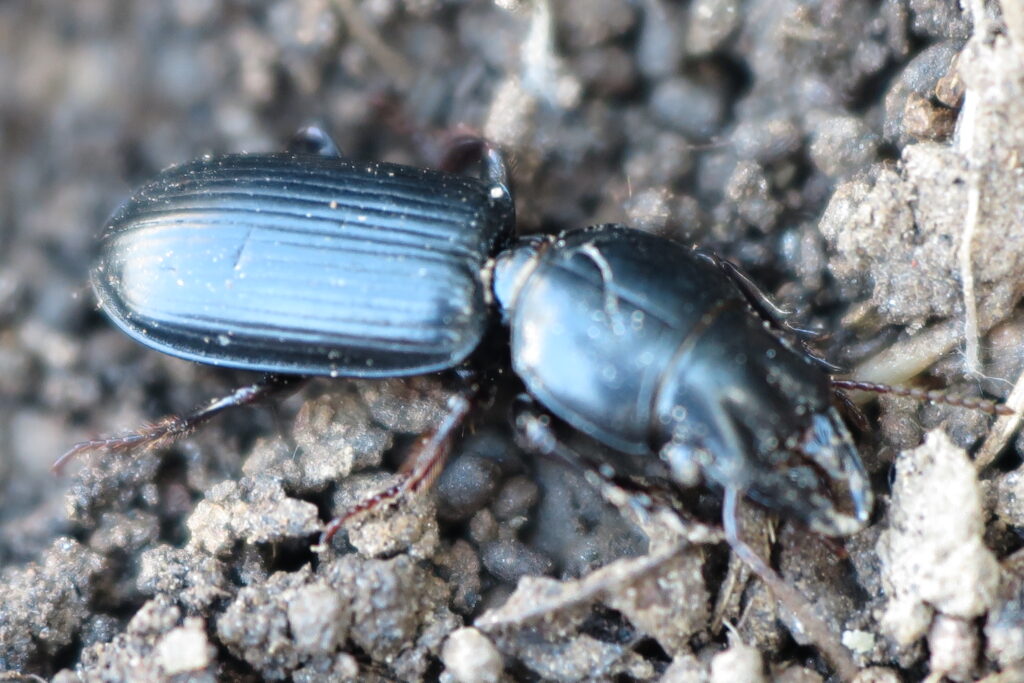
The Big-Headed Ground Beetle (Scarites sp.) is a large predatory beetle found throughout portions of North America. Its oversized head, strong mandibles, and glossy black body often cause people to assume that it may be dangerous. When discovered beneath rocks, logs, or garden debris, the insect can appear intimidating because of its unusual proportions and heavily armored appearance.
Many encounters occur unexpectedly while moving stones, lifting boards, or working in gardens. The beetle’s large jaws immediately draw attention and frequently cause concern among people unfamiliar with ground beetles. Despite its appearance, the species rarely poses a serious threat to humans or pets.
Throughout its range, the Big-Headed Ground Beetle spends much of its life hidden beneath the surface. Because most people encounter the beetle only briefly, misunderstandings about its danger level are common. Its appearance often resembles a much more aggressive insect than it actually is.
Observing one closely is similar to finding a miniature armored machine resting beneath the soil. The strong jaws and broad head suggest power, yet the beetle typically prefers avoidance over confrontation. Understanding how the species responds to threats helps explain why it is generally considered harmless.
Big-Headed Ground Beetle Danger and Risk Assessment
The overall danger level of the Big-Headed Ground Beetle is very low. The species does not possess venom, stingers, or toxic chemicals capable of harming people. Most encounters end with the beetle attempting to escape rather than displaying aggressive behavior.
The enlarged mandibles can occasionally give the impression that the insect is dangerous. These jaws are primarily adaptations for capturing prey and moving through soil. Although they appear intimidating, they are not designed to attack humans.
Compared to stinging insects such as wasps or biting insects such as horseflies, the Big-Headed Ground Beetle presents very little risk. Its defensive responses are usually passive and involve concealment or escape. The insect benefits more from avoiding danger than confronting it.
A useful comparison can be made to a snapping turtle that remains calm until directly handled. The beetle generally ignores nearby people but may defend itself if physically restrained. This distinction helps explain why encounters in the wild are usually harmless.
For most people, simply observing the insect creates no risk whatsoever. The beetle neither chases humans nor seeks contact with larger animals. Its presence in gardens, forests, and yards should be viewed as beneficial rather than dangerous.
Big-Headed Ground Beetle Bites and Human Encounters
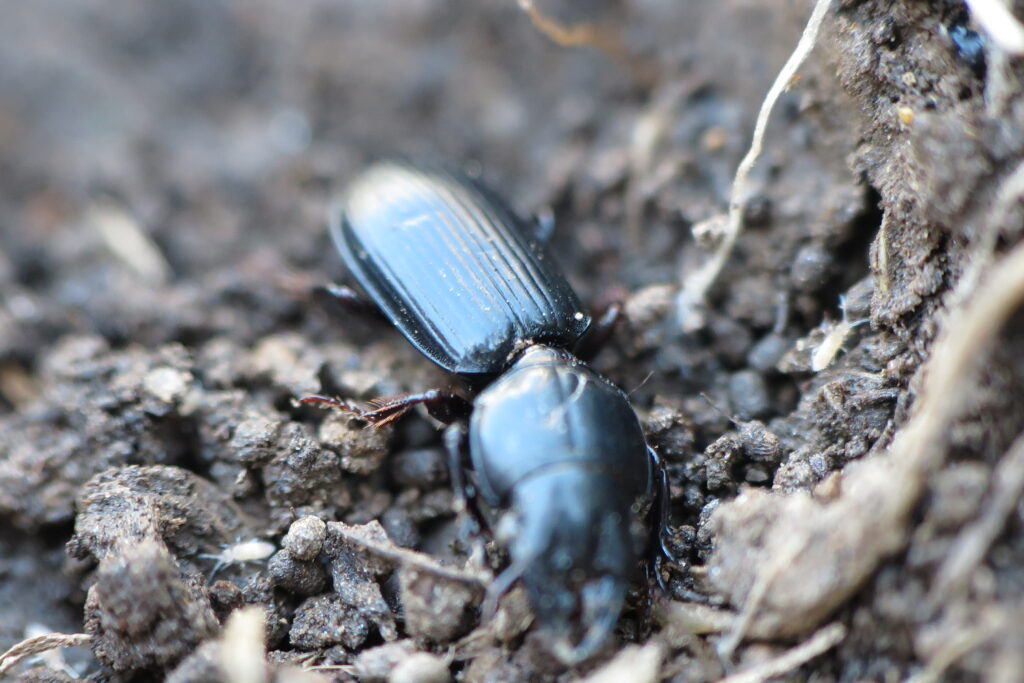
Big-Headed Ground Beetles are capable of biting if they are picked up or trapped against the skin. The large mandibles can pinch with noticeable force because they are designed to grasp prey. However, bites are uncommon because the beetle generally attempts to escape before resorting to defense.
Most bites occur during direct handling. Children, gardeners, or curious observers who attempt to pick up the insect may occasionally receive a defensive pinch. The discomfort is usually brief and rarely results in significant injury.
The sensation can be compared to a strong pinch from clothespins or a minor pinch from forceps. Larger individuals may produce a more noticeable bite because of their stronger mandibles. Even so, bites generally do not require medical attention.
The beetle does not inject venom or produce toxins through its bite. Redness or mild irritation may occur around the affected area, but serious reactions are extremely rare. Washing the area with soap and water is typically sufficient if a bite occurs.
Pets occasionally investigate these beetles, especially dogs and cats. Most animals quickly lose interest after encountering the hard exoskeleton or defensive behavior. The species does not present a meaningful threat to household pets under normal circumstances.
Big-Headed Ground Beetle Defense and Survival Responses
When threatened, the Big-Headed Ground Beetle relies primarily on avoidance. The insect often remains motionless beneath rocks or debris, depending on concealment to prevent detection. Remaining hidden allows the beetle to avoid many potentially dangerous encounters.
If disturbed, the beetle frequently attempts to run toward nearby cover. Its strong legs allow rapid movement across soil and loose debris. This escape response usually occurs before any defensive use of the mandibles.
The mandibles serve as a final line of defense rather than an offensive weapon. If the beetle becomes trapped or restrained, it may attempt to bite to free itself. This behavior represents a survival response rather than aggression.
A common example occurs when a rock covering the beetle is lifted. Many individuals initially remain still, relying on camouflage and concealment. If continued disturbance occurs, they often run toward cover or attempt to burrow into nearby soil.
These defensive strategies resemble those of many ground-dwelling animals that prioritize escape over confrontation. The beetle’s success depends upon avoiding predators rather than fighting them. This behavior explains why most encounters with humans remain completely harmless.
Although the Big-Headed Ground Beetle appears intimidating because of its large head and jaws, it is generally a beneficial and low-risk insect. Its defensive behaviors, lack of venom, and preference for avoidance make it one of the less dangerous large beetles encountered throughout North America.
Popular Searches About Ground Beetles
Explore Ground Beetle Guide
Explore More Wildlife

Support Encounters World
Help support wildlife photography and get behind the scenes discoveries on Patreon.