
Big-Headed Ground Beetle Identification Guide: How to Identify a Big-Headed Ground Beetle
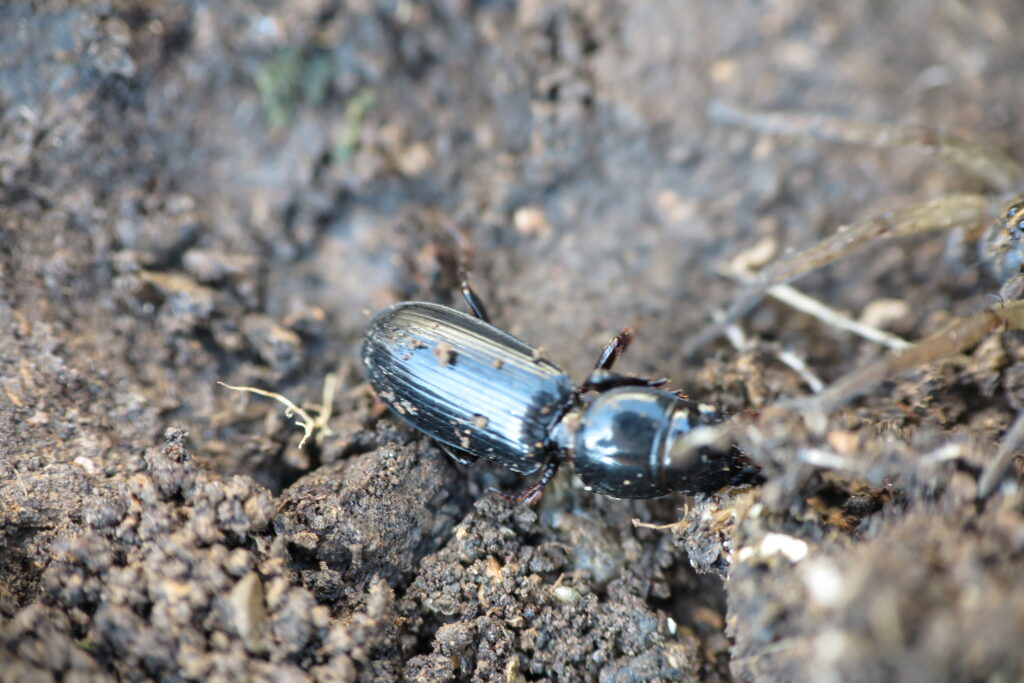
Quick Facts
Identification Difficulty: Easy to Moderate
Primary Color: Glossy Black
Average Length: 0.75–1.50 inches (19–38 mm)
Distinctive Feature: Enlarged head and powerful mandibles
Common Lookalikes: Darkling Beetles and Other Ground Beetles
Best Identification Feature: Broad head wider than most ground beetles
Big-Headed Ground Beetle Identification Overview
The Big-Headed Ground Beetle (Scarites sp.) is one of the most recognizable ground beetles found throughout portions of North America. Its oversized head, smooth black body, and heavily built appearance immediately separate it from many other insects that inhabit the forest floor and garden soil. Although many people first mistake it for a darkling beetle or another black beetle, several physical characteristics make identification relatively straightforward.
Most encounters occur unexpectedly beneath rocks, logs, landscaping stones, or loose debris. The beetle often remains still when first exposed, allowing observers to study its appearance closely. Its large jaws and broad head usually become the first features that attract attention.
Species within the genus Scarites share several identifying characteristics that distinguish them from other ground beetles. Their bodies appear wider near the front, creating a profile that resembles a miniature digging machine. Even individuals unfamiliar with beetle identification often recognize that the insect looks unusual compared to other black beetles.
Finding one can feel similar to uncovering a small armored vehicle hidden beneath the soil. The enlarged head, strong mandibles, and polished body surface combine to create a distinctive appearance that remains memorable long after the observation ends.
Big-Headed Ground Beetle Size and Body Characteristics
Adult Big-Headed Ground Beetles typically measure between three-quarters of an inch and one and a half inches in length. A mature individual is approximately the size of a house key or small pocketknife. Their relatively large size allows them to stand out among many smaller ground-dwelling beetles.
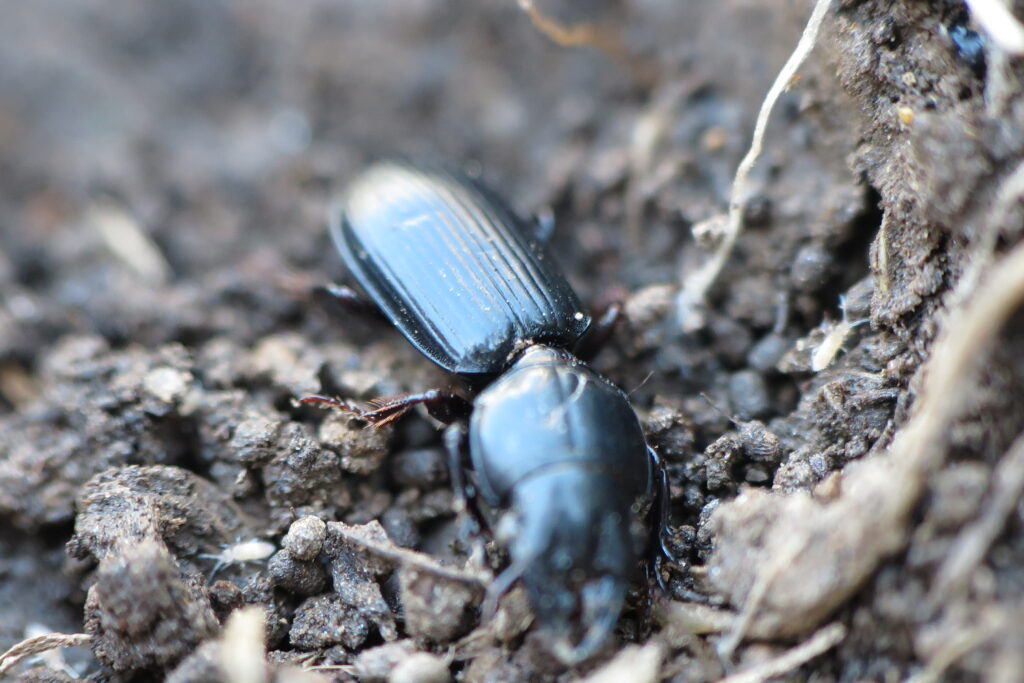
The body is elongated and somewhat flattened, allowing the insect to move through soil and beneath debris. Unlike rounded beetles that appear bulky, Scarites species possess a low profile that keeps them close to the ground. This shape contributes to their distinctive appearance.
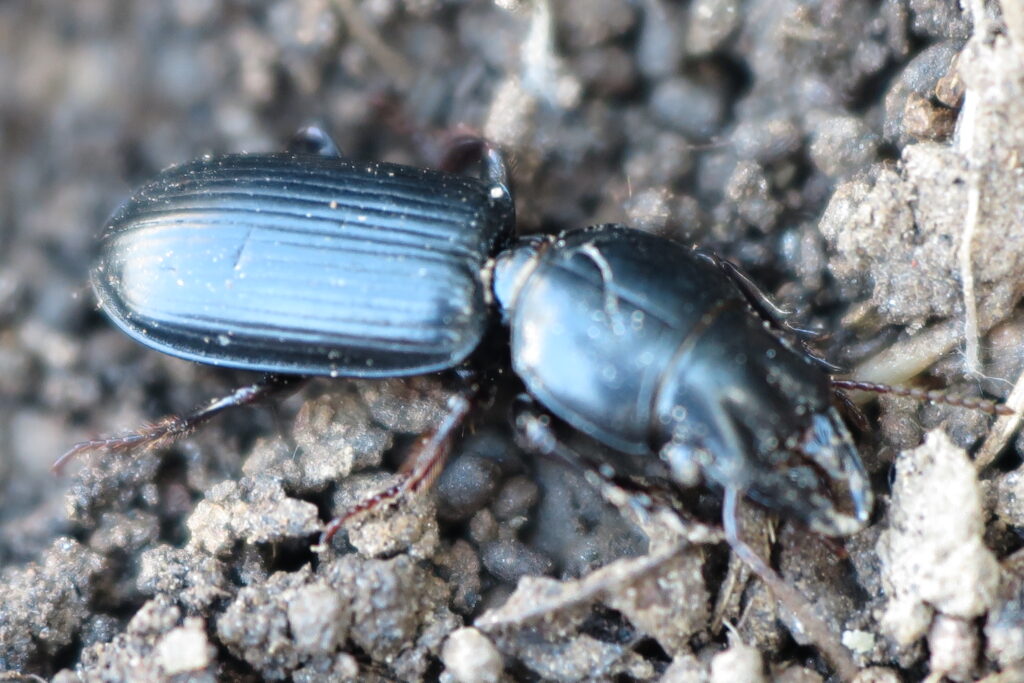
Coloration is generally glossy black, although some individuals may appear dark brown under certain lighting conditions. The hardened wing covers contain noticeable grooves that run lengthwise down the body. These grooves create a textured appearance that helps separate them from smoother black beetles.
The front portion of the body appears noticeably wider than the rear. This broad front section gives the insect a muscular appearance and contributes to its common name. Viewed from above, the beetle often resembles a wedge or small bulldozer moving through the soil.
Big-Headed Ground Beetle Head and Mandible Features
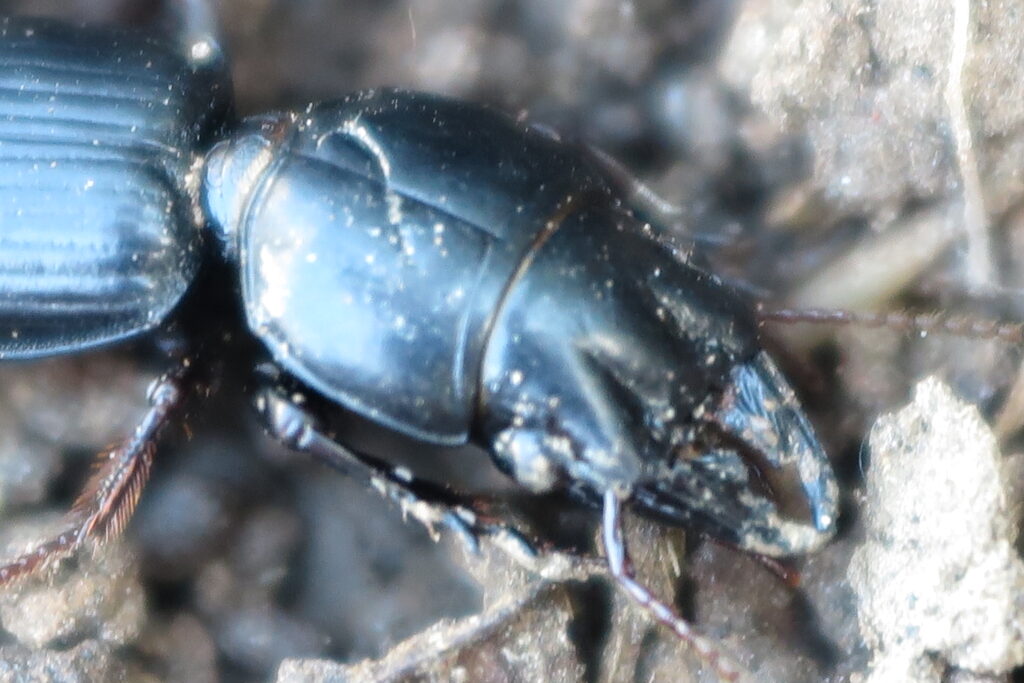
The enlarged head is the single most important identification feature. Few North American ground beetles possess a head that appears so large compared to the rest of the body. This characteristic immediately distinguishes Scarites from many similar-looking insects.
Large mandibles extend forward from the front of the head. These jaws appear thick, curved, and powerful, giving the beetle an intimidating appearance. Compared to many other beetles, the mandibles are exceptionally well developed and easily visible without magnification.
The pronotum, located directly behind the head, is also broad and heavily built. This section contributes to the muscular appearance of the front body region. Together, the head and pronotum create a body shape that differs substantially from many other ground beetles.
A useful comparison can be made to a pair of pliers attached to the front of a small machine. The head functions as the central operating area, while the jaws serve as specialized tools. This distinctive arrangement makes the species relatively easy to identify once these features become familiar.
Big-Headed Ground Beetle Lookalikes and Identification Tips
Darkling beetles are among the most common insects confused with Big-Headed Ground Beetles. Both groups often possess black coloration and similar body sizes. However, darkling beetles usually have smaller heads and lack the massive mandibles characteristic of Scarites.
Other ground beetles may also create confusion. Many species within the family Carabidae possess dark bodies and similar overall shapes. The oversized head remains the easiest feature for separating Big-Headed Ground Beetles from their relatives.
Movement can also assist with identification. When disturbed, Scarites species often run quickly while keeping their bodies low to the ground. Their movements appear direct and purposeful, unlike some beetles that wander erratically across the surface.
The simplest identification method involves examining four major characteristics: glossy black coloration, enlarged head, strong mandibles, and elongated body shape. If all four features are present, the insect is very likely a Big-Headed Ground Beetle. Using multiple characteristics together provides much greater confidence than relying on a single feature.
Photographs of the head region are especially valuable when confirming identification. Images showing the broad head and large jaws often provide enough detail to separate the beetle from most lookalikes. Because these features remain consistent across the genus, they serve as the most reliable tools for identification.
Popular Searches About Ground Beetles
Explore Ground Beetle Guide
Explore More Wildlife

Support Encounters World
Help support wildlife photography and get behind the scenes discoveries on Patreon.