
Big-Headed Ground Beetle Predators and Threats: Natural Enemies, Risks, and Survival Challenges
Quick Facts
Primary Predators: Birds, Amphibians, Reptiles, and Small Mammals
Greatest Natural Threat: Ground-Foraging Predators
Human-Related Threats: Habitat Disturbance and Soil Alteration
Main Defense: Burrowing and Strong Mandibles
Predator Avoidance: Concealment and Rapid Escape
Population Trend: Generally Stable
Big-Headed Ground Beetle Predators and Threats Overview
The Big-Headed Ground Beetle (Scarites sp.) spends much of its life hidden beneath the soil, yet it still faces numerous dangers throughout its range. Predators, environmental conditions, and human disturbances all influence the survival of these large ground beetles. Although their underground lifestyle provides protection, it does not completely remove them from the challenges faced by many terrestrial insects.
Across North America, these beetles occupy environments filled with animals that search for prey along the ground. Birds, mammals, reptiles, and amphibians regularly hunt within the same areas where Big-Headed Ground Beetles live. Because the beetles occasionally emerge from their shelters, they become vulnerable to a variety of predators.
The species relies heavily on concealment and underground protection to reduce exposure. Remaining hidden beneath rocks, logs, and soil allows individuals to avoid many dangerous encounters. Nevertheless, periods of movement and activity place them within reach of numerous predators that patrol the forest floor.
The challenges faced by the Big-Headed Ground Beetle can be compared to those of a small mammal living in a burrow. Although underground shelter provides security, survival still depends on avoiding predators and adapting to changing environmental conditions. These pressures help shape the behavior and success of the species throughout its range.
Big-Headed Ground Beetle Natural Predators
Birds represent some of the most important predators of Big-Headed Ground Beetles. Ground-feeding species such as robins, thrushes, crows, and other insect-eating birds frequently search through leaf litter and loose soil. A beetle moving across open ground may quickly attract attention from these visually oriented hunters.
Amphibians such as toads and larger salamanders may also prey upon these beetles. These animals often hunt near the ground surface where beetles become active. Their ability to detect movement allows them to capture insects that emerge from shelter.
Reptiles contribute to predation as well. Small snakes and lizards occasionally consume ground beetles when opportunities arise. The hard exoskeleton may discourage some predators, but others are capable of handling heavily armored prey.
Small mammals, including shrews, mice, and certain insect-eating mammals, may also feed upon Big-Headed Ground Beetles. Many of these predators hunt beneath leaf litter and within loose soil, placing them in direct contact with beetle populations. Their excellent sense of smell allows them to locate hidden prey.
The predator community can vary depending on location. Forest populations may face different predators than those living in grasslands or agricultural areas. Despite these differences, the beetle remains part of an extensive food web that includes numerous animals capable of consuming it.
Environmental and Human Threats to Big-Headed Ground Beetles
Environmental changes can create significant challenges for Big-Headed Ground Beetle populations. Prolonged drought reduces soil moisture and may make underground environments less suitable. Dry conditions can also reduce the abundance of prey species, indirectly affecting beetle survival.
Flooding presents another natural threat. Heavy rainfall can saturate underground spaces and temporarily destroy burrows or hiding locations. Although many beetles survive these events, severe flooding may reduce local populations.
Human activities represent some of the largest modern threats. Construction projects, urban development, and extensive soil disturbance can eliminate suitable habitat. Areas that once supported underground communities may become compacted, paved, or otherwise altered.
Agricultural practices can also influence populations. Heavy tillage, repeated soil disturbance, and certain pesticides may affect both the beetles and their prey. While some agricultural environments support populations, intensive land use can reduce habitat quality.
Habitat fragmentation creates additional problems. Isolated patches of suitable habitat may support smaller populations that become separated from one another. This fragmentation can reduce movement between populations and limit long-term stability.
Big-Headed Ground Beetle Survival and Defensive Responses
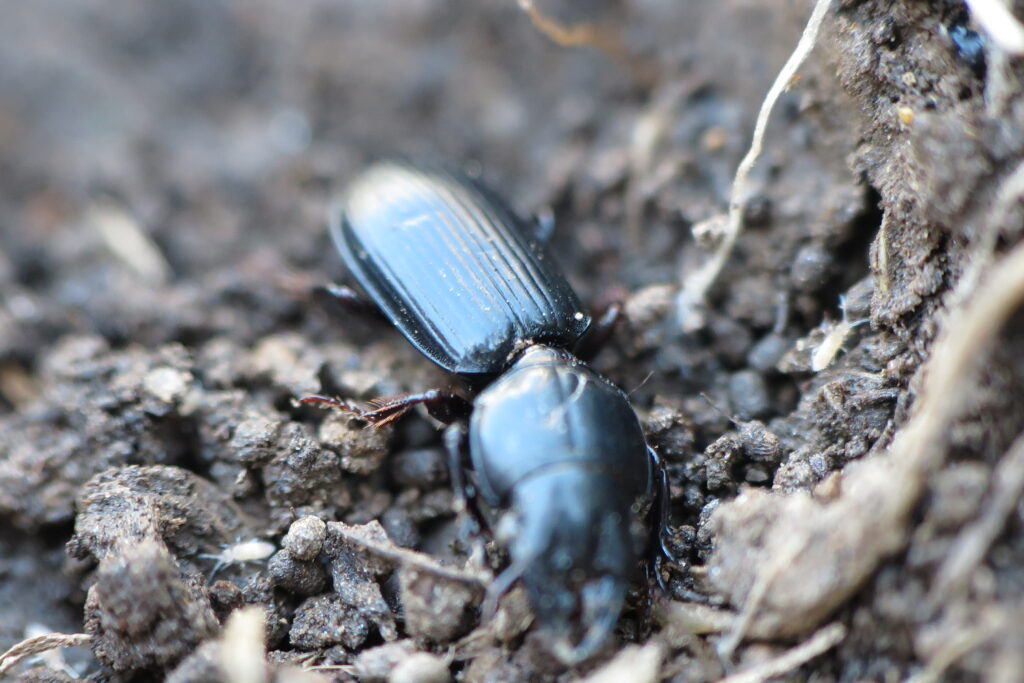
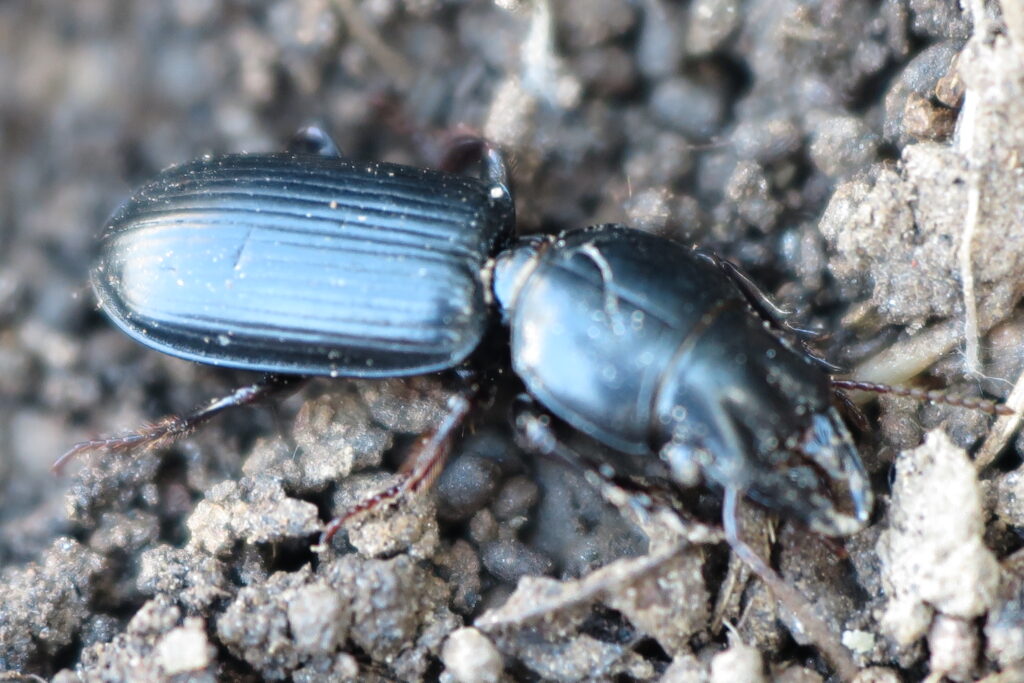
The Big-Headed Ground Beetle possesses several adaptations that help reduce the risks posed by predators and environmental threats. One of its most important defenses is its ability to burrow and remain hidden beneath the soil. Underground shelter reduces exposure to many predators that hunt visually.
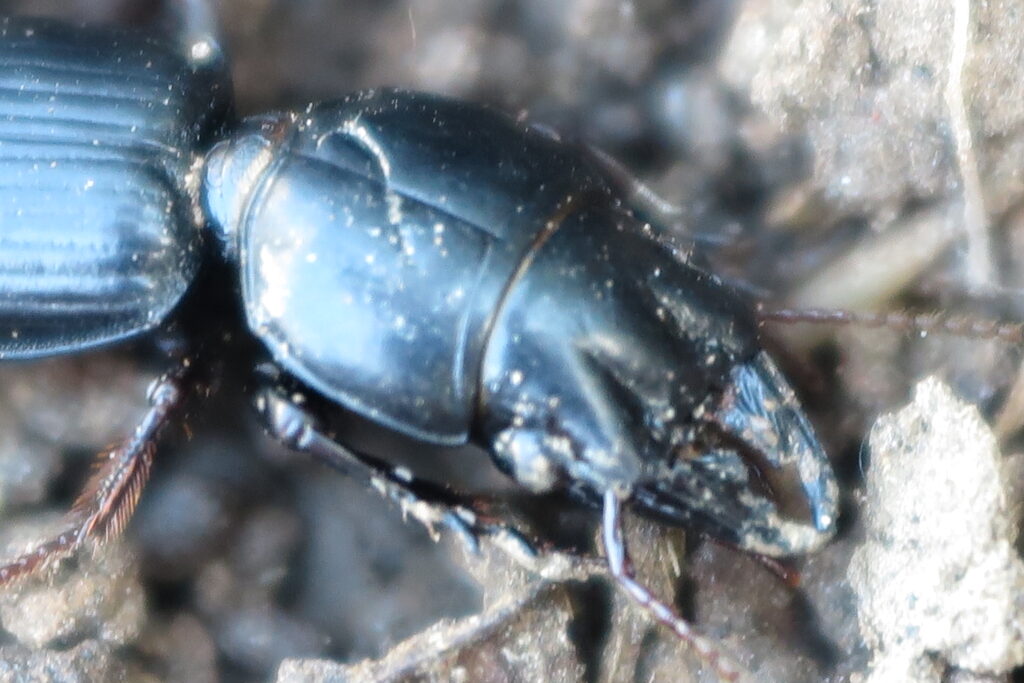
The beetle’s dark coloration also contributes to survival. Its glossy black body blends well with shadows, soil, and leaf litter. This natural camouflage helps conceal individuals when they remain motionless beneath cover.
Large mandibles provide another layer of protection. Although the beetle rarely displays aggression, the jaws may be used defensively if an animal attempts to capture or handle it. Their intimidating appearance may also discourage some predators from attacking.
Rapid movement serves as an additional survival strategy. When exposed, the beetle can run quickly toward nearby shelter or loose soil. This sudden movement often surprises predators and increases the likelihood of escape.
A useful example occurs when a rock is lifted and the beetle becomes exposed. Some individuals remain perfectly still, relying on concealment. Others immediately run toward cover or disappear beneath loose soil, demonstrating the flexibility of their defensive responses.
The combination of burrowing ability, camouflage, strong mandibles, and rapid escape has allowed Big-Headed Ground Beetles to survive despite numerous threats. While predators and environmental pressures remain constant, these adaptations provide effective protection. Their ability to avoid danger while utilizing underground environments helps explain why the species remains successful across much of its range.
Popular Searches About Ground Beetles
Explore Ground Beetle Guide
Explore More Wildlife

Support Encounters World
Help support wildlife photography and get behind the scenes discoveries on Patreon.