
Big-Headed Ground Beetle Ecosystem Role: Ecological Importance, Pest Control, and Soil Benefits
Quick Facts
Ecological Role: Predator and Soil Invertebrate
Food Web Position: Secondary Consumer
Primary Contribution: Natural Pest Control
Environmental Benefit: Regulates Invertebrate Populations
Soil Impact: Supports Healthy Underground Ecosystems
Ecosystem Type: Forests, Fields, Grasslands, and Agricultural Areas
Big-Headed Ground Beetle Ecological Importance Overview
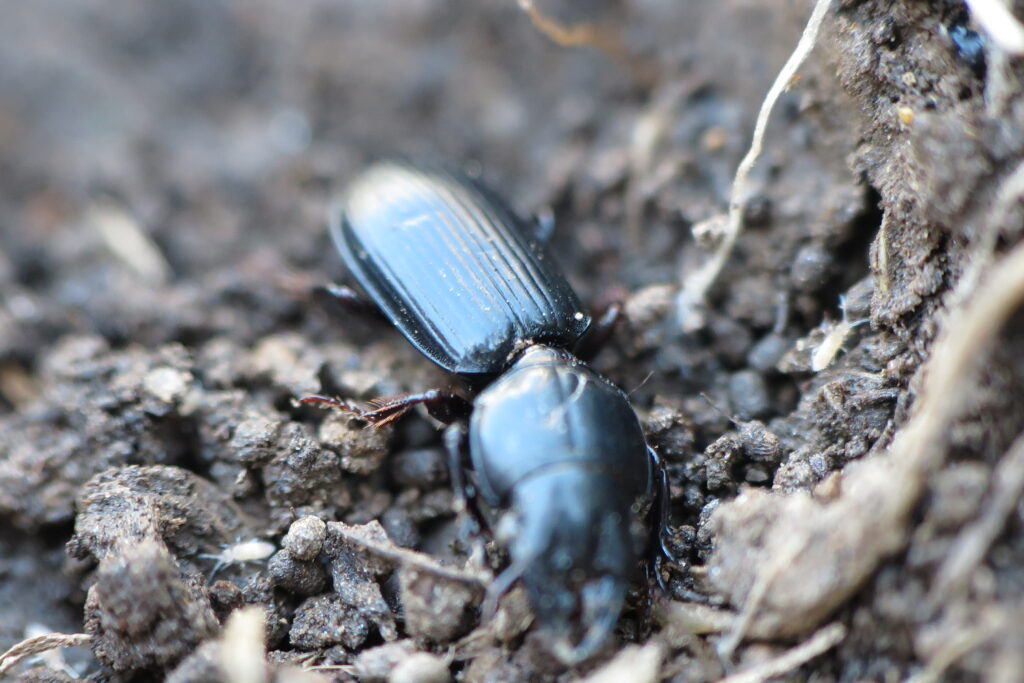
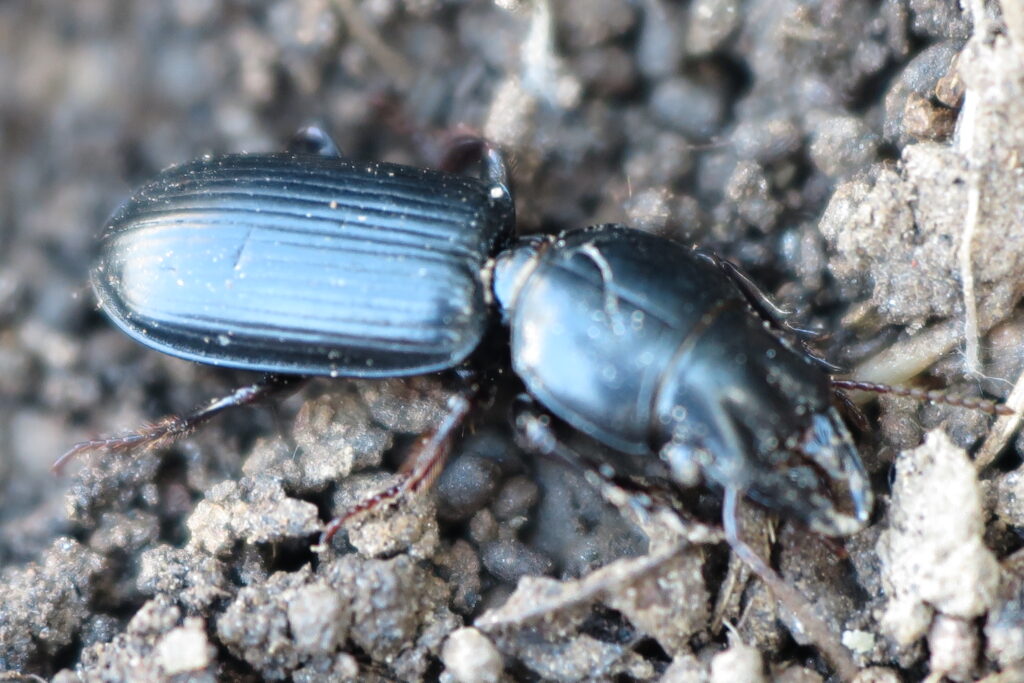
The Big-Headed Ground Beetle (Scarites sp.) serves an important role within terrestrial ecosystems throughout North America. Although much of its life occurs beneath the soil surface, its influence extends throughout forests, grasslands, agricultural fields, and other ground-level environments. The species functions as both a predator and a food source, helping maintain ecological balance within the communities it inhabits.
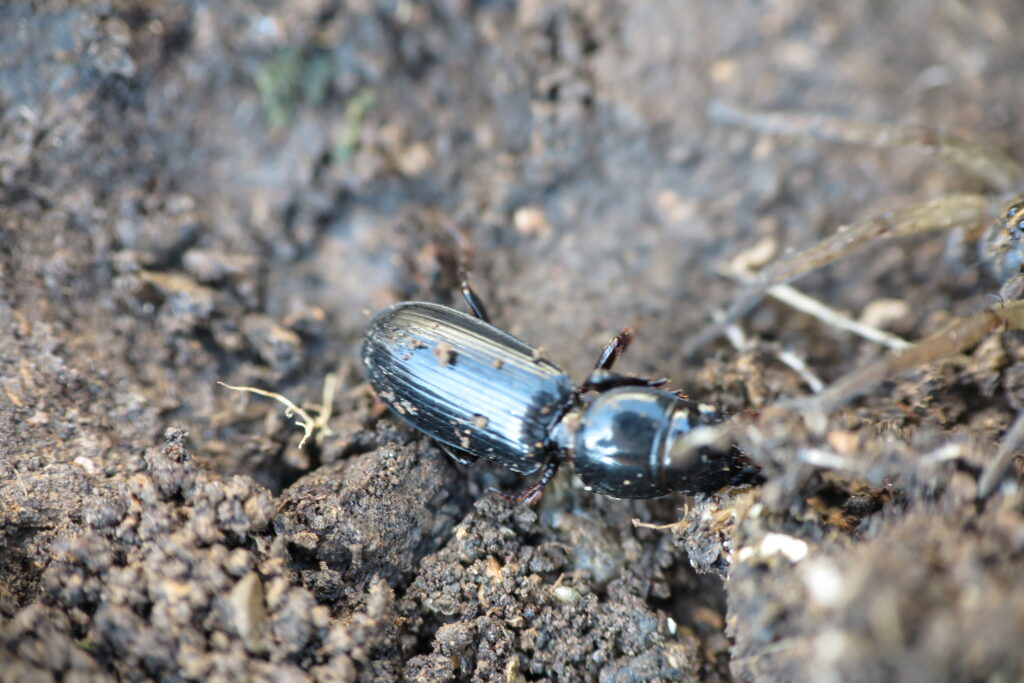
Many people overlook ground beetles because they spend most of their lives hidden beneath rocks, soil, and debris. Their secretive behavior often causes them to go unnoticed, even in areas where they are relatively common. Despite this lack of visibility, these beetles contribute significantly to the health of underground ecosystems.
The ecological importance of the Big-Headed Ground Beetle comes largely from its position within the food web. It helps regulate populations of smaller invertebrates while simultaneously providing energy to larger predators. This dual role allows energy to move through multiple levels of the ecosystem.
A useful comparison can be made to a nighttime security patrol operating beneath the ground. Although rarely observed, the beetle constantly influences the organisms around it. Through its daily activities, it contributes to the stability and balance of numerous environments across its range.
Big-Headed Ground Beetle Role in the Food Web
The Big-Headed Ground Beetle occupies a middle position within the food web. As a predator, it feeds on smaller soil-dwelling animals, while larger predators occasionally feed upon the beetle itself. This intermediate role allows nutrients and energy to move between different levels of the ecosystem.
Birds, amphibians, reptiles, and small mammals may prey upon adult beetles. These animals benefit from the nutrients contained within the beetle’s body, especially during periods when other prey becomes scarce. The beetle therefore serves as an important link between underground invertebrates and larger vertebrate predators.
At the same time, the beetle helps control populations of smaller organisms. By consuming various invertebrates, it prevents certain populations from becoming excessively abundant. This natural regulation contributes to ecological stability and reduces competition among many soil-dwelling species.
The food web can be compared to a chain of connected gears within a machine. Each species influences several others, and the removal of one component may affect many additional parts. The Big-Headed Ground Beetle helps keep these ecological connections functioning smoothly.
Its role may appear small when viewed individually, but large numbers of predatory beetles can significantly influence local ecosystems. Through countless feeding interactions, they contribute to the balance of underground communities throughout their range.
Big-Headed Ground Beetle Benefits to Soil Communities
The soil environment contains one of the most diverse communities found in nature. Beneath the surface live insects, worms, fungi, bacteria, and countless microscopic organisms. The Big-Headed Ground Beetle contributes to this hidden ecosystem through its interactions with many of these species.
Predatory beetles help maintain healthy soil communities by influencing the abundance of smaller invertebrates. This regulation reduces the likelihood that certain species become overly dominant. Balanced populations contribute to greater biodiversity and more stable ecological conditions.
Burrowing activities also influence soil environments on a small scale. As beetles move beneath the surface, they create spaces within the soil that may improve airflow and water movement. Although these effects are not as dramatic as those produced by earthworms, they still contribute to soil complexity.
The beetle can be compared to a gardener maintaining balance within a landscape. Rather than allowing one species to dominate, its presence helps support a diverse community of organisms. This diversity benefits the overall health of underground ecosystems.
Healthy soil communities support plant growth, nutrient cycling, and ecosystem productivity. By participating in these underground environments, Big-Headed Ground Beetles indirectly contribute to the functioning of forests, grasslands, and agricultural areas.
Big-Headed Ground Beetle Importance for Natural Pest Control
One of the most valuable contributions of the Big-Headed Ground Beetle is its role as a natural pest controller. By feeding on various soil-dwelling invertebrates, the beetle helps reduce populations of insects that may damage crops, gardens, or vegetation. This ecological service benefits both natural ecosystems and human-managed landscapes.
Agricultural scientists have long recognized the importance of predatory ground beetles. Many species help suppress populations of insects that would otherwise increase in number. Their activities provide a natural form of pest regulation without the need for human intervention.
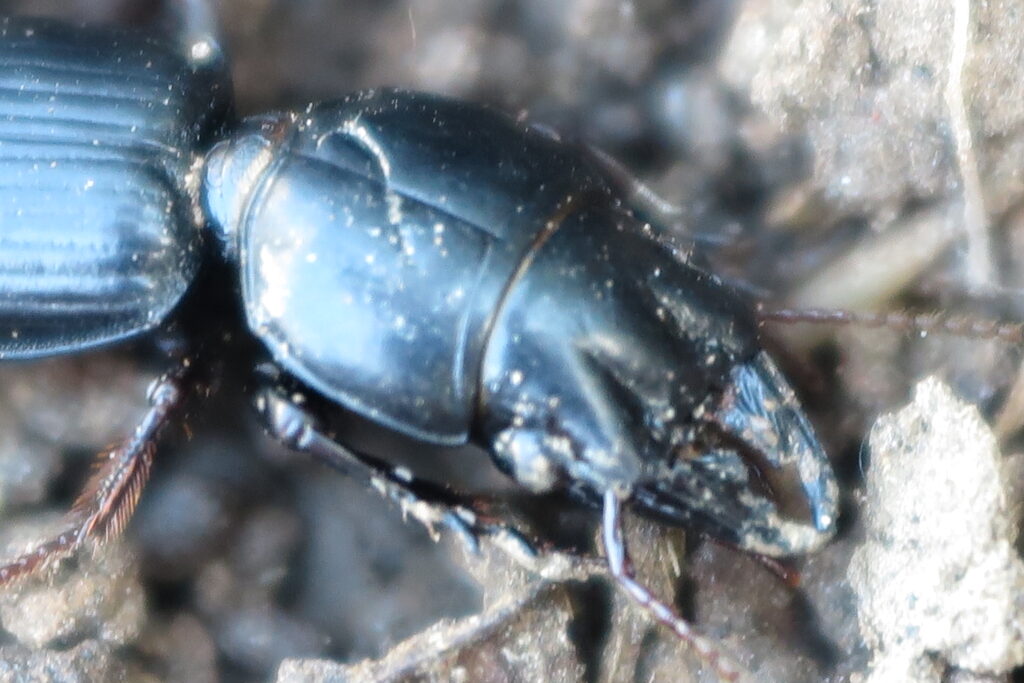
The beetle’s large mandibles and strong head make it an effective predator within underground environments. These adaptations allow it to capture prey that smaller predators may be unable to handle. Its feeding activities contribute to the overall balance of invertebrate communities.
A practical comparison can be made to owls controlling rodent populations within fields. Just as owls help reduce small mammal numbers, ground beetles help regulate smaller invertebrates. Both predators contribute to healthier ecosystems by maintaining balanced populations.
The ecological value of the Big-Headed Ground Beetle extends far beyond its appearance. Through natural pest control, food web interactions, and contributions to soil communities, the species plays an important role within many North American ecosystems. Although it spends much of its life hidden underground, its influence on the environment remains substantial and far-reaching.
Popular Searches About Ground Beetles
Explore Ground Beetle Guide
Explore More Wildlife

Support Encounters World
Help support wildlife photography and get behind the scenes discoveries on Patreon.