
Big-Headed Ground Beetle vs Darkling Beetle: Identification, Differences, and Comparison Guide
Quick Facts
Big-Headed Ground Beetle Family: Carabidae
Darkling Beetle Family: Tenebrionidae
Main Difference: Enlarged Head and Mandibles
Activity Pattern: Mostly Nocturnal for Both
Diet Comparison: Predator vs Scavenger
Best Identification Feature: Oversized Head of Scarites
Big-Headed Ground Beetle vs Darkling Beetle Overview
The Big-Headed Ground Beetle (Scarites sp.) and the Darkling Beetle (family Tenebrionidae) are two black beetles that are frequently confused with one another. Both groups share dark coloration, ground-dwelling habits, and similar body sizes, causing many people to misidentify them when they encounter them beneath rocks, logs, or loose soil. Despite these similarities, several important differences separate the two groups.
Many observations occur in gardens, wooded areas, agricultural fields, and disturbed soils where both beetles may live. A person lifting a stone or moving debris may discover a glossy black beetle and assume it belongs to one particular group. Close examination often reveals important features that quickly distinguish one from the other.
Big-Headed Ground Beetles belong to the ground beetle family Carabidae, while darkling beetles belong to the family Tenebrionidae. These families have followed different evolutionary paths, producing unique body shapes, feeding strategies, and physical adaptations. Their appearances may overlap, but their biology differs considerably.
Finding these two beetles side by side is similar to comparing a bulldozer and a delivery truck. Both are dark, durable machines designed for movement, yet each serves a very different purpose. Understanding their differences allows naturalists to identify each species with greater confidence.
Big-Headed Ground Beetle and Darkling Beetle Physical Differences
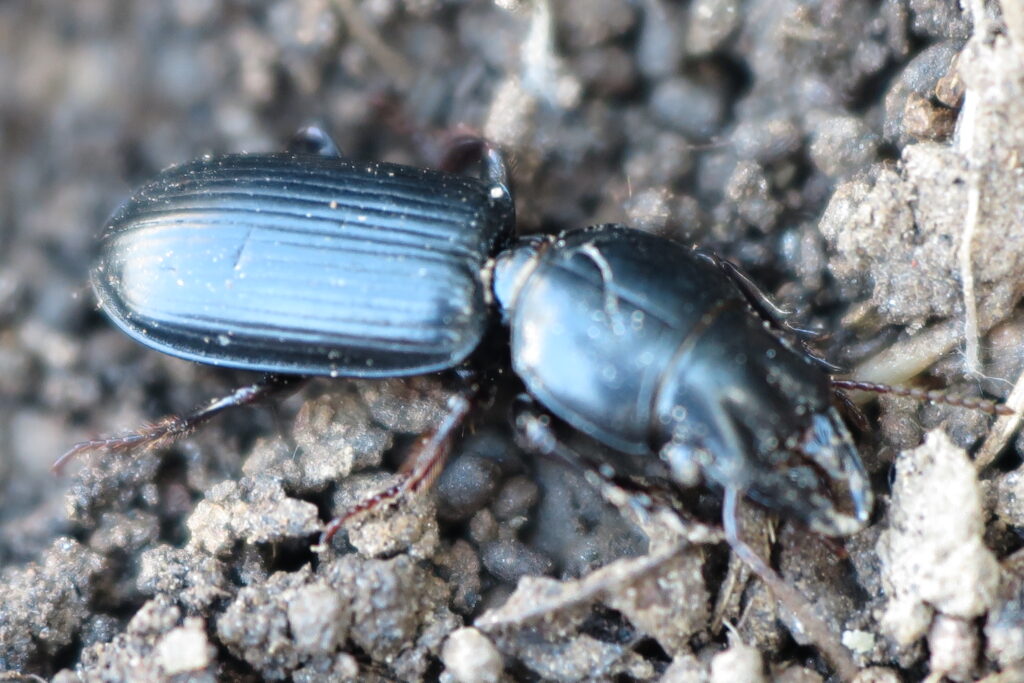
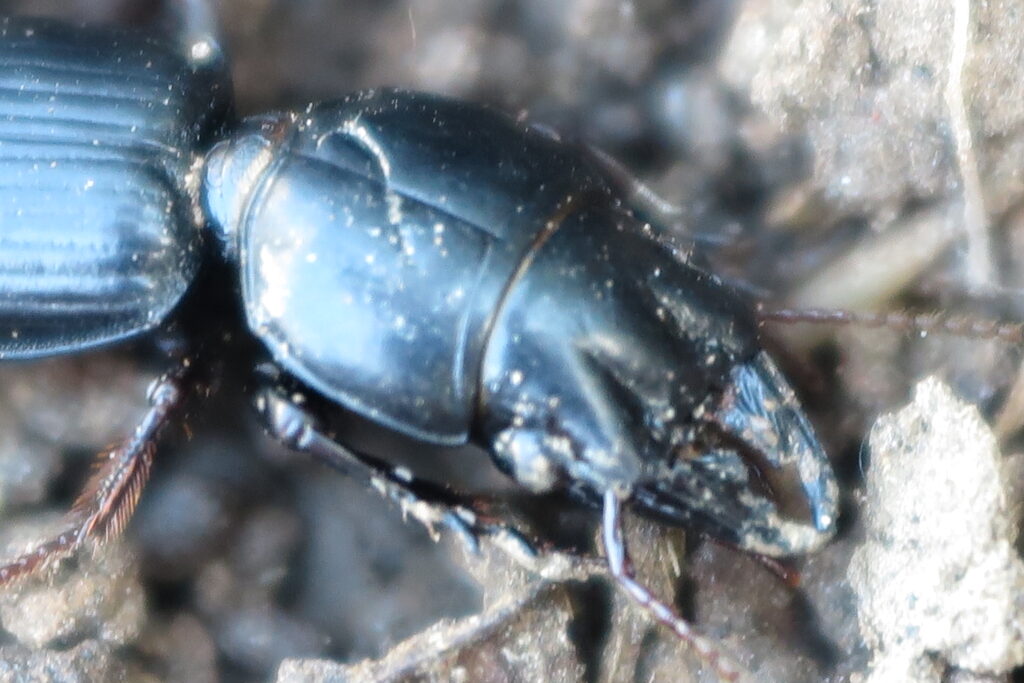
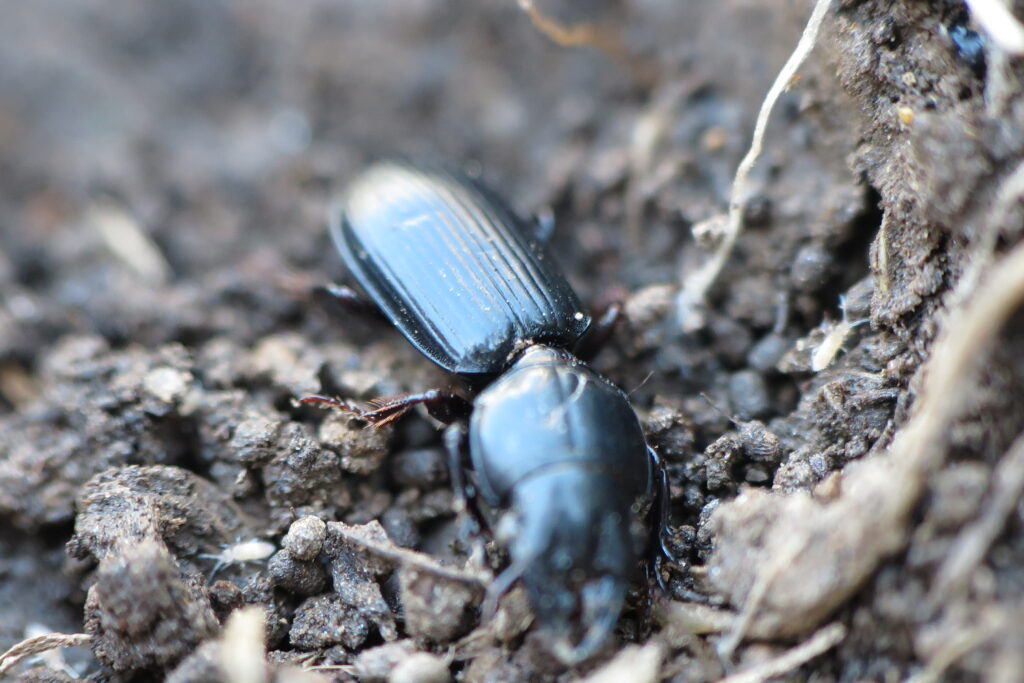
The most obvious difference between the two beetles is the head. Big-Headed Ground Beetles possess a noticeably enlarged head that appears wider and more powerful than the rest of the body. Darkling beetles generally have smaller heads that blend smoothly into the thorax.
Mandibles provide another major distinction. The jaws of Scarites species are large, prominent, and easily visible from above. Darkling beetles usually possess smaller mouthparts that do not project forward in the same dramatic way.
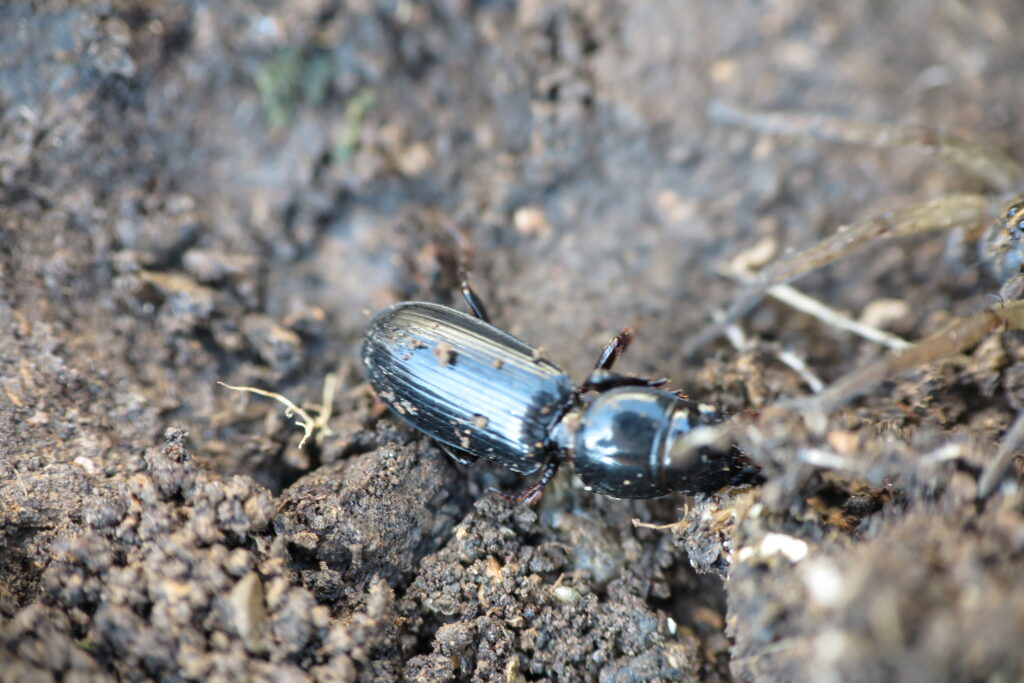
Body shape also differs considerably. Big-Headed Ground Beetles often appear flattened with broad front sections and tapered rear ends. Darkling beetles usually possess more evenly rounded bodies with smoother transitions between body segments.
The pronotum behind the head often appears much wider and stronger in Big-Headed Ground Beetles. This muscular front region contributes to their bulldozer-like appearance. Darkling beetles generally have simpler body proportions that lack the heavily built front section.
A useful comparison can be made to a pair of hand tools. The Big-Headed Ground Beetle resembles a set of pliers because of its large jaws, while the darkling beetle resembles a smooth handle without obvious projections. These differences become obvious once both insects are examined closely.
Big-Headed Ground Beetle vs Darkling Beetle Behavior and Ecology
Although both beetles are often active at night, their ecological roles differ substantially. Big-Headed Ground Beetles function primarily as predators that hunt smaller invertebrates. Their enlarged mandibles reflect their role as active hunters within soil communities.
Darkling beetles frequently serve as scavengers, decomposers, or plant feeders depending on the species. Many consume decaying organic matter, fungi, seeds, or plant material. Their feeding habits make them very different from the predatory lifestyle of Scarites.
The two beetles also interact with their environments in different ways. Big-Headed Ground Beetles often utilize underground spaces and loose soil while searching for prey. Darkling beetles may occupy dry habitats, decaying wood, stored grains, or open surfaces depending on the species involved.
Compared to the patient hunting strategy of the ground beetle, many darkling beetles display slower and less aggressive feeding behaviors. Their ecological roles emphasize decomposition and scavenging rather than active predation. These differences influence the structure of the communities where they live.
The relationship between these beetles can be compared to a wolf and a vulture. Both animals may occupy similar landscapes, yet one serves primarily as a hunter while the other processes available resources. The same principle applies to these two beetle groups.
How to Identify a Big-Headed Ground Beetle From a Darkling Beetle
The easiest method of identification is to examine the head. If the head appears unusually large and wider than most of the body, the insect is likely a Big-Headed Ground Beetle. A smaller, rounded head often indicates a darkling beetle.
Next, examine the mandibles. Large, projecting jaws strongly suggest Scarites. Darkling beetles usually lack these oversized mandibles and instead possess much smaller mouthparts that are difficult to see without close inspection.
The overall body shape also provides important clues. Big-Headed Ground Beetles frequently appear flattened and muscular, while darkling beetles often display smoother, more evenly shaped bodies. Looking at the insect from above usually reveals these differences.
Behavior can also assist with identification. Big-Headed Ground Beetles often move quickly and directly when disturbed. Many darkling beetles move more slowly or rely on remaining still rather than running rapidly toward cover.
A practical example occurs when lifting a rock in a garden. A large black beetle with a broad head, visible jaws, and rapid movement is likely a Big-Headed Ground Beetle. A smoother-bodied beetle with a smaller head and slower movement is more likely a darkling beetle.
Although both groups share black coloration and similar sizes, their physical structure, feeding roles, and body proportions make them relatively easy to separate once the key features are understood. Learning these differences allows naturalists and homeowners to confidently distinguish between one of North America’s largest ground beetles and one of its most diverse beetle families.
Popular Searches About Ground Beetles
Explore Ground Beetle Guide
Explore More Wildlife

Support Encounters World
Help support wildlife photography and get behind the scenes discoveries on Patreon.