
Big-Headed Ground Beetle Facts Guide: Interesting Facts, Unique Traits, and Surprising Discoveries
Quick Facts
Scientific Name: Scarites sp.
Common Name: Big-Headed Ground Beetle
Animal Group: Ground Beetle (Carabidae)
Average Length: 0.75–1.50 inches (19–38 mm)
Most Distinctive Feature: Enlarged Head and Powerful Mandibles
Interesting Fact: Spends much of its life hidden underground
Fascinating Big-Headed Ground Beetle Facts Overview
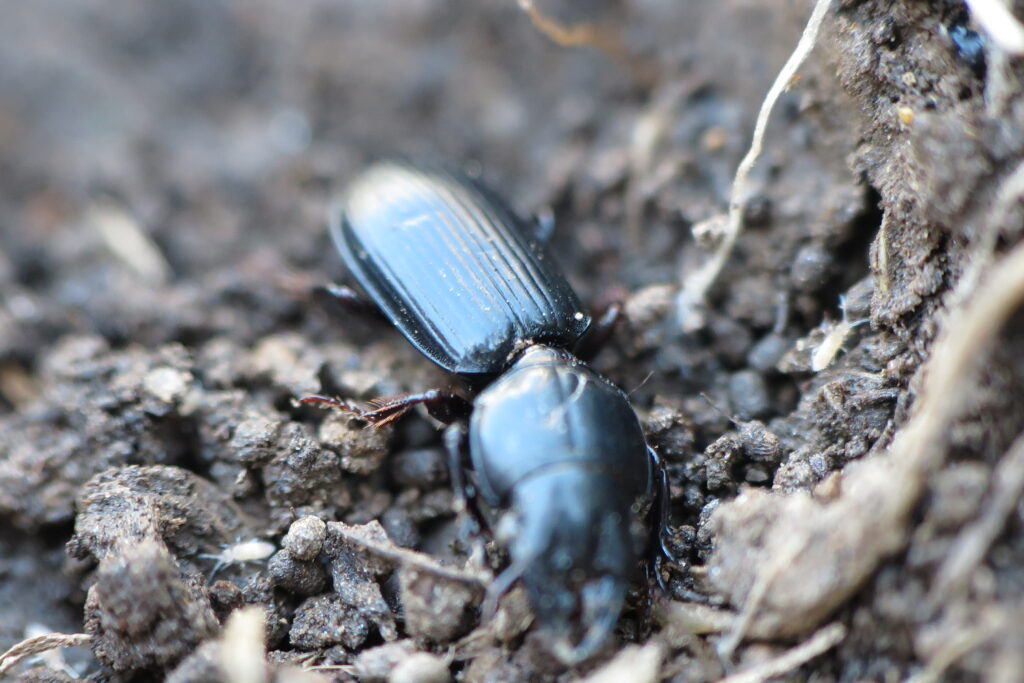
The Big-Headed Ground Beetle (Scarites sp.) is one of the most unusual ground beetles found throughout North America. Its oversized head, large jaws, and heavily armored appearance make it stand out from many other black beetles that inhabit the forest floor. Although people occasionally discover one beneath a rock or log, much of its life remains hidden beneath the surface.
Many insects rely on bright colors or elaborate patterns to attract attention, but the Big-Headed Ground Beetle follows a different approach. Its glossy black body and simple appearance conceal an insect equipped with impressive adaptations. The species often surprises observers because it looks far more intimidating than its actual behavior suggests.
Members of the genus Scarites belong to the large ground beetle family Carabidae. This family contains thousands of species worldwide, yet few possess the enlarged head that gives these beetles their common name. Their unusual proportions make them among the easiest ground beetles to recognize.
Learning interesting facts about the species helps reveal why it occupies such an important role within terrestrial ecosystems. Beneath its simple appearance lies an insect with remarkable anatomy, specialized behaviors, and a long evolutionary history that extends far beyond modern landscapes.
Amazing Big-Headed Ground Beetle Physical Facts
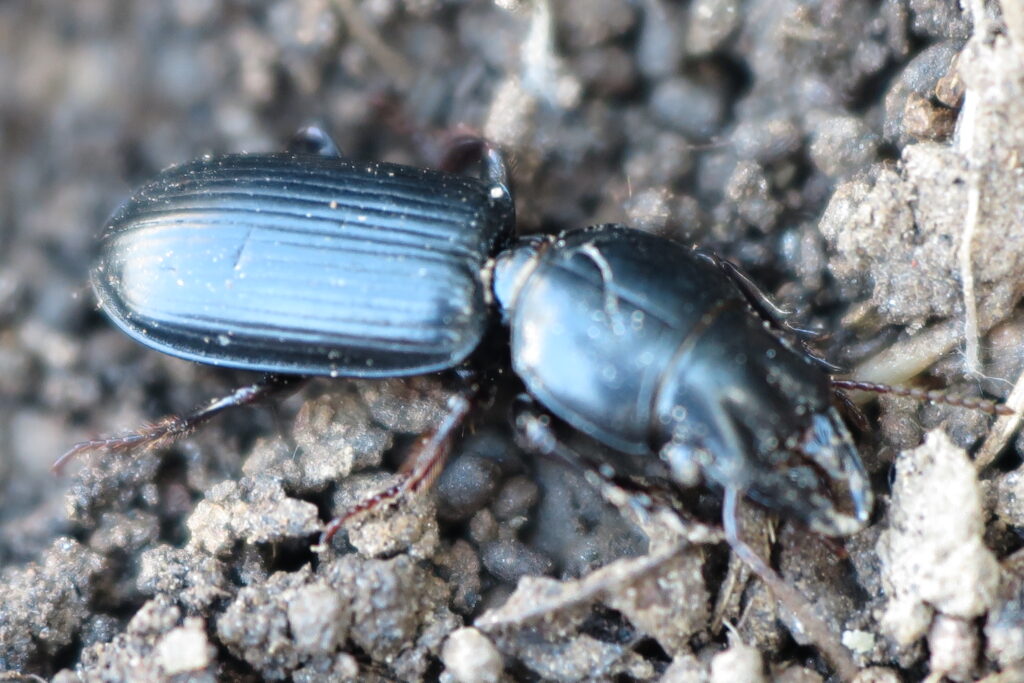
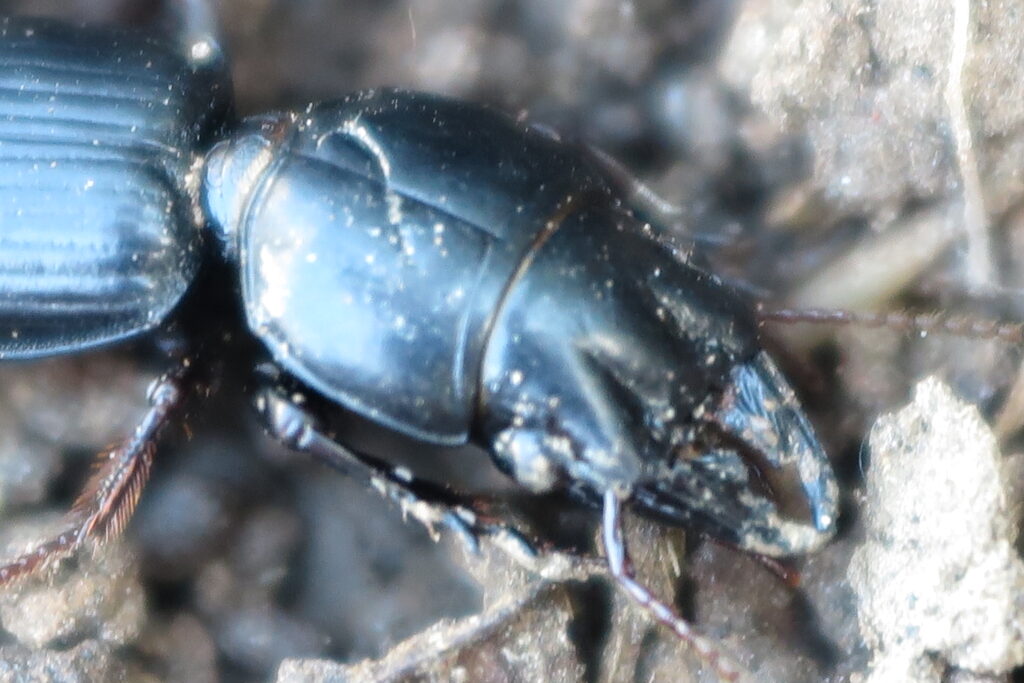
One of the most surprising facts about the Big-Headed Ground Beetle is that its head is proportionally larger than that of most ground beetles. The enlarged head houses strong muscles that operate the powerful mandibles. This adaptation gives the insect both its name and its distinctive appearance.
The jaws themselves are another remarkable feature. These mandibles can appear almost oversized compared to the rest of the body, giving the beetle an intimidating look. Despite their appearance, the jaws primarily serve feeding and defensive functions rather than aggression toward humans.
The body possesses a glossy black exoskeleton that often reflects light. Under sunlight or camera flash, the surface may appear polished or metallic. This smooth appearance contrasts with the rough textures found on many other beetles.
Deep grooves run along the wing covers, creating a lined pattern that adds additional texture. These grooves help distinguish the species from many similar black beetles. Combined with the enlarged head and broad pronotum, they create one of the most recognizable body shapes among North American ground beetles.
A mature beetle may reach lengths comparable to a house key or small pocketknife. Their relatively large size makes encounters particularly memorable. Few soil-dwelling beetles possess such a combination of size, strength, and unusual proportions.
Surprising Big-Headed Ground Beetle Behavior Facts
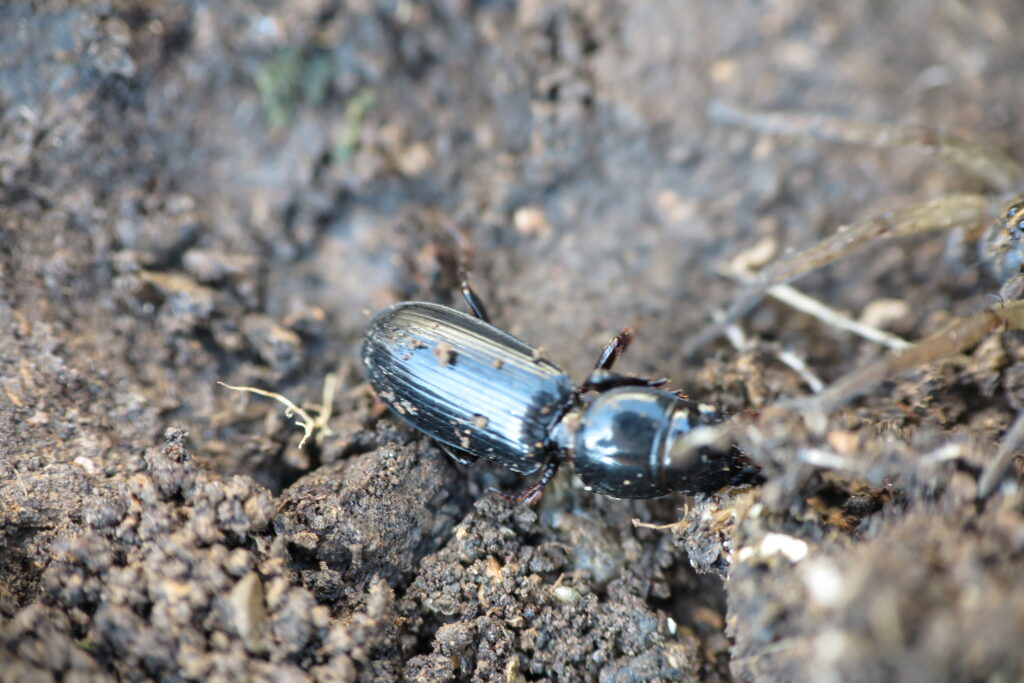
The Big-Headed Ground Beetle spends much of its life hidden beneath the soil. Many individuals remain underground for long periods, emerging only during favorable conditions. Because of this secretive lifestyle, people often underestimate how common these beetles actually are.
When disturbed, the beetle frequently remains motionless before suddenly running toward cover. This behavior can surprise observers who initially believe the insect is inactive. The rapid transition from stillness to movement serves as an effective survival strategy.
Most activity occurs during nighttime hours. Darkness reduces exposure to predators and provides safer conditions for movement. This nocturnal lifestyle explains why the species is encountered less frequently than many daytime insects.
The beetle can be compared to a nocturnal mammal that spends daylight hours inside a den. Just as foxes or raccoons avoid unnecessary daytime activity, Big-Headed Ground Beetles often remain concealed until conditions become more favorable. This pattern contributes greatly to their success.
Despite their intimidating appearance, these beetles generally avoid confrontation. Their first response to danger is often concealment or escape. The species relies far more heavily on avoiding threats than confronting them directly.
Big-Headed Ground Beetle Ecological and Historical Facts
Big-Headed Ground Beetles function as important predators within underground ecosystems. By feeding on smaller invertebrates, they help regulate populations and contribute to ecological balance. Their role in natural pest control makes them beneficial members of many environments.
Ground beetles have existed for millions of years, and their ancestors occupied ancient ecosystems long before humans appeared. Over time, specialized species such as Scarites developed unique features that allowed them to exploit underground habitats successfully. Their large heads and strong jaws represent evolutionary adaptations refined over countless generations.
Many people mistake these beetles for darkling beetles because both groups often possess black coloration. However, the enlarged head immediately separates Scarites from most lookalikes. This distinction has made the species popular among naturalists and insect enthusiasts.
The underground world inhabited by these beetles contains countless interactions that remain largely hidden from human observation. Beneath rocks, logs, and loose soil, Big-Headed Ground Beetles participate in complex food webs involving numerous insects and other organisms. Their contributions often go unnoticed despite their importance.
Perhaps the most interesting fact is that people may walk directly over these beetles without realizing they are present. Entire populations can exist beneath fields, forests, and gardens while remaining completely hidden. Their secretive lifestyle, unusual appearance, and ecological value make the Big-Headed Ground Beetle one of the most fascinating ground beetles in North America.
Popular Searches About Ground Beetles
Explore Ground Beetle Guide
Explore More Wildlife

Support Encounters World
Help support wildlife photography and get behind the scenes discoveries on Patreon.