
Buffalo Treehopper Identification Guide: How to Identify Buffalo Treehoppers in the Wild
Quick Facts
Identification Difficulty: Easy to Moderate
Primary Color: Bright green to yellow-green
Average Size: 6–10 mm long
Body Shape: Triangular, thorn-like profile
Most Distinctive Feature: Raised buffalo-shaped pronotum
Common Confusion Species: Thorn bugs, leafhoppers, and other treehoppers
Identifying the Buffalo Treehopper in Nature
The Buffalo Treehopper (Stictocephala bisonia) is one of the easiest treehoppers to recognize once its unusual shape becomes familiar. Found across much of North America and introduced into parts of Europe, this insect often goes unnoticed because it resembles part of the plant rather than an animal. Its appearance immediately separates it from most other insects encountered on stems and branches.
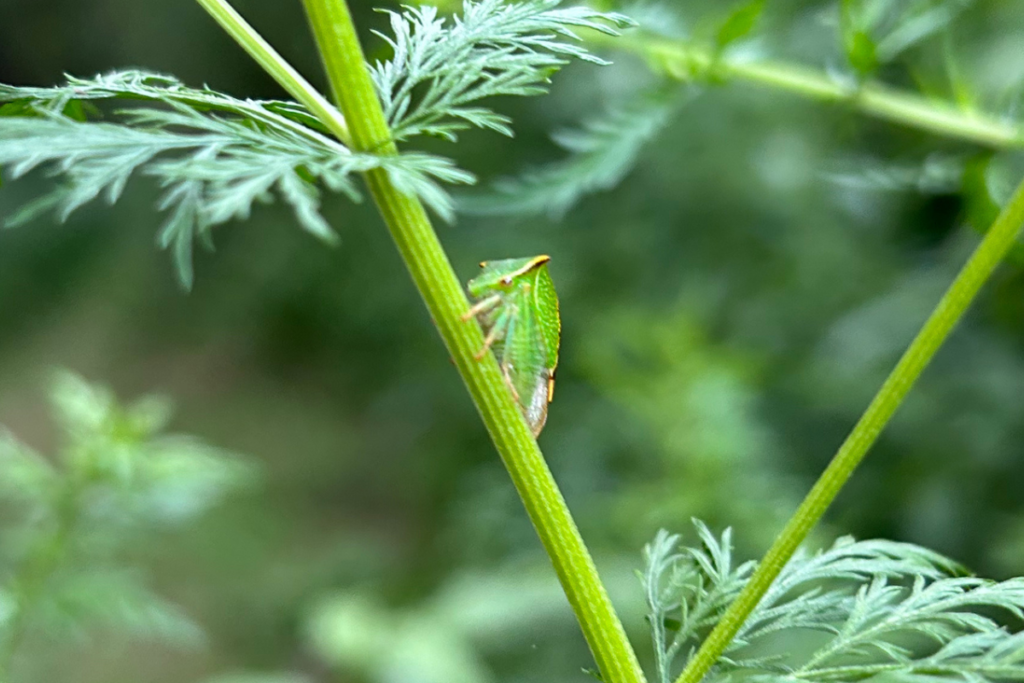
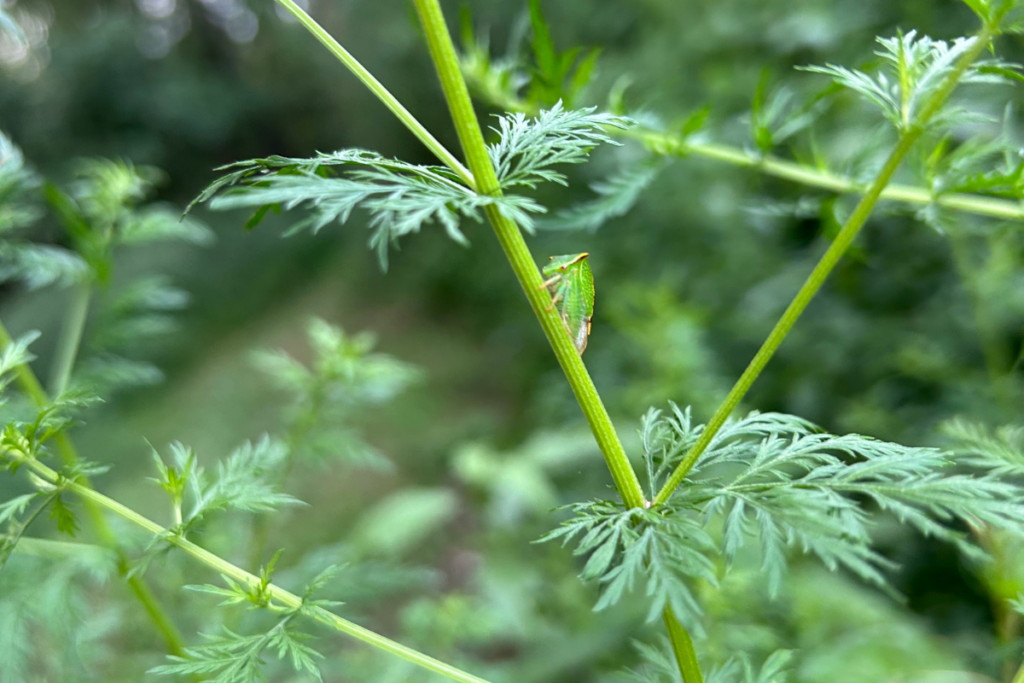
People commonly discover Buffalo Treehoppers while examining garden plants, wildflowers, shrubs, or small trees. At first glance, the insect may appear to be a thorn, leaf bud, or damaged piece of vegetation. Only careful observation reveals that the structure is actually a living insect.
Unlike many insects that rely on bright colors or obvious markings, the Buffalo Treehopper depends on shape and outline for identification. The triangular profile creates one of the most recognizable silhouettes among North American insects. Even small individuals display the same distinctive form.
Observing one closely often feels like discovering a hidden object attached to a stem. The insect’s appearance seems almost artificial, resembling a tiny piece of folded green plastic or a decorative plant spine. This unusual body design makes identification possible even without magnification.
Buffalo Treehopper Overall Appearance and Body Shape
The Buffalo Treehopper possesses a compact body measuring approximately 6 to 10 millimeters in length. Most individuals are similar in size to a small pea, pencil eraser, or sunflower seed. Despite their small dimensions, their expanded body structure makes them appear larger than they actually are.
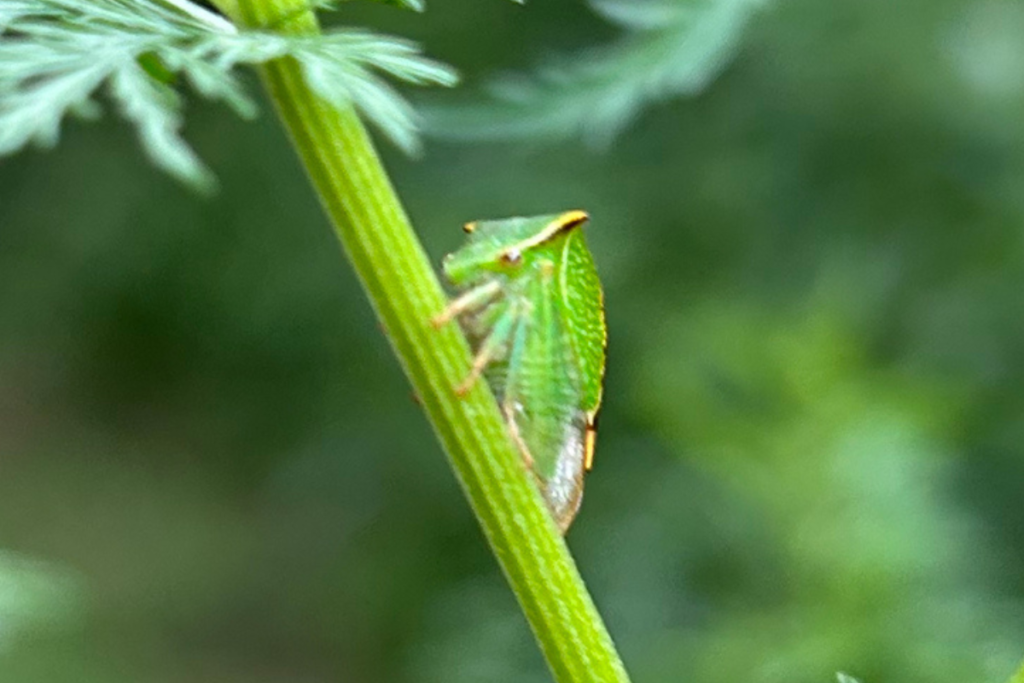
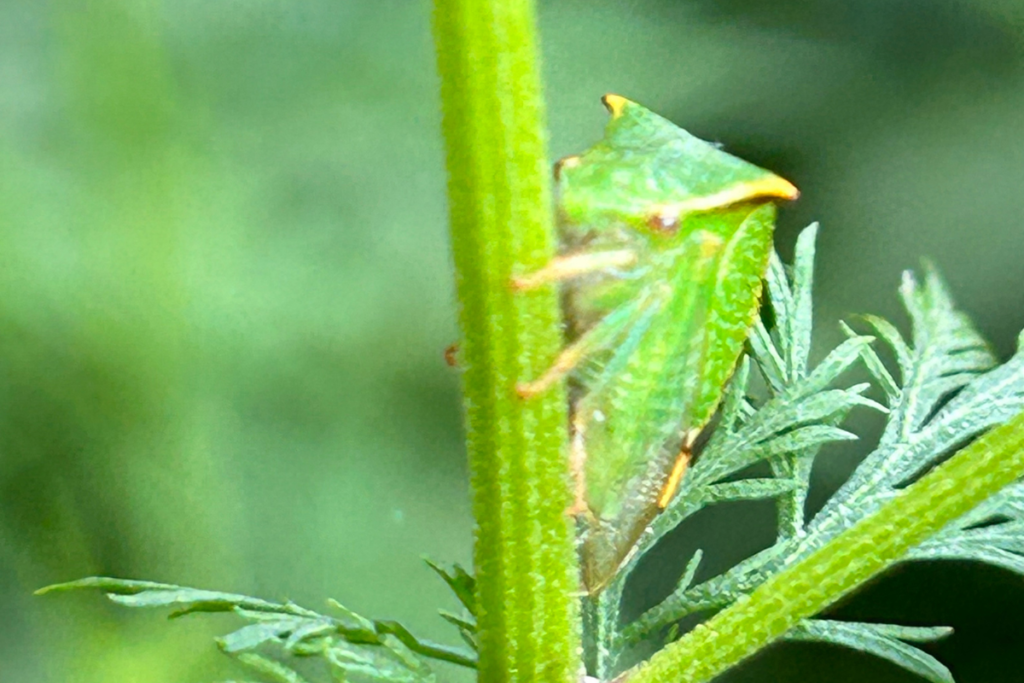
The most recognizable feature is the enlarged pronotum, which forms a tall triangular structure above the body. Two outward projections near the sides create the appearance of a buffalo’s shoulders, giving the insect its common name. This raised shield covers much of the insect’s upper body.
Viewed from the side, the Buffalo Treehopper resembles a thorn sticking outward from a stem. The sharply angled back creates a nearly geometric appearance unlike most insects. From above, the body appears narrow and compact.
The underside of the insect remains relatively small compared to the upper shield. Transparent wings fold beneath the pronotum and often remain partially hidden. The overall appearance resembles a tiny green tent placed on top of the insect’s body.
The body surface appears smooth and slightly glossy. Unlike many beetles that display rough textures or strong patterns, Buffalo Treehoppers usually exhibit clean lines and simple contours. This streamlined appearance contributes to their remarkable camouflage.
Buffalo Treehopper Color Variations and Physical Features
Most Buffalo Treehoppers display bright green coloration that closely matches living vegetation. This green color helps the insect blend into stems, leaves, and young plant growth. Fresh adults often appear vivid green during the growing season.
Some individuals develop yellow-green, olive, or pale green tones. Older specimens may gradually become slightly brown or faded as the season progresses. These color changes can make identification slightly more difficult late in the year.
Thin yellow, orange, or cream-colored margins sometimes appear along the upper edges of the pronotum. These markings are usually subtle but may become visible under good lighting conditions. They help outline the distinctive buffalo-shaped profile.
The eyes are relatively small and positioned near the front of the head. Because the enlarged pronotum dominates the insect’s appearance, the head often appears partially hidden. This creates the illusion that the insect lacks obvious facial features.
The legs are slender and pale green to yellowish in color. They remain tucked beneath the body while resting, making them difficult to notice. The hind legs are somewhat enlarged to support jumping movements.
Although color can vary slightly between individuals, the body shape remains highly consistent. This means the triangular outline provides a more reliable identification feature than coloration alone.
Distinguishing Buffalo Treehoppers From Similar Insects
Buffalo Treehoppers are sometimes confused with thorn bugs and other treehopper species. Thorn bugs often possess longer horns or more elaborate projections, while Buffalo Treehoppers maintain a smoother and more symmetrical triangular shape. Their body appears cleaner and less spiny.
Leafhoppers may also cause confusion because they belong to related groups. However, leafhoppers have flatter bodies and lack the dramatic elevated pronotum. Their appearance is more streamlined and less angular.
Small green stink bugs occasionally resemble Buffalo Treehoppers from a distance. Stink bugs possess broader, shield-shaped bodies and wider abdomens. Buffalo Treehoppers remain much narrower and more vertically compressed.
Plant thorns themselves can create identification challenges. The insect’s camouflage works so effectively that many observers mistake it for part of the plant. Looking for legs, eyes, or slight movement often confirms the presence of a living insect.
Young treehopper nymphs differ from adults because they lack fully developed wings. Nymphs often possess spines, waxy filaments, or unusual body projections. Their appearance can seem completely different from mature adults.
The easiest way to identify a Buffalo Treehopper is to remember its overall shape. Few insects combine a bright green color with a sharply angled triangular profile that resembles a tiny buffalo or plant thorn. This combination makes the species one of the most recognizable treehoppers in North America.
For many observers, the first Buffalo Treehopper becomes unforgettable. Once its distinctive shape is recognized, future individuals often stand out immediately among surrounding vegetation. Its unusual appearance makes it one of the most remarkable insects to identify in the field.
Popular Searches About Buffalo Treehoppers
Explore Buffalo Treehopper Guide
Explore More Wildlife

Support Encounters World
Help support wildlife photography and get behind the scenes discoveries on Patreon.