
Are Buffalo Treehoppers Harmful? Safety, Bites, and Plant Damage Guide
Quick Facts
Danger Level: Harmless to humans
Can They Bite?: No harmful bites reported
Venomous: No
Risk to Pets: None known
Plant Impact: Minor to moderate sap feeding damage
Defense Method: Camouflage and escape behavior
Are Buffalo Treehoppers Dangerous to People?
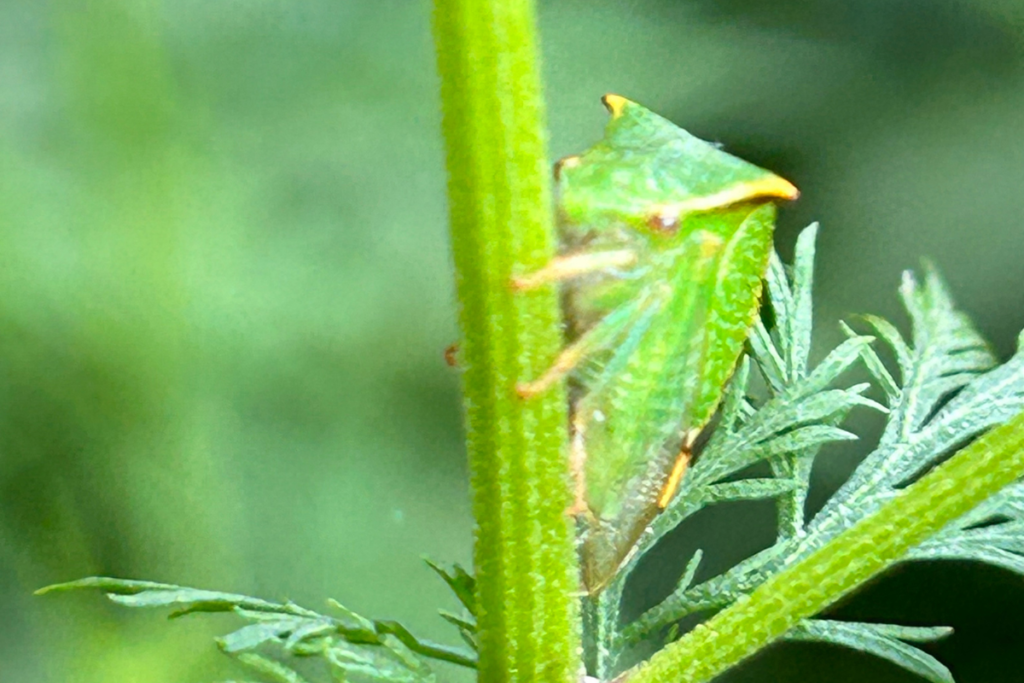
The Buffalo Treehopper (Stictocephala bisonia) is one of the more unusual insects that people encounter on plants, shrubs, and garden vegetation. Its pointed body and thorn-like shape often cause concern because it appears armored or potentially dangerous. Fortunately, this species presents very little risk to people.
When discovered on a stem or branch, Buffalo Treehoppers usually remain completely motionless. Their quiet behavior and unusual appearance can make them seem intimidating despite their extremely small size. Many observers initially assume they may sting or bite because of their pointed body shape.
Throughout North America and introduced portions of Europe, Buffalo Treehoppers live among vegetation and rarely come into contact with humans. Their entire lifestyle revolves around plants rather than animals. Even when handled accidentally, these insects generally attempt to escape rather than defend themselves.
A close encounter with a Buffalo Treehopper is comparable to finding a harmless moth or small leafhopper resting on a garden plant. Their strange appearance often creates more concern than the insect itself. Once identified correctly, most people discover that the species is completely harmless.
Buffalo Treehopper Effects on Humans and Pets
Buffalo Treehoppers are not considered dangerous to humans. They do not possess venom, stingers, or defensive chemicals that can injure people. Their small mouthparts are designed specifically for feeding on plant tissues and are not adapted for biting human skin.
Reports of Buffalo Treehoppers biting people are extremely rare. Even if one lands on a person, it usually attempts to walk away or jump to nearby vegetation. The insect shows no aggressive tendencies and does not actively defend itself against humans.
Pets such as dogs and cats face no known risk from Buffalo Treehoppers. Curious animals may investigate or accidentally consume one, but the insect does not contain venom or toxic substances known to harm household pets. Their small size further limits any potential concern.
Children frequently become interested in Buffalo Treehoppers because of their unusual appearance. The insects can generally be observed safely without special precautions. Teaching children to handle wildlife gently helps prevent injury to the insect while allowing close observation.
Unlike bees, wasps, or certain beetles, Buffalo Treehoppers do not possess painful defensive mechanisms. Their bodies may appear sharp, but the pointed structures are simply part of the enlarged pronotum. The “horns” cannot puncture skin or deliver a sting.
For most people, the greatest risk associated with Buffalo Treehoppers is simply misidentification. Their odd appearance sometimes causes unnecessary concern, but they remain among the more harmless insects found on vegetation.
Can Buffalo Treehoppers Damage Plants?
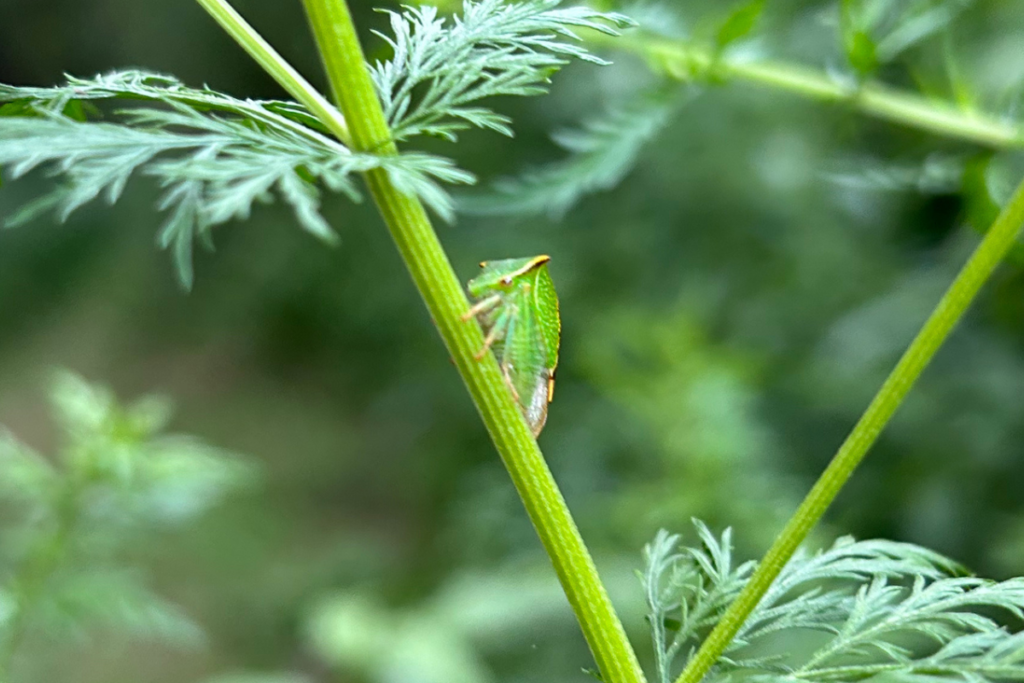
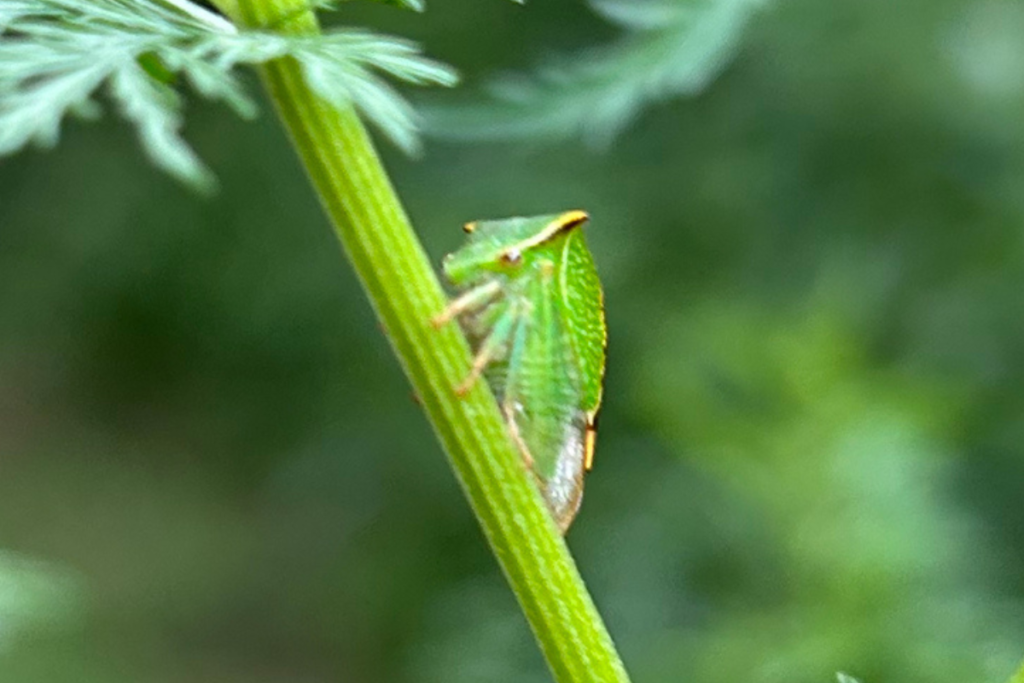
Although Buffalo Treehoppers are harmless to people, they can occasionally affect plants. Both adults and immature stages feed on plant sap by inserting their mouthparts into stems and branches. Small numbers usually cause little noticeable damage.
Problems may develop when larger populations occur on young trees, shrubs, or agricultural crops. Feeding itself often produces minimal injury, but females may create small cuts in stems when laying eggs. These scars can sometimes weaken young branches.
Fruit trees, ornamental plants, and certain agricultural crops may experience minor damage when numerous individuals are present. Young stems occasionally develop cracks, swelling, or breakage around egg-laying sites. These effects are generally most noticeable on newly growing branches.
Most garden plants tolerate Buffalo Treehopper feeding without serious consequences. Healthy vegetation can often support small populations without visible injury. The insects typically become a concern only when numbers increase substantially.
Their impact is far less severe than that of many major insect pests. Compared to invasive beetles or large caterpillar outbreaks, Buffalo Treehoppers usually cause only localized damage. In many natural areas, their presence goes entirely unnoticed.
Home gardeners who discover a few Buffalo Treehoppers generally do not need to take action. Their populations often remain low enough that significant plant injury never develops.
Buffalo Treehopper Survival Strategies and Defensive Responses
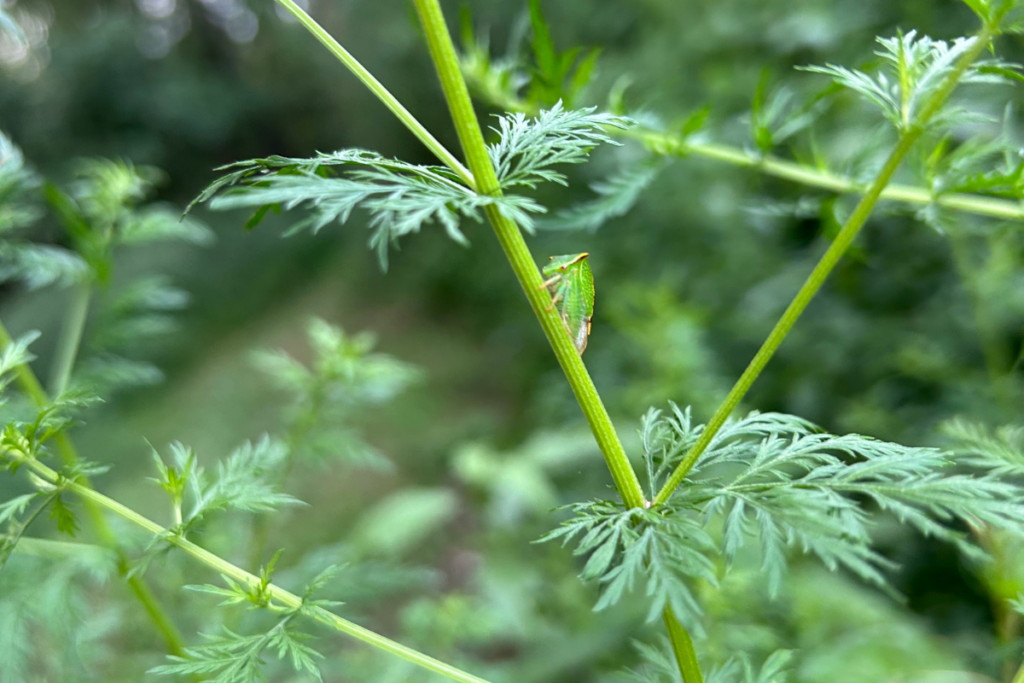
The Buffalo Treehopper survives primarily through avoidance rather than aggression. When threatened, the insect relies on camouflage instead of fighting or attacking. Its thorn-like body allows it to blend almost perfectly into surrounding vegetation.
Remaining motionless serves as its first line of defense. A resting Buffalo Treehopper may stay completely still even when approached closely. This behavior reduces the likelihood that predators or people will notice its presence.
If camouflage fails, the insect relies on rapid escape. Powerful hind legs allow it to jump suddenly away from danger. The movement resembles a tiny spring releasing tension, carrying the insect to nearby vegetation.
Buffalo Treehoppers may also move to the opposite side of a stem when danger approaches. This simple action places the plant between the insect and a potential threat. Such behavior helps maintain concealment.
Unlike insects that bite, sting, or release defensive chemicals, Buffalo Treehoppers avoid direct confrontation entirely. Their strategy depends on remaining hidden rather than resisting predators. This passive defense system has proven extremely effective.
The species demonstrates that unusual appearance does not always indicate danger. Despite their armored look and pointed body shape, Buffalo Treehoppers remain harmless insects that rely entirely on camouflage and escape for survival. For people, pets, and most healthy plants, they pose very little threat.
Popular Searches About Buffalo Treehoppers
Explore Buffalo Treehopper Guide
Explore More Wildlife

Support Encounters World
Help support wildlife photography and get behind the scenes discoveries on Patreon.