
Buffalo Treehopper Adaptations: Camouflage, Survival, and Specialized Traits
Quick Facts
Primary Adaptation: Thorn-like camouflage
Defense Mechanism: Crypsis and rapid escape
Body Specialization: Enlarged pronotum shield
Movement Adaptation: Jumping hind legs
Communication Method: Plant vibrations
Survival Advantage: Blending into vegetation
How Buffalo Treehoppers Adapt to Their Environment
The Buffalo Treehopper (Stictocephala bisonia) possesses some of the most remarkable adaptations among North American insects. Its unusual body shape, coloration, and survival strategies allow it to remain hidden in plain sight throughout much of its range. These adaptations have enabled the species to thrive across diverse landscapes.
Across North America and introduced portions of Europe, Buffalo Treehoppers inhabit areas where remaining unnoticed often determines survival. Their adaptations focus less on strength or aggression and more on concealment and efficiency. The insect succeeds by avoiding detection rather than confronting danger.
Many people overlook Buffalo Treehoppers entirely because their appearance resembles a natural part of the plant. Their adaptations function continuously, whether the insect is resting, feeding, or avoiding predators. Every part of the body contributes to survival.
Observing a Buffalo Treehopper closely reveals how specialized its design has become. The insect appears almost engineered for life among stems and branches. From its body shape to its coloration, nearly every feature serves a protective purpose.
Buffalo Treehopper Camouflage and Body Shape Adaptations
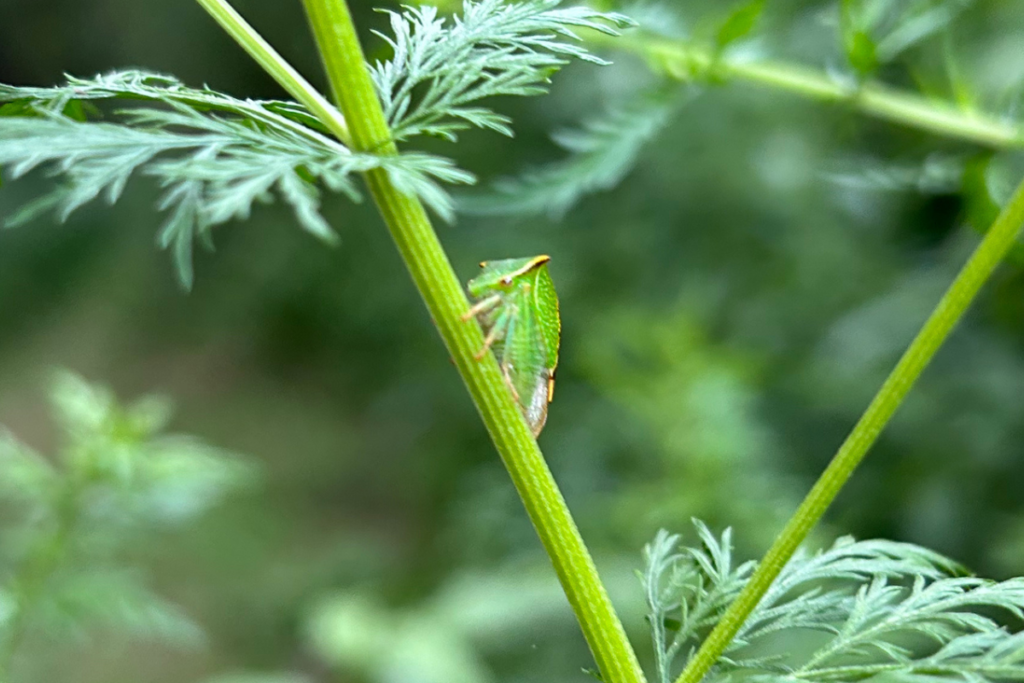
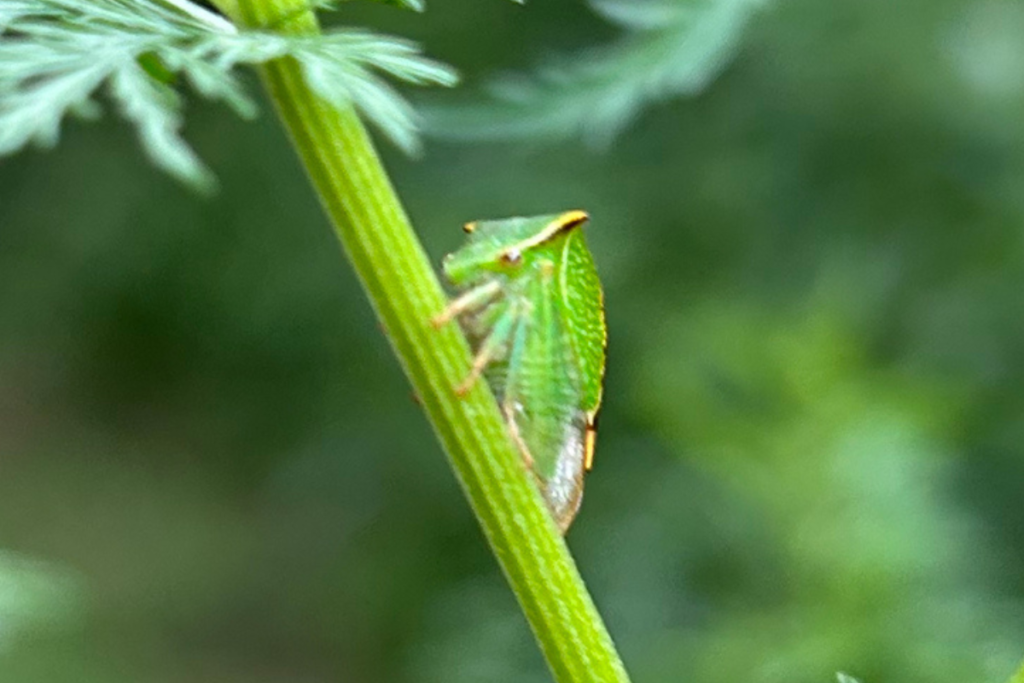
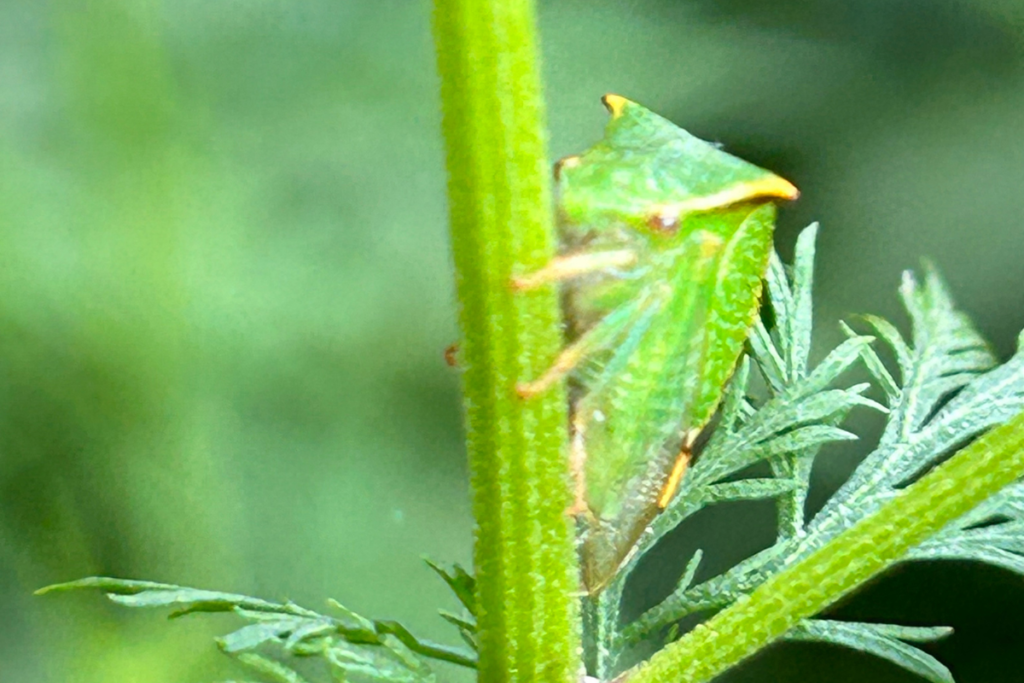
The most recognizable adaptation of the Buffalo Treehopper is its enlarged pronotum. This shield-like structure extends upward and outward, creating the distinctive buffalo-shaped profile. The unusual shape causes the insect to resemble a thorn, bud, or plant spine.
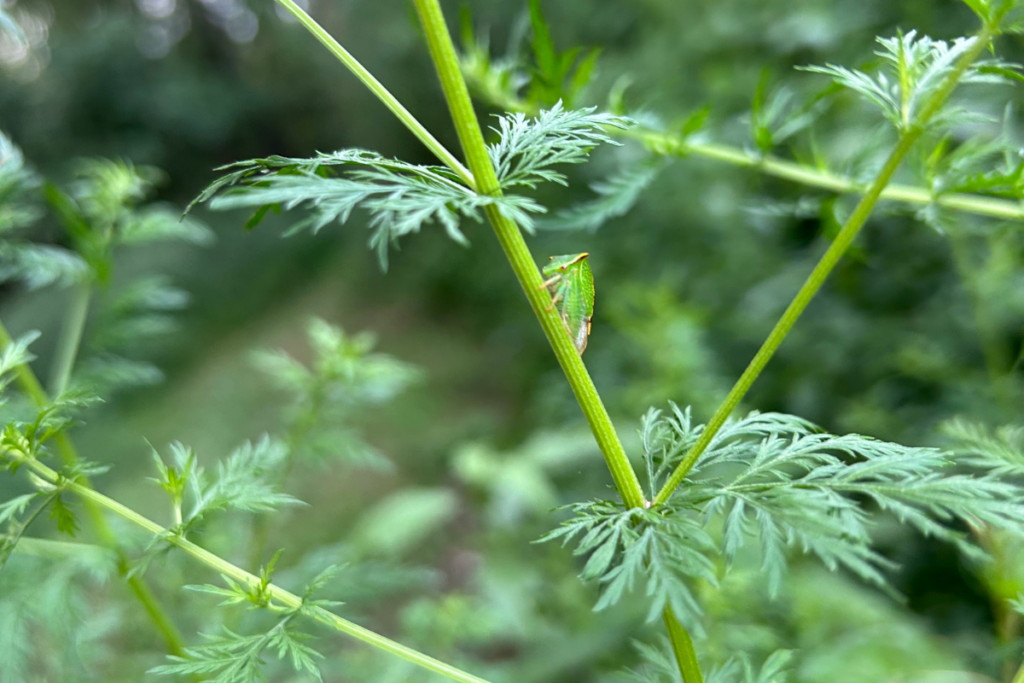
When resting along a stem, the insect’s body blends remarkably well with surrounding vegetation. The triangular outline disrupts the typical appearance of an insect and makes the animal difficult for predators to recognize. Birds and other hunters may overlook it entirely.
Its body functions much like military camouflage designed to break up outlines and prevent detection. Rather than hiding behind objects, the Buffalo Treehopper becomes visually similar to the plant itself. This strategy allows it to remain exposed while still remaining concealed.
Coloration further enhances this adaptation. Bright green or yellow-green tones closely match fresh vegetation during the growing season. Even slight color variations help the insect blend into different types of plant growth.
The smooth surface of the pronotum also contributes to its disguise. Unlike spiny insects or heavily textured beetles, the Buffalo Treehopper possesses clean lines that mimic plant structures. The result is one of the most convincing examples of insect camouflage in North America.
These physical adaptations work together to create a nearly invisible insect. Predators searching for moving prey often overlook an insect that appears to be part of the plant itself.
Buffalo Treehopper Movement and Escape Adaptations
Although Buffalo Treehoppers often remain motionless, they possess specialized adaptations for rapid escape. Powerful hind legs allow them to jump considerable distances relative to their body size. These jumps can carry the insect away from danger in an instant.
The jumping mechanism functions much like a compressed spring. Energy builds within the hind legs before being released suddenly. This explosive movement provides a rapid response when camouflage is no longer effective.
Short flights offer another important adaptation. Transparent wings unfold quickly, allowing the insect to move between nearby plants. While Buffalo Treehoppers are not strong long-distance fliers, their wings provide additional escape options.
Remaining still is itself an adaptation. Long periods of inactivity reduce the chances of attracting attention. A stationary Buffalo Treehopper often becomes nearly impossible to distinguish from the surrounding vegetation.
Energy conservation also benefits survival. Instead of constantly moving, the insect limits activity to necessary situations. This strategy resembles reptiles basking quietly or deer standing motionless in tall grass to avoid detection.
By combining patience with sudden movement, Buffalo Treehoppers maintain an effective balance between concealment and escape. Their ability to remain hidden while retaining rapid mobility provides a significant survival advantage.
Buffalo Treehopper Survival and Communication Adaptations
Buffalo Treehoppers communicate using vibrations transmitted through plant stems. Rather than producing audible sounds, they send signals through the vegetation itself. This hidden communication system allows individuals to exchange information while avoiding detection.
Vibrational communication travels efficiently through stems and branches. Signals can reach nearby individuals without attracting predators. This adaptation functions similarly to quietly tapping on a wall rather than shouting across a room.
The species also demonstrates seasonal adaptations that help it survive changing conditions. Eggs remain protected inside plant tissue throughout winter, allowing the next generation to withstand freezing temperatures. This strategy ensures survival during unfavorable seasons.
Developmental adaptations appear during the nymph stage as well. Young individuals often possess spines and unusual projections that differ from adults. These structures may provide additional protection during vulnerable growth stages.
The Buffalo Treehopper’s ability to utilize numerous plant species represents another important adaptation. Flexibility in plant use allows populations to survive in various environments and changing conditions. This adaptability contributes to the insect’s wide distribution.
Together, these adaptations create a highly successful survival strategy. Rather than relying on speed, strength, venom, or aggression, Buffalo Treehoppers depend on camouflage, communication, energy conservation, and rapid escape. Their specialized traits demonstrate how unusual body forms can provide powerful advantages in nature.
The Buffalo Treehopper serves as an excellent example of evolutionary adaptation. Its thorn-like appearance, hidden communication methods, and efficient survival strategies make it one of the most specialized and recognizable insects found throughout North America.
Popular Searches About Buffalo Treehoppers
Explore Buffalo Treehopper Guide
Explore More Wildlife

Support Encounters World
Help support wildlife photography and get behind the scenes discoveries on Patreon.