
Buffalo Treehopper Facts Guide: Interesting Facts and Surprising Information
Quick Facts
Scientific Name: Stictocephala bisonia
Family: Membracidae
Average Length: 6–10 mm
Native Range: North America
Most Unique Feature: Buffalo-shaped pronotum
Interesting Fact: It resembles a plant thorn more than an insect
Fascinating Facts About the Buffalo Treehopper
The Buffalo Treehopper (Stictocephala bisonia) is one of North America’s strangest insects. Although it measures less than half an inch long, its unusual appearance immediately captures attention. The species has become well known among naturalists because of its remarkable shape and camouflage.
Many people encounter Buffalo Treehoppers without realizing they are insects at all. Their triangular bodies often resemble thorns, buds, or small pieces of vegetation attached to stems. Even experienced hikers and gardeners may overlook them entirely.
The species occurs throughout much of the United States, southern Canada, and portions of Mexico. Introduced populations have also become established in parts of Europe. This broad distribution has allowed Buffalo Treehoppers to become one of the most recognizable members of the treehopper family.
Despite their odd appearance, these insects spend much of their lives quietly resting on vegetation. Their small size and patient behavior make them easy to miss. Once discovered, however, they often become unforgettable because of their unusual shape.
Buffalo Treehopper Appearance Facts
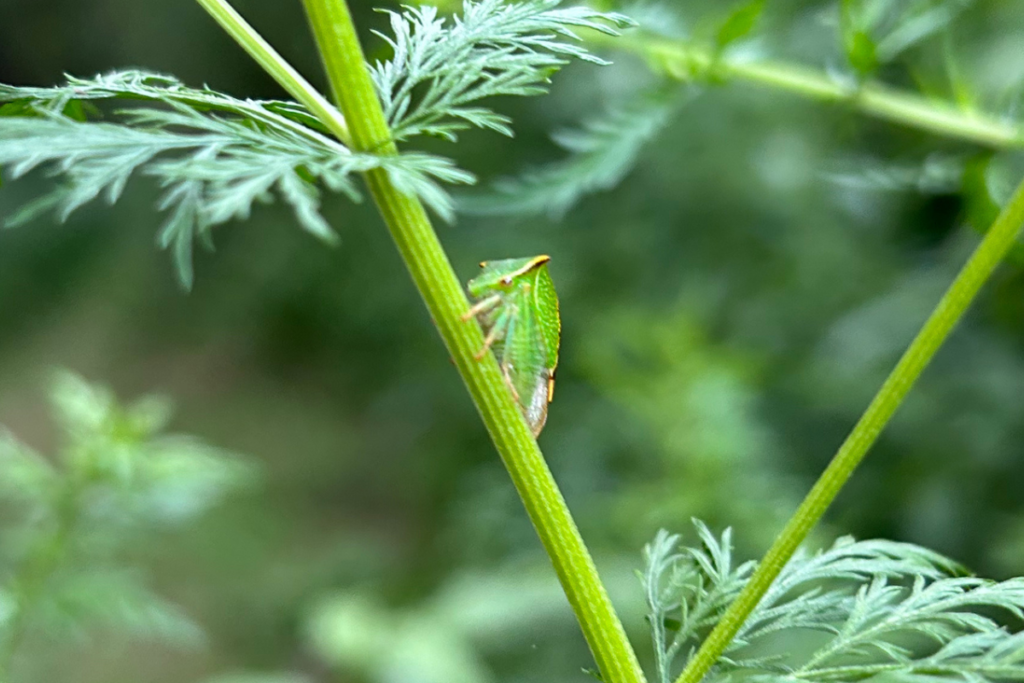
One of the most interesting facts about Buffalo Treehoppers is that their body resembles a buffalo’s shoulders. The raised pronotum creates two angled projections that inspired the insect’s common name. Few insects possess such a recognizable silhouette.
The enlarged shield covering the body is not a shell or wing. Instead, it is an expanded portion of the thorax called the pronotum. In treehoppers, this structure has evolved into countless unusual shapes.
Most Buffalo Treehoppers appear bright green, allowing them to blend into stems and leaves. Some individuals may display yellow-green or pale brown coloration depending on age and seasonal conditions. Their color often matches surrounding vegetation surprisingly well.
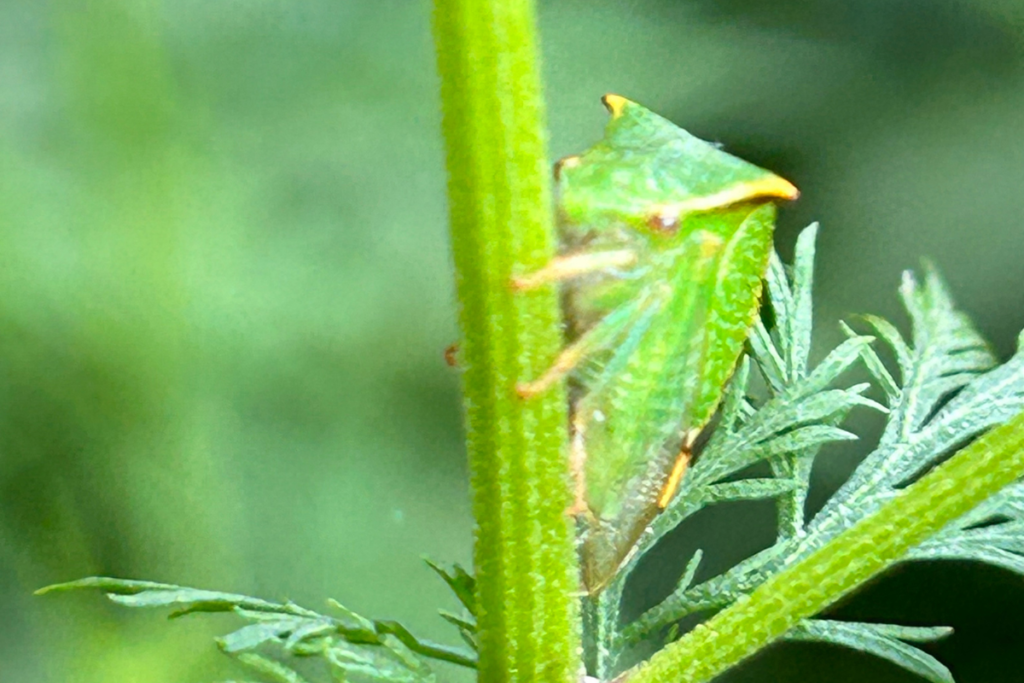
Viewed from the side, the insect resembles a tiny thorn or plant bud. This shape provides camouflage while making the insect difficult to recognize. Some observers compare them to miniature pieces of folded paper attached to stems.
Their wings remain mostly hidden beneath the enlarged pronotum. This makes the insect appear almost wingless until it suddenly flies. The concealed wings contribute to the insect’s strange appearance.
Although they measure only a few millimeters long, Buffalo Treehoppers appear larger because of their elevated body shape. Their unique design makes them one of the easiest treehoppers to identify.
Buffalo Treehopper Behavior and Survival Facts
Buffalo Treehoppers spend long periods sitting motionless. Remaining still allows them to avoid detection and conserve energy. Their patience often surprises observers who expect insects to move constantly.
If threatened, they can jump surprisingly far for their size. Their hind legs function like tiny springs, launching them away from danger in an instant. This sudden movement contrasts sharply with their normally quiet behavior.
The species communicates through vibrations rather than audible sounds. Signals travel through plant stems and branches, allowing individuals to exchange information without attracting predators. These hidden vibrations act as a private communication system.
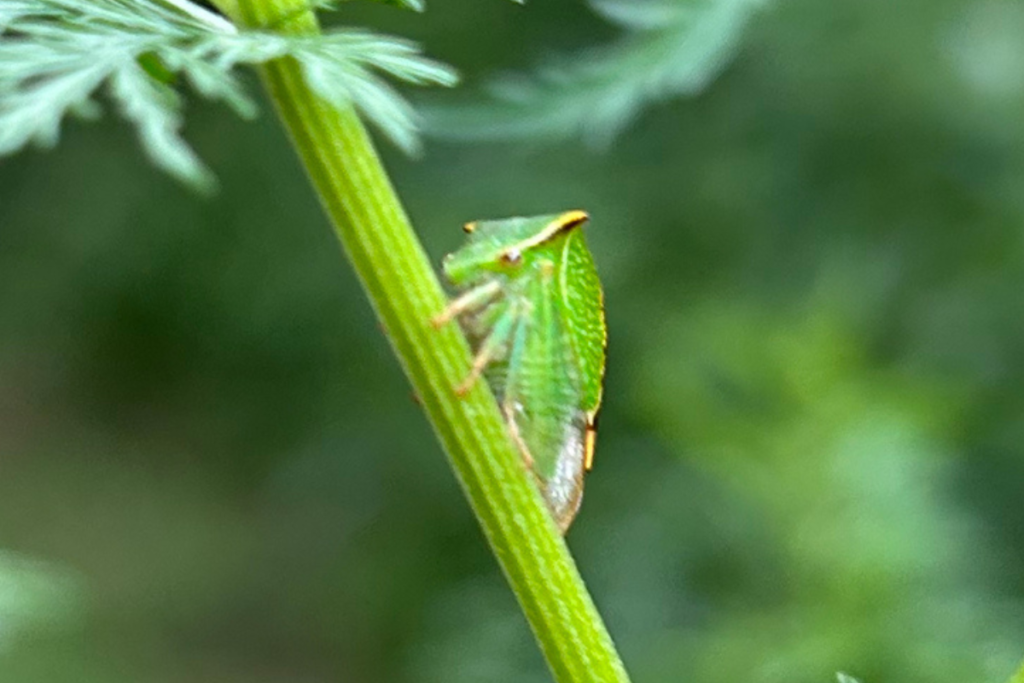
Buffalo Treehoppers often position themselves directly along stems to improve their camouflage. The body aligns with the plant, causing the insect to resemble part of the vegetation. This behavior increases the effectiveness of their disguise.
Many predators search for movement when hunting insects. By remaining completely still, Buffalo Treehoppers reduce the likelihood of being discovered. Their survival depends heavily on avoiding attention.
Unlike bees or wasps, they possess no stinger and cannot defend themselves aggressively. Their primary protection comes from camouflage, patience, and rapid escape. These simple strategies have proven extremely effective.
Surprising Buffalo Treehopper Facts
Buffalo Treehoppers belong to the family Membracidae, which contains some of the most bizarre insects in the world. Other treehopper species possess spines, horns, helmet-like projections, and structures that resemble leaves or fungi.
Their life cycle involves incomplete metamorphosis. Young nymphs gradually develop into adults without entering a pupal stage. This differs greatly from butterflies, moths, and beetles.
Females place eggs inside plant stems where they remain protected throughout winter. These hidden eggs survive cold temperatures and hatch the following spring. The strategy allows the next generation to begin developing as vegetation grows.
The species has successfully spread beyond its native range into Europe. Introduced populations demonstrate how adaptable Buffalo Treehoppers can be when suitable plants are available. Their ability to utilize many host plants contributes to this success.
Scientists continue studying treehoppers because of their remarkable body structures. The enlarged pronotum represents one of the most unusual examples of insect evolution. Researchers remain interested in how these shapes developed.
Buffalo Treehoppers remind people that some of nature’s most fascinating animals are also among the smallest. Their strange appearance, hidden lifestyle, and remarkable camouflage make them one of the most interesting insects found in North America.
Whether discovered on a garden plant, wildflower stem, or woodland shrub, the Buffalo Treehopper often leaves a lasting impression. Its combination of unusual shape and effective camouflage demonstrates the incredible diversity that exists within the insect world.
Popular Searches About Buffalo Treehoppers
Explore Buffalo Treehopper Guide
Explore More Wildlife

Support Encounters World
Help support wildlife photography and get behind the scenes discoveries on Patreon.