Black Rat Snake Behavior Guide: Movement, Defense, and Daily Activity
Quick Facts
Activity Type: Primarily diurnal with some nighttime activity during warm weather
Social Structure: Solitary except during breeding and winter brumation
Territorial Behavior: Generally non-territorial but defensive when threatened
Movement Style: Smooth slithering with strong climbing ability
Communication Method: Body posture, vibration, scent, and hissing
Defense Strategy: Freezing, rattling tail vibrations, musk release, and striking displays
Introduction to Black Rat Snake Daily Behavior and Activity
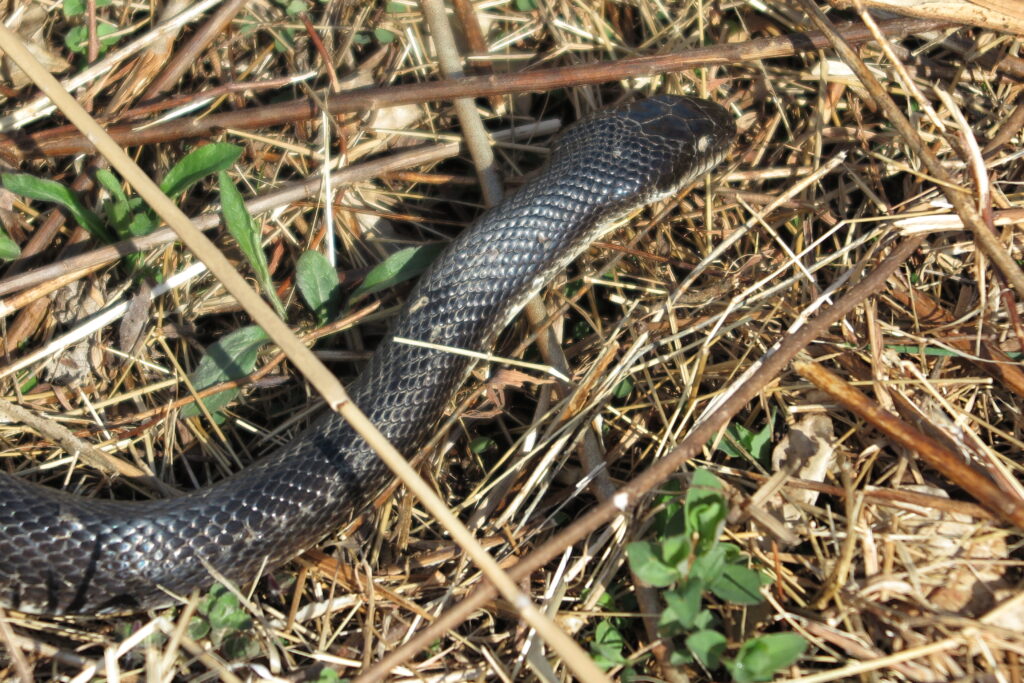
The Black Rat Snake is one of the most active and adaptable nonvenomous snakes found across eastern North America. Its range stretches through much of the eastern United States, where it is commonly encountered in forests, rocky terrain, agricultural regions, and suburban woodland edges. Because of its large size and climbing ability, the species often leaves a strong impression during encounters in the wild.
Black Rat Snakes are frequently observed moving steadily through grass, crossing trails, or resting silently near fallen logs and rocks. Their behavior often appears calm and deliberate, especially when undisturbed. Unlike smaller nervous snakes that react instantly to movement, Black Rat Snakes commonly maintain a composed and controlled presence.
Many encounters happen during warmer months when the snakes become more visible while traveling between shelter areas and basking locations. A large adult may move confidently across open ground or climb directly into low branches with surprising ease. Their smooth motion and relaxed posture often create the impression of quiet focus rather than panic.
Although capable of defensive displays, Black Rat Snakes generally avoid conflict whenever possible. Most individuals rely on stealth, concealment, and escape rather than confrontation. Their behavior reflects a balance between caution and adaptability, allowing them to thrive across many different environments throughout eastern North America.
Black Rat Snake Behavior Overview and General Temperament
Black Rat Snakes are generally calm, observant, and highly adaptable reptiles that spend much of their time quietly navigating through their surroundings. When undisturbed, they often appear patient and unhurried, moving with steady purpose rather than sudden frantic motion. This calm demeanor helps them conserve energy while remaining aware of nearby activity.
The species is highly responsive to environmental changes such as temperature, light, vibration, and movement. A nearby disturbance may cause a snake to pause briefly and assess the situation before deciding whether to continue moving or retreat. This measured reaction creates behavior that feels cautious but not overly nervous.
Compared to the Eastern Garter Snake, the Black Rat Snake appears slower and more controlled in overall demeanor. Garter snakes often move in quick erratic bursts, while Black Rat Snakes behave with a more deliberate and composed rhythm. Their larger body size contributes to this calmer visual presence.
When resting, Black Rat Snakes may remain motionless for long periods while partially hidden beneath cover or stretched across branches. Their dark coloration allows them to blend naturally into shadows, bark, and rocky surfaces. A still Black Rat Snake can resemble a fallen vine or thick root within woodland environments.
The species also demonstrates impressive adaptability around human-modified landscapes. Barns, sheds, stone walls, and wood piles often become part of their regular movement patterns. Many individuals learn to navigate these environments quietly without drawing attention to themselves.
Although usually passive, Black Rat Snakes can become defensive if cornered or physically threatened. In these situations, their behavior changes dramatically from calm observation to loud warning displays. This shift can make the snake appear aggressive even though its actions are primarily defensive.
Their overall temperament resembles that of a cautious but confident traveler moving through familiar terrain. Rather than constantly reacting with panic, Black Rat Snakes often appear focused on their intended direction or objective. This steady behavioral style makes them one of the more composed large snakes in eastern North America.
Black Rat Snake Movement Patterns and Daily Activity Cycles
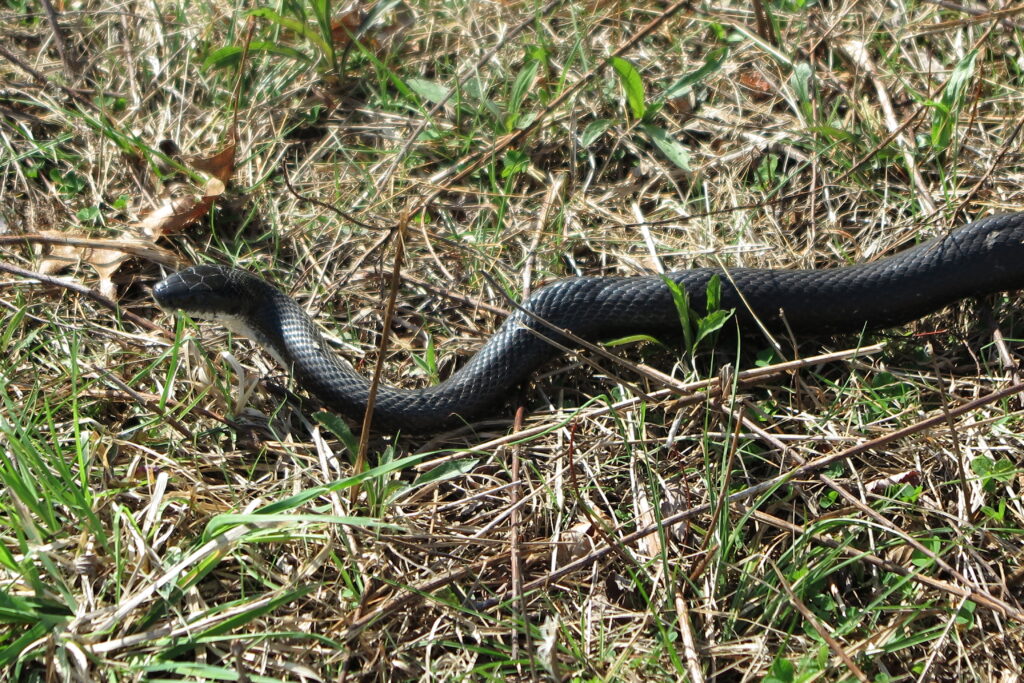
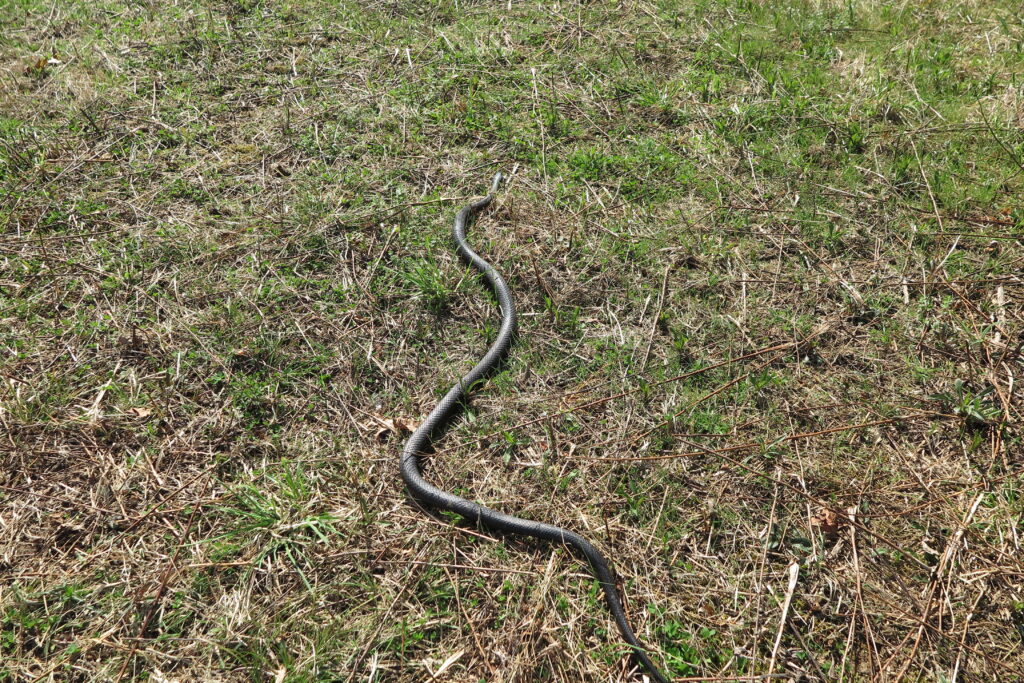
Black Rat Snakes move using smooth lateral undulation, creating flowing side-to-side curves across the ground as they travel. Their muscular bodies allow them to glide through grass, leaf litter, rocky terrain, and branches with surprisingly little visible effort. Watching a large individual move through vegetation often resembles seeing a thick rope being pulled silently through the landscape.
The species is primarily active during daytime hours, especially during spring and early summer when temperatures remain moderate. Morning and late afternoon are often peak activity periods because surface temperatures are warm without becoming excessively hot. During extremely hot weather, activity may shift more toward evening or nighttime hours.
Climbing ability is one of the Black Rat Snake’s most impressive movement characteristics. Strong muscles and textured scales allow the snake to ascend trees, fences, and rough surfaces efficiently. Large adults can stretch through branches with remarkable balance despite their size and weight.
Their movement style is typically controlled rather than rapid. A Black Rat Snake crossing open ground often travels in long, smooth waves rather than quick darting motions. This steady motion creates an appearance of quiet confidence rather than nervous urgency.
Seasonal temperature changes strongly influence activity levels. During colder months, Black Rat Snakes enter periods of brumation where movement and energy use decline dramatically. In warmer seasons, however, individuals may travel considerable distances while searching for basking areas, shelter, or mates.
When startled suddenly, Black Rat Snakes are capable of impressive bursts of speed despite their normally calm demeanor. A threatened snake may disappear rapidly into grass, rocks, or nearby vegetation within seconds. These sudden escape movements contrast sharply with their slower routine travel patterns.
Compared to the Copperhead, Black Rat Snakes move with more continuous flowing motion and greater climbing agility. Copperheads often rely on stillness and short-distance movement, while Black Rat Snakes travel more actively through varied terrain and elevated surfaces.
Their movement efficiency allows them to navigate environments that would challenge many reptiles of similar size. Whether gliding across woodland floors or extending through tree branches, Black Rat Snakes maintain controlled body positioning that minimizes wasted energy and supports long-distance travel.
Black Rat Snake Interaction and Survival Behavior in the Wild
Black Rat Snakes rely heavily on avoidance and concealment as their primary survival strategies. When confronted by potential danger, many individuals choose to remain still and depend on camouflage rather than immediately fleeing. Their dark coloration blends effectively with bark, shadows, and rocky terrain.
If a threat continues approaching, the snake may shift into more active defensive behavior. Tail vibrations are one of the most recognizable responses, especially when dry leaves surround the snake. This rapid tail movement can create a rattling sound similar to a rattlesnake, potentially confusing predators.
Hissing and defensive body posture are also common survival responses. A threatened Black Rat Snake may flatten portions of its body, coil tightly, and raise its head while producing loud hissing sounds. These displays are designed to make the snake appear more intimidating without requiring physical confrontation.
Although capable of striking defensively, Black Rat Snakes are nonvenomous and typically bite only when heavily threatened or handled. Most strikes are warning reactions intended to create distance rather than prolonged attacks. Once given an escape route, the snake usually attempts to retreat quickly.
Social interaction among Black Rat Snakes remains limited for much of the year. Individuals generally live solitary lives except during breeding periods or winter brumation, when multiple snakes may share sheltered overwintering sites. These temporary gatherings help conserve warmth during cold weather.
One especially effective survival instinct is their ability to freeze motionless when danger appears nearby. A stretched-out snake resting among branches or leaves may become nearly impossible to notice once it stops moving completely. This stillness acts as a powerful form of camouflage.
Young Black Rat Snakes are especially cautious because of their smaller size and increased vulnerability to predators. Juveniles often retreat rapidly beneath cover at the first sign of disturbance. Adults, by contrast, may rely more heavily on intimidation displays before deciding whether escape is necessary.
The Black Rat Snake ultimately survives through a combination of stealth, adaptability, climbing skill, and defensive signaling. Its ability to remain calm under normal conditions while reacting quickly to danger has helped the species thrive across a wide range of eastern North American environments.
Popular Searches About Black Rat Snakes
Explore Black Rat Snake Guide
Explore More Wildlife

Support Encounters World
Help support wildlife photography and get behind the scenes discoveries on Patreon.