
Blacklet Fly: Appearance, Characteristics, and Ecological Importance
Quick Facts
Scientific Name: Family Heleomyzidae
Common Name: Blacklet Fly
Location: Fields, forest edges, wetlands, gardens, and natural habitats
Average Size: 4–12 mm (0.15–0.47 in)
Lifespan: Several weeks to a few months depending on species
Global Range: North America, Europe, Asia, South America, Africa, and Oceania
Conservation Status: Not Evaluated (varies by species)
Notable Feature: Dark-bodied appearance combined with strong adaptability to diverse environments
Location Observed: Pennsylvania, USA
Field Observation
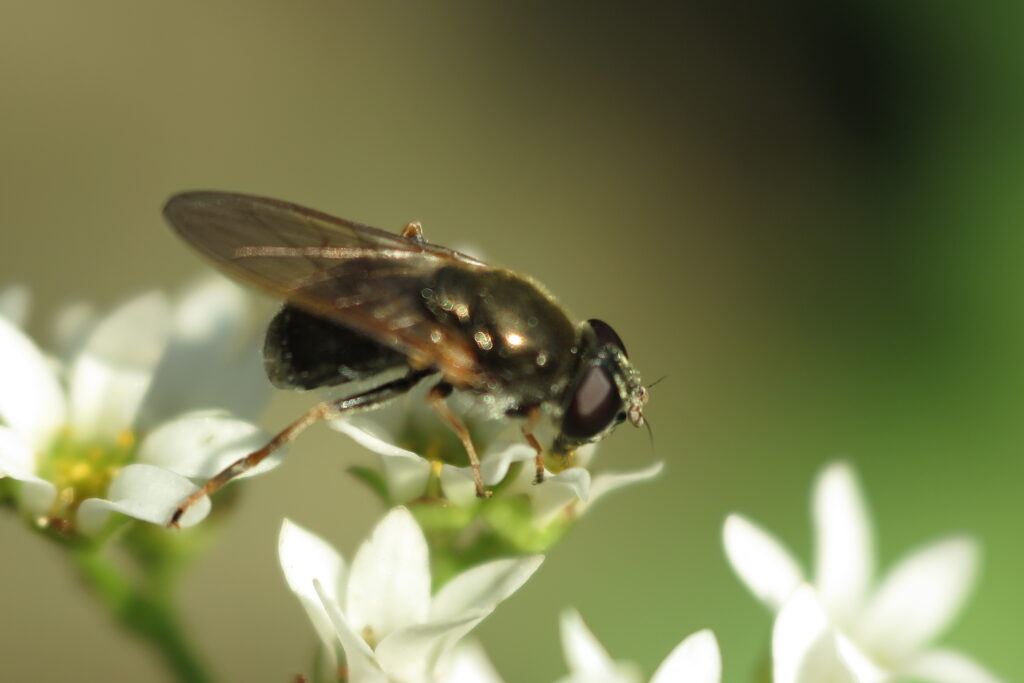
During observation, this blacklet fly moved continuously from flower to flower, rarely remaining in one place for more than a few seconds. It appeared focused on feeding, repeatedly visiting blooms and collecting pollen while searching for additional nectar sources. Its constant movement and quick transitions between flowers made it one of the more active insects present in the area.
Introduction to the Blacklet Fly and Its Worldwide Distribution
The blacklet fly is a member of the Heleomyzidae family, a diverse group of true flies found across much of the world. Although they rarely receive the same attention as butterflies, bees, or dragonflies, these small insects represent an important component of countless ecosystems. Their understated appearance often causes them to be overlooked despite their widespread presence.
Species within the Heleomyzidae family occur throughout North America, Europe, Asia, South America, Africa, and parts of Oceania. Many inhabit temperate regions where seasonal changes create a variety of environmental conditions. Their ability to occupy numerous geographic regions has allowed the family to diversify into hundreds of recognized species.
Blacklet flies can be encountered in locations ranging from woodland clearings and wetland margins to meadows, gardens, and rural landscapes. Some species thrive near decaying organic matter, while others are commonly observed resting on foliage or visiting flowering plants. Their broad distribution reflects a remarkable capacity to persist in environments that differ greatly in temperature, moisture, and vegetation.
At first glance, a blacklet fly may resemble a small hoverfly, housefly, or other dark-bodied insect. Closer examination reveals a more refined appearance marked by large compound eyes, transparent wings, and a compact body structure. While individual species vary in detail, the family shares several recognizable traits that distinguish it from many other fly groups.
Blacklet Fly Physical Appearance and Overall Identification Features
Blacklet flies are generally small insects, with most species measuring only a few millimeters in length. Their size is often comparable to a grain of rice or a small sunflower seed, making them easy to miss among surrounding vegetation. Despite their small stature, close observation reveals intricate body details that become increasingly visible through macro photography.
Many species possess dark coloration ranging from charcoal gray and brown to nearly black. The thorax may display subtle metallic reflections when viewed under direct sunlight, while the wings often appear slightly smoky or amber-tinted. These subdued colors help create the family’s characteristic understated appearance.
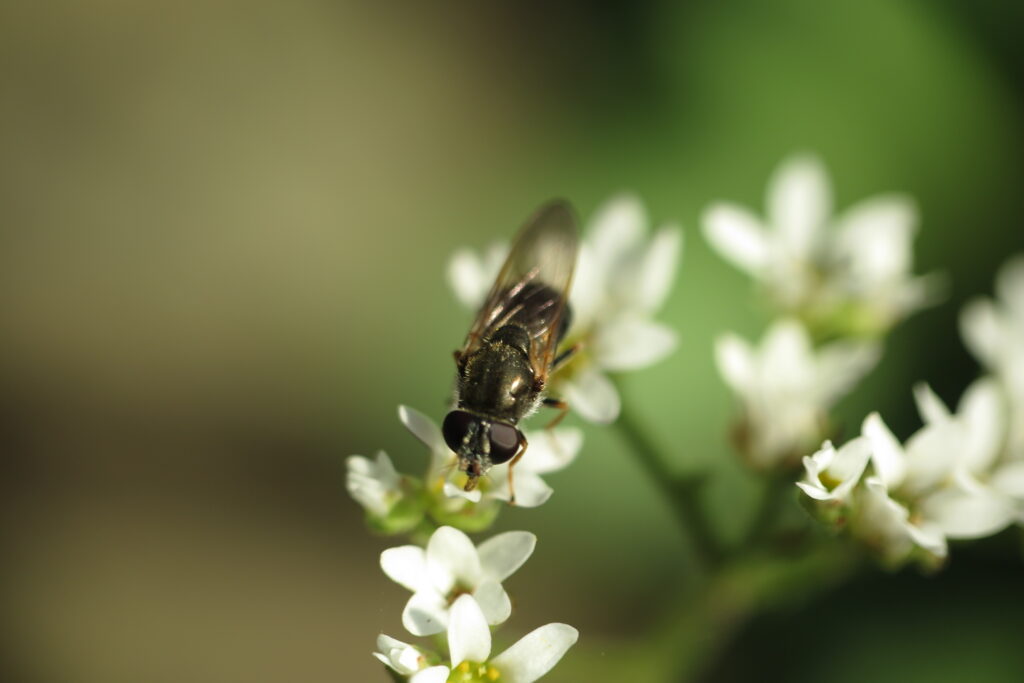
The head is dominated by large compound eyes that provide a broad field of vision. Depending on lighting conditions, the eyes may appear reddish, brown, purple, or nearly black. Short antennae project from the face, contributing to the streamlined profile that distinguishes these flies from many bee-like insects.
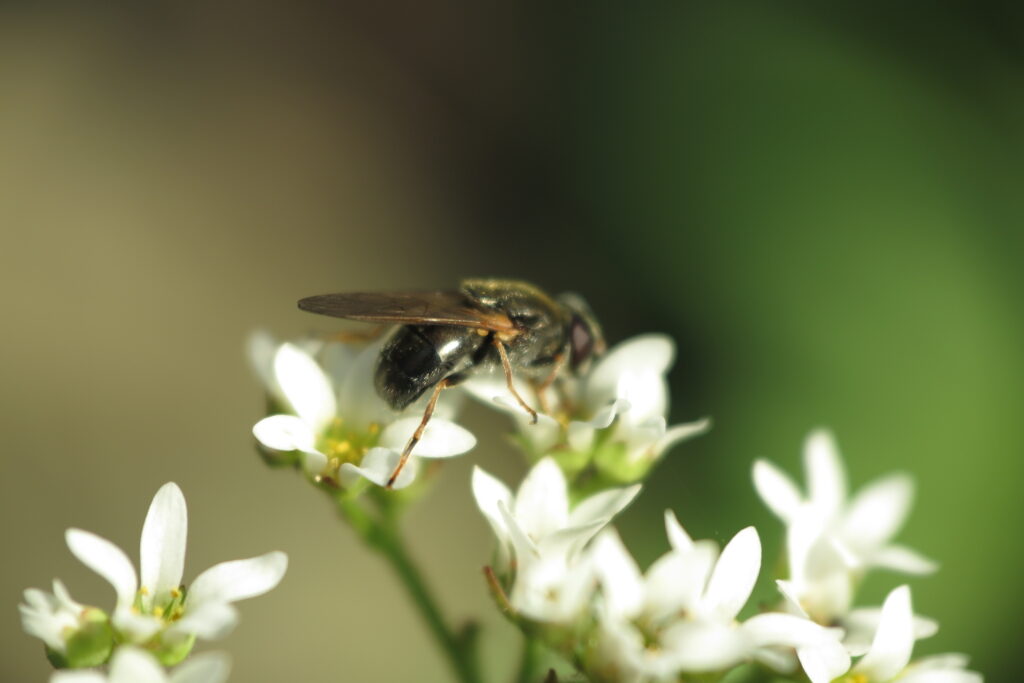
Wing structure is another notable feature. The transparent wings extend neatly over the abdomen when at rest, creating a sleek silhouette. In natural settings, blacklet flies often appear as small dark insects perched on flowers, leaves, or stems, where their glossy bodies can catch flashes of reflected light.
Although most species share a similar general appearance, variation exists throughout the family. Some individuals display lighter brown tones, while others appear almost entirely black. This flexibility in coloration, combined with their ability to occupy numerous regions worldwide, contributes to the family’s success across a broad range of environments.
Defining Blacklet Fly Characteristics and Distinctive Traits
One of the most recognizable characteristics of blacklet flies is their balance between simplicity and detail. At a distance, they may seem unremarkable, yet close inspection reveals complex structures that aid identification. Their smooth body surfaces, proportionally large eyes, and delicate wing venation create a distinctive overall form.
The abdomen is typically elongated and cylindrical rather than rounded. This shape gives many species a streamlined appearance that differs from the more robust bodies seen in certain flower flies and bee mimics. When viewed from the side, the body often appears slightly tapered toward the rear.
Compared with common houseflies, blacklet flies generally possess a more slender build and less conspicuous body hair. Their appearance is also less bulky than many hoverflies, which frequently exhibit bold yellow markings. Instead, blacklet flies often rely on darker, more uniform coloration that blends naturally into surrounding vegetation.
The legs are relatively long in proportion to body size and provide stability when resting on flowers or foliage. Fine hairs may cover portions of the body, though these are usually subtle and difficult to see without magnification. Such details contribute to the refined appearance often appreciated by insect photographers and naturalists.
Another defining trait is the family’s diversity. Despite sharing common structural features, species can vary considerably in size, coloration, and body proportions. This variation allows members of Heleomyzidae to occupy a wide range of ecological niches while maintaining the recognizable characteristics that unite the family.
Blacklet Fly Role in Ecosystems and Environmental Importance
Blacklet flies contribute to ecological stability in ways that often go unnoticed. Like many small insects, they form part of intricate food webs that connect plants, microorganisms, invertebrates, birds, amphibians, reptiles, and mammals. Their presence supports numerous ecological relationships across natural habitats.
As members of broader insect communities, blacklet flies help maintain energy flow through ecosystems. They serve as prey for spiders, predatory insects, birds, and other wildlife. A healthy population of small flies provides an important food resource that supports higher levels of biodiversity.
The family also plays a role in natural decomposition systems. Many species are associated with organic material undergoing breakdown, contributing to ecological processes that recycle nutrients back into the environment. These processes help maintain soil productivity and support plant growth across a variety of habitats.
In flowering landscapes, blacklet flies may occasionally contribute to pollination while moving among blossoms. Although they are not typically considered major pollinators, even small amounts of pollen transfer can assist plant reproduction. Their interactions with flowering plants add another layer to their ecological significance.
Perhaps the greatest contribution of blacklet flies is their participation in ecosystem balance. They help connect multiple biological processes, from nutrient cycling to wildlife support. While rarely celebrated compared to larger or more colorful insects, members of the Heleomyzidae family demonstrate how even small organisms can play meaningful roles within healthy natural systems.

Observation Location
Observed in Turkey Hill Overlook Trail, Lancaster County, Pennsylvania, USA
Popular Searches About Blacklet Flies
Explore Blacklet Fly Guide
Explore More Wildlife

Support Encounters World
Help support wildlife photography and get behind the scenes discoveries on Patreon.