
Big-Headed Ground Beetle Behavior: Activity Patterns, Movement, and Survival Strategies
Quick Facts
Activity Type: Primarily Nocturnal
Social Structure: Solitary
Territorial Behavior: Mildly Territorial
Movement Style: Fast Running and Burrowing
Communication Method: Chemical Signals and Physical Contact
Defense Strategy: Burrowing, Mandibles, and Concealment
Big-Headed Ground Beetle Behavior and Daily Activity
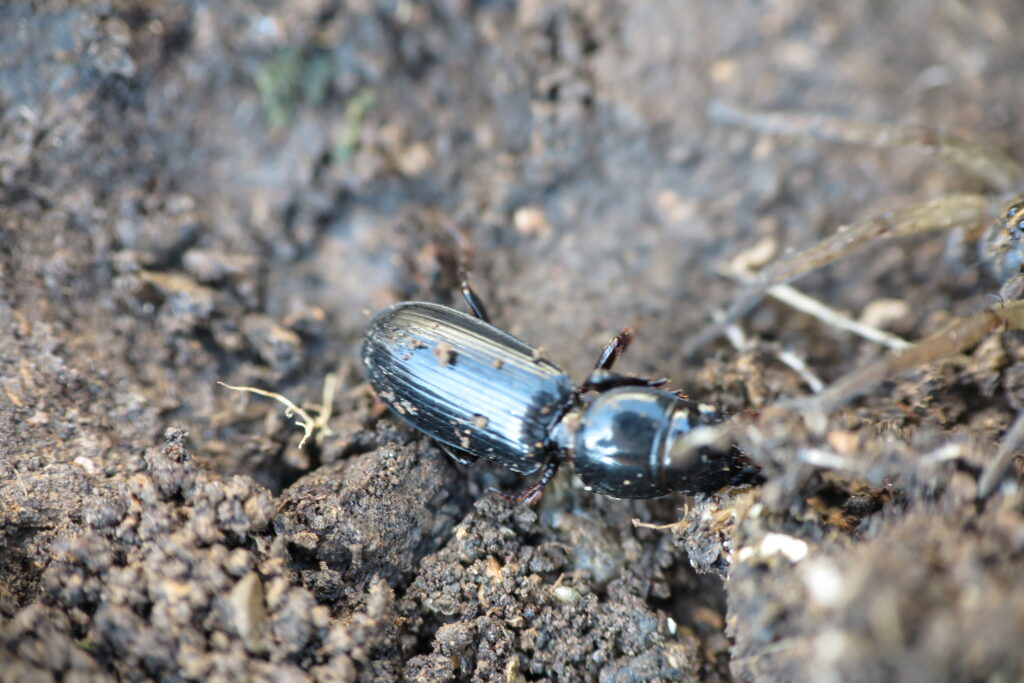
The Big-Headed Ground Beetle (Scarites sp.) spends much of its life hidden beneath the ground, emerging only during favorable conditions. Throughout much of North America, these beetles remain concealed under rocks, logs, loose soil, and debris where they avoid exposure to predators and environmental extremes. Their secretive nature means many people may live near them for years without ever noticing their presence.
Observing one in the wild often involves uncovering a stone or lifting a piece of wood, revealing a dark beetle sitting motionless beneath the surface. During these encounters, the beetle frequently appears calm and still, relying on concealment rather than immediate escape. This behavior creates the impression of an animal that carefully conserves energy rather than remaining constantly active.
When left undisturbed, Big-Headed Ground Beetles generally display patient and deliberate behavior. They do not continuously roam the landscape in search of activity. Instead, they spend long periods resting or remaining hidden, becoming active only when environmental conditions favor movement.
Their behavior can be compared to that of a nocturnal mammal resting in a den during daylight hours. The beetle remains sheltered and protected while waiting for conditions that reduce risk and improve survival. This strategy allows the species to avoid unnecessary exposure while maximizing its effectiveness during active periods.
Big-Headed Ground Beetle General Behavioral Tendencies
The overall temperament of the Big-Headed Ground Beetle is cautious and highly defensive. Unlike insects that constantly explore their surroundings, this species often remains still when encountered. Motionlessness serves as an effective strategy because predators may overlook an insect that does not move.
These beetles appear highly aware of disturbances around them. Vibrations in the soil, shifting debris, or approaching animals can quickly trigger behavioral responses. Although they may initially remain motionless, they are capable of reacting rapidly if they perceive a direct threat.
Compared to active daytime beetles that fly between flowers or move continuously through vegetation, Scarites species demonstrate a much more reserved lifestyle. Their behavior resembles that of an ambush predator waiting in concealment rather than an insect constantly searching for opportunities. This patient approach reduces energy expenditure while improving survival.
Adaptability also plays an important role in their behavior. The beetles can remain inactive during unfavorable conditions and increase activity when circumstances improve. Their ability to adjust activity levels allows them to survive seasonal changes and varying environmental conditions across their range.
When observed beneath rocks or logs, individuals frequently remain in place rather than immediately fleeing. This tendency suggests that concealment is one of their primary responses to uncertainty. Remaining hidden often provides greater protection than exposing themselves through unnecessary movement.
Big-Headed Ground Beetle Movement and Activity Patterns
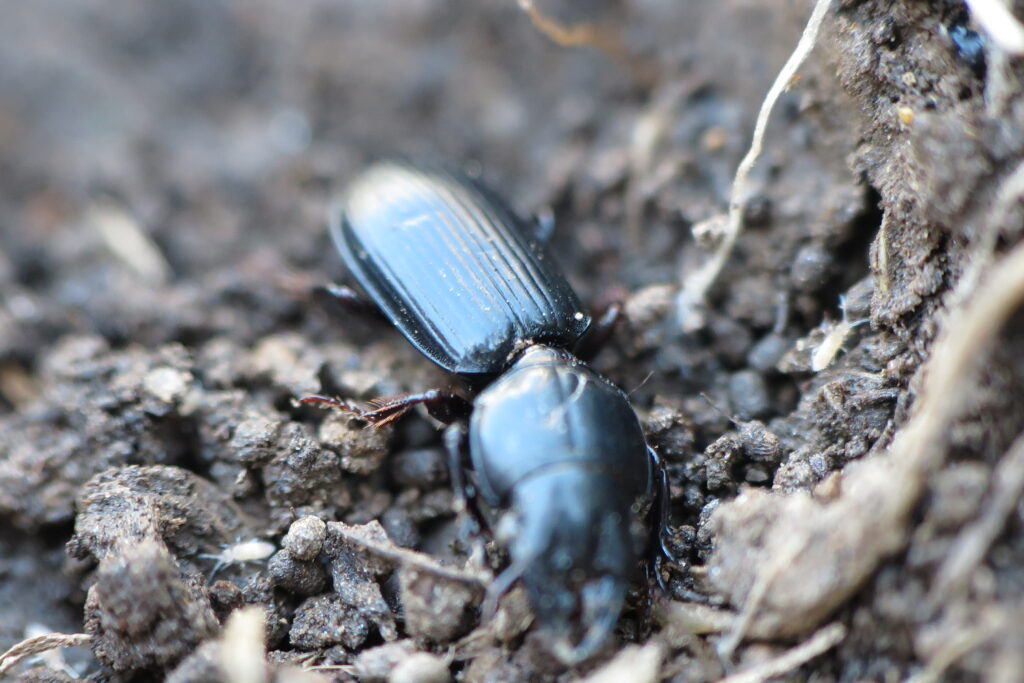
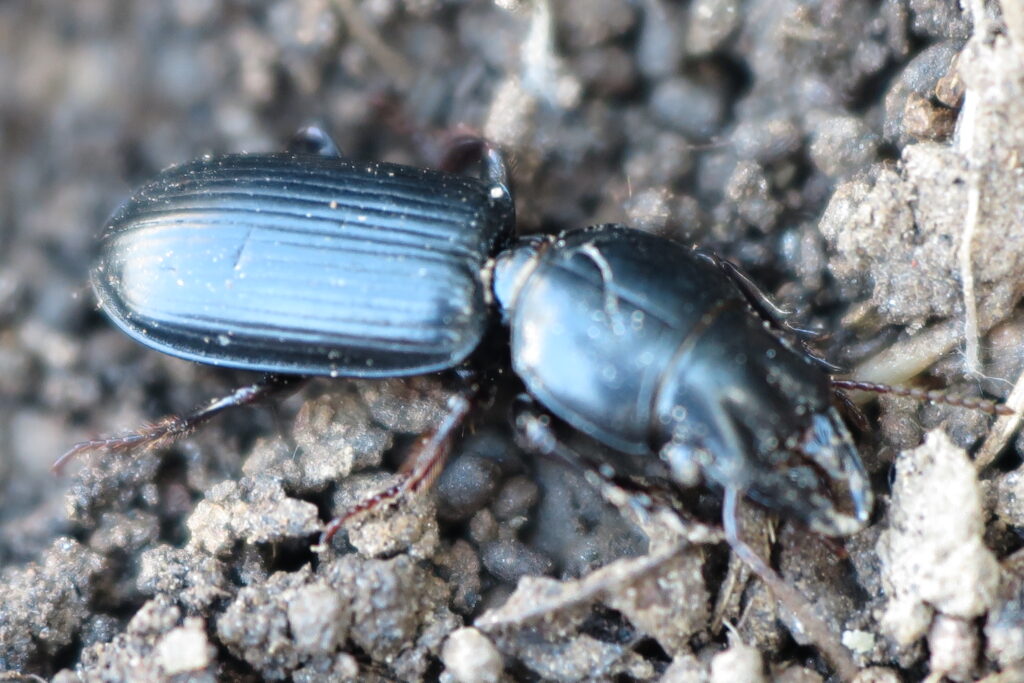
Movement in the Big-Headed Ground Beetle differs considerably from its quiet resting behavior. When active, these beetles can move surprisingly quickly across the ground. Their long legs and streamlined body allow them to travel efficiently despite their heavy appearance.
Most activity occurs during nighttime hours or during periods of reduced light. Darkness provides protection from visually hunting predators while allowing the beetle to move more freely. Evening hours, cloudy weather, and moist conditions often increase the likelihood of observing active individuals.
Seasonal changes strongly influence movement patterns. Activity generally increases during warmer months when environmental conditions become more favorable. Colder temperatures often reduce movement, causing beetles to spend extended periods beneath the surface while conserving energy.
The running style of the beetle can be compared to a small wind-up toy suddenly released across a floor. After remaining perfectly still, it may suddenly accelerate and disappear beneath nearby cover. This rapid transition from inactivity to movement often surprises observers.
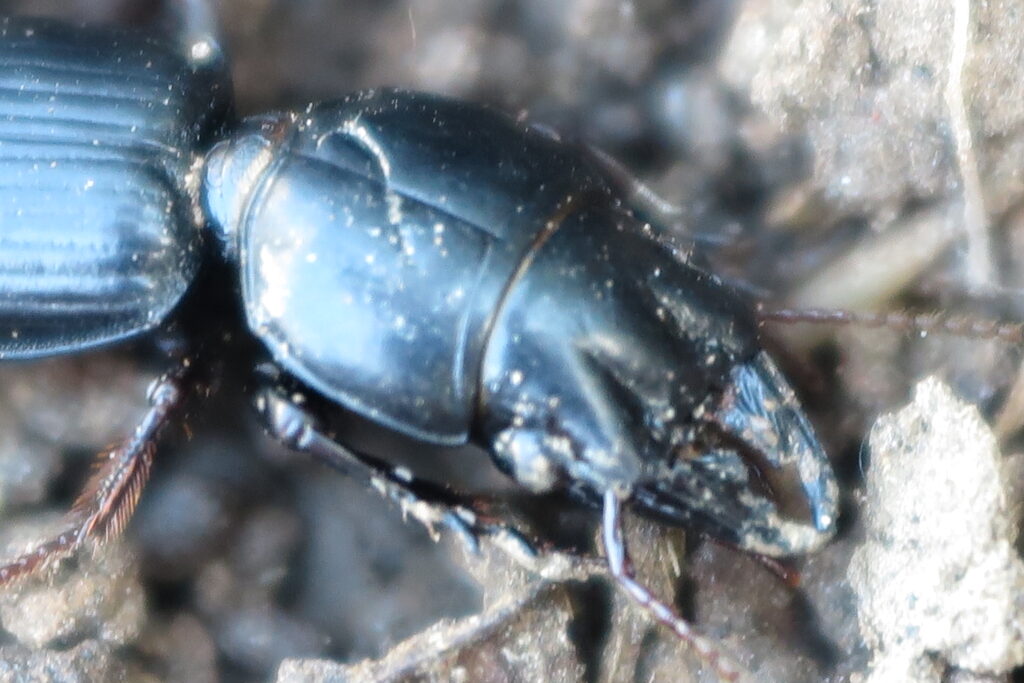
Burrowing also contributes to movement behavior. The enlarged head and strong front legs assist the beetle in navigating soil and loose material. Rather than simply running across the surface, the beetle frequently uses underground spaces and protected pathways to travel.
Energy conservation remains an important aspect of these movement patterns. Long periods of inactivity reduce energy demands, while short bursts of activity accomplish necessary tasks. This balance allows the beetle to function efficiently without remaining exposed for extended periods.
Big-Headed Ground Beetle Interaction and Survival Behavior
The Big-Headed Ground Beetle is generally a solitary animal. Individuals rarely form groups or display cooperative behavior. Most interactions with others occur during reproduction or occasional encounters within suitable environments.
When threatened, the beetle often relies on concealment as its first line of defense. Remaining motionless beneath debris may prevent predators from detecting it altogether. If danger increases, the beetle can quickly retreat into soil or seek nearby shelter.
Its large mandibles provide an additional defensive advantage. Although the beetle is not aggressive toward people, the jaws may be used if the insect is handled or cornered. These mandibles can appear intimidating and serve as a visual deterrent against potential threats.
A useful example of its survival behavior can be seen when a rock covering the beetle is lifted. Many individuals initially remain perfectly still, blending with the dark soil beneath them. If disturbance continues, they may suddenly run toward cover or disappear beneath loose earth.
The species relies more heavily on avoidance than confrontation. Rather than standing its ground, the beetle usually attempts to escape dangerous situations. This strategy reduces the risk of injury and allows the insect to survive encounters with larger animals.
The combination of concealment, rapid movement, burrowing ability, and strong mandibles creates a highly effective survival system. Although rarely observed, these behaviors have allowed Big-Headed Ground Beetles to remain successful across a wide geographic range. Their quiet and secretive lifestyle demonstrates that survival often depends more on caution and timing than on strength alone.
Popular Searches About Ground Beetles
Explore Ground Beetle Guide
Explore More Wildlife

Support Encounters World
Help support wildlife photography and get behind the scenes discoveries on Patreon.