
European Earwig Behavior: Activity Patterns, Movement, and Survival Strategies
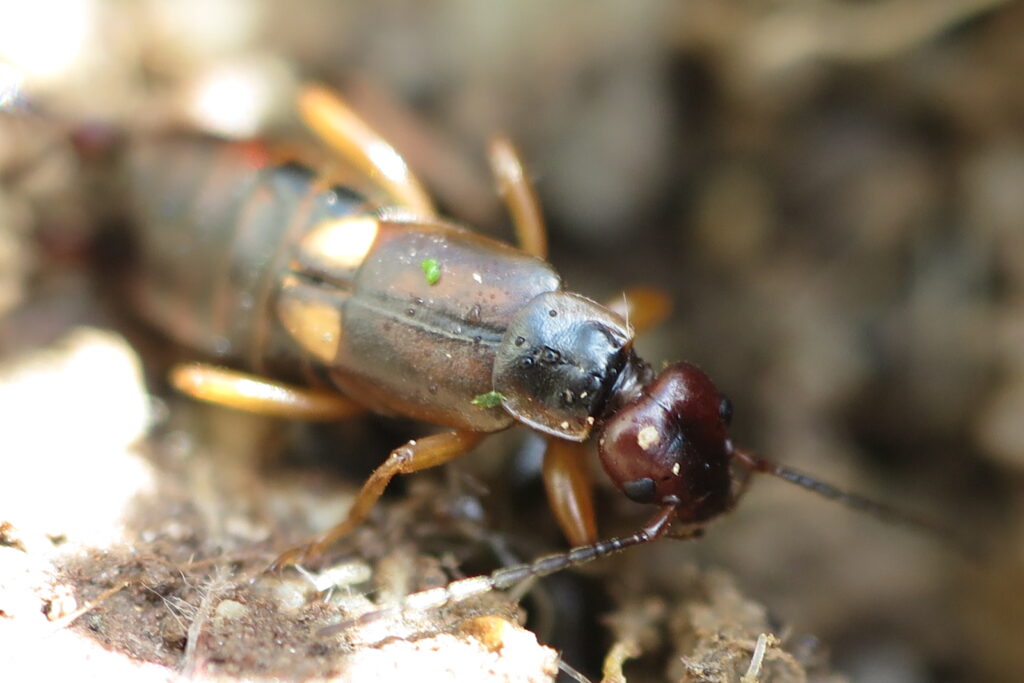
Quick Facts
Activity Type: Primarily Nocturnal
Social Structure: Solitary to Small Groups
Territorial Behavior: Limited Territoriality
Movement Style: Fast Crawling and Crevice Navigation
Communication Method: Antennal Contact and Chemical Signals
Defense Strategy: Forceps Displays and Rapid Retreat
European Earwig Behavior and Daily Activity
The European Earwig (Forficula auricularia) often remains hidden during daylight hours, making direct observations relatively uncommon. Beneath stones, fallen bark, garden debris, and other sheltered surfaces, these insects spend much of the day protected from sunlight and changing temperatures. Their secretive nature allows them to avoid many potential dangers while remaining close to suitable feeding areas.
Across Europe, North America, and other introduced regions, earwigs occupy environments that provide numerous hiding places. Discovering one usually occurs accidentally while moving a rock or turning over a piece of wood. The sudden appearance of a rapidly moving insect often surprises observers because the animal had remained completely concealed.
The overall behavior of the European Earwig can appear cautious and deliberate. Individuals rarely remain exposed for long periods and generally seek cover whenever conditions become unfavorable. This constant awareness creates an insect that appears highly responsive to changes in its surroundings.
Watching an earwig emerge from shelter resembles observing a person stepping outside during a rainstorm while constantly checking the weather. The insect remains attentive to nearby disturbances and quickly reacts to movement, vibrations, or changes in light. These responses contribute to its survival in a wide variety of environments.
Although earwigs are often thought of as solitary insects, small groups may occasionally gather beneath the same shelter. Shared cover sites provide protection from drying conditions and extreme temperatures. These temporary associations do not necessarily represent permanent social behavior.
The species demonstrates considerable flexibility in its activity patterns. Populations living in different climates may show slight differences in their daily routines. This adaptability has contributed to the success of the European Earwig across multiple continents.
European Earwig General Behavioral Tendencies
When left undisturbed, European Earwigs display a calm and purposeful demeanor. They spend considerable time exploring surfaces, investigating cracks, and moving through narrow spaces. Their actions often appear focused, as though they are continuously evaluating their surroundings.
Individuals rarely remain motionless for extended periods once exposed. After shelter is disturbed, they often begin searching for another protected location. This tendency creates the impression of an insect constantly seeking security.
The species responds rapidly to environmental changes. Sudden shadows, vibrations, or movement nearby frequently trigger an immediate reaction. Compared with slower-moving insects, earwigs demonstrate impressive responsiveness.
Their behavior may be compared to a person navigating through a crowded room while searching for an exit. The insect continually assesses available pathways and adjusts its movements accordingly. This adaptability allows it to occupy a variety of environments.
European Earwigs also demonstrate flexibility when encountering obstacles. They can climb rough surfaces, squeeze through small openings, and maneuver beneath debris with ease. Their flattened bodies contribute greatly to these abilities.
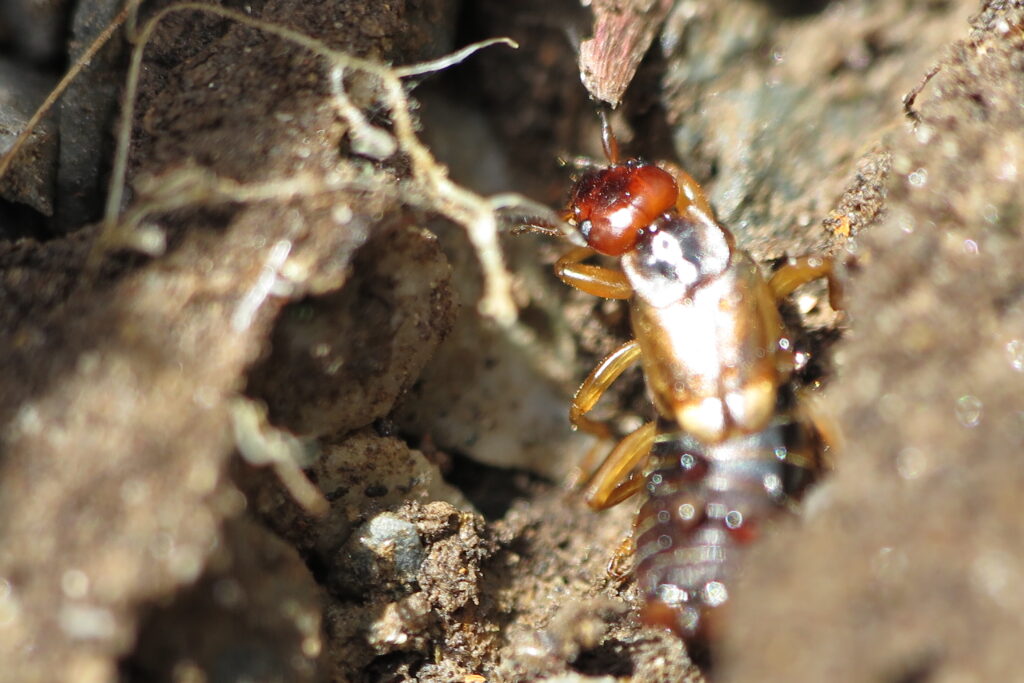
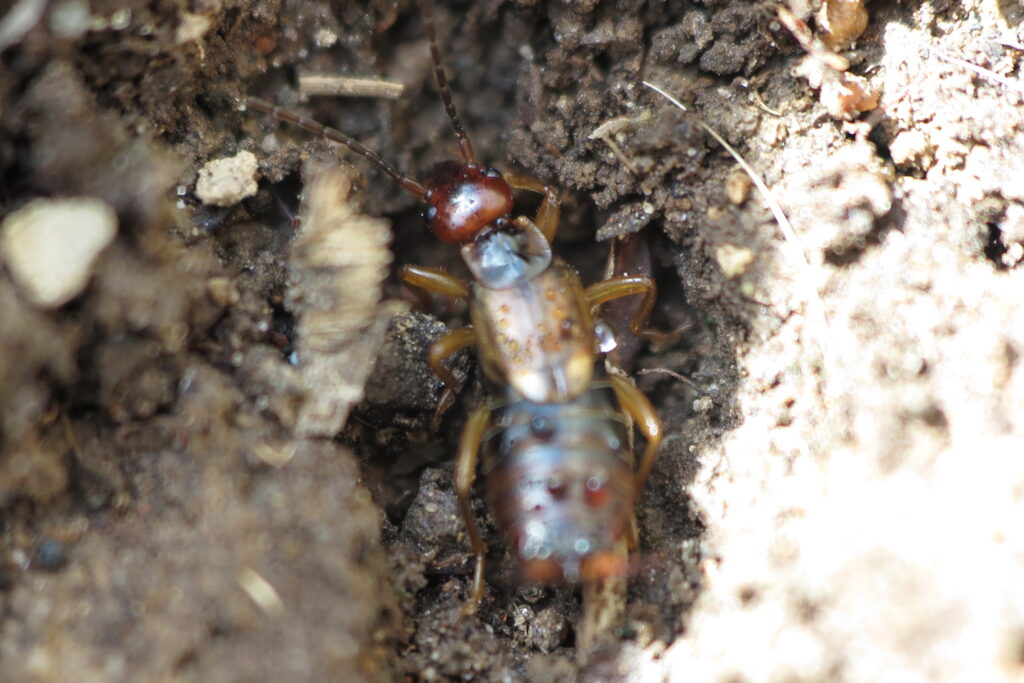
Observations often reveal repeated use of sheltered pathways. Earwigs move along cracks, soil crevices, and hidden spaces rather than crossing exposed areas whenever possible. This pattern reduces risk while allowing efficient movement through their surroundings.
European Earwig Movement and Activity Patterns
The European Earwig is primarily active during nighttime hours. Darkness provides protection from visual predators and allows individuals to move across open ground with reduced risk. Activity often increases shortly after sunset and continues throughout the night.
Movement is generally quick and direct. Earwigs can accelerate rapidly when disturbed, covering short distances surprisingly fast for their size. Their speed often catches observers off guard when a hiding place is uncovered.
The body moves with a low profile close to the ground. Flexible abdominal segments allow the insect to twist and maneuver through tight spaces. This movement resembles a small mechanical tool sliding through narrow openings.
Seasonal changes also influence activity. Warmer months often produce increased movement and greater visibility. During colder periods, individuals may remain sheltered for extended lengths of time.
The legs function efficiently on soil, bark, leaf litter, and other rough surfaces. Earwigs move with a coordinated running motion rather than a slow crawl. Their speed can resemble that of a small cockroach or ground beetle.
Energy conservation occurs through prolonged sheltering during daylight hours. By remaining hidden during hotter and drier conditions, earwigs reduce water loss and avoid unnecessary exposure. This strategy allows activity to be concentrated during more favorable periods.
Your observation of the earwig rapidly crossing shaded soil reflects this movement style well. Individuals frequently travel quickly through protected areas while searching for shelter, resources, or new locations. Their purposeful movement creates the appearance of an insect constantly heading toward a destination.
European Earwig Survival and Interaction Behavior
When threatened, European Earwigs rely on several defensive responses. The most obvious involves raising the abdomen and displaying the forceps. These pincers create an intimidating appearance despite the insect’s relatively small size.
The forceps themselves rarely cause significant injury to humans. Instead, they serve primarily as defensive tools and visual deterrents. Many predators may hesitate when confronted with the raised pincers.
Retreat remains the preferred response in most situations. Earwigs frequently attempt to escape into cracks, beneath debris, or into soil openings. Their small size and flexibility allow them to disappear rapidly.
Interactions between individuals generally remain peaceful. Temporary aggregations beneath rocks or logs may contain several earwigs sharing the same shelter. These encounters typically involve limited aggression.
A useful comparison can be made to a person holding up their hands during an argument while backing away. The raised forceps warn potential threats while the insect searches for an escape route. This combination of defense and retreat increases survival.
Chemical signals may also contribute to communication. Antennal contact and scent cues likely help individuals recognize suitable shelter sites and other earwigs. Although these interactions remain subtle, they influence behavior within populations.
One remarkable aspect of earwig behavior involves maternal care. Females protect eggs and young offspring, an uncommon behavior among many insects. This parental investment increases the survival of developing young.
Through rapid movement, cautious behavior, defensive displays, and flexible responses to danger, the European Earwig has become highly successful across much of the world. Its behavioral adaptations allow it to survive in forests, gardens, agricultural landscapes, and urban environments while remaining one of the most recognizable insects with forceps.
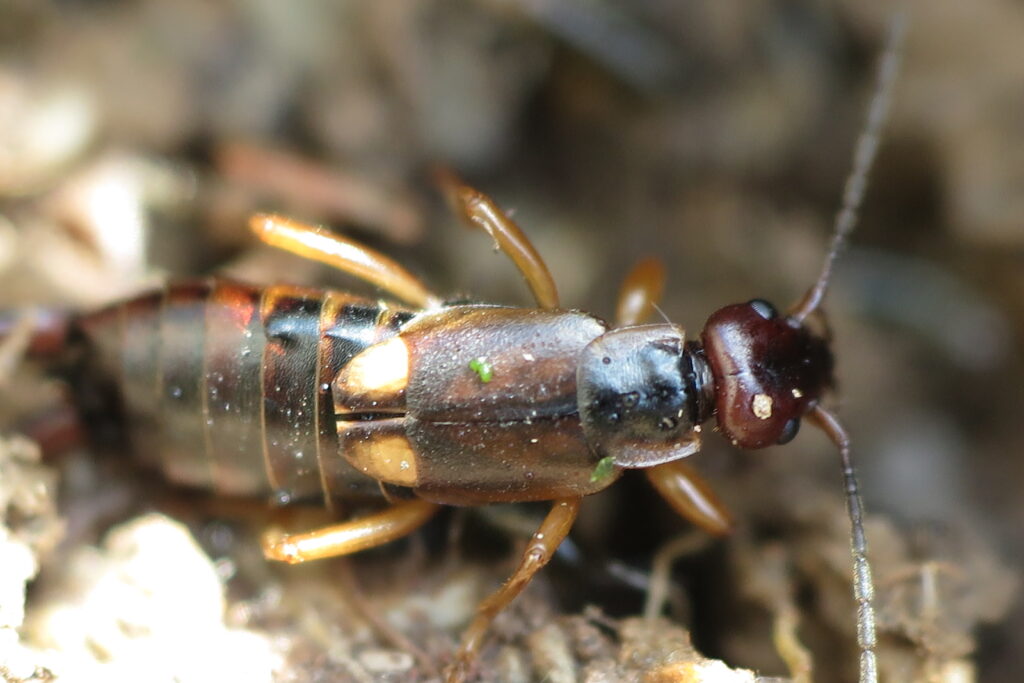
Popular Searches About European Earwigs
Explore European Earwig Guide
Explore More Wildlife

Support Encounters World
Help support wildlife photography and get behind the scenes discoveries on Patreon.