
Buffalo Treehopper Diet: What Buffalo Treehoppers Eat and How They Feed
Quick Facts
Diet Type: Herbivore
Main Food Sources: Plant sap from trees, shrubs, and herbaceous plants
Feeding Time: Primarily daytime feeding
Foraging Method: Piercing plant tissues and extracting sap
Seasonal Diet Changes: Shifts between herbaceous plants and woody vegetation
Predatory Adaptations: None; specialized piercing mouthparts for feeding
Buffalo Treehopper Feeding Habits and Food Ecology
The Buffalo Treehopper (Stictocephala bisonia) is a small sap-feeding insect found across much of North America and introduced regions of Europe. Although its unusual appearance often attracts attention, its feeding habits play an equally important role in its survival. The species spends much of its life obtaining nutrients directly from living plants.
Throughout fields, orchards, gardens, and woodland edges, Buffalo Treehoppers depend entirely on vegetation for nourishment. Unlike insects that hunt prey or gather various foods, these insects obtain their energy from liquid plant resources. Their feeding strategy allows them to remain attached to vegetation for extended periods.
The species occupies regions with abundant plant growth, where suitable food sources remain available throughout the growing season. Areas containing diverse vegetation often support larger populations because multiple plant species can provide nourishment during different periods of the year.
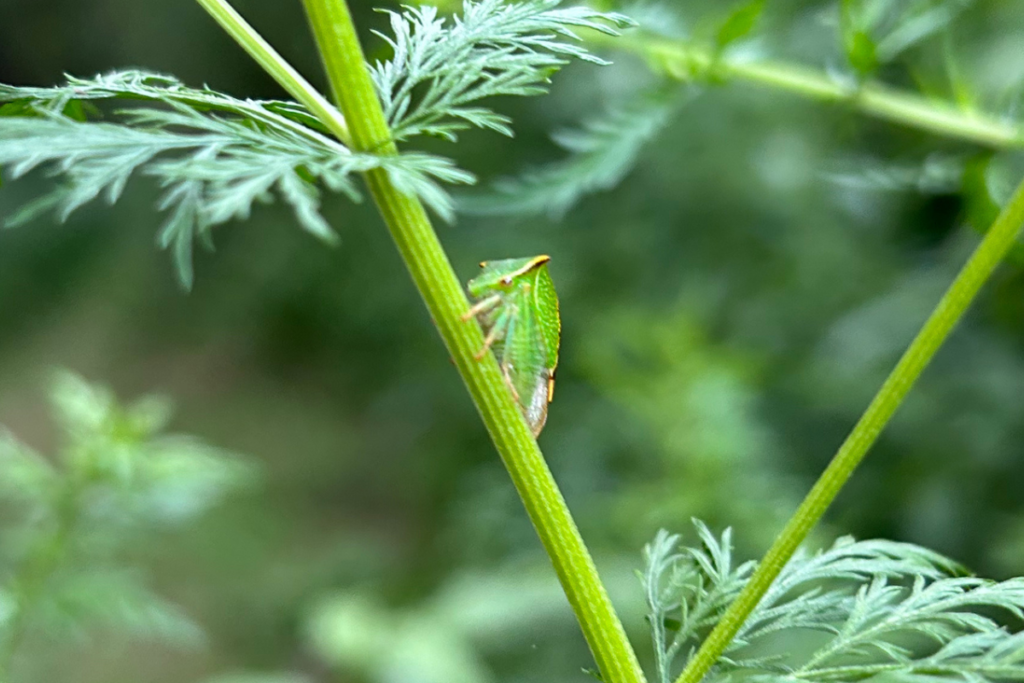
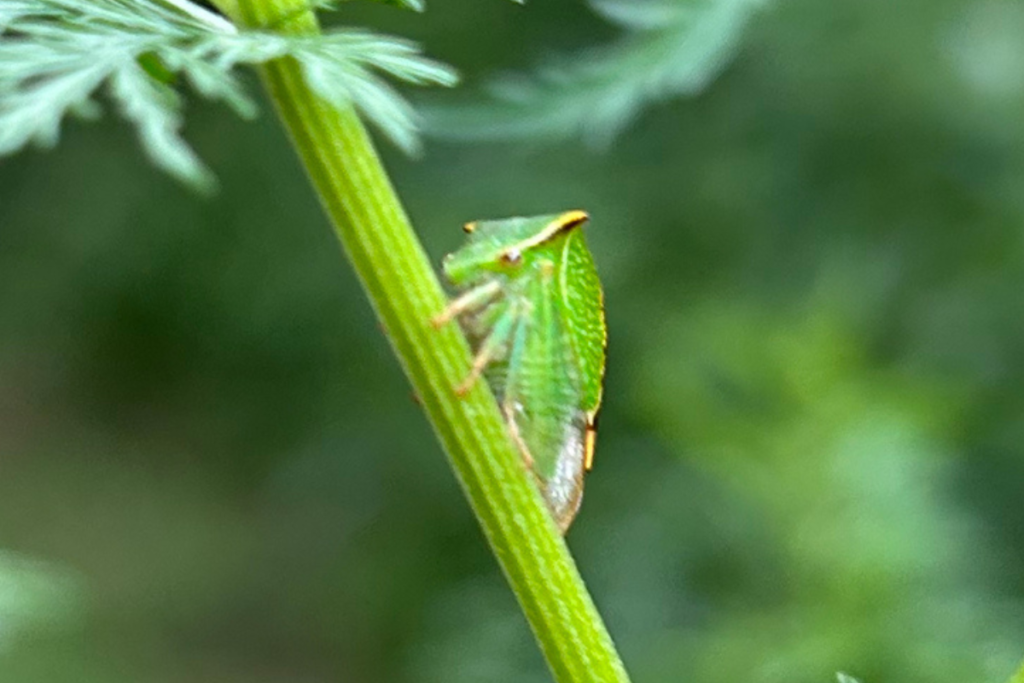
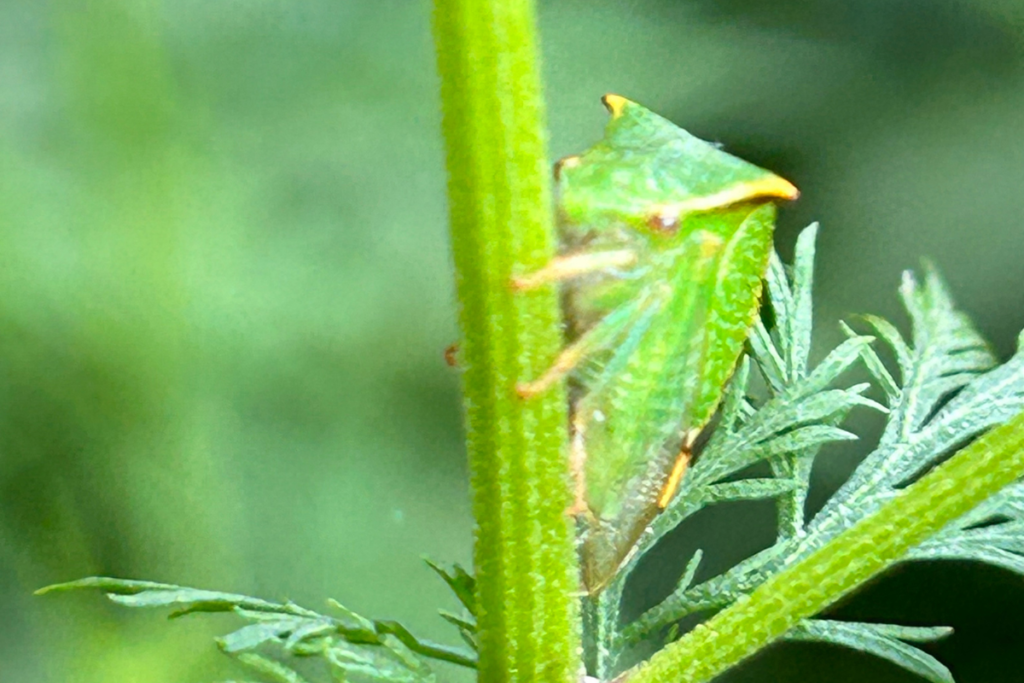
A Buffalo Treehopper feeding on a stem may appear inactive, yet it is constantly drawing nutrients from the plant. This quiet method of feeding differs greatly from the visible activity of caterpillars chewing leaves or beetles consuming flowers. Their diet remains largely hidden from casual observation.
Buffalo Treehopper Dietary Strategy and Feeding Type
Buffalo Treehoppers are strict herbivores that feed entirely on plant fluids. They belong to a large group of insects that possess specialized mouthparts capable of piercing plant tissues and extracting sap. This feeding strategy allows them to access nutrients without consuming leaves or stems directly.
Their diet is considered moderately specialized because they rely on plant sap rather than solid plant material. Unlike grasshoppers, which may feed on numerous plant parts, Buffalo Treehoppers depend specifically on fluids moving within living vegetation. This requires highly adapted feeding structures.
The species displays some flexibility in the types of plants it uses. Different populations may feed on various shrubs, trees, grasses, and herbaceous plants depending on local availability. This adaptability allows the insect to occupy a broad geographic range.
Compared to highly specialized insects that depend on only a single plant species, Buffalo Treehoppers use a wider selection of vegetation. Their feeding habits resemble those of many leafhoppers and other sap-feeding insects that utilize several suitable host plants throughout their lives.
The diet remains relatively consistent regardless of location because plant sap always serves as the primary food source. While the exact plants may differ between regions, the nutritional strategy changes very little. This consistency contributes to the species’ success across numerous environments.
Young individuals and adults both depend upon plant fluids. Although the plants used may change during development, the overall feeding strategy remains similar throughout the life cycle. This creates a dependable source of nutrition from early growth through adulthood.
Buffalo Treehopper Natural Food Sources
Buffalo Treehoppers commonly feed on a wide variety of herbaceous plants, shrubs, and young trees. Alfalfa, clover, goldenrod, asters, and numerous wild plants often serve as important food sources. These plants provide the nutrient-rich sap needed for growth and survival.
Woody vegetation also contributes to the species’ diet. Apple, maple, elm, oak, and various fruit trees may support feeding individuals. Young stems and developing branches often contain abundant plant fluids that can be accessed through the insect’s specialized mouthparts.
Seasonal changes influence which plants are used throughout the year. During warmer months, herbaceous vegetation may provide abundant food resources. As plant communities change, Buffalo Treehoppers may utilize different vegetation types that remain suitable.
Plant sap contains water, sugars, amino acids, and other nutrients that sustain the insect. Although these fluids appear simple, they provide the energy necessary for growth and reproduction. Similar to how a hummingbird relies upon nectar, Buffalo Treehoppers depend on liquid plant resources.
Immature stages often feed on softer vegetation with tender stems that are easier to penetrate. Adults may use both herbaceous plants and woody growth depending on availability. This variation allows different life stages to exploit slightly different food resources.
Alfalfa serves as one of the better-known food plants for the species. Large agricultural fields may support substantial populations because these plants provide consistent nutrition. Numerous native wildflowers and grasses also contribute to the insect’s natural diet.
Buffalo Treehopper Feeding Behavior and Survival Strategies
Buffalo Treehoppers feed using specialized piercing-sucking mouthparts that function like extremely fine drinking straws. These structures penetrate plant tissues and reach fluid-conducting vessels within the stem. Once inserted, the insect can withdraw sap while remaining nearly motionless.
Feeding often occurs while the insect rests along stems or branches. The Buffalo Treehopper may remain attached to a single feeding site for extended periods. This stationary approach conserves energy and reduces exposure to predators.
Competition for food appears relatively limited because numerous suitable plants may be available within a single area. Multiple individuals can sometimes feed on the same plant without direct conflict. Their feeding strategy depends more on access to vegetation than territorial behavior.
When conditions change, Buffalo Treehoppers may move to new feeding locations. Seasonal shifts in plant quality or the aging of vegetation can influence feeding sites. This flexibility helps ensure continued access to nutritious sap throughout the year.
Periods of limited food availability may require individuals to utilize alternative plants. Their ability to feed on several types of vegetation provides an important survival advantage. Unlike highly specialized insects, Buffalo Treehoppers can often adjust to changing conditions.
The feeding process itself remains remarkably quiet and efficient. A feeding treehopper resembles a tiny valve connected to a plant stem, slowly extracting nutrients over time. This method allows the insect to obtain food while remaining concealed.
By combining specialized mouthparts, flexible plant selection, and low-energy feeding behavior, Buffalo Treehoppers have developed an effective survival strategy. Their success depends not on speed or strength, but on patience and the reliable availability of plant sap throughout their range.
Popular Searches About Buffalo Treehoppers
Explore Buffalo Treehopper Guide
Explore More Wildlife

Support Encounters World
Help support wildlife photography and get behind the scenes discoveries on Patreon.