Are Garter Snakes Dangerous? Bite, Venom, and Safety Facts Explained
Quick Facts
Location: North America
Average Size: 18–26 inches (45–66 cm)
Lifespan: 2–6 years in the wild
Global Range: Canada, United States, northern Mexico
Conservation Status: Least Concern
Notable Feature: Mild venom and non-aggressive nature
Introduction – Understanding Whether Garter Snakes Are Dangerous to Humans
The Common Garter Snake is one of the most frequently encountered snakes across North America, often appearing in yards, parks, and natural areas. Its widespread presence means that many people come across this species at some point, leading to a common question: is it dangerous? Because it is so familiar, it often becomes the subject of concern, especially for those who are not used to seeing snakes up close.
Across its range, this snake is commonly observed in everyday environments, sometimes unexpectedly crossing paths with people. Its appearance can vary depending on location, but its striped body and relatively small size make it recognizable once identified. These encounters are typically brief, yet they often leave a strong impression, especially when the observer is unsure of the potential risk.
The idea of danger surrounding snakes is often influenced by general assumptions rather than specific knowledge of individual species. In reality, not all snakes pose the same level of threat, and many are far less dangerous than commonly believed. The common garter snake falls into a category that is widely misunderstood, largely due to its similarity in shape to more concerning species.
Understanding whether this snake is dangerous requires looking at its physical traits, how it presents itself in the wild, and how it fits into its environment. When viewed in context, it becomes easier to separate perception from reality and better understand what kind of risk—if any—it truly represents.
Overview – Common Garter Snake Appearance and First Impressions of Risk
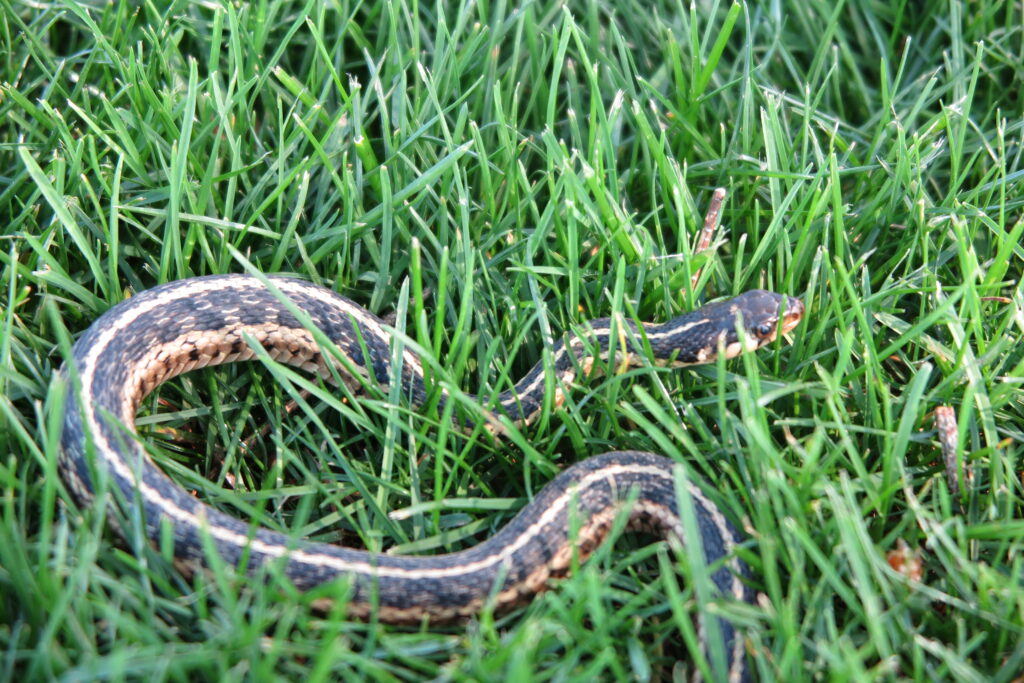
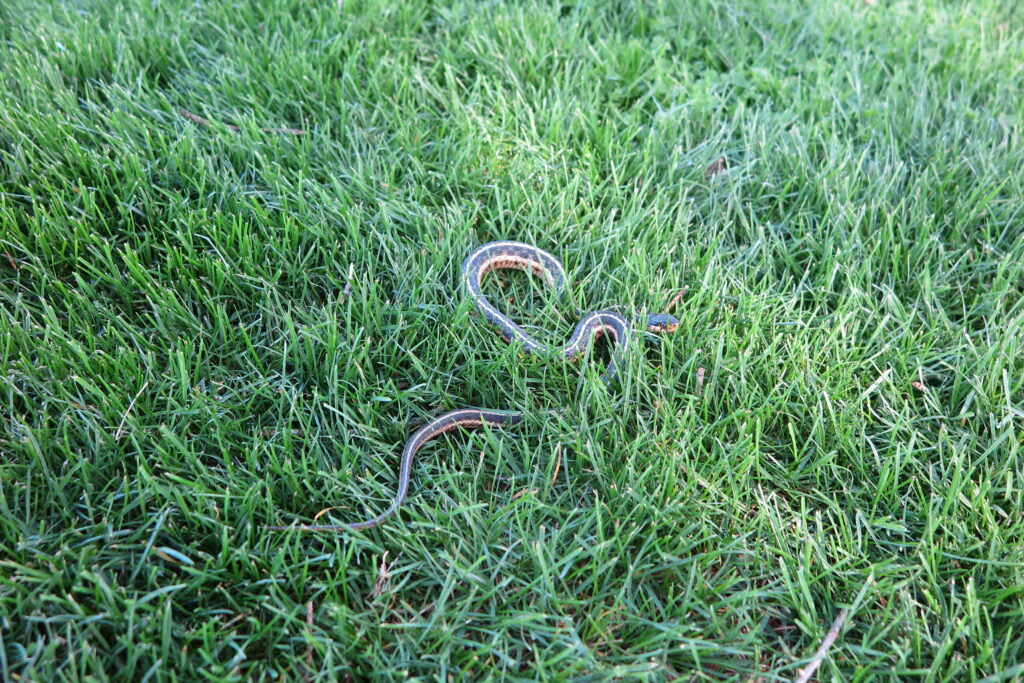
At first glance, the common garter snake presents a slender, elongated body that can sometimes trigger concern simply due to its resemblance to other snakes. Its length, typically comparable to a standard ruler or slightly longer, gives it a noticeable presence without appearing large or imposing. Despite this, the shape alone can lead to assumptions about potential danger.
The snake’s most recognizable feature is its series of longitudinal stripes, which run along the length of its body. These stripes are usually lighter in color, such as yellow or green, set against darker tones like black or brown. This pattern creates a strong visual contrast that helps distinguish it from many other species once recognized.
Color variation can influence how threatening the snake appears to an observer. Some individuals display bold, high-contrast markings, while others have more muted tones that blend into their surroundings. In certain lighting conditions, the snake may appear darker or more solid in color, which can increase the perception of risk at a quick glance.
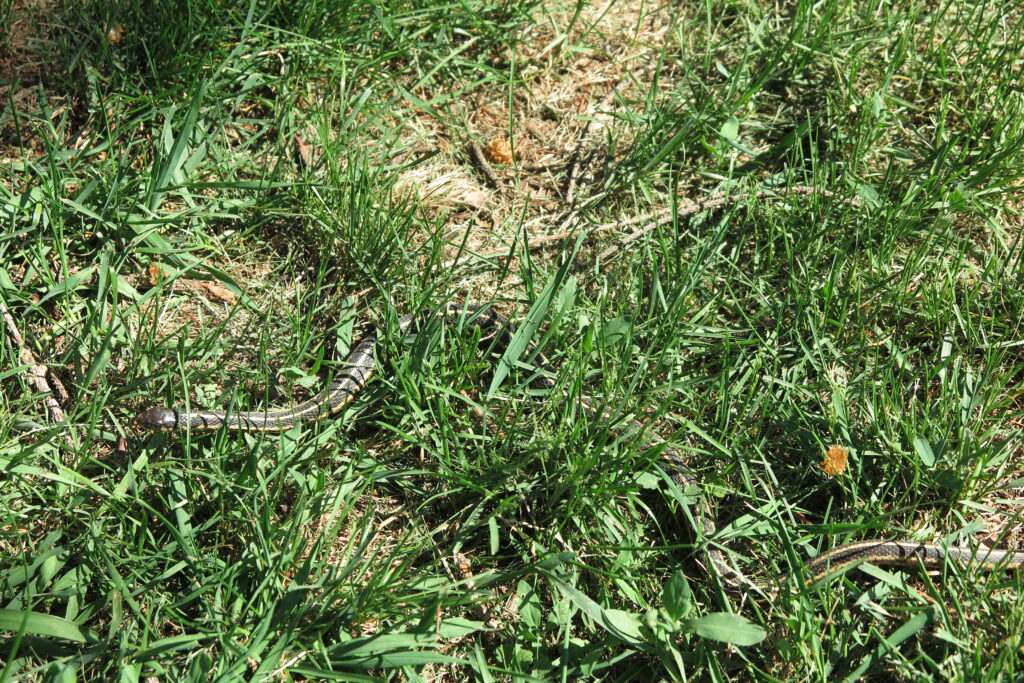
In natural settings, the common garter snake often appears partially hidden, with only sections of its body visible through grass or ground cover. This partial visibility can make it seem larger or more sudden in appearance than it actually is. However, its overall form remains lightweight and non-intimidating when viewed clearly, helping to clarify its true nature.
General Characteristics – Physical Traits and Features Related to Safety
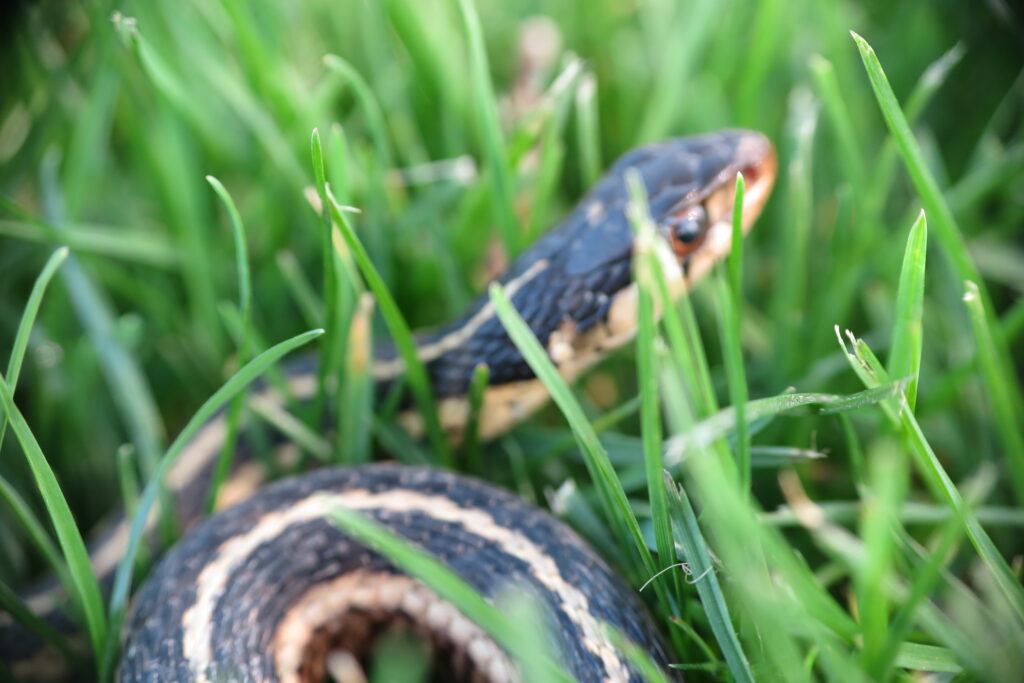
The common garter snake has a narrow head that blends smoothly into the body, lacking the broad, triangular shape often associated with more dangerous species. This streamlined profile gives it a softer, less defined appearance when compared to snakes that rely on intimidation or strong defensive displays. Its head structure alone is often an early indicator of its relatively low threat level.
One notable feature is its small, forward-facing eyes, which appear alert but not aggressive. These eyes, combined with subtle facial markings in some individuals, contribute to a more neutral expression. Unlike species that rely on visual intimidation, the garter snake’s appearance does not strongly signal aggression or dominance.
Its scales are keeled, meaning they have a slight ridge along the center, giving the body a textured look rather than a glossy sheen. This creates a matte appearance that reduces reflectiveness, helping it blend into natural surroundings. While this texture adds to its camouflage, it does not enhance any sense of danger.
Compared to similar species such as ribbon snakes, the common garter snake appears slightly thicker and more varied in pattern. Ribbon snakes tend to have sharper striping and a more delicate build, while garter snakes show broader variation in both color and body shape. This distinction helps identify the species more accurately, reducing confusion with other snakes that might be perceived differently.
Role in Ecosystem – Why the Common Garter Snake Is Beneficial Rather Than Dangerous
The common garter snake plays an important role in maintaining balance within the ecosystems it inhabits. As a mid-level species, it contributes to the natural regulation of smaller animal populations, helping prevent imbalances that could affect plant life and other organisms. This role supports overall environmental stability rather than posing a threat.
At the same time, it serves as a food source for larger predators, including birds, mammals, and other reptiles. This position within the food web allows energy to move through different levels of the ecosystem, supporting a wide range of species. Without animals like the garter snake, these connections would be disrupted.
In environments where it is present, the common garter snake often exists without causing noticeable disturbance. Its presence is typically subtle, blending into the background of everyday natural activity. This quiet role contrasts with the idea of danger, showing that it contributes more to balance than to risk.
Rather than being a species to fear, the common garter snake is better understood as a beneficial part of its environment. Its interactions within the ecosystem support both plant and animal life, reinforcing its importance in maintaining healthy natural systems. When viewed from this perspective, its presence represents stability rather than threat.