White-Tailed Deer Overview | Identification, Appearance, and Ecological Importance
Quick Facts
Scientific Name: Odocoileus virginianus
Common Name: White-Tailed Deer
Location: Forests, grasslands, wetlands, and rural edges
Average Size: 3–7 feet long; 90–300 pounds depending on sex and region
Lifespan: 4–10 years in the wild
Global Range: North America, Central America, and parts of South America
Conservation Status: Least Concern
Notable Feature: Bright white underside of the tail used as a warning signal
Location Observed: Pennsylvania, USA
Field Observation
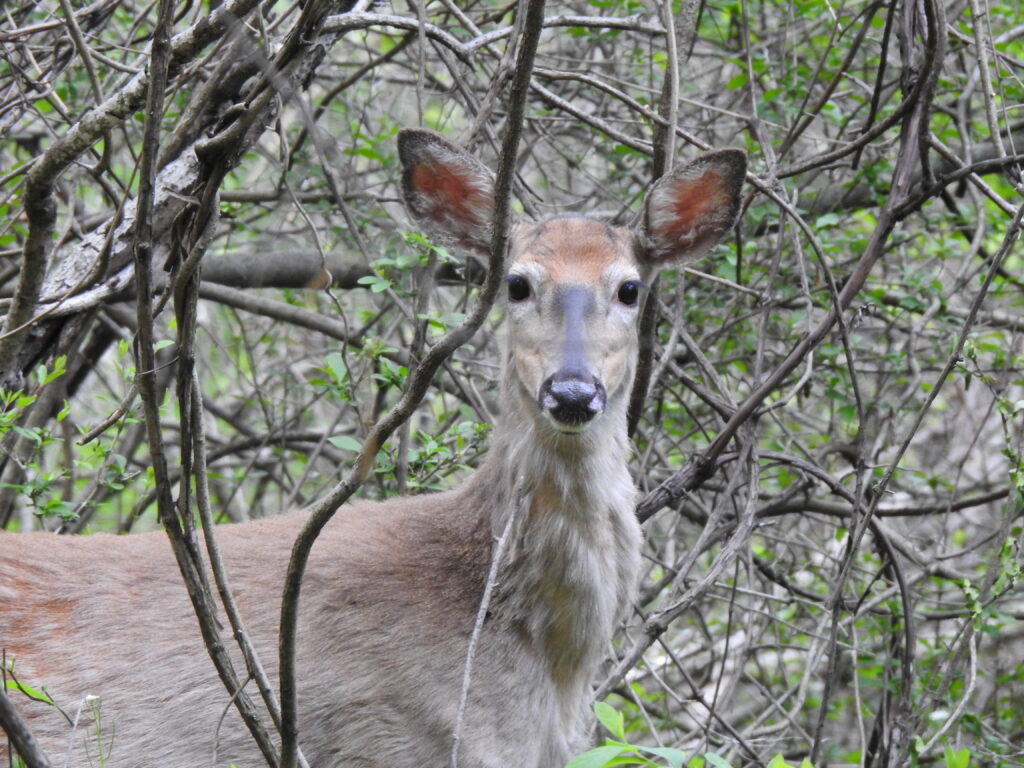
A small group of white-tailed deer slowly moved through the woods while searching for food, stopping often to eat leaves growing from low trees and bushes. The deer remained highly alert to everything around them, frequently lifting their heads to scan the forest before continuing to feed. At one point, one of the deer paused and stared directly at me for several moments before calmly returning to eating.
White-Tailed Deer Across North America’s Landscapes
The white-tailed deer is one of the most recognizable mammals in North America, appearing everywhere from deep woodlands to the edges of suburban neighborhoods. Known for its graceful body shape and alert posture, this species has become closely tied to the image of untamed wilderness in many regions. Its scientific name, Odocoileus virginianus, refers to the hollow nature of its hair and its early identification in Virginia during colonial records. Even people who rarely visit forests often recognize the animal instantly because of how widespread and familiar it has become.
White-tailed deer are distributed across an enormous geographic range that stretches from southern Canada through much of the United States and into parts of Central and South America. Their adaptability has allowed them to thrive in cold northern forests, humid swamps, dry grasslands, and mountainous terrain. In many areas, deer populations have expanded alongside human development rather than shrinking away from it. This broad range makes the species one of the most successful large mammals on the continent.
In natural settings, the animal often appears suddenly and quietly, standing motionless between trees or crossing open fields at dawn. Its slender legs and earthy coloration allow it to blend naturally into woodland scenery, especially during autumn when fallen leaves match its reddish-brown coat. Even a brief glimpse can leave a strong impression because of the animal’s calm but attentive appearance. The contrast between its soft coloring and the flash of white beneath the tail makes it especially memorable when seen moving through vegetation.
Throughout history, white-tailed deer have held importance in art, folklore, conservation, and outdoor culture. Indigenous communities across North America relied on deer for materials and food long before European settlement. Today, the species remains deeply connected to wildlife observation, photography, and outdoor recreation. Whether spotted beside a rural road or deep within a forest trail, the white-tailed deer continues to symbolize the quiet presence of wild nature across a changing landscape.
White-Tailed Deer Appearance and Physical Features
The white-tailed deer has a slim but powerful body structure designed for speed and agility. Adult males, known as bucks, are usually much larger than females and develop antlers that can vary dramatically in size and shape. Females, called does, generally appear more delicate with narrower faces and lighter body frames. Despite these differences, both sexes share the same smooth coat texture and distinctive long-legged silhouette.
Coat coloration changes noticeably throughout the year, giving the animal a different appearance depending on the season. During summer, the fur often appears reddish-brown with a sleek texture that reflects sunlight softly in open areas. Winter coats become thicker and shift toward grayish-brown tones, helping the animal blend into leafless forests and snowy environments. Young fawns are covered in white spots that resemble scattered drops of sunlight filtering through trees, providing one of the species’ most recognizable early-life appearances.
A fully grown white-tailed deer can stand roughly as tall as the hood of a compact car at the shoulder, while large northern bucks may weigh several hundred pounds. Their bodies are built with long muscular legs and narrow hooves that allow efficient movement across uneven terrain. The ears are large and rounded, constantly rotating to detect distant sounds. Combined with large dark eyes and an elongated muzzle, these features create an alert and highly expressive facial appearance.
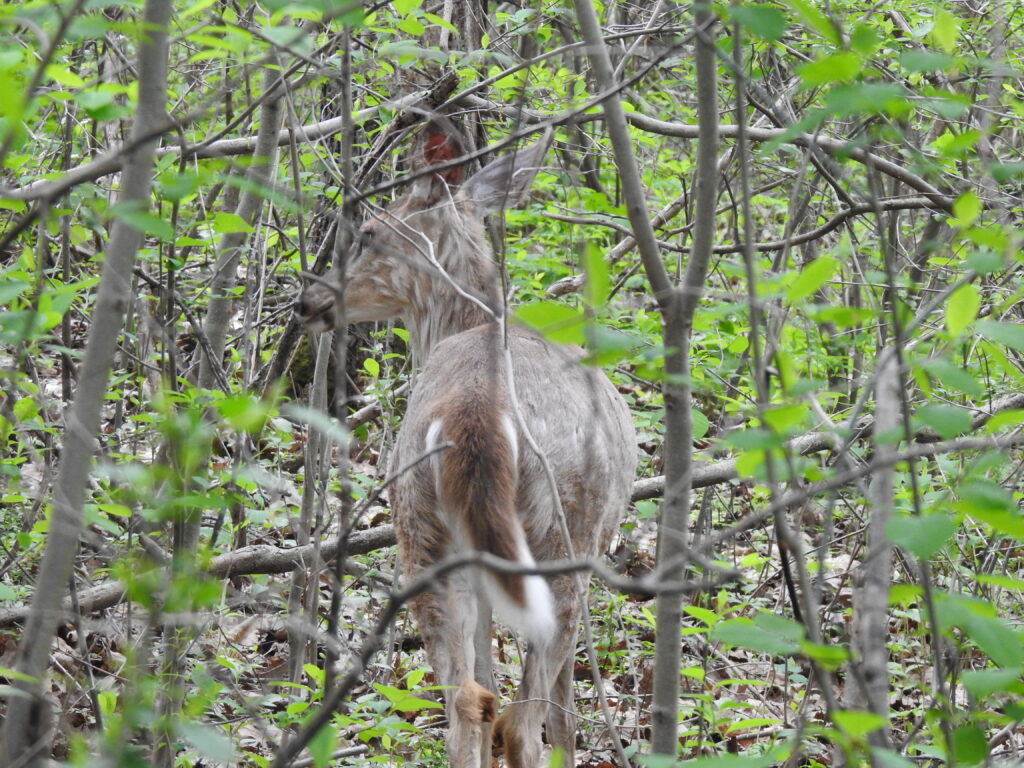
One of the defining physical characteristics of the species is the bright white underside of the tail. When raised, the tail creates a sudden flash of white that stands out sharply against forests or grasslands. This feature is so distinctive that it inspired the animal’s common name and often becomes the most visible detail when a deer disappears into cover. Even from a distance, that bright white signal can immediately identify the species to wildlife observers.


Distinctive Characteristics That Identify the White-Tailed Deer
Among North American mammals, the white-tailed deer is especially recognizable because of its balanced proportions and elegant profile. Its narrow chest, long neck, and upright posture create a lighter appearance than larger relatives such as elk or moose. Compared to mule deer, another common deer species, white-tailed deer typically have slimmer faces and tails with a brighter, more obvious white underside. These differences become especially noticeable when the animals are viewed side by side in overlapping regions.
The antlers of mature bucks are one of the most striking features of the species. Growing fresh each year, antlers branch outward from the head in curved formations that resemble polished tree limbs. Some bucks develop simple spikes, while others form large multi-pointed racks that spread widely above the ears. The size and symmetry of these antlers often become a defining visual trait for individual animals and contribute to the deer’s iconic image in wildlife photography and outdoor culture.
Another unusual feature is the structure of the deer’s fur itself. Individual hairs are hollow, helping trap warmth and improve insulation during colder seasons. This gives the coat a slightly coarse appearance while also helping the animal survive harsh winter conditions. In sunlight, the fur can appear almost layered with muted tones of gray, tan, and chestnut blended together. This natural camouflage makes the animal surprisingly difficult to spot when standing still among trees or brush.
The white-tailed deer also carries itself with a recognizable sense of caution and awareness. Even while standing quietly, its body language appears tense and prepared for sudden movement. The ears constantly pivot, and the nose frequently lifts to sample the air. Combined with the animal’s lean frame and smooth movement, these traits give the species a refined appearance that separates it from stockier hoofed mammals such as cattle or wild boar.
Ecological Importance of the White-Tailed Deer
White-tailed deer play a major role in shaping ecosystems across much of their range. As one of the most widespread large mammals in North America, their presence influences forests, grasslands, and wetland environments in many subtle ways. The movement of deer through these landscapes contributes to seed dispersal and vegetation changes over time. Their constant interaction with plant life affects how certain areas grow and regenerate.
The species also serves as an important connection within the food web. Predators such as wolves, coyotes, mountain lions, and alligators rely on deer populations in parts of their range. Even after natural death, deer remains provide food for scavengers including vultures, foxes, insects, and countless microorganisms. Because of their size and abundance, white-tailed deer support multiple levels of ecological activity throughout different environments.
In forested regions, deer browsing can influence the growth patterns of young trees and understory vegetation. Areas with dense deer populations may experience noticeable differences in plant composition over time. This influence can shape how forests regenerate after storms, fires, or logging activity. Ecologists often study deer populations closely because changes in their numbers can affect entire ecosystems rather than just individual plant species.
The white-tailed deer also acts as a visible indicator of environmental balance and landscape health. Healthy deer populations often suggest that water, vegetation, and shelter remain available within an ecosystem. At the same time, unusually large populations can signal the absence of natural predators or shifts caused by human activity. Because the species interacts with so many parts of the environment, it remains one of the most closely observed mammals in wildlife management and conservation studies across North America.
Observation Location
Observed in Nixon Park Nature Center, Pennsylvania, USA
Popular Searches About White Tail Deer
Explore White Tail Deer Guide
Explore More Wildlife

Support Encounters World
Help support wildlife photography and get behind the scenes discoveries on Patreon.