Northern Cardinal vs Blue Jay Guide: Differences in Appearance, Behavior, and Habitat
Quick Facts
Primary Color Difference: Bright red vs vivid blue plumage
Average Size: Cardinal: 8–9 inches | Blue Jay: 9–12 inches
Global Range: Eastern and central North America
Conservation Status: Least Concern for both species
Main Habitat: Forest edges, suburban neighborhoods, parks, and woodlands
Notable Feature: Cardinals are known for melodic whistles while Blue Jays are recognized for loud intelligent calls
Introduction to Northern Cardinals and Blue Jays
The Northern Cardinal and Blue Jay are two of the most recognizable backyard birds in North America, frequently sharing forests, suburban neighborhoods, parks, and woodland edges throughout much of the eastern United States. Although both species are common around bird feeders and wooded environments, they differ dramatically in appearance, vocalization, body structure, and overall presence. Their bright coloration and year-round visibility often make them favorite birds among birdwatchers and photographers alike.
Northern Cardinals are best known for their vivid red coloration, black facial mask, and smooth melodic whistles that echo through trees and shrubs. Blue Jays, in contrast, display bright blue plumage with bold black markings and loud energetic calls that immediately attract attention. Even people unfamiliar with bird identification can usually recognize both species because of their striking visual differences.
The two birds are commonly observed within the same general environments but create very different impressions in nature. Cardinals often appear calm and steady while moving quietly through vegetation, whereas Blue Jays tend to stand out because of their louder personalities and more dramatic movements. Their contrasting behavior and coloration make them one of the most interesting backyard bird comparisons in North America.
Despite their differences, both species have adapted exceptionally well to human-altered environments. Suburban neighborhoods, backyard feeders, wooded parks, and forest edges all support healthy populations of cardinals and Blue Jays. Their year-round activity and strong visual presence have made them iconic symbols of eastern North American birdlife.
Northern Cardinal vs Blue Jay Appearance Comparison
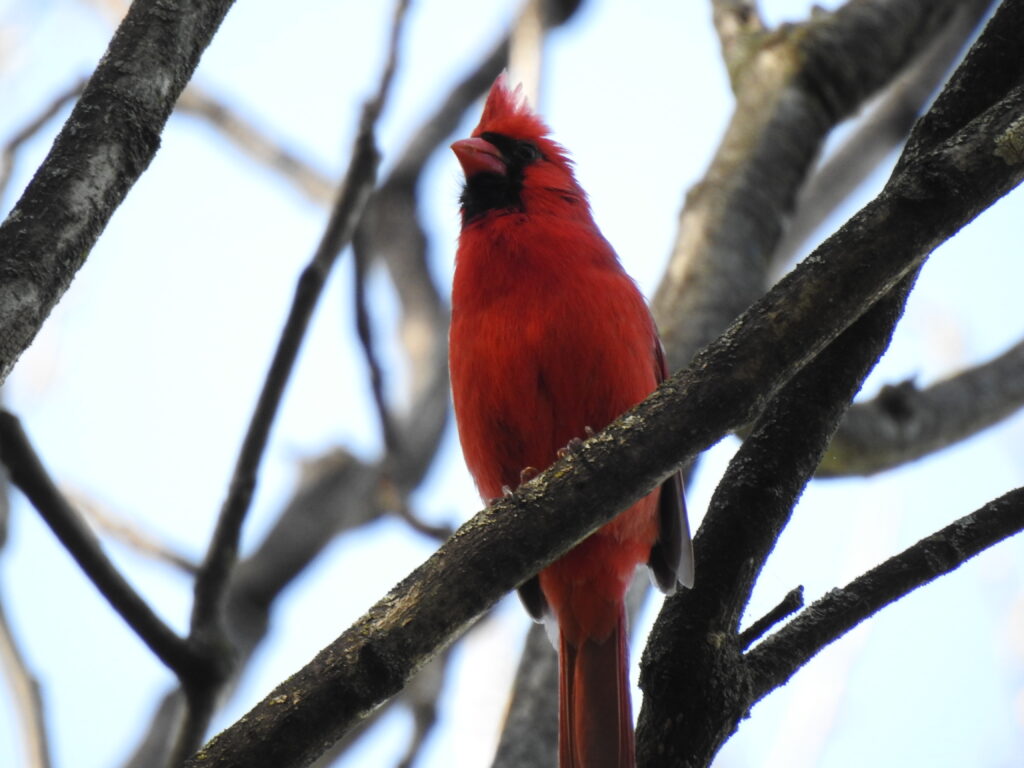
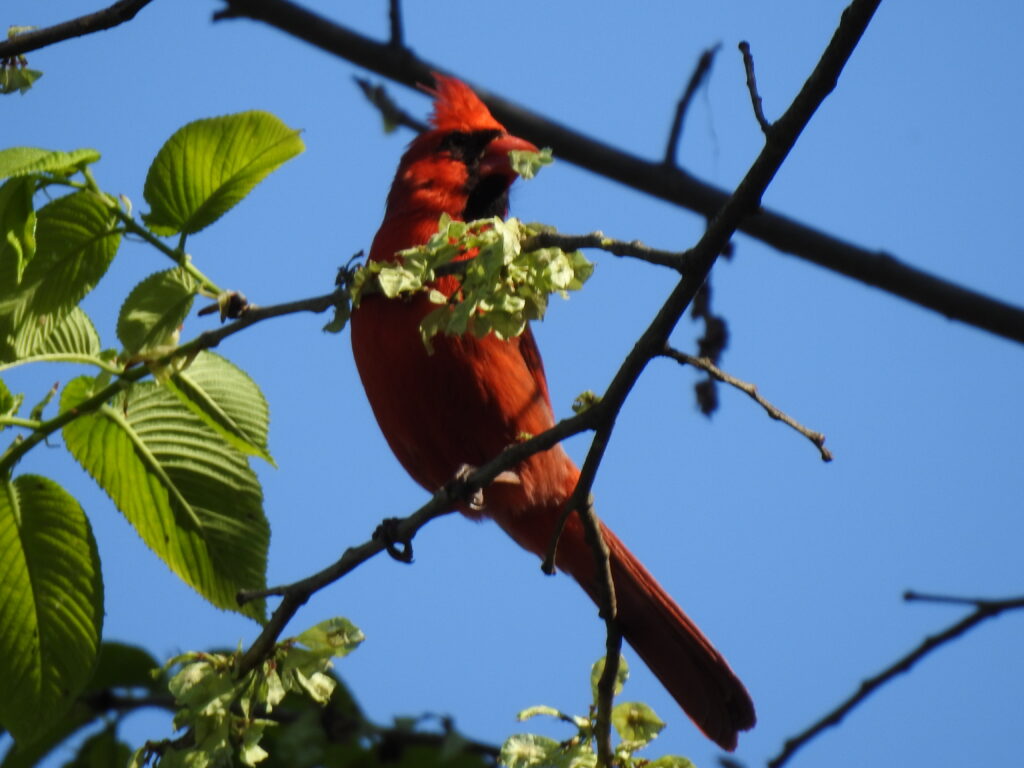
Northern Cardinals and Blue Jays differ immediately in coloration, body shape, and feather pattern. The male Northern Cardinal displays brilliant scarlet-red plumage covering most of the body, contrasted by a black facial mask surrounding the beak. Female cardinals possess softer brown and tan coloration with muted reddish highlights on the wings and tail.
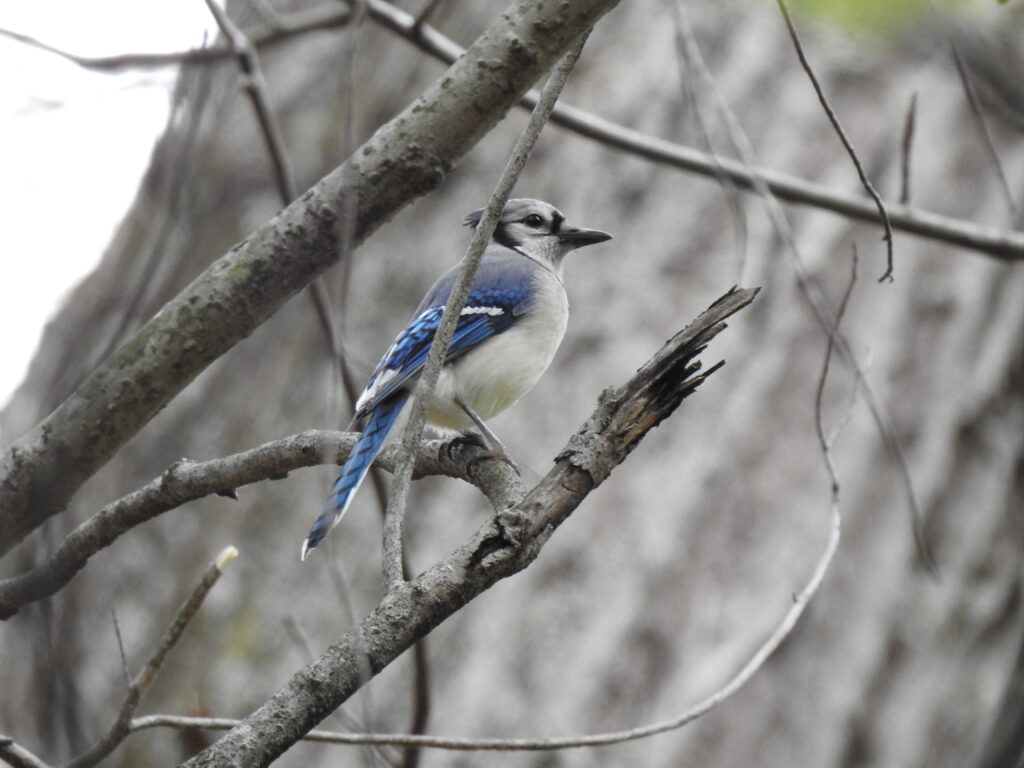
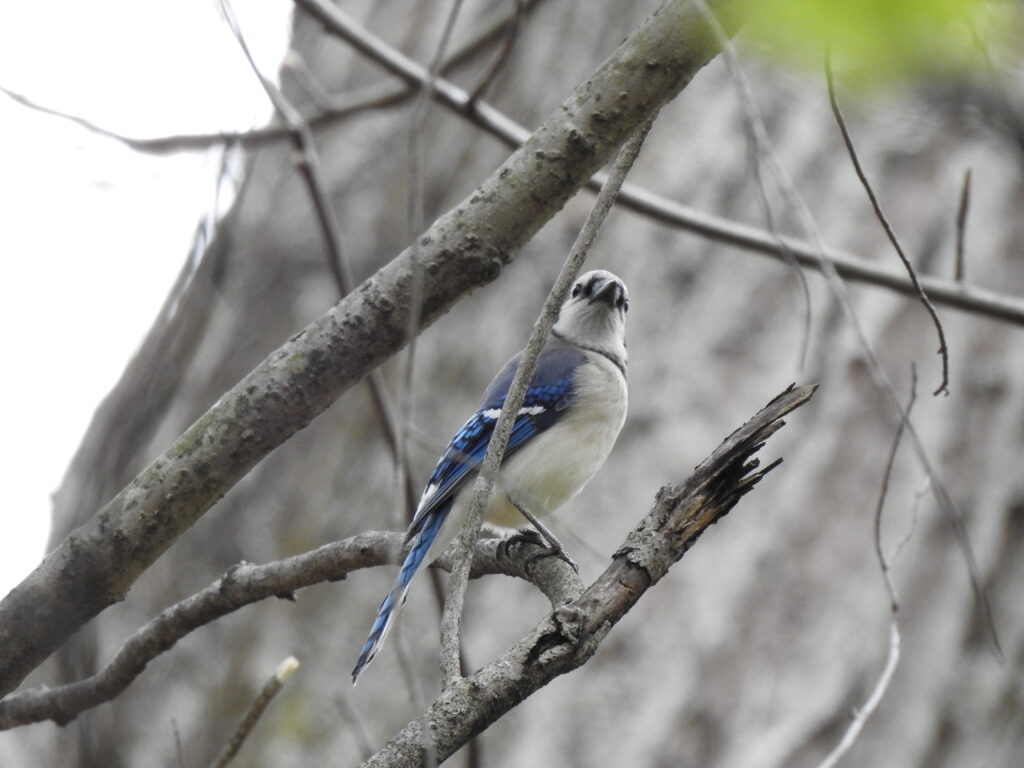
Blue Jays, on the other hand, display bright blue upper feathers mixed with white underparts and bold black markings around the neck and face. Their plumage contains intricate barring and layered feather patterns that create a much more textured appearance than the smoother coloration of a cardinal. In sunlight, the blue tones can appear almost electric against green woodland backgrounds.
Body structure also separates the two species clearly. Cardinals possess a compact body with a thick orange-red beak and long pointed tail, giving them a balanced and elegant appearance. Blue Jays appear larger overall with broader shoulders, stronger necks, and slightly heavier body proportions.
In size comparison, a Blue Jay is generally closer to the size of a small crow, while a Northern Cardinal resembles a slightly larger robin-sized songbird. Seeing both species side by side at a feeder highlights how much bulkier and taller the Blue Jay appears. Cardinals usually look slimmer and more streamlined overall.
Both birds possess distinctive crests, but the shapes differ noticeably. The Northern Cardinal’s crest appears taller and more pointed, often standing sharply upright during alert moments. Blue Jays have broader crests that flow more smoothly backward along the head.
Compared to the American Robin, both cardinals and Blue Jays appear more vividly colored and dramatically patterned. Robins display softer earth-toned coloration, while cardinals and Blue Jays stand out immediately because of their intense feather colors.
Another major difference lies in facial expression and beak structure. Cardinals possess thick triangular beaks built for cracking seeds, while Blue Jays have longer sharper beaks better suited for varied feeding behavior. These structural differences contribute heavily to the overall personality each bird appears to project visually.
General Characteristics That Separate Cardinals and Blue Jays
Northern Cardinals and Blue Jays differ not only in appearance but also in overall personality and presence within the environment. Cardinals often appear calmer and more measured while moving through shrubs and low branches. Their movements typically feel smooth and controlled, especially when feeding quietly near dense vegetation.
Blue Jays create a far more energetic impression. They move boldly between branches, frequently calling loudly while investigating their surroundings. Their behavior often appears highly confident and inquisitive compared to the quieter demeanor of cardinals.
Vocalization is one of the clearest differences between the species. Northern Cardinals produce rich whistles and repeated melodic phrases that sound musical and rhythmic. Blue Jays instead create loud calls, sharp screams, rattles, and mimicking sounds that carry strongly through forests and suburban neighborhoods.
Compared to the Tufted Titmouse, both cardinals and Blue Jays appear much more visually dramatic and vocally noticeable. Titmice remain smaller and softer-toned, while cardinals and Blue Jays dominate attention through color and sound.
The species also differ in social presentation. Cardinals are commonly observed alone or in pairs, especially during breeding periods. Blue Jays may gather in larger groups and appear more socially interactive within mixed bird communities.
Flight style creates another noticeable contrast. Cardinals usually fly in smooth direct bursts between shrubs and low trees, often staying relatively close to cover. Blue Jays fly with stronger wingbeats and broader movements that make them appear more forceful in the air.
Intelligence and environmental awareness are also commonly associated with Blue Jays because of their problem-solving behavior and vocal complexity. Cardinals appear more reserved by comparison, relying on quieter movement and territorial familiarity rather than bold interaction.
Together, these characteristics create two very different types of backyard birds despite overlapping habitats. Cardinals represent elegance, calmness, and visual warmth, while Blue Jays project energy, confidence, and vocal intensity throughout their environment.
Northern Cardinals and Blue Jays in the Ecosystem
Both Northern Cardinals and Blue Jays play important ecological roles across forests, suburban environments, and woodland edges throughout eastern North America. As seed dispersers, both species help move plant material through ecosystems while supporting vegetation growth across changing landscapes.
Northern Cardinals contribute heavily through seed consumption and insect feeding that helps regulate smaller invertebrate populations. Their feeding activity supports ecological balance while also dispersing plant seeds into new locations. Because they remain active year-round, their ecological influence continues throughout every season.
Blue Jays also contribute strongly to forest ecosystems, especially through acorn transport and seed caching behavior. Jays frequently carry and hide seeds over long distances, unintentionally helping spread oak trees and other vegetation. Some forgotten seed caches eventually germinate into new plant growth.
The two species additionally serve as prey for hawks, owls, snakes, and mammals. Their presence supports higher predator populations while contributing to broader food web structure. Although both birds are highly alert, predation remains an important ecological pressure throughout their lifespan.
Blue Jays often function as warning birds within woodland environments because of their loud alarm calls. Their vocal reactions to predators may indirectly benefit nearby birds, including cardinals, by alerting surrounding wildlife to danger. This creates an important layer of communication within bird communities.
Cardinals contribute more strongly to the natural soundscape through softer whistles and melodic calls that dominate many suburban mornings. Blue Jays instead create louder environmental presence through energetic calling and social interaction. Together, their vocal differences help shape the overall atmosphere of eastern North American forests.
Human communities have also developed strong cultural connections to both species. Cardinals are often associated with symbolism, warmth, and winter imagery, while Blue Jays are commonly connected with intelligence, boldness, and striking visual beauty. Their contrasting personalities make them two of the most beloved birds in North America.
Through seed dispersal, predator-prey interaction, vocal communication, and environmental adaptation, both Northern Cardinals and Blue Jays remain essential parts of eastern North American ecosystems. Although they differ greatly in color, behavior, and personality, both species contribute strongly to the biodiversity and visual identity of forests, parks, and suburban landscapes throughout their shared range.
Popular Searches About Northern Cardinals
Explore Northern Cardinal Guide
Explore More Wildlife

Support Encounters World
Help support wildlife photography and get behind the scenes discoveries on Patreon.