
Blacklet Fly Identification Guide: How to Identify Blacklet Flies (Family Heleomyzidae)

Quick Facts
Scientific Name: Family Heleomyzidae
Common Name: Blacklet Fly
Identification Type: True Fly (Order Diptera)
Average Size: 4–12 mm (0.15–0.47 in)
Key Identification Feature: Dark body with large compound eyes and clear to slightly smoky wings
Similar Species: Hoverflies, House Flies, Root-Maggot Flies, Small Muscid Flies
Global Range: North America, Europe, Asia, Africa, South America, and Oceania
Conservation Status: Not Evaluated (varies by species)
Identifying Blacklet Flies in the Field
Blacklet flies belong to the insect family Heleomyzidae, a diverse group of true flies distributed across much of the world. Although they are widespread, they rarely receive the same recognition as butterflies, dragonflies, or bees. As a result, many observations are either overlooked or confused with other small fly species.
At first glance, a blacklet fly often appears as a small dark insect resting on vegetation, flowers, or natural surfaces. Their overall appearance is subtle, lacking the bright warning colors or dramatic markings found in many more recognizable insects. This understated coloration can make field identification challenging without careful observation.
Members of the Heleomyzidae family occur throughout North America, Europe, Asia, South America, Africa, and Oceania. Because they occupy numerous regions, observers may encounter them in a wide variety of natural settings. Despite regional variation, many species share common visual features that aid identification.
Successful identification usually begins by examining overall body shape, coloration, wing appearance, and eye size. Unlike many insects that require close inspection of minute details, blacklet flies often possess a recognizable combination of traits when viewed clearly. Learning these characteristics helps separate them from the many other flies that occupy similar environments.
Blacklet Fly Appearance and Visual Identification Features
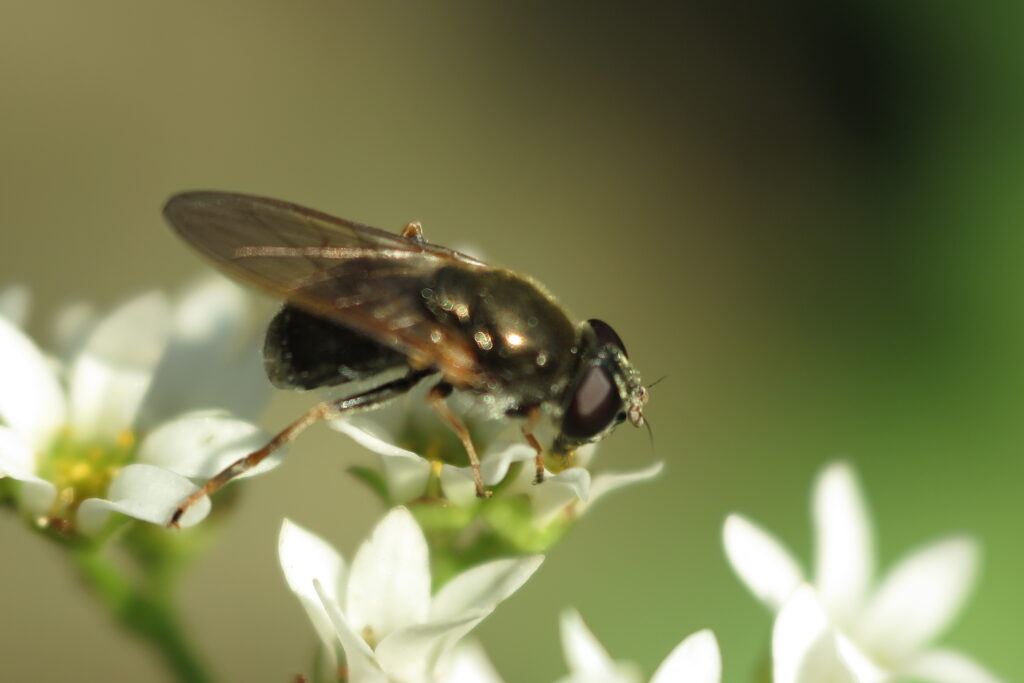
The overall appearance of a blacklet fly is compact, streamlined, and relatively simple compared to many colorful insects. Most species possess dark coloration ranging from brown and charcoal gray to nearly black. In direct sunlight, portions of the thorax may display subtle metallic reflections that are easily missed under normal lighting conditions.
Body size provides another useful identification clue. Most blacklet flies measure between 4 and 12 millimeters in length, making them comparable in size to a grain of rice or a small sunflower seed. Their modest dimensions often cause them to blend into surrounding vegetation until viewed at close range.
Large compound eyes dominate much of the head and are among the easiest features to recognize. Depending on lighting conditions, the eyes may appear dark brown, reddish, purple, or nearly black. These oversized eyes create a distinctive profile that immediately identifies the insect as a fly rather than a bee, wasp, or beetle.
The wings are typically transparent or lightly tinted with smoky or amber coloration. When at rest, they fold neatly over the abdomen and contribute to the insect’s sleek outline. Wing shape is generally narrow and delicate, complementing the fly’s streamlined appearance.
Color variation exists among species, though most remain within a relatively dark color spectrum. Some individuals display lighter brown tones while others appear almost entirely black. Unlike hoverflies, which frequently exhibit bright yellow bands, blacklet flies usually maintain a more subdued appearance.
In natural settings, blacklet flies often appear glossy when viewed from certain angles. Sunlight reflecting from the thorax can produce small flashes of metallic sheen. These reflections are subtle but can become helpful identification markers during close observation.
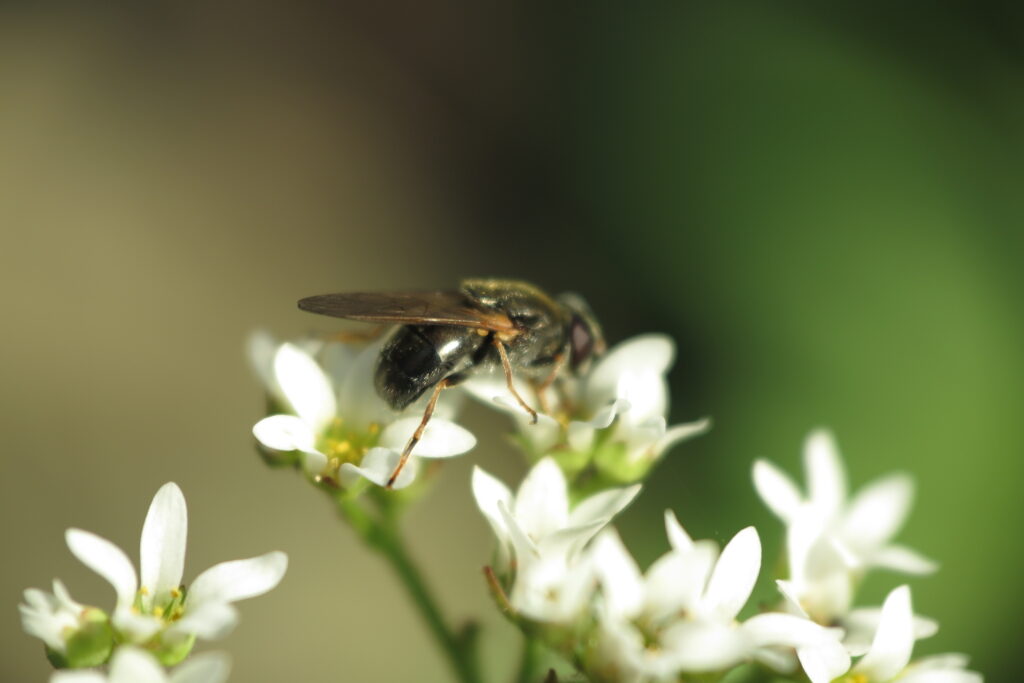
The abdomen is typically elongated rather than rounded. Viewed from the side, the body often appears slender and slightly tapered toward the rear. This shape contributes to the family’s distinctive silhouette and helps separate blacklet flies from stockier fly species.
Taken together, the combination of dark coloration, large eyes, transparent wings, and streamlined proportions forms the foundation of blacklet fly identification. These visible traits provide a practical starting point for recognizing members of the Heleomyzidae family.

Key Characteristics That Distinguish Blacklet Flies
One of the most important aspects of identifying blacklet flies is understanding what separates them from similar insects. Many observers initially mistake them for hoverflies, houseflies, or small muscid flies because all share a comparable overall size. However, closer examination reveals several meaningful differences.
Compared with hoverflies, blacklet flies generally lack bold yellow, orange, or white markings. Hoverflies often mimic bees and wasps through striking color patterns, whereas blacklet flies usually display darker and more uniform coloration. This difference is often noticeable even from a moderate distance.
Body structure provides another useful clue. Houseflies typically appear more robust and compact, while blacklet flies often possess a narrower and more refined shape. The abdomen frequently appears longer relative to body width, creating a more streamlined profile.
The family’s understated appearance can actually serve as an identification advantage. Instead of relying on bright colors or unusual appendages, blacklet flies are recognized through a combination of subtle features. Their identification resembles recognizing a specific model of car by overall shape rather than a single dramatic characteristic.
Wing presentation is also helpful. The wings rest neatly over the abdomen and often display slight smoky coloration. In some lighting conditions, this tint becomes easier to notice and can assist with distinguishing blacklet flies from similar species.
The head-to-body proportion is another defining characteristic. Large eyes occupy a significant portion of the head, giving the insect a visually distinctive appearance. This feature is particularly noticeable in high-quality photographs and macro observations.
Observers often describe blacklet flies as appearing smooth and polished compared to more heavily bristled fly species. While small hairs may be present, the overall impression is usually one of simplicity and refinement rather than rugged texture.
When all identifying characteristics are considered together, blacklet flies develop a recognizable identity that becomes easier to spot with experience. No single feature provides certainty on its own, but the combination of shape, coloration, eyes, wings, and proportions creates a reliable identification profile.
Blacklet Fly Recognition and Ecological Importance
Accurate identification serves an important purpose beyond simply assigning a name to an insect. Recognizing blacklet flies contributes to a better understanding of biodiversity and the countless small organisms that support healthy ecosystems. Even insects that appear ordinary often perform meaningful ecological functions.
Blacklet flies occupy a position within complex food webs that connect plants, microorganisms, invertebrates, birds, amphibians, reptiles, and mammals. Their presence contributes to ecological stability by supporting interactions among many different species. These connections may not always be obvious, but they remain essential components of functioning ecosystems.
In natural environments, blacklet flies help illustrate the diversity that exists within the order Diptera. While attention often focuses on larger or more colorful insects, flies represent one of the most successful and varied groups of organisms on Earth. Families such as Heleomyzidae contribute significantly to that diversity.
The ability to identify blacklet flies also improves wildlife observation skills. Learning to recognize subtle differences between similar insects encourages closer examination of the natural world. Over time, observers begin noticing details that might otherwise go completely unnoticed.
A useful comparison can be made to birdwatching. Just as learning field marks allows birders to distinguish similar species, understanding the characteristics of blacklet flies makes insect identification more accurate and rewarding. Small details become meaningful clues rather than overlooked features.
Citizen science projects and wildlife documentation efforts also benefit from accurate identification. Every correctly identified observation contributes valuable information about species distribution and occurrence. These records help improve scientific understanding of insect populations across different regions.
Because blacklet flies are widespread yet frequently overlooked, increased recognition can reveal how common they truly are. Many people encounter them regularly without realizing they belong to a distinct family of flies. Identification transforms an anonymous insect into a recognizable part of local biodiversity.
Ultimately, identifying a blacklet fly involves more than matching physical traits. It represents an opportunity to better understand a diverse insect family that quietly exists throughout much of the world. Through careful observation and attention to detail, these often-overlooked flies become a fascinating subject in their own right.
Popular Searches About Blacklet Flies
Explore Blacklet Fly Guide
Explore More Wildlife

Support Encounters World
Help support wildlife photography and get behind the scenes discoveries on Patreon.