
Are Blacklet Flies Harmful? Safety Guide for Humans, Pets, and Wildlife
Quick Facts
Harm Level: Generally Harmless
Can They Bite?: No Known Biting Behavior
Can They Sting?: No
Risk to Pets: Extremely Low
Risk to Humans: Minimal
Notable Safety Feature: Lacks Stinger and Venom Apparatus
Understanding Whether Blacklet Flies Are Harmful
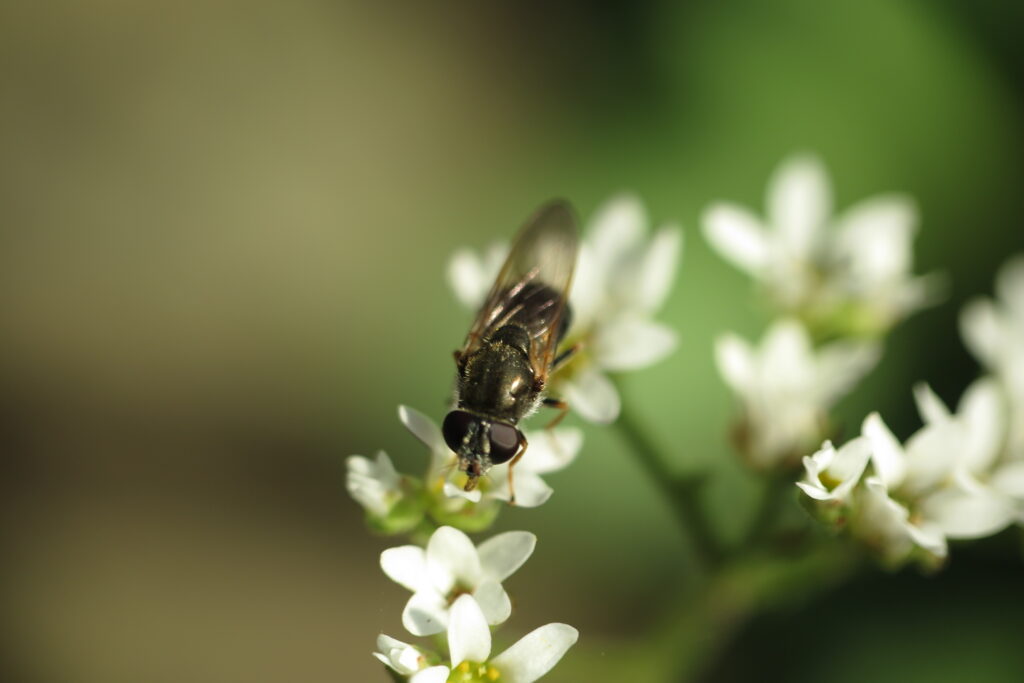
Blacklet flies belong to the insect family Heleomyzidae, a widespread group of true flies found across North America, Europe, Asia, Africa, South America, and Oceania. Although they are commonly encountered in many environments, most people know very little about them. Their small size and dark appearance sometimes cause unnecessary concern when they are observed resting on flowers or vegetation.
When people encounter unfamiliar insects, one of the first questions they ask is whether the animal poses a threat. This concern is understandable because many insects possess stingers, defensive chemicals, painful bites, or the ability to damage crops and property. Blacklet flies, however, belong to a very different category.
In most situations, these flies are considered harmless to humans, pets, and larger wildlife. They lack the physical structures associated with stinging insects and are not known for aggressive interactions. Their presence is usually far less significant than that of wasps, hornets, or biting flies.
Understanding the difference between appearance and actual risk is important when identifying insects. Blacklet flies may resemble other dark-colored flies that people associate with nuisance species, but their ecological role and behavior are generally much less concerning. Accurate identification often reveals that they present little reason for alarm.
Blacklet Fly Risks to Humans and Pets
For humans, blacklet flies are considered extremely low-risk insects. They are not known to attack people, pursue individuals, or deliberately seek contact. Most encounters involve a fly briefly landing nearby or moving through vegetation without interacting directly with observers.
Unlike mosquitoes, black flies, horse flies, or deer flies, blacklet flies are not recognized as blood-feeding insects. They do not possess specialized mouthparts designed to pierce skin and obtain blood. As a result, they are not associated with the painful bites commonly attributed to certain other fly groups.
Stings are also not a concern. Blacklet flies lack the stingers found in bees, wasps, and hornets. Even when disturbed, their primary response is usually avoidance rather than confrontation, making accidental injury highly unlikely.
Pet owners frequently worry about insects encountered in gardens, parks, and yards. Fortunately, blacklet flies present very little risk to dogs, cats, and other household animals. A curious pet may investigate one, but harmful interactions are uncommon.
Large wildlife species similarly experience minimal risk. Mammals, birds, reptiles, and amphibians regularly encounter countless insects throughout their lives, and blacklet flies generally do not represent a threat. Their role within ecosystems is largely passive rather than harmful.
Compared with aggressive insects such as yellowjackets, blacklet flies are remarkably unproblematic. A yellowjacket may actively defend a nest and sting repeatedly if threatened. Blacklet flies possess neither the physical capability nor the behavioral tendency to respond in this way.
Even accidental contact rarely creates issues. If a blacklet fly lands on a person, it is usually resting temporarily before departing. The interaction is typically no more significant than a brief encounter with a harmless gnat.
For the vast majority of people, blacklet flies can be safely observed without concern. Their presence in natural environments does not indicate danger and is generally a normal part of local insect diversity.
Blacklet Fly Effects on Gardens, Property, and Wildlife
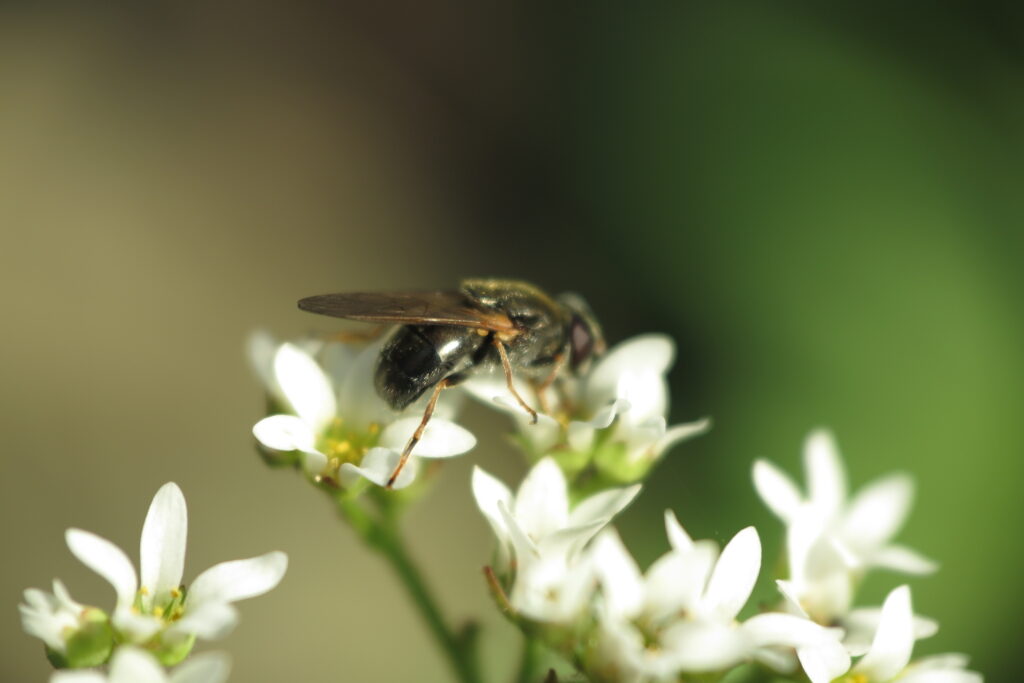
Many insects become problematic because they damage plants, invade homes, or spread disease. Blacklet flies are not generally associated with these types of impacts. Their ecological role differs significantly from insects that create major agricultural or household concerns.
Gardeners occasionally notice small flies visiting flowers and wonder whether they are harmful to ornamental plants. Blacklet flies are not known for destroying leaves, stems, or roots in the way certain pest insects can. Their presence on vegetation is usually unrelated to direct plant damage.
Unlike termites or carpenter ants, blacklet flies do not damage wooden structures. They are not structural pests and do not threaten homes, sheds, fences, or outdoor buildings. Property owners therefore have little reason to view them as destructive insects.
Wildlife impacts are similarly limited. Blacklet flies are not predators of birds, mammals, reptiles, or amphibians. Their small size and lack of specialized weapons make them incapable of harming larger animals.
In agricultural settings, they are generally far less concerning than insects such as locusts, aphids, or crop-feeding caterpillars. These major pest species can affect harvests and plant productivity, while blacklet flies typically exist as minor components of larger insect communities.
Some observers may mistake them for nuisance flies because of their appearance. However, resemblance alone does not indicate harmful behavior. Many harmless fly species share physical similarities with insects that create more noticeable problems.
From an ecological perspective, blacklet flies are better viewed as ordinary members of local biodiversity rather than pests. They participate in natural environmental processes without causing significant disruption. Their presence is usually a sign of a functioning ecosystem rather than a developing problem.
As a result, most landowners, gardeners, and wildlife enthusiasts have little reason to control or remove blacklet flies. They are generally among the least troublesome insects encountered in outdoor environments.
Blacklet Fly Defense Mechanisms and Why They Avoid Conflict
The primary reason blacklet flies are considered harmless is that they rely on avoidance rather than aggression. Their survival strategy centers on escaping danger instead of confronting it. This approach reduces the likelihood of harmful interactions with humans, pets, or wildlife.
When threatened, a blacklet fly typically responds by flying away. Rapid departure is often its first and most effective defense. Rather than standing its ground, it seeks distance from whatever triggered the disturbance.
This reaction contrasts sharply with defensive insects such as paper wasps or honey bees. Those species may actively defend nests and use stingers when they perceive danger. Blacklet flies possess no equivalent defensive weapon and therefore depend on mobility instead.
Their small size also contributes to survival. Remaining inconspicuous can be as effective as any physical defense mechanism. A dark-colored insect resting among vegetation is often overlooked by both predators and observers.
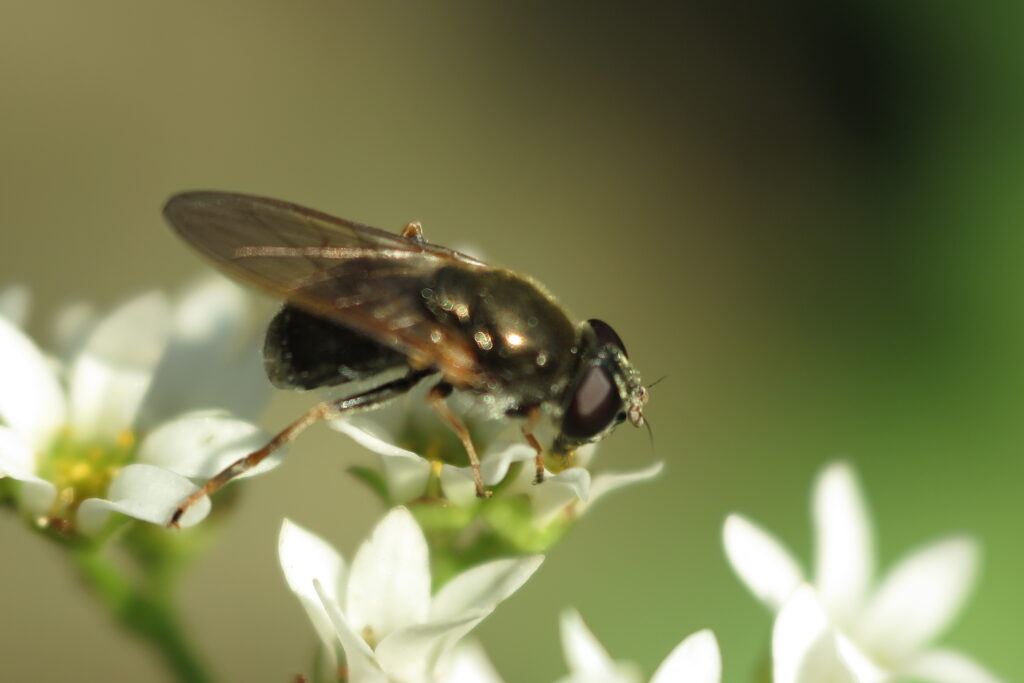
Another layer of protection comes from awareness. Large compound eyes provide extensive visual coverage, allowing the fly to detect approaching movement. This early warning system helps trigger rapid escape responses before direct contact occurs.
A practical example can be observed when a person reaches toward a flower occupied by a blacklet fly. In most cases, the insect departs immediately rather than remaining in place. This instinctive reaction minimizes the chance of injury or confrontation.
Because blacklet flies lack venom, stingers, and biting mouthparts designed for defense, they have evolved alternative methods of staying safe. Speed, awareness, and concealment provide protection without creating risk for other animals.
Overall, blacklet flies are among the least threatening insects commonly encountered outdoors. Their defensive strategy is based almost entirely on avoiding danger, making them harmless companions within the diverse communities of insects that share natural landscapes around the world.

Popular Searches About Blacklet Flies
Explore Blacklet Fly Guide
Explore More Wildlife

Support Encounters World
Help support wildlife photography and get behind the scenes discoveries on Patreon.