
Blacklet Fly Life Cycle Guide: Development Stages From Egg to Adult
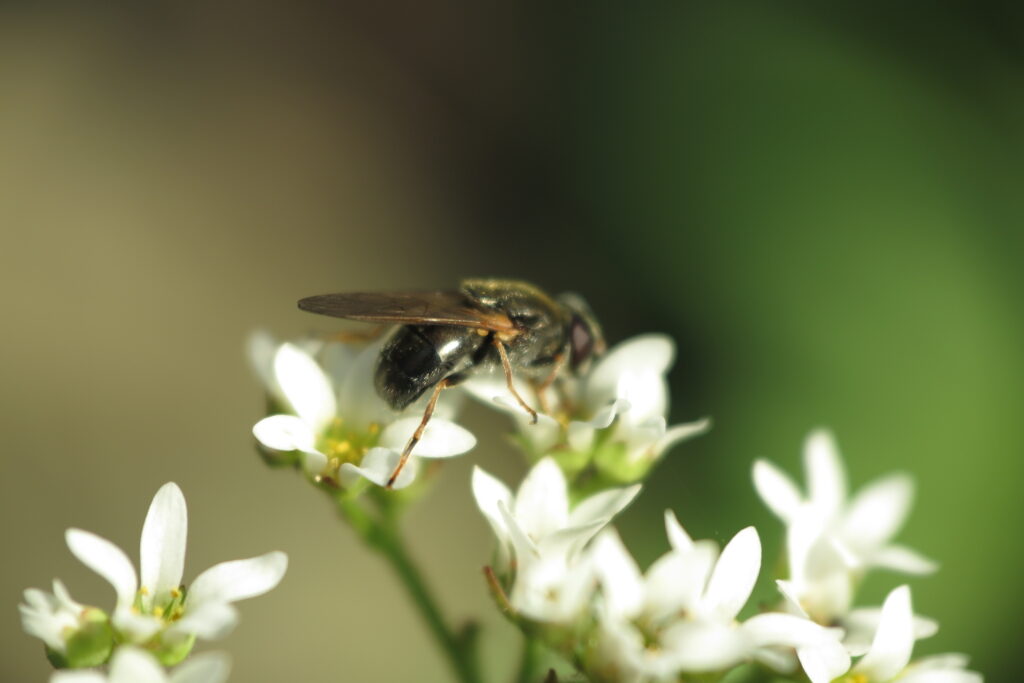
Quick Facts
Life Cycle Type: Complete Metamorphosis
Development Stages: Egg, Larva, Pupa, Adult
Average Development Time: Several weeks to a few months depending on species and conditions
Number of Generations Per Year: Varies by species and climate
Young Form: Larva (Maggot-Like Stage)
Notable Life Cycle Feature: Dramatic transformation between larval and adult stages
Understanding the Blacklet Fly Life Cycle
Blacklet flies belong to the family Heleomyzidae, a widespread group of true flies found across North America, Europe, Asia, Africa, South America, and Oceania. Like all members of the order Diptera, they undergo a complete metamorphosis that transforms them from simple larvae into winged adults. This process involves several distinct developmental stages, each serving a specific role in the insect’s life.
Many people only encounter adult blacklet flies and never realize how different the earlier stages appear. The immature forms look nothing like the winged insects seen resting on flowers or vegetation. This dramatic transformation is one of the defining characteristics of fly development.
The life cycle is designed to separate growth and reproduction into different stages. Young individuals focus primarily on development, while adults concentrate on dispersal and reproduction. This division allows each life stage to specialize in specific biological functions.
Across their global range, the exact timing of development varies between species and environmental conditions. Some populations may complete development relatively quickly, while others progress more slowly depending on temperature, moisture, and seasonal influences. Despite these differences, the overall life cycle pattern remains remarkably consistent throughout the family.
Blacklet Fly Egg Stage and Early Development
The life cycle begins when a female blacklet fly deposits eggs in a suitable location. These sites are selected carefully because newly hatched larvae must immediately access conditions that support growth and survival. Egg placement plays an important role in determining whether the next generation successfully develops.
Blacklet fly eggs are extremely small and often difficult to observe without magnification. Their pale coloration helps them blend into surrounding surfaces, making them nearly invisible to casual observers. Because of their size, most people never notice this stage in the wild.
Within the protective egg, embryonic development begins almost immediately. Internal structures gradually form until the developing insect is ready to emerge. This process may take several days, although timing varies depending on environmental conditions.
The egg stage functions much like the foundation of a building. While little visible activity occurs from the outside, important developmental changes are taking place internally. Every later stage depends on successful completion of this early period.
Temperature often influences development speed. Warmer conditions generally accelerate growth, while cooler conditions may slow progress. This relationship is common throughout the insect world and affects many species beyond blacklet flies.
Protection remains a major advantage of the egg stage. The developing insect is sheltered while delicate structures form before exposure to the outside environment. This brief but critical phase prepares the organism for its next stage of life.
Although short compared with later stages, the egg period represents the starting point of the entire life cycle. Without successful egg development, no larvae, pupae, or adults can emerge. Its importance far exceeds its small size.
Once development is complete, the young larva breaks free and begins the next stage of growth. This transition marks the beginning of the most rapid period of physical development in the fly’s life.
Blacklet Fly Larva and Pupal Transformation Stages
After hatching, the blacklet fly enters the larval stage. Larvae look dramatically different from adults and resemble small, pale, legless maggots. At this point in development, their primary purpose is growth rather than reproduction or dispersal.
The larval stage is often the longest phase of the life cycle. During this period, the insect increases significantly in size while storing energy for future development. Growth occurs through a series of molts as the larva periodically sheds its outer covering.
Compared to the sleek adult fly, the larva appears simple and highly specialized for development. It lacks wings, large compound eyes, and many of the structures associated with adulthood. Instead, nearly all resources are directed toward growth and preparation for metamorphosis.
As development progresses, the larva eventually reaches its final growth stage. At this point, it transitions into the pupal phase, one of the most remarkable transformations in the insect world. The insect effectively reorganizes its body before emerging as an adult.
The pupa serves as a protective transitional stage between larva and adult. From the outside, little movement may be visible, but extensive internal restructuring is occurring. Wings, compound eyes, antennae, and adult body structures gradually form during this period.
A useful comparison is the renovation of a building from the inside out. While the exterior may appear unchanged, major structural changes are taking place internally. The pupal stage functions in much the same way.
Duration varies depending on species and environmental conditions. Some pupae complete development relatively quickly, while others require longer periods before emergence. Regardless of timing, the outcome remains the same: the creation of a fully developed adult fly.
By the end of the pupal stage, the insect bears little resemblance to the larva that entered it. Complete metamorphosis allows blacklet flies to separate juvenile and adult lifestyles into distinct developmental phases.
Adult Blacklet Fly Stage and Reproductive Cycle
The final stage begins when the adult blacklet fly emerges from the pupal casing. At first, the newly emerged fly may appear pale and soft while its body structures finish hardening. Within a short period, the insect develops the appearance associated with mature adults.
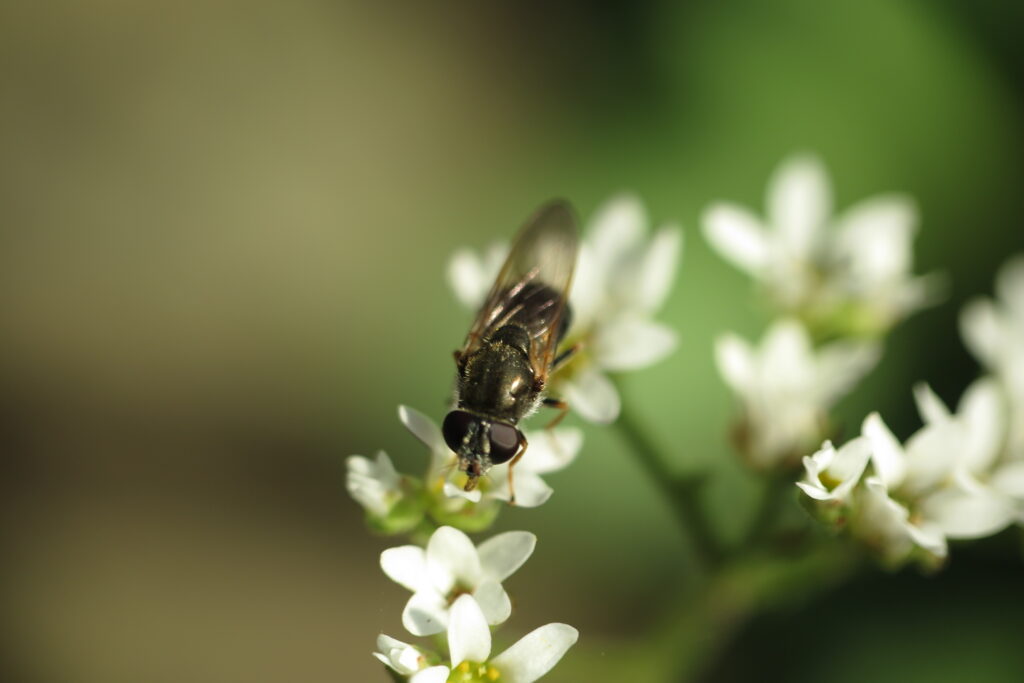
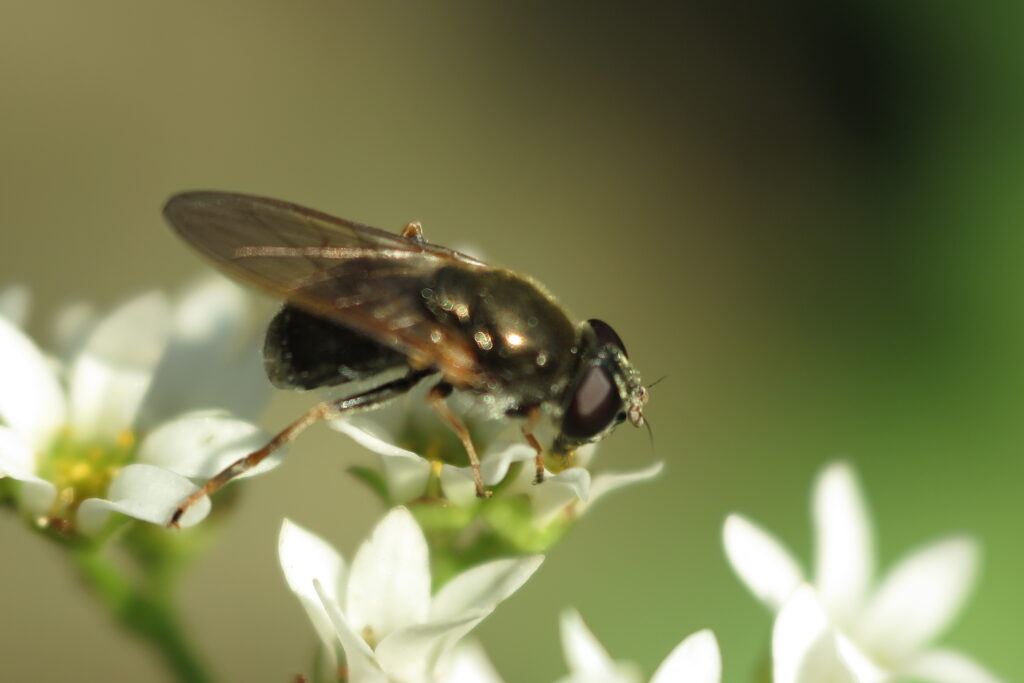
Adult blacklet flies possess large compound eyes, functional wings, and fully developed reproductive organs. These features distinguish them clearly from earlier stages. Their role now shifts from growth to reproduction and dispersal.
The adult stage is often the most visible part of the life cycle because it is the form most frequently observed by people. Individuals may be seen resting on vegetation, visiting flowers, or moving through natural environments. Despite attracting the most attention, adulthood represents only one portion of a much longer developmental journey.
Reproduction becomes the primary focus of mature individuals. Males and females locate one another, mate, and begin the process that will produce the next generation. This ensures continuity of the species and maintains population stability over time.
Adult lifespan varies among species and environmental conditions. Some individuals survive only a relatively short period, while others may persist longer when conditions remain favorable. Longevity depends on factors such as climate, resource availability, and environmental stress.
In favorable regions, multiple generations may occur within a single year. Warmer climates often support more rapid reproductive cycles, while cooler areas may limit development to fewer generations. These differences influence population dynamics across the family’s global range.
A useful comparison is the flowering stage of a plant. Just as a flower represents the reproductive phase of a plant’s life cycle, the adult fly represents the reproductive phase of insect development. Both stages are designed primarily to ensure the continuation of future generations.
The life cycle concludes when adults complete reproduction, but the process immediately begins again through newly laid eggs. This continuous cycle of egg, larva, pupa, and adult has allowed blacklet flies to persist successfully across diverse ecosystems for millions of years.

Popular Searches About Blacklet Flies
Explore Blacklet Fly Guide
Explore More Wildlife

Support Encounters World
Help support wildlife photography and get behind the scenes discoveries on Patreon.