
Blacklet Fly Facts Guide: 10 Fascinating Facts About Blacklet Flies (Family Heleomyzidae)

Quick Facts
Animal Type: Insect
Order: Diptera (True Flies)
Family Diversity: Hundreds of Species Worldwide
Average Size: 4–12 mm (0.15–0.47 in)
Global Distribution: Nearly Worldwide
Most Recognizable Trait: Dark Body with Large Compound Eyes
Blacklet Fly Overview and Surprising Background Facts
Blacklet flies belong to the family Heleomyzidae, a large and diverse group of insects within the order Diptera. Although they are not as widely recognized as butterflies, dragonflies, or bees, they are found throughout much of the world. Their widespread distribution makes them one of the many small insect groups quietly contributing to ecosystem function.
One interesting fact about blacklet flies is that many people encounter them without realizing what they are. Their dark appearance often causes them to be mistaken for houseflies, hoverflies, or other small fly species. As a result, they frequently go unidentified despite being relatively common in suitable environments.
The family includes hundreds of known species spread across multiple continents. This diversity means that no single blacklet fly perfectly represents the entire group. Instead, the family contains a wide range of species that share similar structural characteristics while varying in size, coloration, and distribution.
Another fascinating fact is their long evolutionary history. Flies as a group have existed for millions of years and have diversified into thousands of species occupying different ecological roles. Blacklet flies represent one branch of this remarkable evolutionary success story.
Unlike insects known for bright warning colors, blacklet flies typically rely on subtle appearance rather than visual display. Their darker coloration often helps them blend naturally into surrounding vegetation. This understated appearance contributes to why they are frequently overlooked.
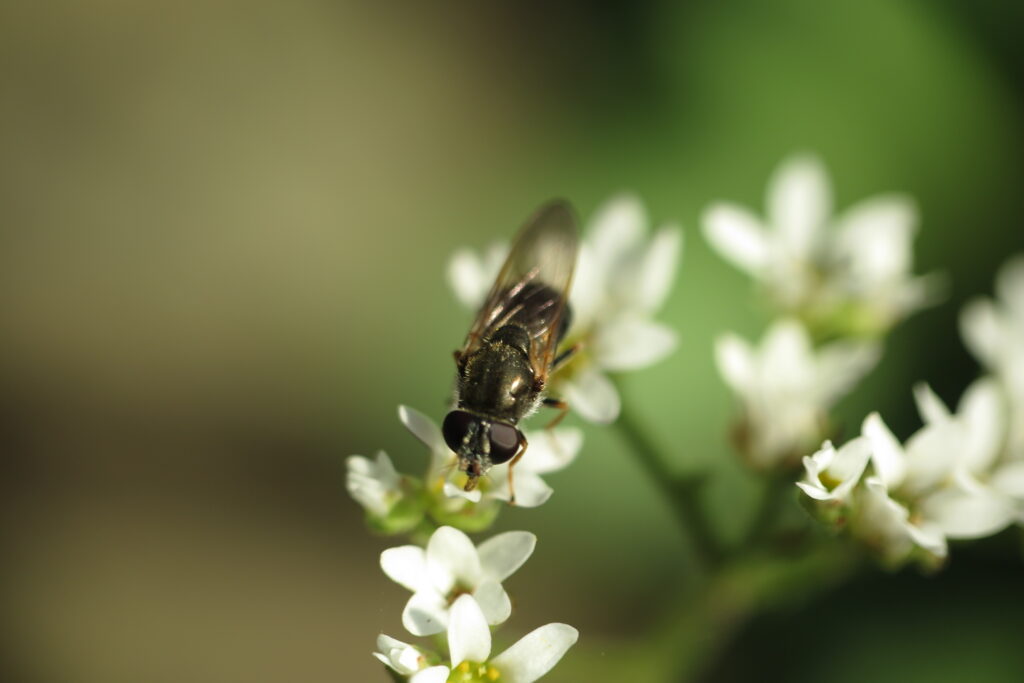
Many wildlife observers first notice blacklet flies while photographing flowers. Because these insects occasionally visit blooms, they may appear unexpectedly in macro photographs. Such encounters often spark curiosity and lead to further identification efforts.
Despite their small size, blacklet flies possess highly developed sensory structures. Large compound eyes allow them to monitor their surroundings efficiently. These visual systems provide important information about movement, obstacles, and potential threats.
Perhaps the most surprising fact is how widespread they truly are. An insect that appears insignificant at first glance actually belongs to a family distributed across much of the globe. Their success demonstrates how even small, overlooked organisms can become highly successful members of the natural world.
Blacklet Fly Identification Facts and Physical Features
One of the easiest facts to remember about blacklet flies is that they are true flies. Like all members of the order Diptera, they possess only one pair of functional wings. This characteristic immediately separates them from bees, wasps, butterflies, and many other insects.
Most blacklet flies measure between 4 and 12 millimeters in length. Their small size places them among the numerous tiny insects commonly encountered on vegetation and flowers. Many individuals are no larger than a grain of rice.
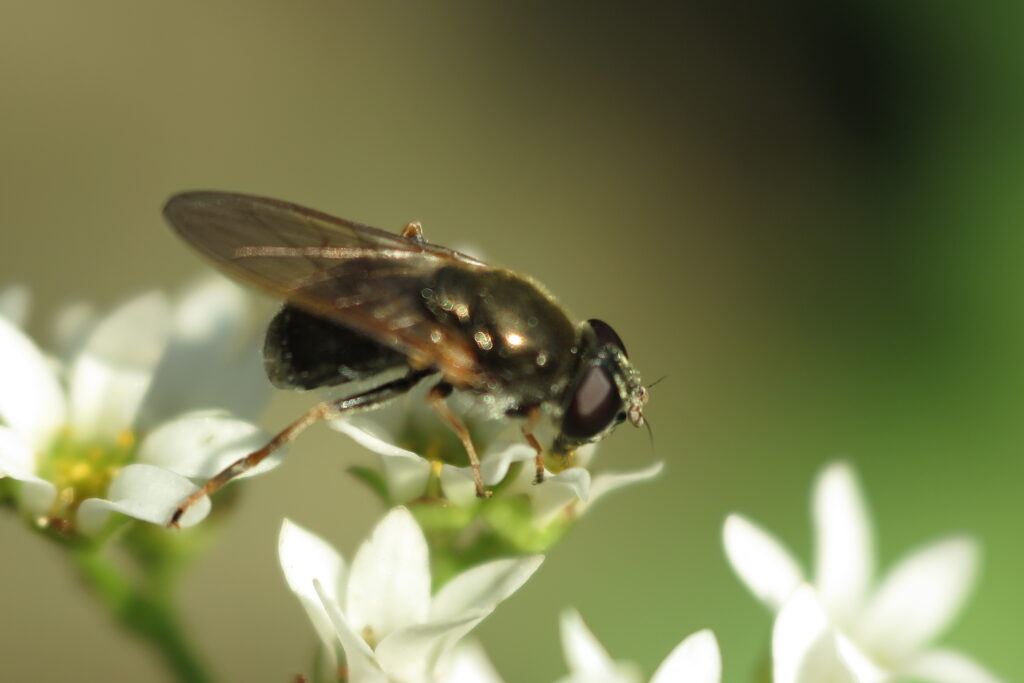
Large compound eyes are among their most distinctive features. These eyes occupy a substantial portion of the head and provide excellent visual awareness. Depending on lighting conditions, they may appear reddish, brown, purple, or nearly black.
Coloration is typically subdued compared with many other insects. Shades of brown, charcoal gray, and black dominate throughout much of the family. Some species may display slight metallic reflections when viewed under direct sunlight.
Another interesting identification fact involves their wing appearance. The wings are generally transparent but may show a faint smoky or amber tint. When resting, they fold neatly over the abdomen and contribute to the insect’s streamlined profile.
Blacklet flies are often confused with hoverflies because both groups may visit flowers. However, hoverflies frequently display bright yellow or orange markings, while blacklet flies tend to maintain a darker overall appearance. This difference can be useful when identifying photographs.
The abdomen is usually elongated rather than rounded. This body shape creates a sleek silhouette that differs from the broader appearance of many bee-mimicking flies. Even subtle shape differences can provide important identification clues.
Taken together, these physical traits create a recognizable identity for the family. Dark coloration, large eyes, clear wings, and a streamlined body form the foundation of blacklet fly identification.
Blacklet Fly Ecology and Environmental Facts
Blacklet flies occupy an important position within ecological systems despite their small size. Like many insects, they help connect different levels of the food web. Their presence contributes to the movement of energy through natural communities.
Many species are associated with natural decomposition processes. Organic materials undergoing breakdown often support the microorganisms and environmental conditions linked to portions of the blacklet fly life cycle. This connection helps support nutrient recycling within ecosystems.
Blacklet flies also contribute to biodiversity. Each species represents part of a much larger network of organisms interacting within natural environments. Their presence increases the overall complexity and stability of ecological communities.
Another noteworthy fact is their broad environmental tolerance. Members of the family occur across multiple climate zones and geographic regions. This adaptability has helped them establish populations throughout much of the world.
Flower visitation is observed in certain species. While they are not considered major pollinators compared with bees, they may still contribute to pollen movement during flower visits. Even small pollination contributions can benefit plant reproduction.
Blacklet flies themselves serve as food for many animals. Birds, spiders, amphibians, reptiles, and predatory insects all consume small flies when opportunities arise. This makes them an important food source within local ecosystems.
Their widespread distribution means these ecological interactions occur on multiple continents. Although individual flies are tiny, their collective impact becomes significant when millions of insects participate in environmental processes simultaneously.
One remarkable fact is how often their ecological importance goes unnoticed. Many people focus on larger animals while overlooking the countless insects supporting ecosystem function. Blacklet flies demonstrate that even small organisms can play meaningful environmental roles.
Blacklet Fly Fun Facts and Lesser-Known Information
A fun fact about blacklet flies is that most people have probably seen one without realizing it. Because they resemble many other small flies, they often pass unnoticed during outdoor activities. Accurate identification usually requires closer observation.
Another interesting fact is that the family name Heleomyzidae is unfamiliar even to many insect enthusiasts. Compared with butterflies or dragonflies, blacklet flies receive relatively little public attention. This makes them one of the lesser-known insect groups encountered in nature.
Some species can be found from lowland environments to mountainous regions. Their ability to occupy different elevations highlights the family’s adaptability. Few casual observers realize how broad their geographic range can be.
Blacklet flies also demonstrate how successful small insects can be. Despite lacking large size, bright colors, or obvious defenses, they have spread across much of the world. Their success comes from adaptability rather than dramatic physical features.
Macro photography often reveals details invisible to the naked eye. Close-up images can showcase eye structure, wing venation, and subtle body textures that are easily missed in the field. Many people gain appreciation for blacklet flies only after viewing magnified photographs.
Their life cycle includes complete metamorphosis. This means the insect passes through egg, larva, pupa, and adult stages before reaching maturity. The dramatic transformation between stages is one of the most remarkable aspects of fly biology.
Another lesser-known fact is that fly diversity greatly exceeds what most people imagine. Thousands of fly species exist worldwide, and blacklet flies represent just one branch of this enormous group. Understanding this diversity helps reveal the complexity of insect life.
Perhaps the most fascinating fact is that an insect often dismissed as “just a fly” belongs to a family with a worldwide distribution, diverse species, complex ecological roles, and millions of years of evolutionary history. The next time a blacklet fly lands on a flower or leaf, it represents far more than a simple insect—it represents a small but important part of Earth’s biodiversity.

Popular Searches About Blacklet Flies
Explore Blacklet Fly Guide
Explore More Wildlife

Support Encounters World
Help support wildlife photography and get behind the scenes discoveries on Patreon.