
White-Tailed Deer Scapula Age Guide: Estimating Bone Age Through Weathering and Condition
Quick Facts
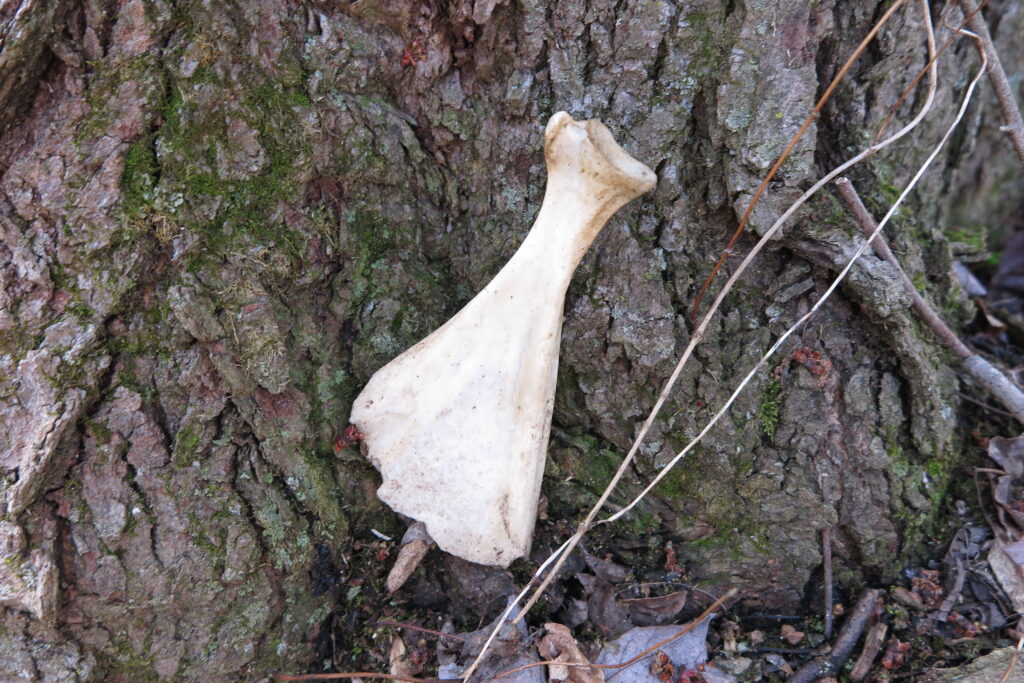
Bone Type: Scapula Fragment (Shoulder Blade)
Likely Animal: White-Tailed Deer
Common Name: White-Tailed Deer Scapula
Scientific Name: Odocoileus virginianus
Bone Category: Shoulder Girdle Bone
Estimated Age Class: Adult Deer
Bone Condition: Weathered, Fragmented
Weathering Stage: Moderate
Age Estimation Clues: Coloration, Surface Texture, Edge Condition, Exposure Damage
White-Tailed Deer Scapula Age and Weathering Guide
Determining the age of a white-tailed deer scapula involves evaluating the condition of the bone rather than assigning an exact calendar date. Once an animal dies, environmental exposure begins altering the bone through weathering, staining, cracking, and fragmentation. These changes provide clues that help estimate how long a specimen has remained in the environment.
The scapula is particularly useful for age estimation because of its broad, exposed surfaces. Unlike dense leg bones that may weather slowly, the shoulder blade often develops visible signs of aging relatively quickly. Surface changes can reveal whether a specimen is recent, moderately weathered, or significantly degraded.
White-tailed deer occur across a wide geographic range, meaning weathering rates vary depending on climate and habitat. A scapula exposed in a dry open field may age differently than one resting beneath forest leaf litter. Because environmental conditions influence preservation, age estimates are typically expressed as ranges rather than precise dates.
The specimen examined here appears to represent an adult deer scapula fragment that has experienced moderate weather exposure. The bone remains structurally recognizable and retains major anatomical landmarks. These preserved features suggest it has not been exposed long enough to undergo advanced deterioration.
White-Tailed Deer Scapula Weathering Stages
Fresh deer scapulae typically retain a smooth surface and a natural ivory coloration. Recently exposed bones often appear dense and relatively free of cracking. Anatomical landmarks remain sharply defined, and fracture surfaces generally display clean edges.
As exposure continues, weathering begins affecting the outer surface. Sunlight, moisture, and temperature fluctuations gradually alter coloration, producing cream, tan, gray, or pale white tones. Minor surface roughness may develop as the bone responds to environmental stress.
Moderately weathered scapulae often display the condition most commonly encountered by bone collectors. Small cracks, discoloration, and edge wear become visible while the overall structure remains intact. Identification remains straightforward because major landmarks are still well preserved.
Advanced weathering produces more substantial deterioration. Larger cracks spread across the surface, edges become increasingly fragile, and portions of the blade may begin separating. At this stage, identification becomes more difficult because important anatomical features may be partially lost.
Extremely weathered specimens can fragment into multiple pieces. Continuous exposure weakens the bone’s structural integrity, allowing natural forces to break it apart. Broad sections of the scapula may disappear entirely, leaving only isolated fragments.
Environmental conditions influence how quickly these stages occur. Bones exposed directly to sunlight often weather faster than specimens protected beneath vegetation. Moisture can either preserve or accelerate deterioration depending on local conditions.
Forest environments sometimes slow visible weathering by shielding bones from direct solar exposure. However, prolonged contact with damp leaf litter may produce staining or localized surface changes. This creates a different aging pattern than that seen in open habitats.
Understanding weathering stages provides a practical framework for age estimation. While exact timelines vary, the progression from fresh bone to heavily fragmented remains offers valuable clues regarding environmental exposure history.

White-Tailed Deer Scapula Age Indicators and Preservation Clues
Color is one of the first characteristics examined during age estimation. Fresh bones generally appear lighter and more uniform, while older specimens often develop uneven coloration. Exposure to soil, moisture, and organic material can create patches of brown, gray, or yellow staining.
Surface texture also provides important information. Newly exposed scapulae typically feel smooth across much of the blade. As weathering progresses, surfaces may become rougher and display subtle pitting or erosion.
The condition of the edges often reveals how long a bone has been exposed. Sharp margins gradually become rounded through repeated environmental wear. Broken areas may lose their original appearance as weathering softens fracture surfaces over time.
Cracking patterns represent another useful indicator. Small hairline cracks commonly develop during moderate weathering, especially when bones experience repeated wet-dry or freeze-thaw cycles. Larger fractures generally indicate longer exposure periods.
The preservation of anatomical landmarks can also assist with estimation. A clearly visible glenoid cavity, scapular neck, and blade margins often suggest the bone has not reached an advanced stage of degradation. Severe deterioration tends to obscure these features.
Fragmentation itself provides valuable clues. A complete scapula often indicates a relatively recent skeletal specimen, whereas partial bones suggest a longer history of environmental stress. The fragmentary condition of this specimen points toward an extended period of exposure.
Comparing multiple indicators produces the most reliable estimate. No single feature can determine age on its own. Instead, coloration, cracking, edge condition, and overall preservation are evaluated together.
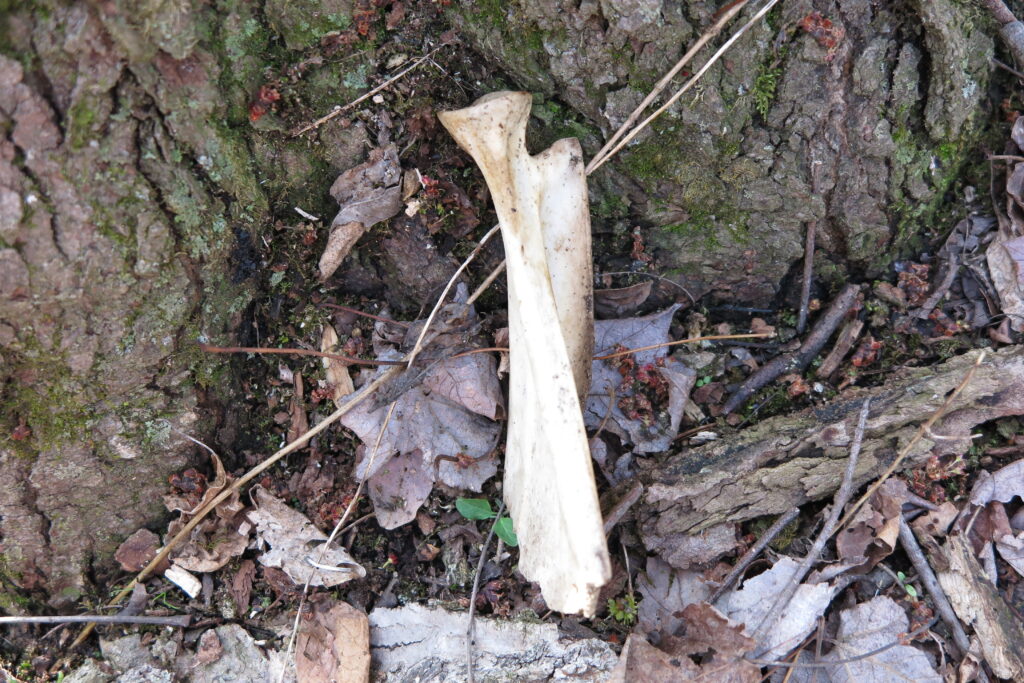
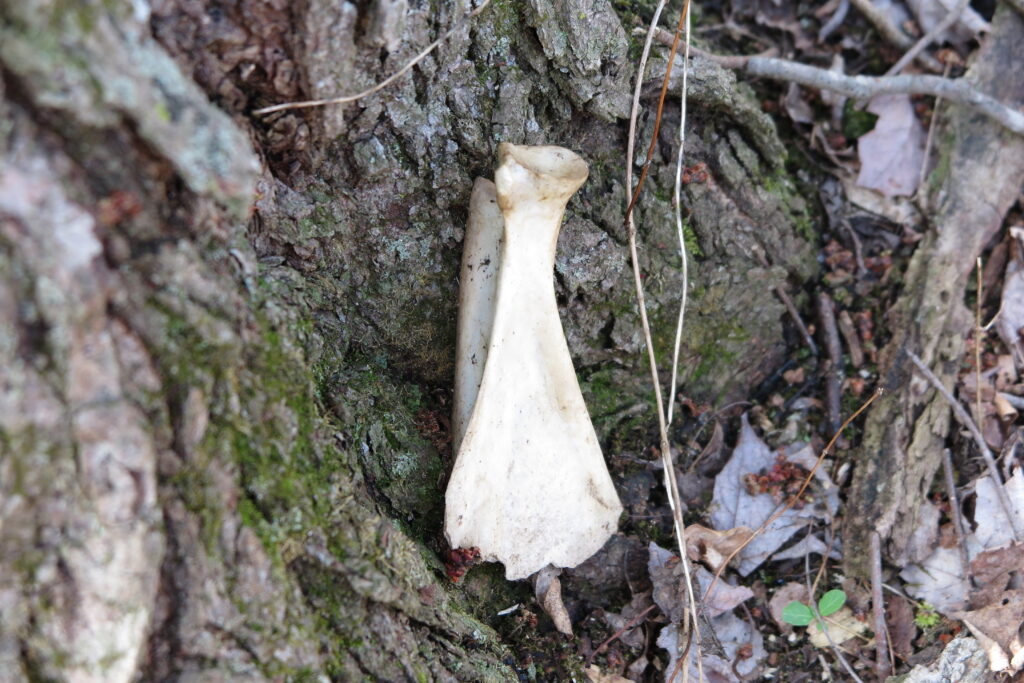
Based on these criteria, the photographed scapula fragment likely represents a moderately weathered specimen rather than a recently exposed or heavily degraded bone. Its preserved landmarks remain consistent with a bone that has experienced environmental exposure while retaining good structural integrity.
Estimating How Long a White-Tailed Deer Scapula Has Been Outdoors
Estimating the amount of time a scapula has spent outdoors requires combining weathering observations with environmental context. Bones exposed to direct sunlight, rainfall, and seasonal temperature changes generally age faster than those protected beneath vegetation or debris.
In forested habitats, decomposition often progresses gradually. Leaf litter can shield bones from direct ultraviolet exposure while simultaneously retaining moisture. This combination may preserve overall shape while still producing moderate staining and surface wear.
A practical example involves a deer carcass decomposing beneath woodland cover. Within months, soft tissue disappears and skeletal elements become exposed. Over subsequent years, weathering gradually alters the bone’s appearance without necessarily destroying major anatomical features.
Scavenger activity can complicate age estimation. Coyotes, raccoons, foxes, and vultures frequently move bones away from the original carcass location. This relocation may expose a specimen to different environmental conditions than those present during early decomposition.
Water movement introduces additional variability. Bones carried by streams may experience abrasion, staining, or impact damage that resembles longer periods of weathering. Consequently, environmental history must always be considered when evaluating condition.
The scapula fragment documented here retains smooth surfaces, recognizable landmarks, and relatively limited cracking. Although portions of the original blade are missing, the remaining structure remains well preserved. These observations suggest moderate rather than extreme exposure.
In many temperate environments, a scapula displaying similar characteristics may have been exposed for several seasons or multiple years. However, local conditions ultimately determine the exact rate of change. Therefore, estimates should remain cautious and evidence-based.
Rather than assigning a specific age, the most accurate conclusion is that this white-tailed deer scapula represents an adult shoulder blade that has undergone moderate weathering while maintaining excellent identification features. Its condition reflects a balance between environmental exposure and natural preservation, making it a valuable example for studying bone aging and weathering patterns.
Popular Searches About Deer Scapula
Explore Deer Scapula Guide
Explore More Bones

Support Encounters World
Help support wildlife photography and get behind the scenes discoveries on Patreon.